
Aesthetic Surgery
Rhinoplasty in Bangkok
At YOUNIFY Clinic in Bangkok, rhinoplasty starts from THB 65,000; the final plan is confirmed in a written quotation after assessment. The bridge and tip reshaped against your facial proportions, using an open or closed approach depending on your tissue.
Clinic open daily, 11:00 to 20:00 (Bangkok time) · Online enquiries answered 24 hours a day

Price list
Procedures in this table start from THB 50,000 to THB 159,000 per procedure; the final plan is confirmed in a written quotation after assessment.
| Procedure | Starting Thailand price (฿) | Starting Thailand price (AUD) | Standard Australia price (AUD) |
|---|---|---|---|
| Rhinoplasty (Surgical) | |||
| Rhinoplasty (Augmentation) | THB 65,000 | A$2,826 | A$15,791 |
| Open Structural Rhinoplasty | THB 159,000 | A$6,913 | A$22,000 |
| Rhinoplasty with Ear Cartilage Graft | THB 150,000 | A$6,522 | A$24,000 |
| Nose Implant (Silicone / Gore-Tex) | THB 56,000 | A$2,435 | A$12,000 |
| Alar / Nasal Base | |||
| Alar Reduction (Alarplasty) | THB 50,000 | A$2,174 | A$6,000 |
| Alae Plasty | THB 50,000 | A$2,174 | A$6,500 |
| Rhinoplasty + Alar Reduction | THB 90,000 | A$3,913 | A$18,000 |
| Non-Surgical Nose | |||
| Non-Surgical Nose (Filler / Threads) | THB 65,000 | A$2,826 | A$2,500 |
* Indicative prices for reference only. Some items are priced per area. Final pricing depends on an individual assessment. Overseas prices are indicative market estimates for comparison only. Contact our team for a personalized quote.
Your final quote follows an individual medical assessment. You receive a written quotation before any deposit.
Plan your trip
All figures are approximate and intended for travel planning. Results vary by individual, and your doctor confirms the plan case by case. Please consult a physician before treatment.
Care you can measure
Figures from the YOUNIFY surgical program.

01 · Planning
Assess the framework before surgery is planned
Skin and cartilage set what is achievable.
Your surgeon assesses skin thickness, the strength and quantity of existing cartilage, the width of the nasal base, and the nose-to-lip angle. Thick skin masks fine tip definition; thin skin shows the edges of the underlying framework more readily.
How much cartilage is available for grafting is a real constraint. If the septal cartilage is insufficient, the alternatives and their trade-offs are explained before anything is decided.
Pre-operative assessment is a planning aid. It illustrates an expected direction, not a guaranteed outcome.
What is rhinoplasty?
Rhinoplasty reshapes the bridge, tip, and alae of the nose into proportions that balance the face, using medical-grade implants or your own cartilage.
Your surgeon assesses your existing framework, skin thickness, and facial proportions to select a closed or open technique and the right material, for a natural result that stays safe long term.
Men planning rhinoplasty alongside a stronger chin or jaw can read about facial implants for men.
Concerns it addresses
Low / flat bridge
A bridge without height makes the face look flat and the nose lack definition.
Bulbous / ill-defined tip
A large, round, or wide tip leaves the nose looking ill-defined even with a high bridge.
Wide alae / base
Wide nostrils or a broad base keep the nasal base from looking refined.
Deviated / crooked nose
A bridge or tip that leans to one side makes the face look asymmetric.
Closed vs Open Rhinoplasty
The difference lies in what the surgeon can see during the operation and how much can be adjusted, not in the quality of the result.
| Closed technique | Open technique | |
|---|---|---|
| Incision | Entirely inside the nostrils, with no external incision | A small additional incision at the base of the columella |
| Intraoperative view | Work proceeds through a limited opening | The full tip framework is visible |
| Strength | No externally visible incision, and usually less early swelling | Cartilage can be placed precisely, particularly in complex tip work |
| Who it suits | Mainly dorsal adjustment, or revisions that need little tip restructuring | Substantial tip work, a deviated nose, or a second corrective operation |
| Limitation | Less scope to restructure the tip | Adds a small incision at the base of the columella |
How we plan your result
The nose sits at the center of the face and draws the eye. Bridge height, tip length and rotation, and base width all have to relate to the forehead, lips, and chin, so the shape is designed against the whole face, not simply built as high as possible.
Your planning options
Who is it for
- Those with a flat or low bridge, or an ill-defined tip
- Those with wide alae wanting a slimmer base
- Those seeking revision of a previous rhinoplasty
- Those in good health with no contraindications to surgery
03 · Technique
Choosing the approach open or closed
The difference is visibility during surgery and how much can be altered, not the quality of the result.
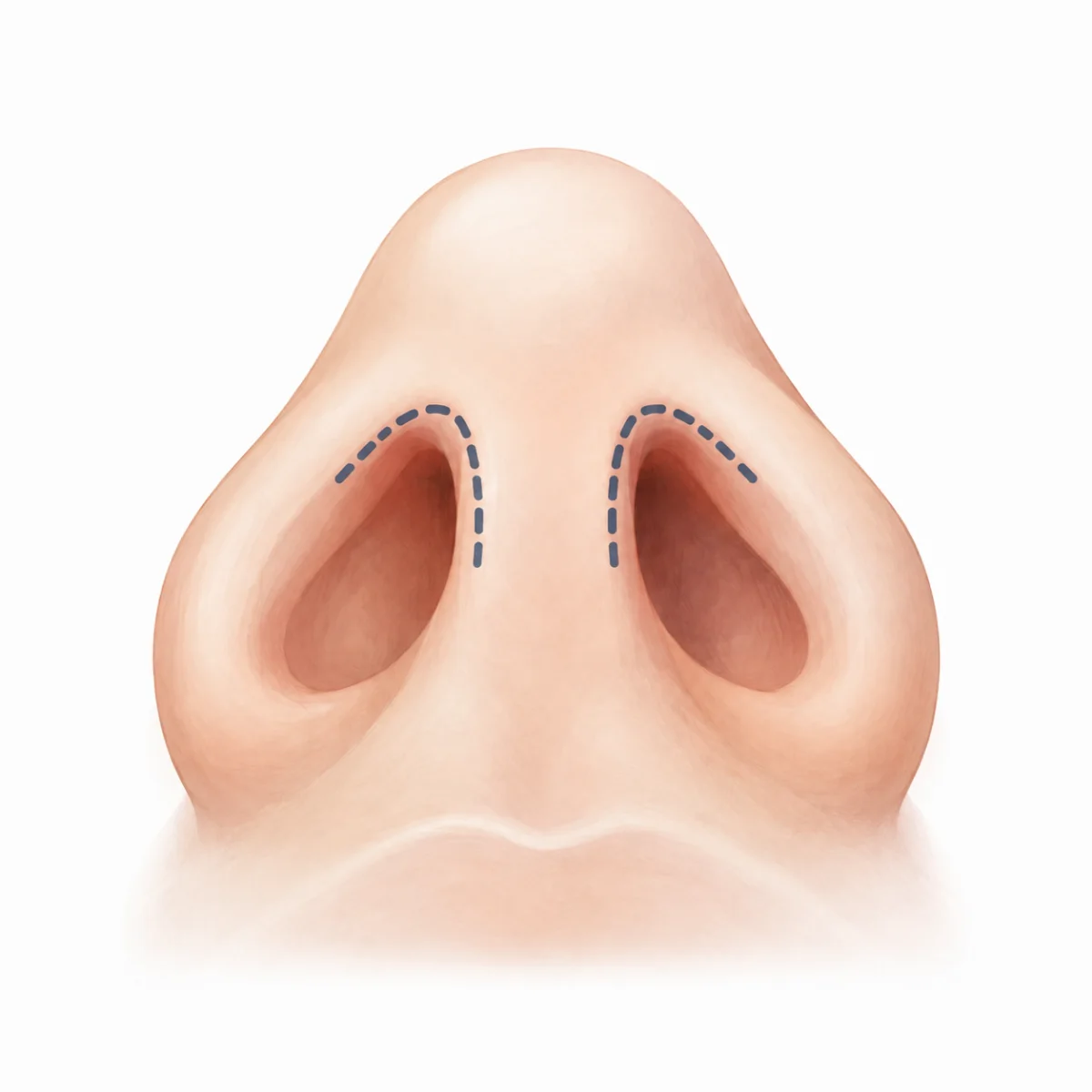
Closed (endonasal)
All incisions sit inside the nostrils, with no external scar. The surgeon works through a limited opening.
Benefits: No externally visible scar, and usually less swelling in the early period.
Suitable for: Mainly bridge work, or corrections that do not need extensive tip restructuring.
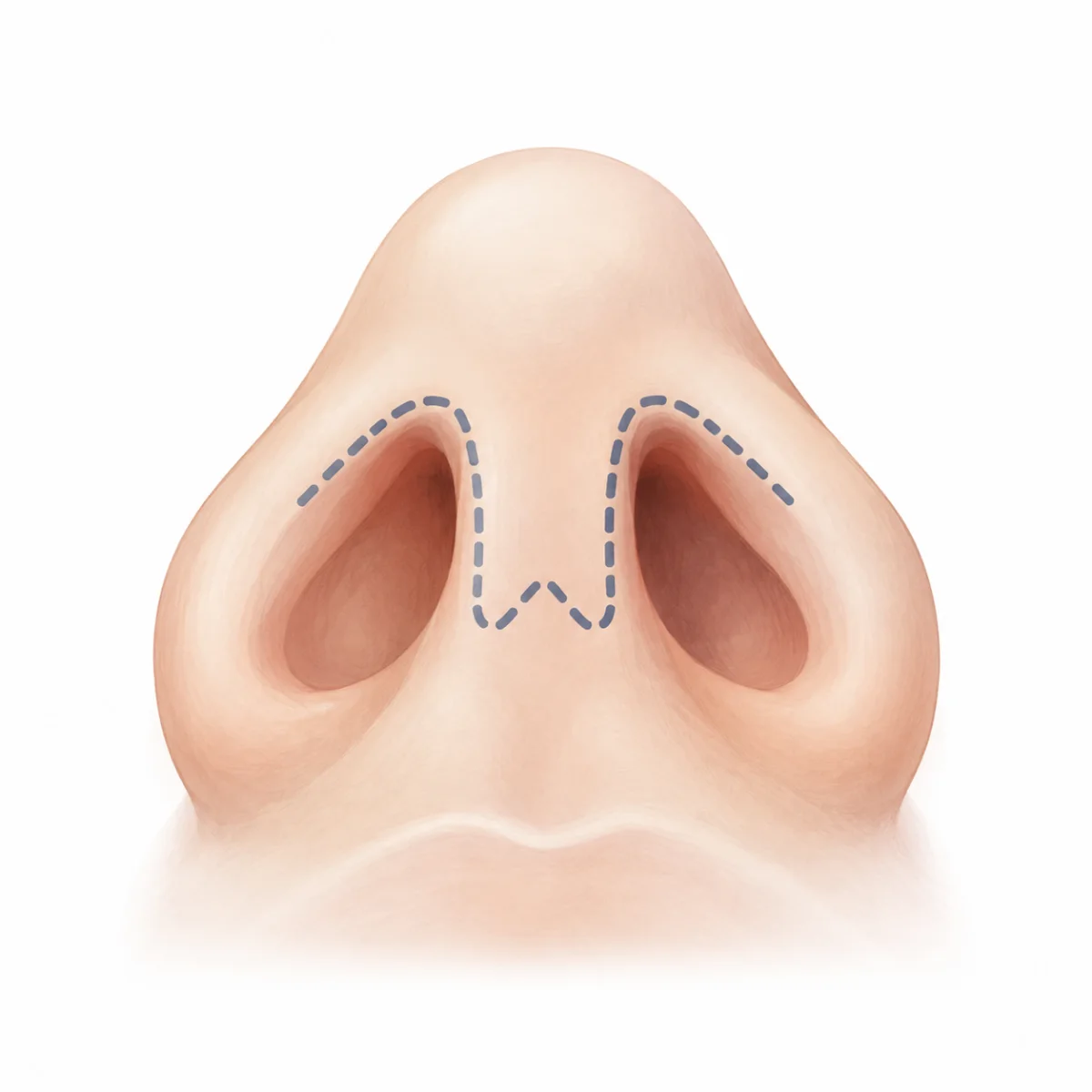
Open (external)
Adds a small incision across the columella (the strip of skin between the nostrils), exposing the whole tip framework.
Benefits: Maximum visibility and the most precise cartilage placement, particularly for complex tip work.
Suitable for: Significant tip reshaping, a deviated nose, or revision surgery.
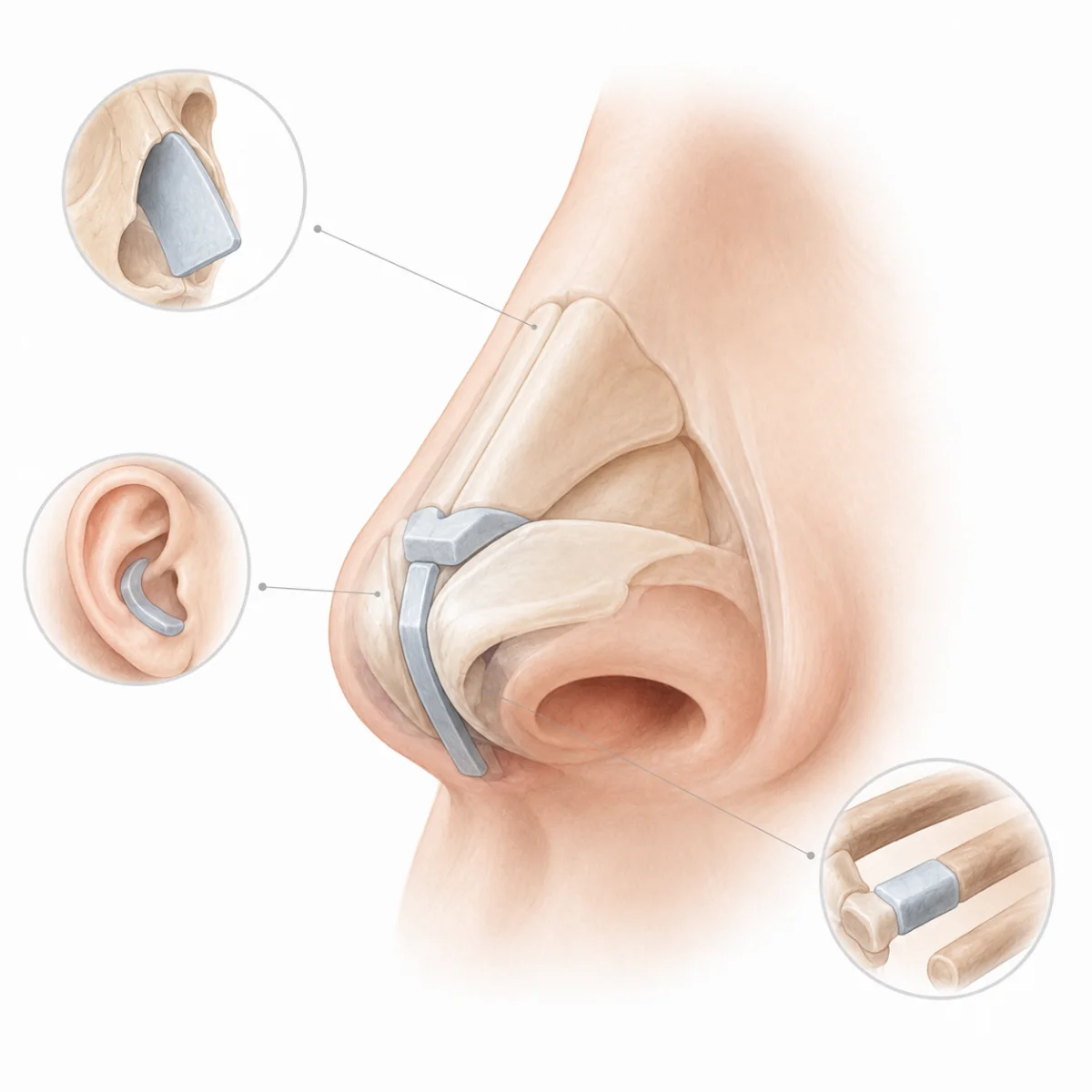
Structural cartilage grafting
Cartilage from the septum, ear or rib is used to reinforce the tip framework.
Benefits: Supports the shape long term with your own tissue and reduces reliance on synthetic material at the tip.
Suitable for: Weak native cartilage, thick skin, or a previously operated nose.
04 · Your team
Performed by board-certified plastic surgeons
This procedure is performed by the clinic's plastic surgeons at an accredited partner private hospital (JCI / AACI).

Dr. Phattrapohn Liangcheep
Plastic and Reconstructive Surgery
Diploma of the Thai Board of Plastic and Reconstructive Surgery
View full profile
Dr. Thanachot Kamolveerat
Plastic and Reconstructive Surgery
Diploma of the Thai Board of Plastic and Reconstructive Surgery
View full profile05 · Safety
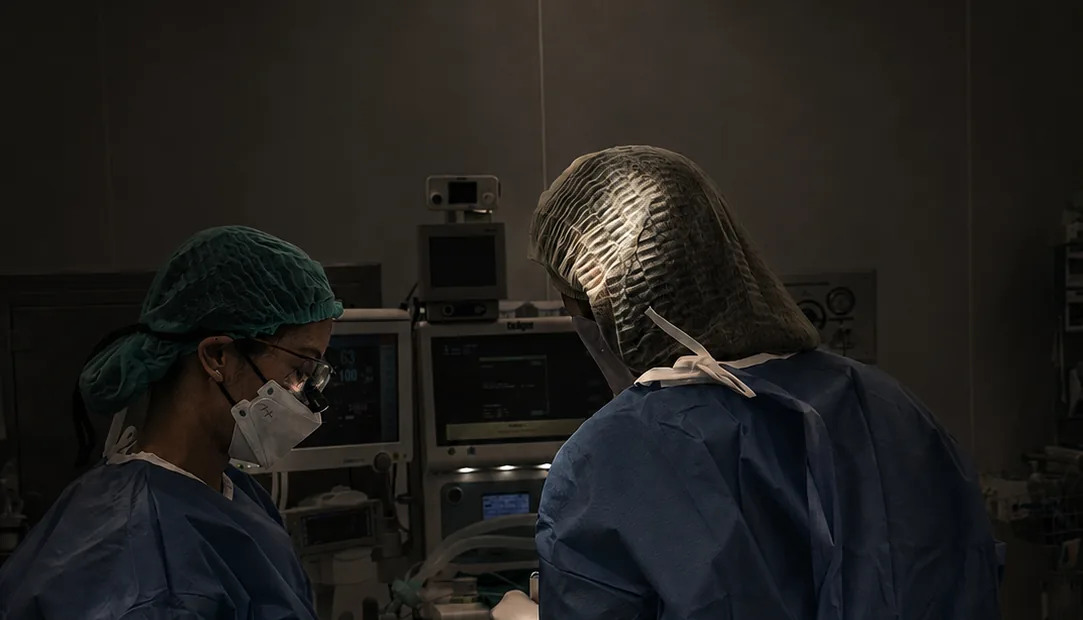
Operating room standards and monitoring
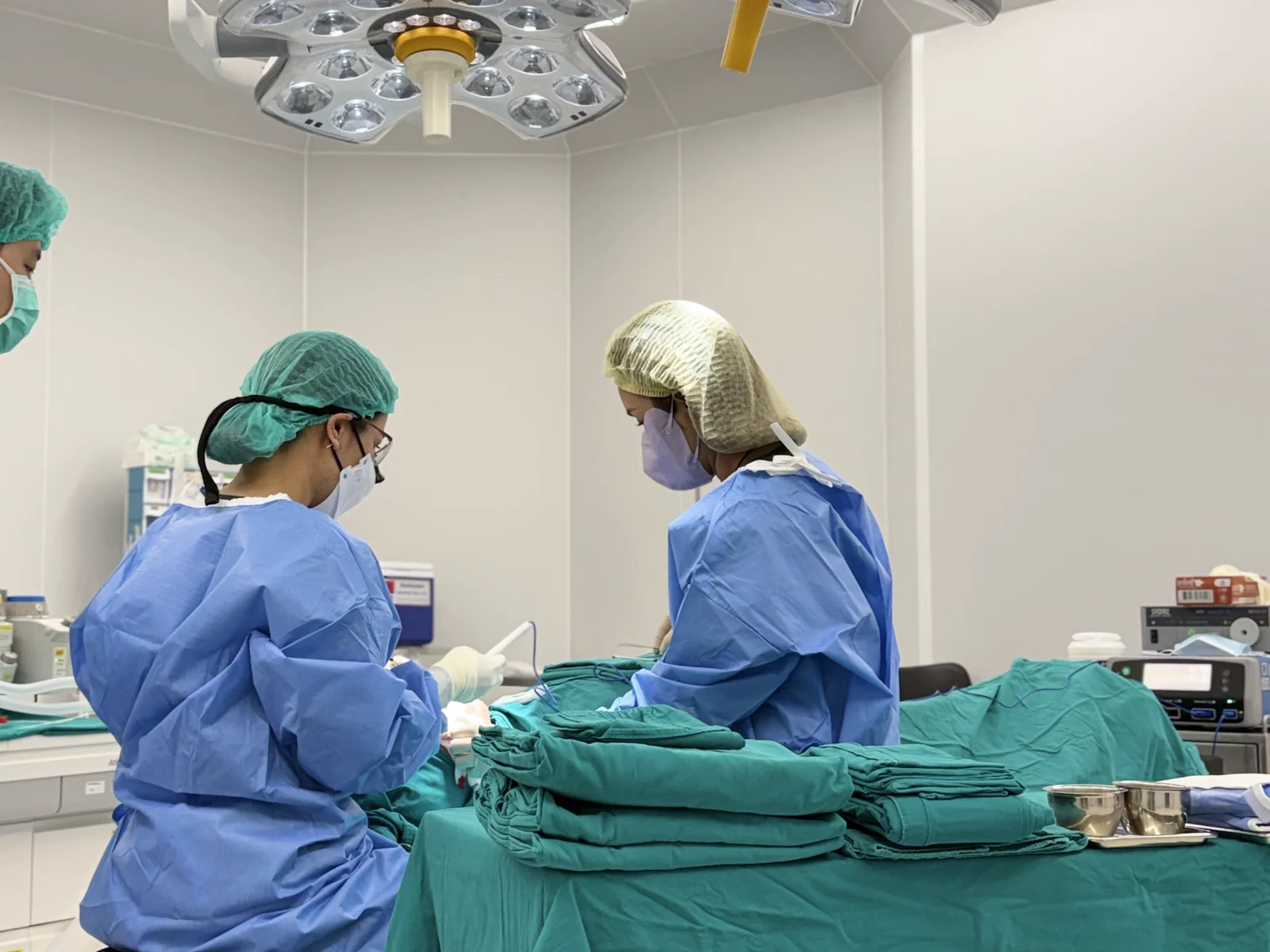
Surgery is performed in the operating room of a JCI- or AACI-accredited partner private hospital, with anesthesia care and continuous monitoring throughout.
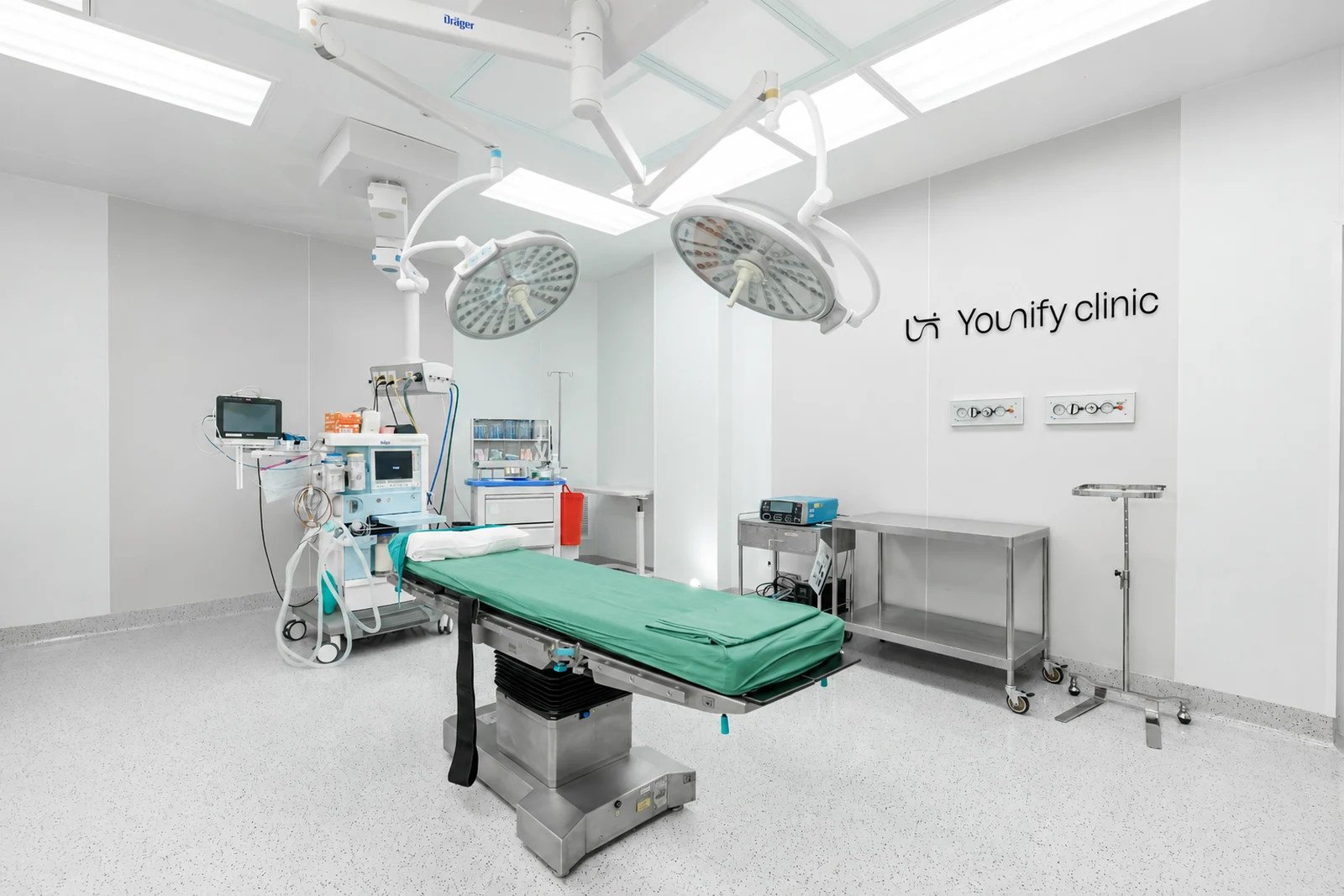
JCI- or AACI-accredited partner private hospital
Procedures are performed in a registered operating room, not a treatment room.
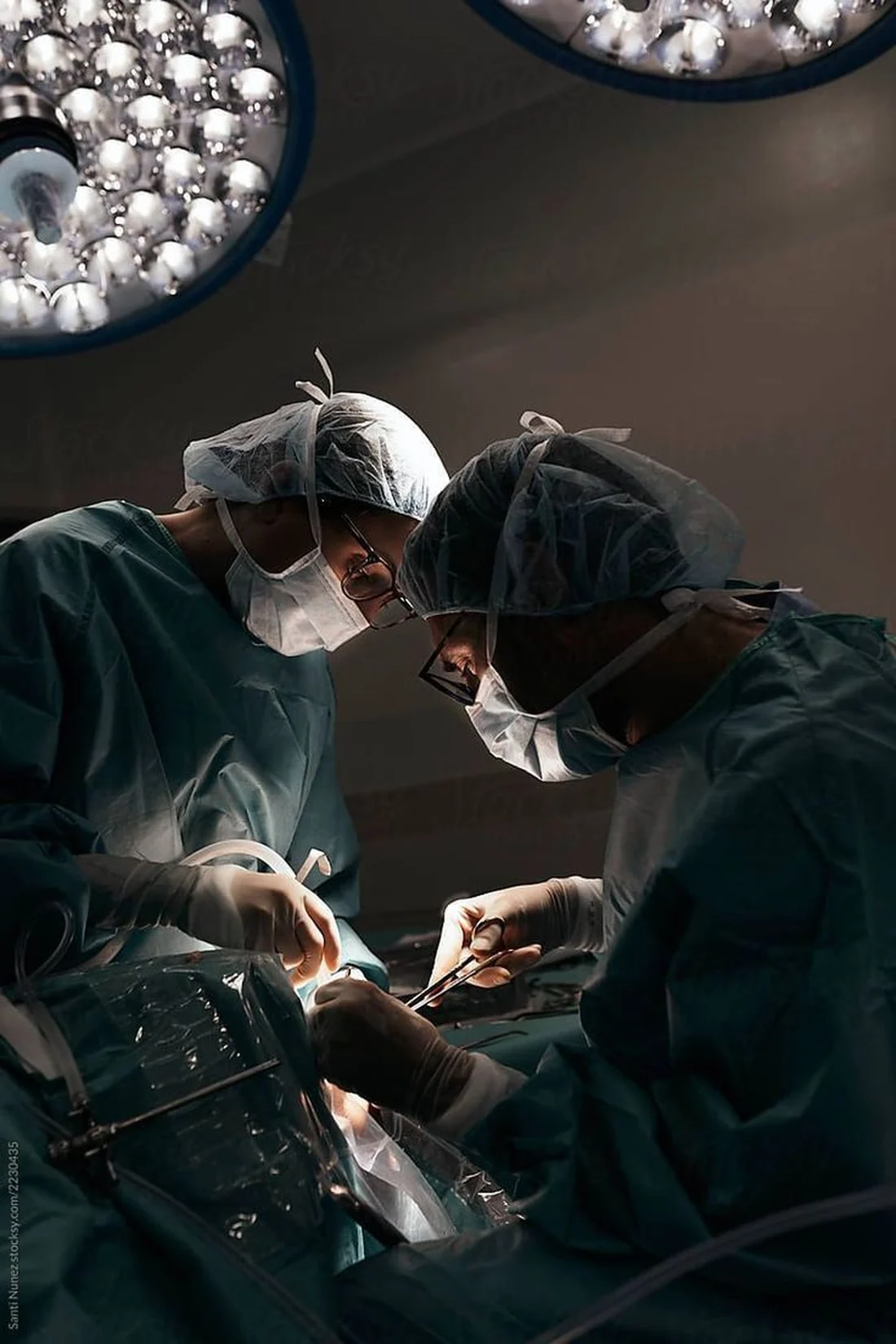
Specialist anaesthesia care
Anaesthesia is administered and monitored by a qualified anaesthesiologist for the duration of surgery.
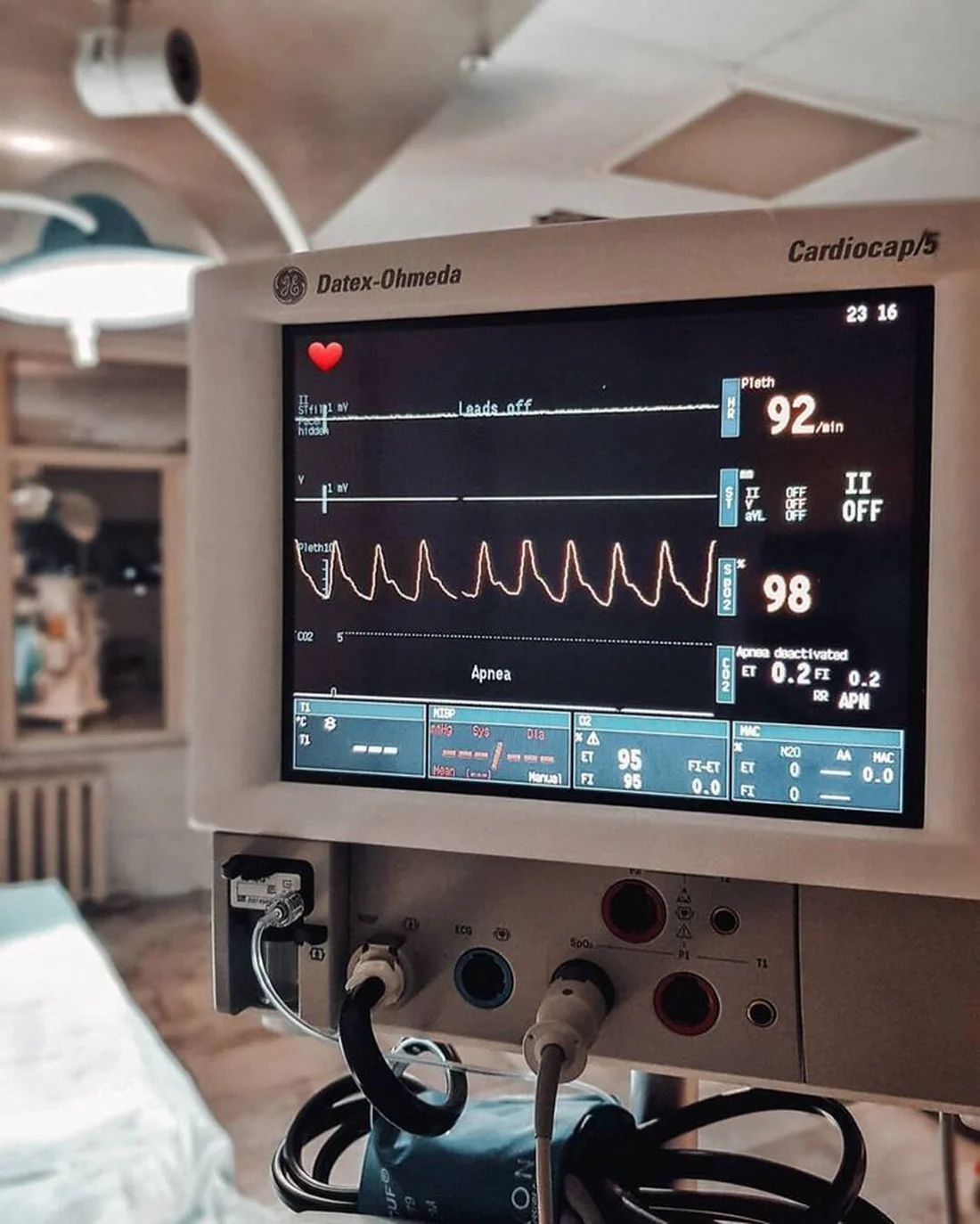
Continuous monitoring
Vital signs are monitored continuously during the procedure and through initial recovery.
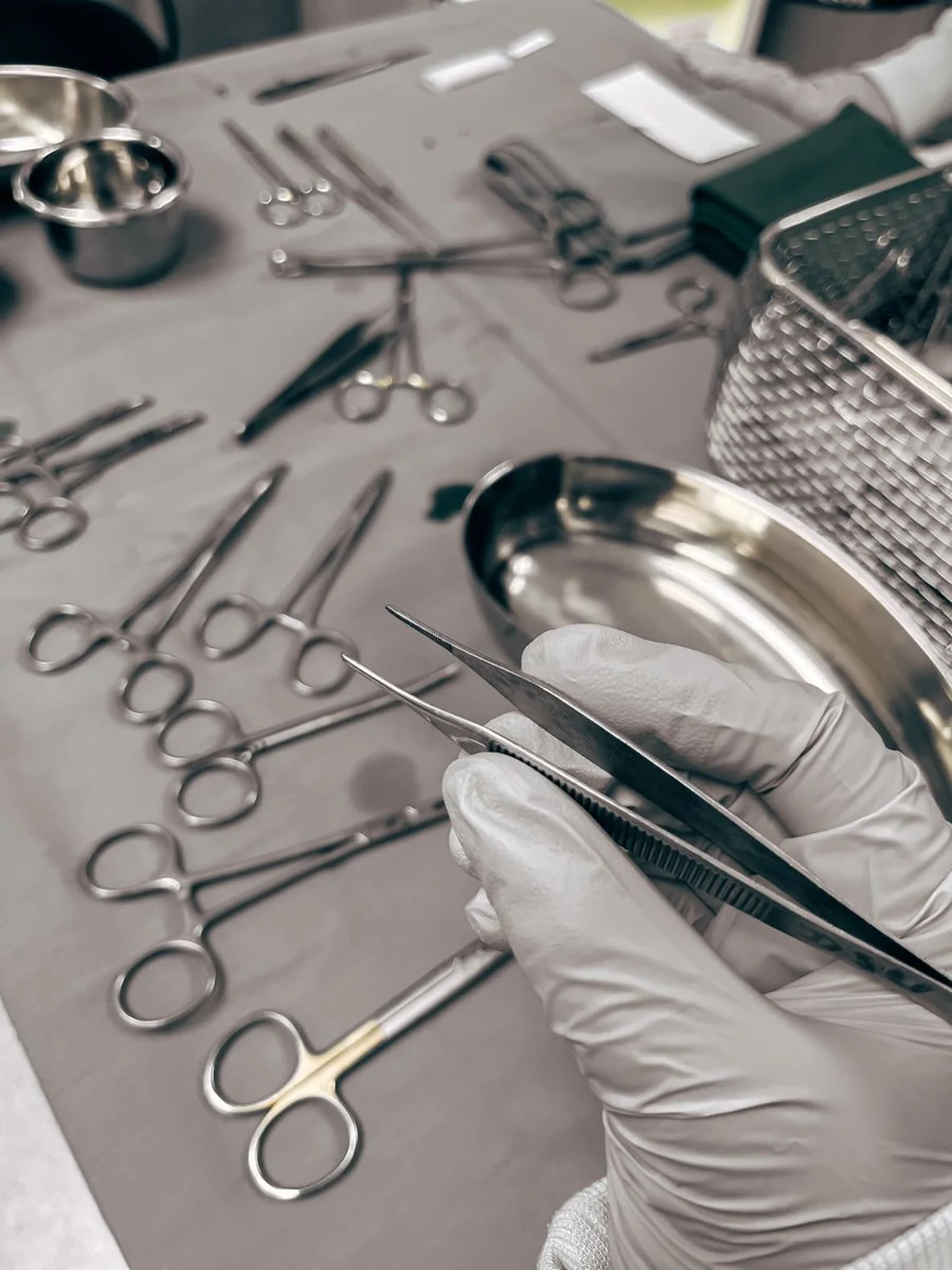
Sterile instrument protocol
Instruments and implants are handled under a documented sterile protocol.
The treatment process
Consult & analyze the profile
Assess your existing framework, skin thickness, and side profile, and hear your goals.
Choose material & technique
Select silicone, Gore-Tex, or cartilage and a closed/open technique to suit the case.
Prepare for surgery
Fitness checks, pausing certain medications, and preparation guidance.
Surgery day
Performed in a standard operating theatre by a specialist surgeon and anesthesia team.
Aftercare
A nasal splint, a swelling-and-bruising program, and wound-care guidance.
Follow-up
Splint and suture removal, with reviews as the shape settles.
Recovery timeline
Your surgery at YOUNIFY
From the surgeon who operates to the nurses who follow up, and a private suite to recover in.


Before & After
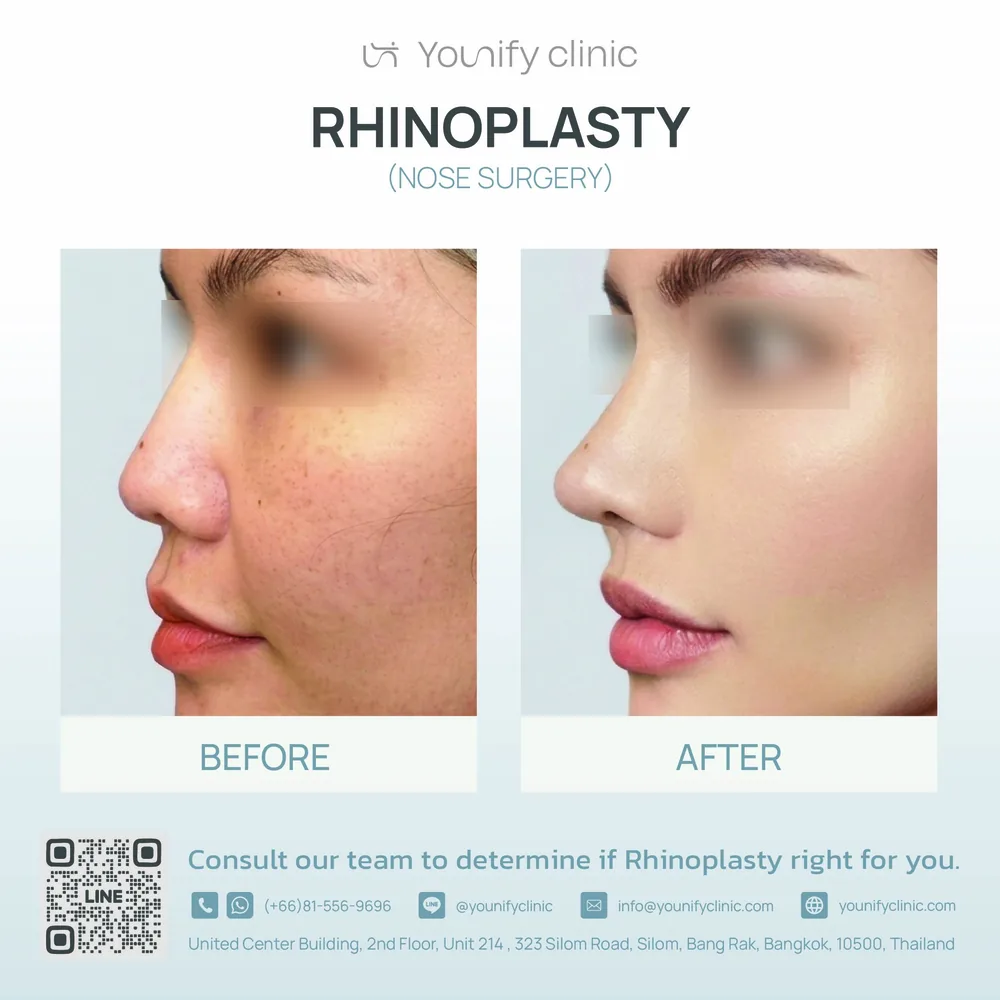
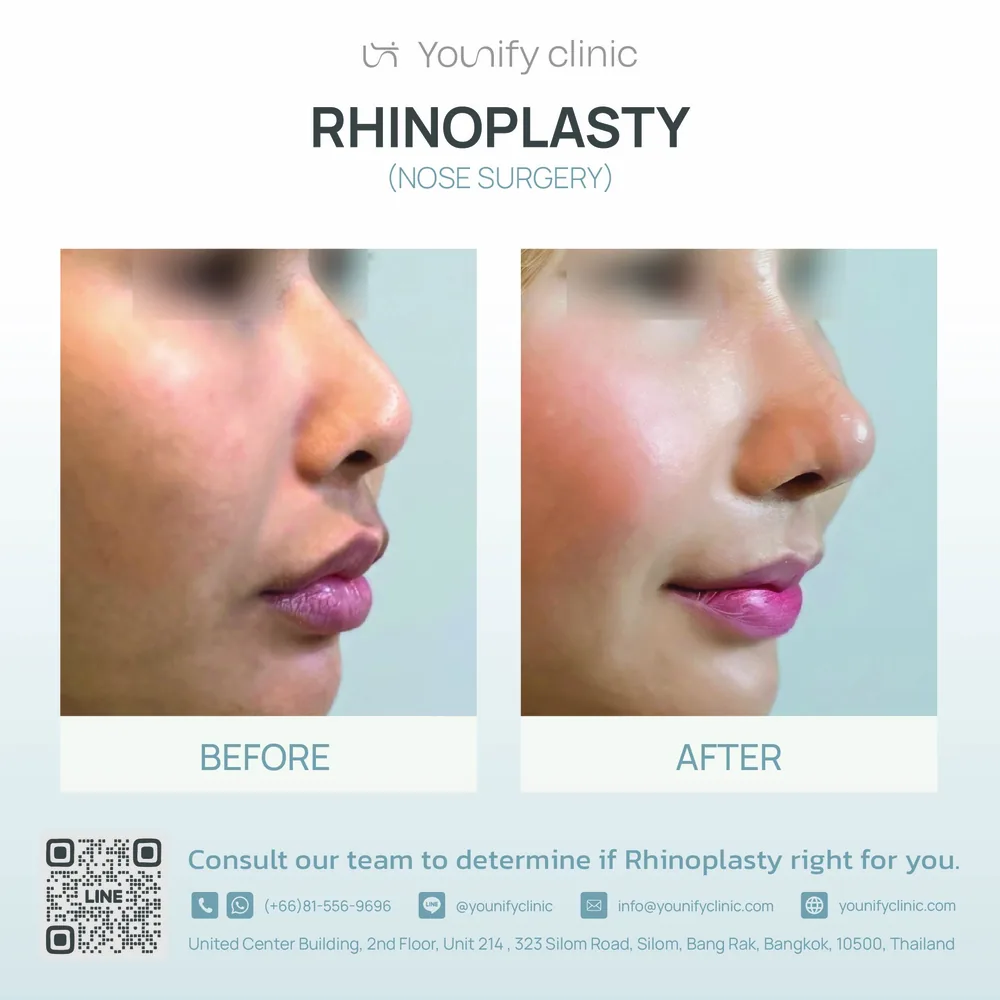
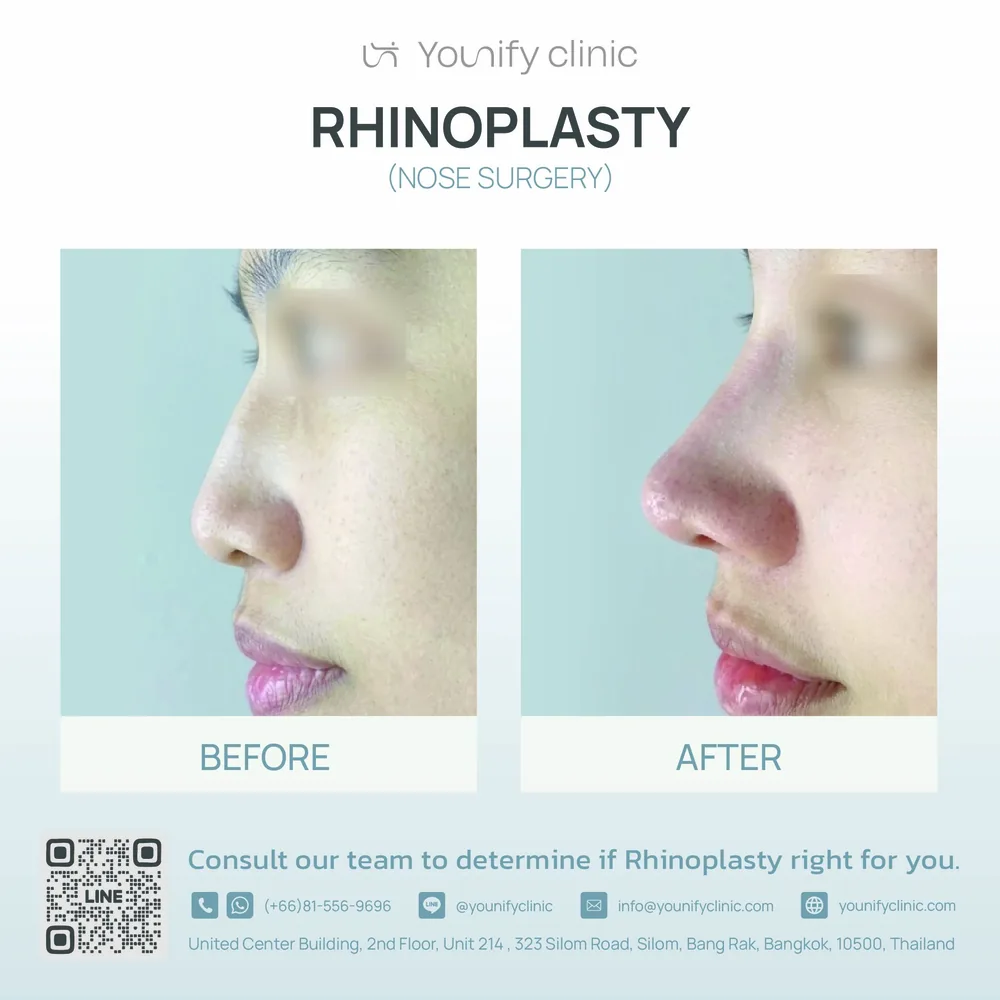
* Real patient results, published with consent. Individual results may vary.
Frequently asked questions
Implant or cartilage: which is better?
It depends on your framework and goals. Silicone gives a defined bridge; cartilage suits the tip and those preferring natural material. Your surgeon advises per case.
Will the nose feel stiff or risk extrusion?
Choosing the right material and placement with a specialist greatly reduces risk, and proper aftercare is important.
How long does it last?
Medical-grade materials are highly durable and can last many years with good care; periodic follow-up is recommended.
Can a previous nose job be revised?
Yes. Revision requires assessing the existing structure and tissue; your surgeon plans it individually.
* This information is for general education. Results and treatment plans depend on an individual medical assessment.
Related procedures
Interested in rhinoplasty?
Book a consultation to assess your nasal structure and plan a personalized treatment with the YOUNIFY Clinic team.
Medically reviewed by Dr. Noppachai Siranart · Last reviewed
Surgery is performed by the clinic's two board-certified plastic surgeons at JCI- or AACI-accredited partner private hospitals in Bangkok.
Individual results may vary. Please consult a doctor before treatment.