
Aesthetic Surgery
Eye Surgery in Bangkok
The crease designed around your eyelid thickness and brow position, covering upper and lower blepharoplasty and ptosis correction.
Clinic open daily, 11:00 to 20:00 (Bangkok time) · Online enquiries answered 24 hours a day

Price list
Procedures in this table start from THB 50,000 to THB 90,000 per procedure; the final plan is confirmed in a written quotation after assessment.
| Procedure | Starting Thailand price (฿) | Starting Thailand price (AUD) | Standard Australia price (AUD) |
|---|---|---|---|
| Upper Eyelid / Crease | |||
| Double Eyelid Surgery | THB 50,000 | A$2,174 | A$6,000 |
| Ptosis Correction (Upper Eyelid Lift) | THB 70,000 | A$3,043 | A$8,000 |
| Epicanthoplasty (Inner Corner) | THB 50,000 | A$2,174 | A$5,000 |
| Upper Blepharoplasty | THB 50,000 | A$2,174 | A$6,989 |
| Lower Eyelid / Under-Eye | |||
| Lower Blepharoplasty (Eye Bag Removal) | THB 50,000 | A$2,174 | A$6,989 |
| Under-Eye Fat Repositioning | THB 57,000 | A$2,478 | A$6,500 |
| Upper + Lower | |||
| Upper & Lower Blepharoplasty | THB 90,000 | A$3,913 | A$12,000 |
| Inner / Outer Corner | |||
| Lateral Canthoplasty (Outer Corner) | THB 50,000 | A$2,174 | A$5,500 |
| Canthoplasty | THB 50,000 | A$2,174 | A$5,500 |
* Indicative prices for reference only. Some items are priced per area. Final pricing depends on an individual assessment. Overseas prices are indicative market estimates for comparison only. Contact our team for a personalized quote.
Your final quote follows an individual medical assessment. You receive a written quotation before any deposit.
Plan your trip
All figures are approximate and intended for travel planning. Results vary by individual, and your doctor confirms the plan case by case. Please consult a physician before treatment.
Care you can measure
Figures from the YOUNIFY surgical program.
01 · Planning
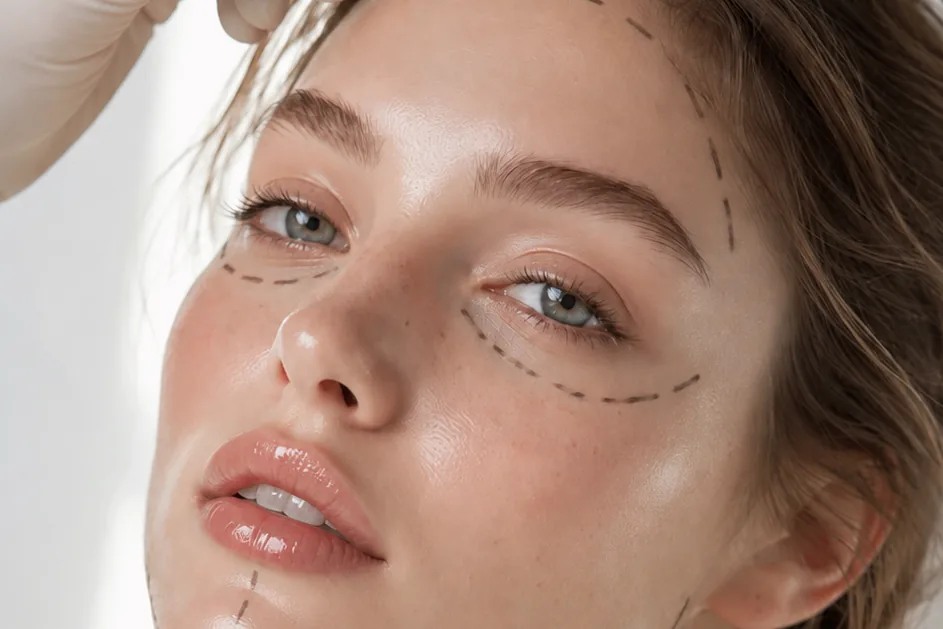
Design the crease before the day of surgery
Measured first, then the height is decided.
Your surgeon measures eyelid skin thickness, orbital fat volume, the distance from lash line to brow, and levator muscle strength. Those numbers decide what crease height will read as natural on your face.
The proposed crease is then previewed with a probe so you can see it before deciding, and both sides are checked for symmetry, since most people have naturally uneven lids to begin with.
Pre-operative assessment is a planning aid. It illustrates an expected direction, not a guaranteed outcome.
What is eye surgery?
Blepharoplasty reshapes the upper and lower eyelids to address drooping skin, ill-defined creases, under-eye bags, or excess fat, for brighter, natural-looking eyes.
Your surgeon assesses the eyelid crease, skin laxity, and overall facial balance to design a crease and incision placement tailored to you, hidden within the natural fold.
Concerns it addresses
Single / ill-defined crease
A faint or absent crease makes the eyes look small and tired.
Uneven creases
Asymmetric crease height or shape, obvious when the eyes are open.
Droopy lids (ptosis)
Lids that fall over the iris create a sleepy look and incomplete opening.
Under-eye bags / fat
Puffiness or deep grooves under the eyes make the face look fatigued.
Incisional vs Suture Double Eyelid Surgery
These two techniques differ in how much skin and fat can be adjusted. Your physician assesses eyelid thickness and the degree of laxity before recommending an approach.
| Incisional | Suture | |
|---|---|---|
| Primary goal | Adjusts skin and fat and forms the crease in a single procedure | Forms the crease without a long incision |
| Method | Incision along the crease line to adjust skin and fat | Sutures secure the crease with no open incision |
| Who it suits | Thicker eyelid skin, more fat, or skin resting over the lash line | Thin eyelid skin, limited fat, and no significant laxity |
| Early recovery | — | Less swelling and a faster early recovery |
| Later adjustment | — | Easier to adjust in the early period |
Upper vs Lower Blepharoplasty
These two groups address different concerns. Your physician assesses whether the concern sits in the upper lid or under the eye.
| Upper blepharoplasty | Lower blepharoplasty | |
|---|---|---|
| Concern addressed | Absent or uneven crease, and upper lid skin that droops | Under-eye bags, under-eye fat, and a deep tear trough |
| Primary goal | Adjusts the crease and the position of the upper lid margin | Addresses under-eye bags and under-eye fat |
| Incision | Within the eyelid crease | Beneath the lash line |
| What it does not address | Does not address under-eye bags or under-eye fat | Does not form a crease or correct a drooping upper lid |
| Who it suits | Those whose crease is unclear or whose lid skin obscures vision | Those whose under-eye bags or fat make the face look tired |
How we plan your result
The eyes are the first thing people meet. Crease height, curve, and symmetry must suit each person's orbit and brows, so the crease is designed to fit the whole face rather than set to a fixed height.
Your planning options
Who is it for
- Those with ill-defined, single, or uneven eyelid creases
- Those with drooping lids that obstruct vision or look tired
- Those with under-eye bags or fat that create a fatigued look
- Those with healthy eyes and no contraindications to surgery
03 · Technique
Choosing the technique for your eyelid
No technique is better in itself: each suits a different eyelid.
Incisional
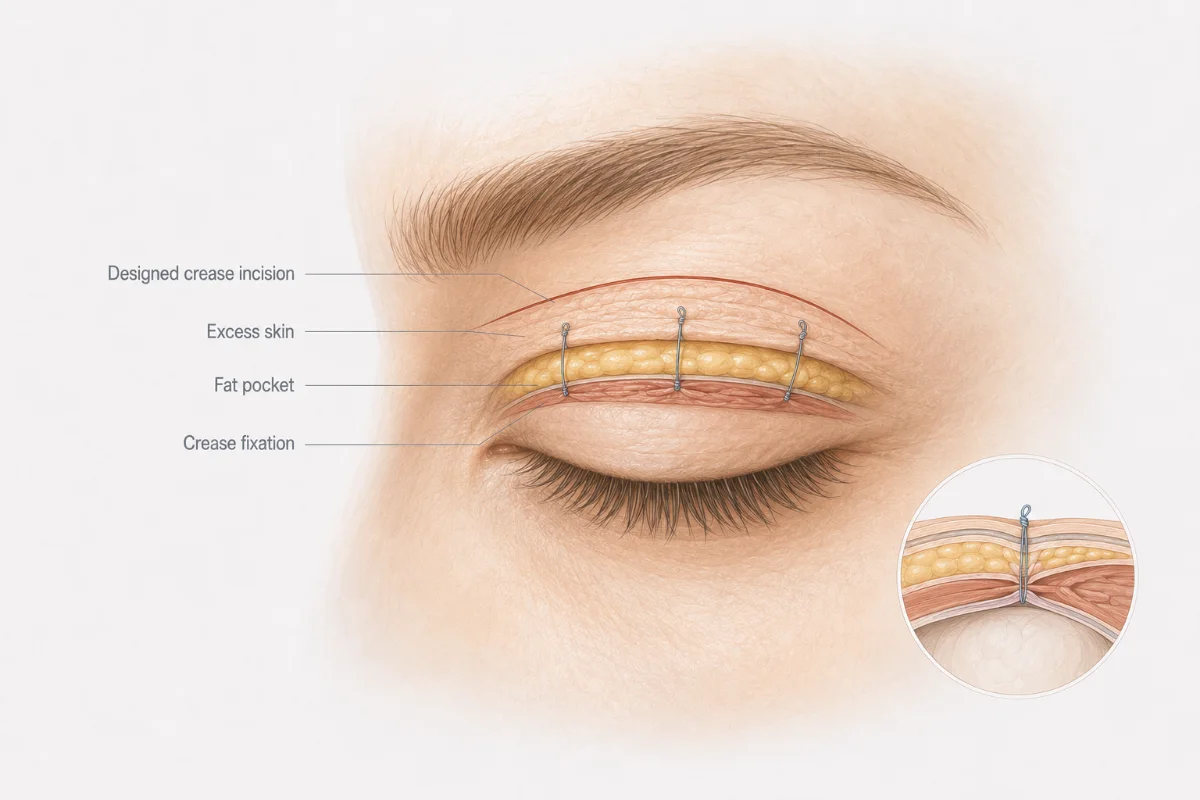
An incision is made along the designed crease so excess skin and fat can be removed directly, then the crease is fixed to the deeper tissue.
Benefits: Skin and fat are addressed in one operation, and the crease is the most defined and durable.
Suitable for: Thicker eyelid skin, more orbital fat, or skin that has begun to hang over the lash line.
Suture (non-incisional)
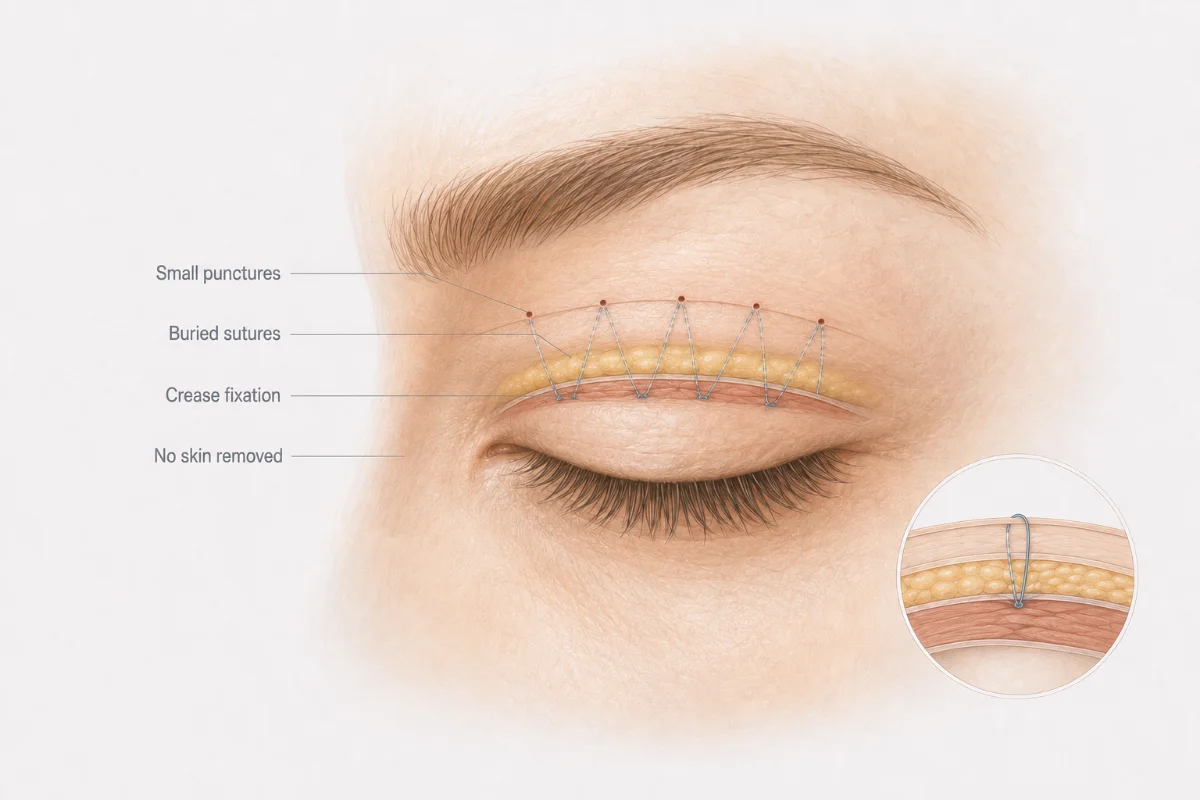
Several small punctures are made along the crease line and sutures fix the crease without removing skin.
Benefits: Less swelling, faster recovery, and easier to adjust in the early period.
Suitable for: Thin eyelid skin, limited fat, and no significant skin excess.
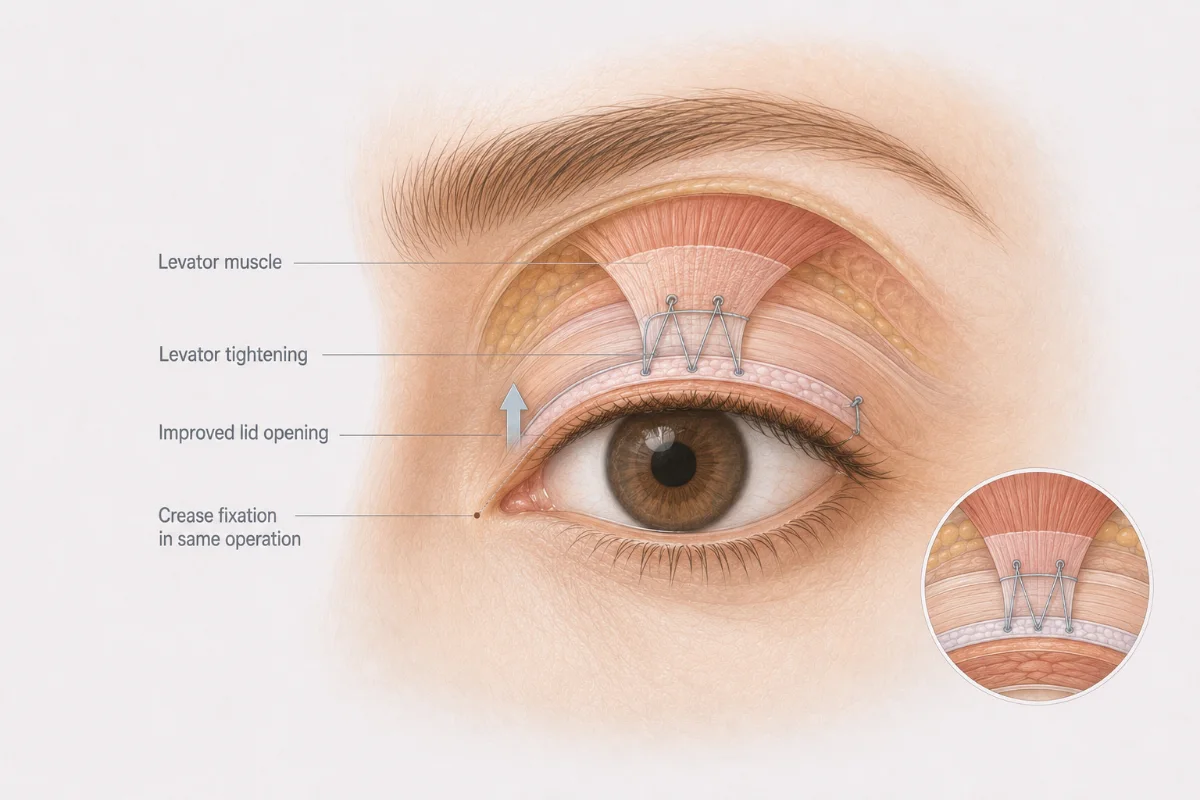
Ptosis correction
The levator muscle is tightened so the lid opens fully. It can be done in the same operation as the crease.
Benefits: Treats the cause of a sleepy-looking eye rather than only adding a crease.
Suitable for: An upper lid margin sitting lower over the iris than usual, or lifting the brow to help open the eye.
04 · Your team
Performed by board-certified plastic surgeons
This procedure is performed by the clinic's plastic surgeons at an accredited partner private hospital (JCI / AACI).

Dr. Phattrapohn Liangcheep
Plastic and Reconstructive Surgery
Diploma of the Thai Board of Plastic and Reconstructive Surgery
View full profile
Dr. Thanachot Kamolveerat
Plastic and Reconstructive Surgery
Diploma of the Thai Board of Plastic and Reconstructive Surgery
View full profile05 · Safety
Operating room standards and monitoring
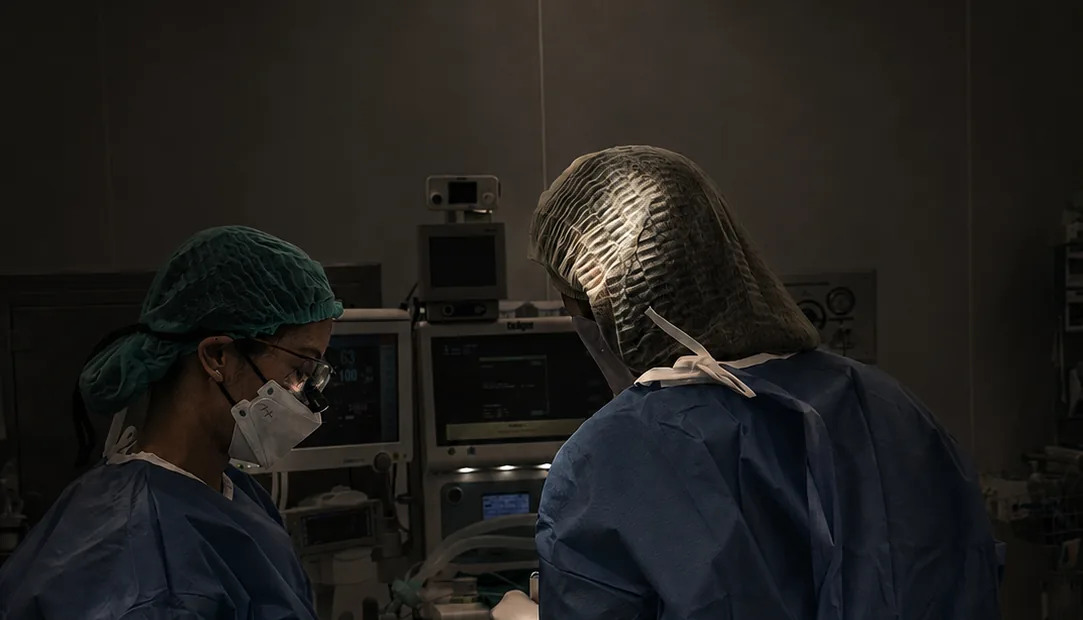
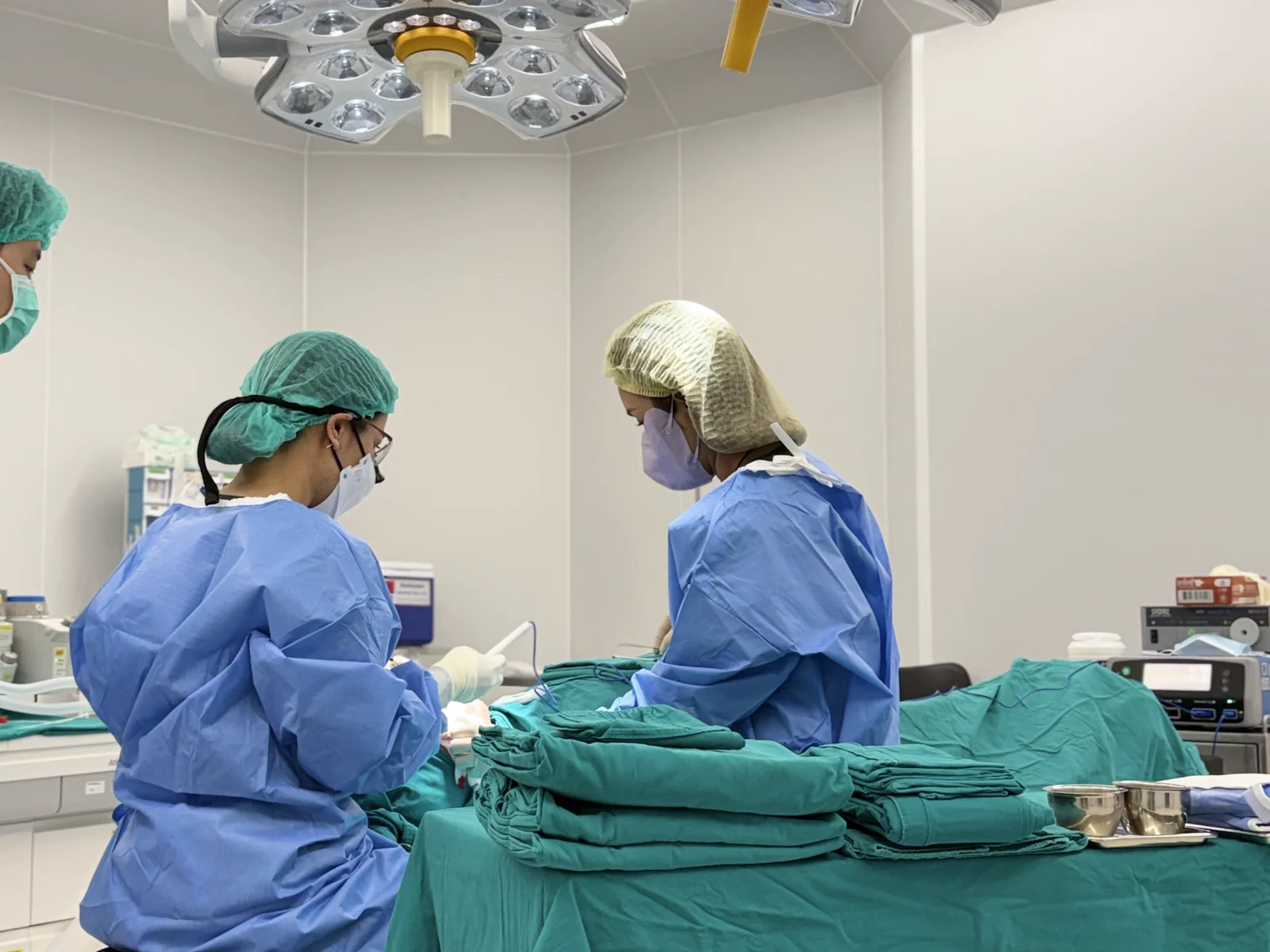
Surgery is performed in the operating room of a JCI- or AACI-accredited partner private hospital, with anesthesia care and continuous monitoring throughout.
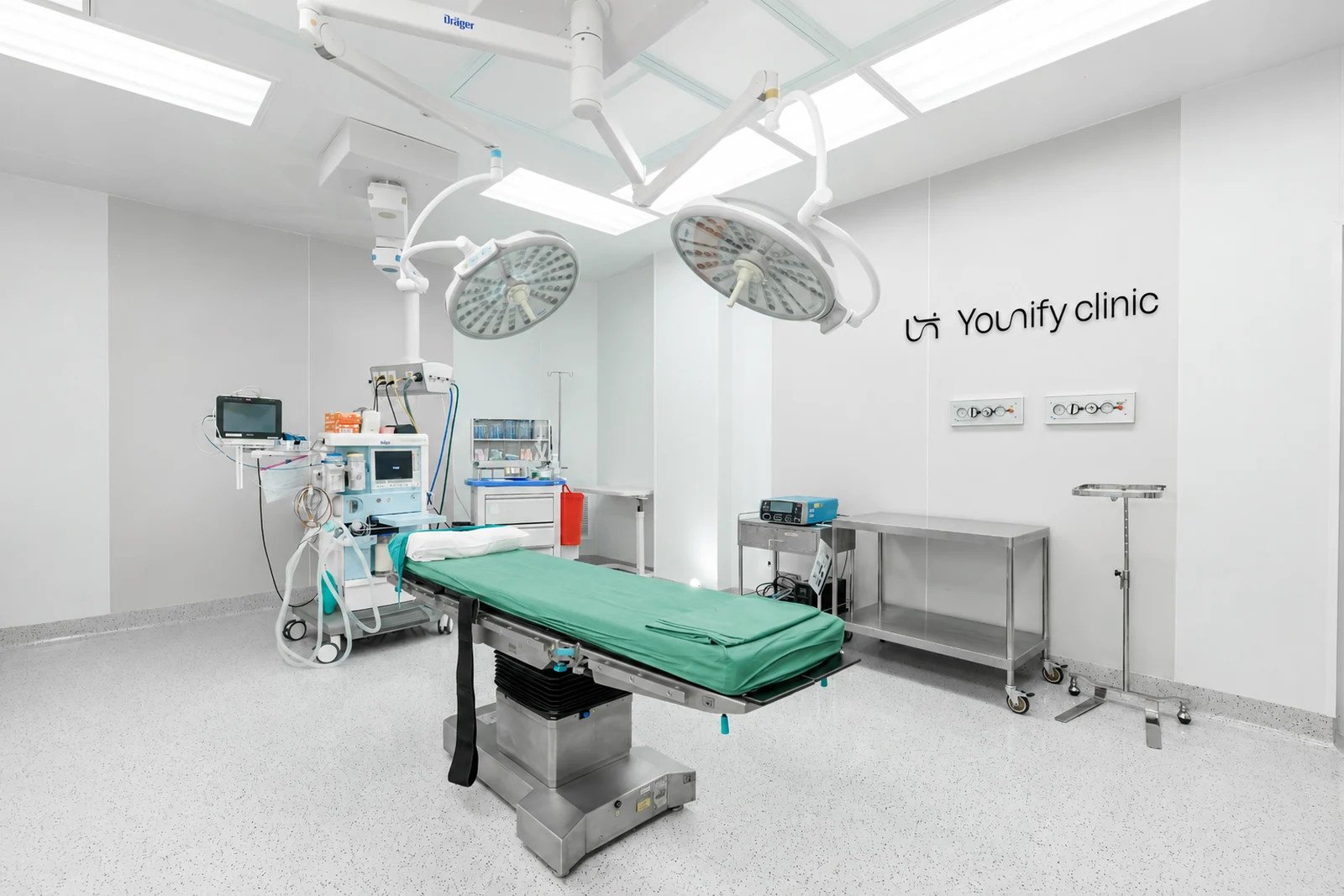
JCI- or AACI-accredited partner private hospital
Procedures are performed in a registered operating room, not a treatment room.
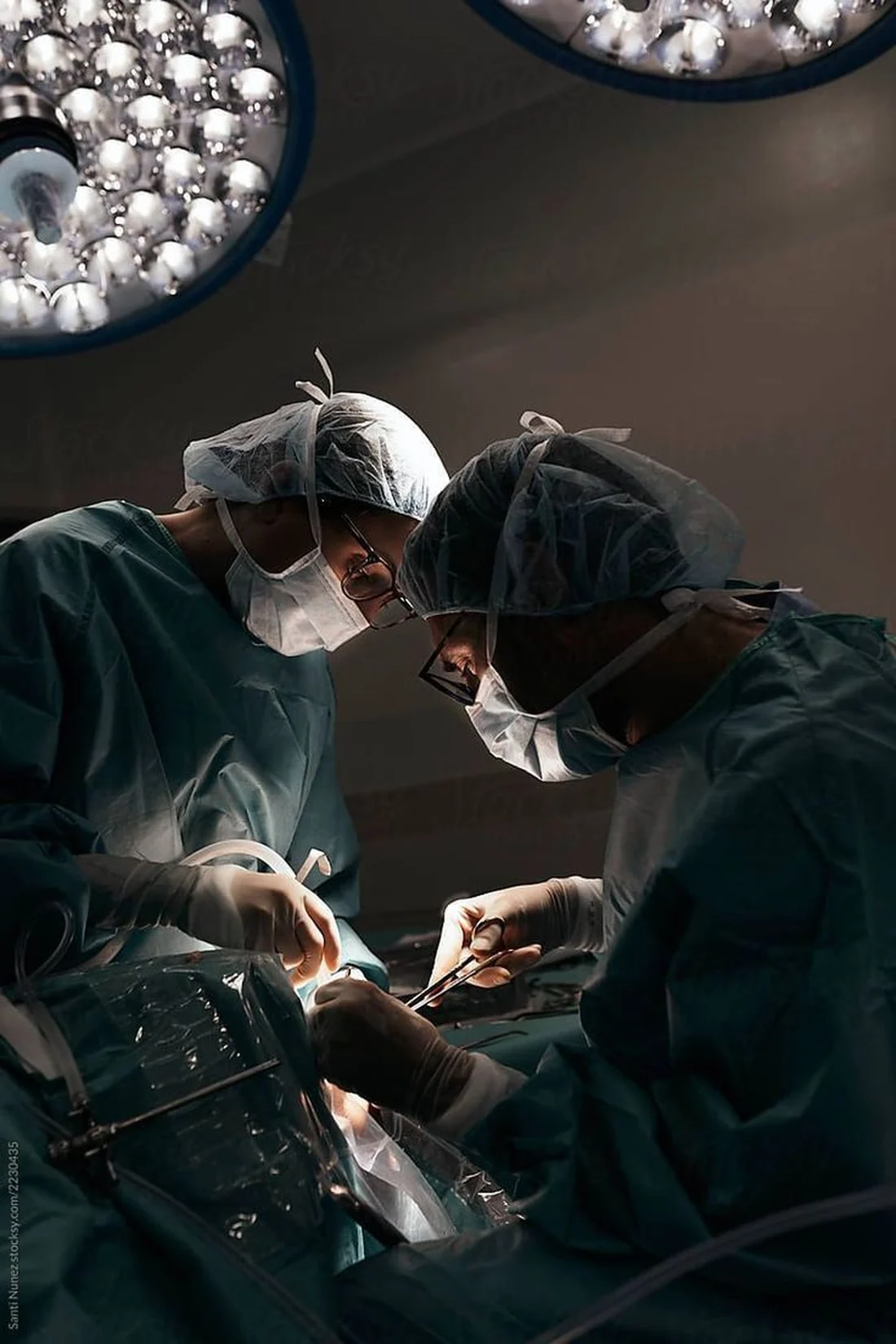
Specialist anaesthesia care
Anaesthesia is administered and monitored by a qualified anaesthesiologist for the duration of surgery.
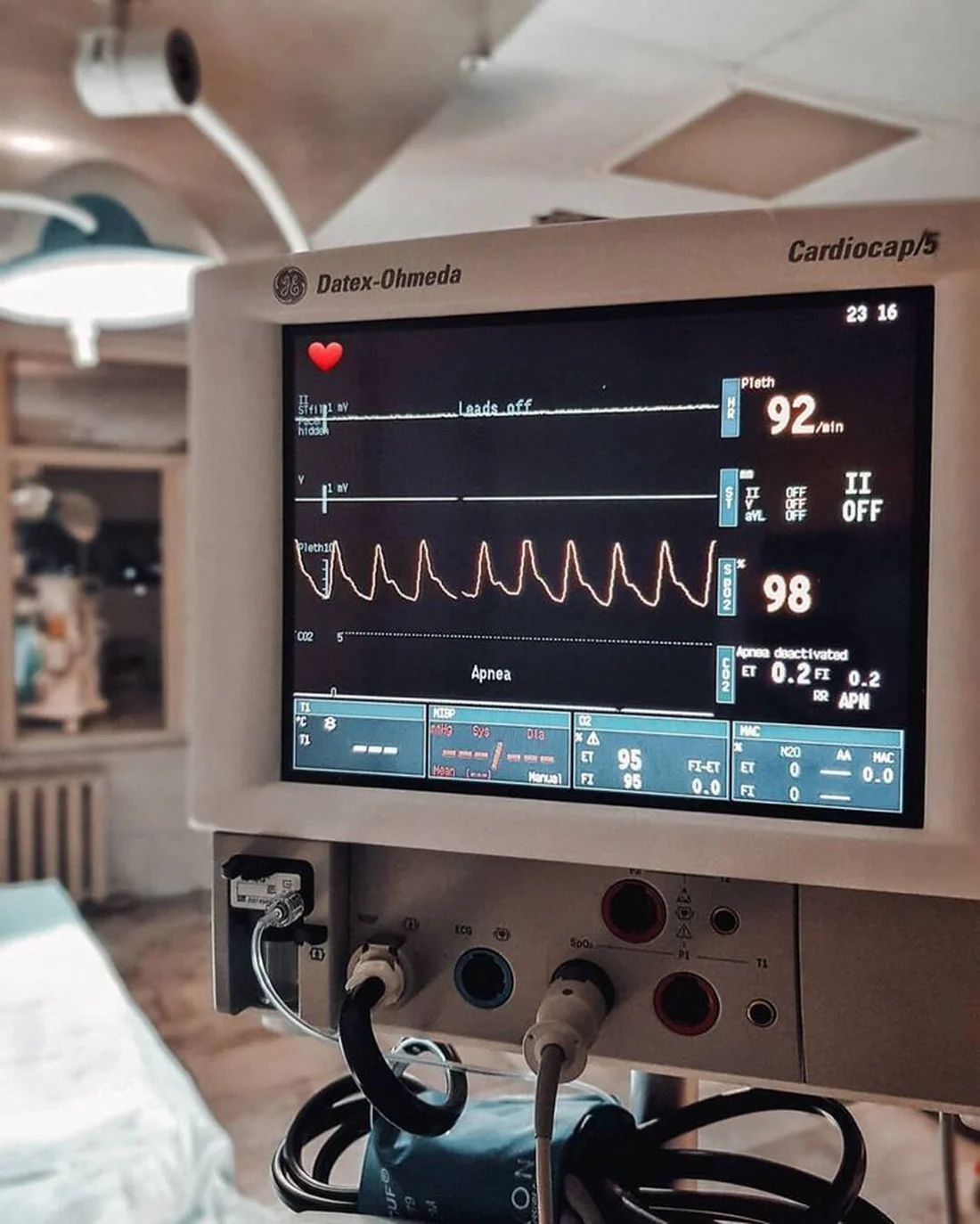
Continuous monitoring
Vital signs are monitored continuously during the procedure and through initial recovery.
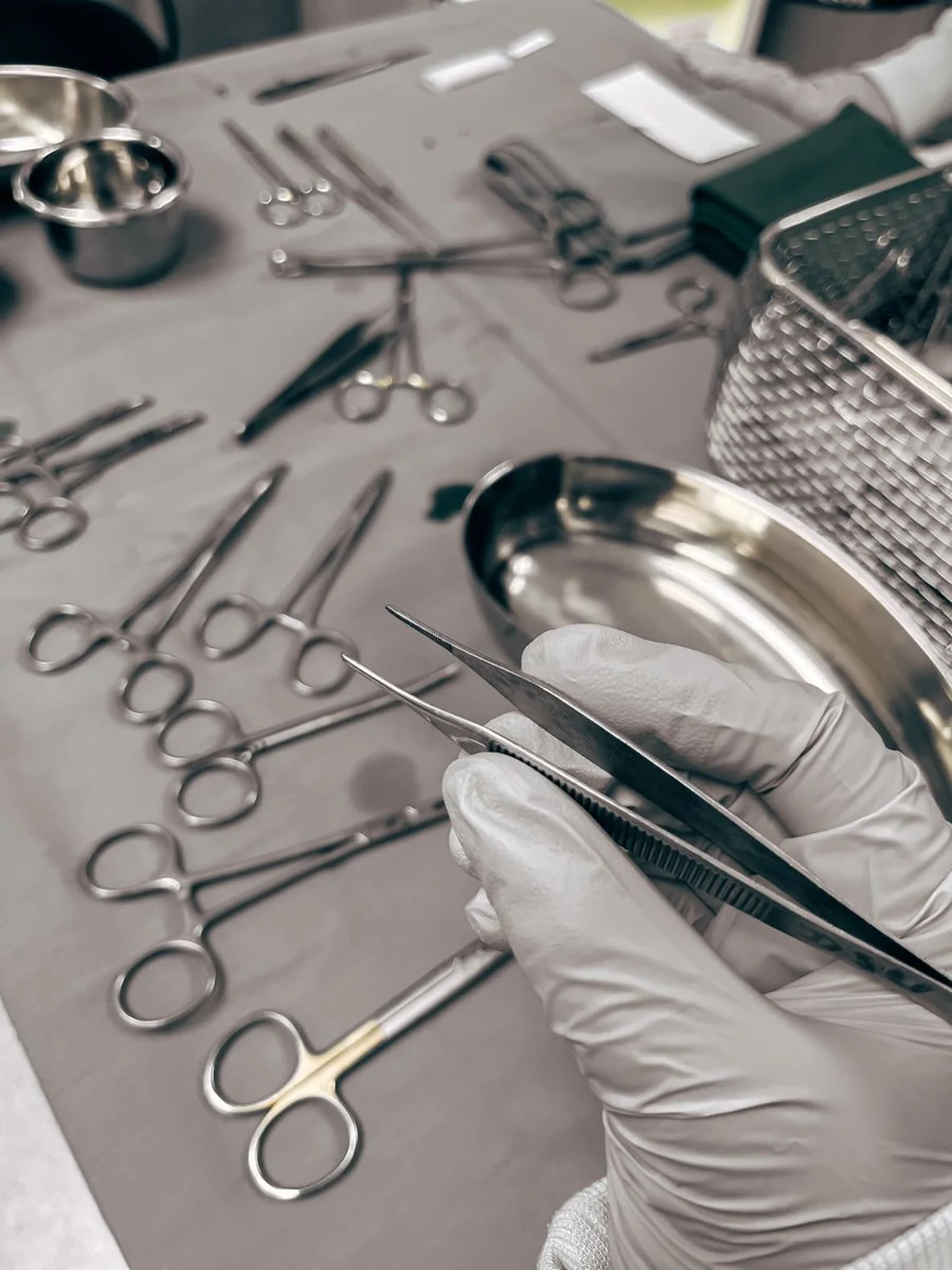
Sterile instrument protocol
Instruments and implants are handled under a documented sterile protocol.
The treatment process
Consult & design the crease
Assess lid skin, fat, and symmetry and design a crease height that fits your face.
Plan & choose the technique
Choose incisional or non-incisional based on your lids and goals.
Prepare for the procedure
Pre-procedure checks and preparation guidance.
Procedure day
Done under local anesthesia by a specialist; not lengthy.
Aftercare
Compresses, wound care, and guidance to reduce swelling and bruising.
Follow-up
Reviews to check how the crease settles, with suture removal as scheduled.
Recovery timeline
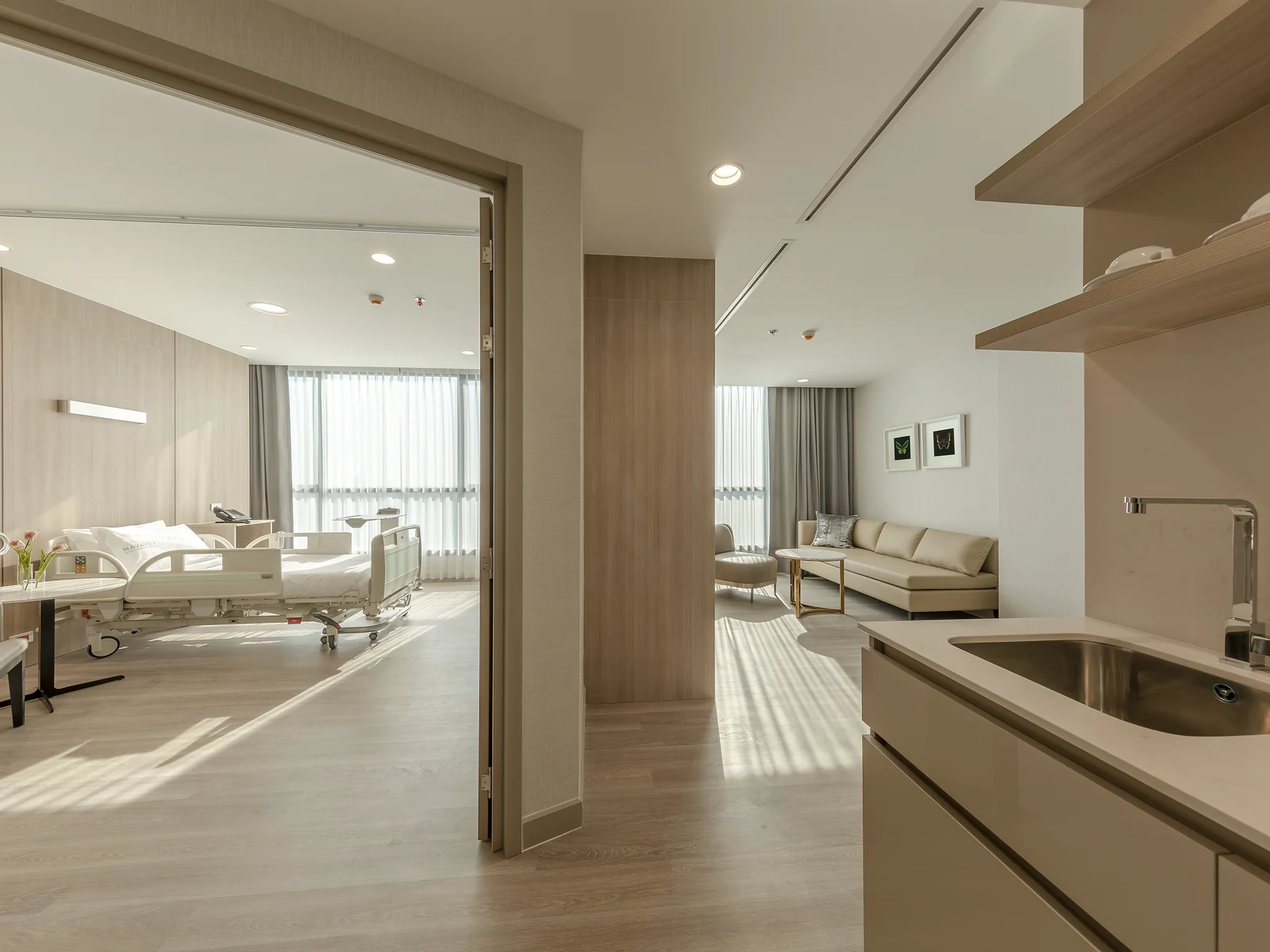
Your surgery at YOUNIFY
From the surgeon who operates to the nurses who follow up, and a private suite to recover in.

Frequently asked questions
Is double-eyelid surgery painful?
Local anesthesia is used during the procedure; mild tightness afterward is controlled with pain relief.
Will it look natural or 'done'?
Your surgeon designs the crease to match your facial structure and existing eyes for a natural result.
Will the scar be visible?
Incisions are hidden in the eyelid crease or beneath the lash line and fade to become hard to notice once healed.
When can I return to work?
Most people are comfortable returning to work and light activities about 7–10 days after surgery, by which point the sutures are out and swelling has settled.
* This information is for general education. Results and treatment plans depend on an individual medical assessment.
Related procedures
Interested in eye surgery?
Book a consultation to assess your eyelids and plan a personalized treatment with the YOUNIFY Clinic team.
Medically reviewed by Dr. Noppachai Siranart · Last reviewed
Surgery is performed by the clinic's two board-certified plastic surgeons at JCI- or AACI-accredited partner private hospitals in Bangkok.
Individual results may vary. Please consult a doctor before treatment.