
Aesthetic Surgery
Chin Implant and Chin Surgery in Bangkok, Thailand
A chin implant adds forward projection to a short or set-back chin. At YOUNIFY Clinic, a Healthy Aging & Wellness Center based in Bangkok, Thailand, a chin implant starts from THB 59,000, sliding genioplasty from THB 160,000, and chin reduction from THB 160,000. Surgery is performed by the clinic's two board-certified plastic surgeons, and your price is confirmed in a written quotation before any deposit.
Clinic open daily, 11:00 to 20:00 (Bangkok time) · Online enquiries answered 24 hours a day

At a glance
- Procedure
- Chin implant (alloplastic chin augmentation)
- Starting from (THB)
- Chin Implant (Augmentation) from 59,000
- Hospital stay
- Day case
- Time in Bangkok
- Approximately 7 days from the day of surgery
- Who operates
- Two board-certified plastic surgeons
- Where
- Partner private hospital accredited by JCI / AACI
- Last reviewed
- August 31, 2026
Key Takeaways
- A chin implant changes your profile by bringing the chin forward; genioplasty moves the chin bone itself.
- An implant usually suits a mild to moderately short chin; larger or vertical changes often suit genioplasty.
- A chin implant at YOUNIFY Clinic starts from THB 59,000, and a combined jaw and chin implant from THB 100,000.
- Your surgeon reviews your photographs by video before you travel, and your written quotation comes before any deposit.
Price list
Procedures in this table start from THB 59,000 to THB 160,000 per procedure; the final plan is confirmed in a written quotation after assessment.
| Procedure | Starting Thailand price (฿) | Starting Thailand price (AUD) | Standard Australia price (AUD) |
|---|---|---|---|
| Chin Augmentation / Reshaping | |||
| Chin Implant (Augmentation) | THB 59,000 | A$2,565 | A$5,249 |
| Chin Reduction / Reshaping | THB 160,000 | A$6,957 | A$12,000 |
* Indicative prices for reference only. Some items are priced per area. Final pricing depends on an individual assessment. Overseas prices are indicative market estimates for comparison only. Contact our team for a personalized quote.
Your final quote follows an individual medical assessment. You receive a written quotation before any deposit.
Plan your trip
All figures are approximate and intended for travel planning. Results vary by individual, and your doctor confirms the plan case by case. Please consult a physician before treatment.
Implant, genioplasty or filler
| Route | Suits | Lasts | Starting from (THB) |
|---|---|---|---|
| Chin implant | A mild to moderately short or set-back chin | Long term | 59,000 |
| Sliding genioplasty (moving the chin bone) | A very short chin, a long chin, or asymmetry | Long term | 160,000 |
| Dermal filler | A small change, or trying a change before surgery | Temporary | 13,000 per cc |
A 2025 systematic review of 1,126 patients found that implants suited mild to moderate deficiency with faster recovery, while genioplasty suited larger and three-dimensional corrections. Read chin implant or genioplasty and chin implant or chin filler.
Care you can measure
Figures from the YOUNIFY surgical program.

01 · Planning
Measure the profile before choosing a method
The chin is judged on a side view, not head-on.
Projection is measured against the nasal bridge and lips on a standardised profile photograph, alongside chin height, soft-tissue thickness and the dental bite.
The bite is the key distinction: if the chin sits back because the whole jaw does, augmenting the chin alone changes appearance but not occlusion, and that is made explicit before you decide.
Pre-operative assessment is a planning aid. It illustrates an expected direction, not a guaranteed outcome.
What is chin surgery?
Chin surgery adjusts the shape and position of the chin, augmenting a short or weak chin with a medical-grade implant, or reducing an over-projected one, to balance the side profile.
Your surgeon assesses your profile, bone structure, and goals to choose the right implant size or bone adjustment, through a small incision inside the mouth or under the chin.
Concerns it addresses
Short / recessed chin
A chin set back makes the face look short and the nose more prominent.
Asymmetric chin
A chin tip tilted to one side leaves the two halves of the face unbalanced.
Wide / square chin
A broad or angular tip makes the lower face read as heavy.
Weak jawline
Loose fat under the chin blurs the line between chin and neck.
Chin Implant vs Sliding Genioplasty
These two approaches differ in how many dimensions can be adjusted. Your physician assesses chin projection, chin height, and the bite before recommending an approach.
| Implant | Sliding genioplasty | |
|---|---|---|
| Primary goal | Mainly increases chin projection | Adjusts projection, height, and asymmetry together |
| Method | An implant is placed on the chin bone | The patient's own chin bone is repositioned |
| Material | Medical-grade implant material | The patient's own bone, with no foreign material |
| Strength | Shorter operating time, faster recovery, and the implant can be removed or resized later | Adjusts several dimensions in one procedure using the patient's own bone |
| Who it suits | Those whose chin height and bite are already normal | Those whose chin is too long or too short, asymmetric, or needs several adjustments |
Chin Implant vs Dermal Filler Augmentation
These two options differ in how long the result lasts and how much can be changed. Your physician explains the advantages and limitations of both before you decide.
| Chin implant | Dermal filler | |
|---|---|---|
| Duration of result | Permanent | Temporary, and absorbed over time |
| Extent of change | Supports the chin framework | Suited to small refinements |
| Type of procedure | Surgical, with the incision usually hidden inside the mouth | Non-surgical |
| Later adjustment | Can be removed or resized later | Absorbs on its own over time |
Chin implants for men
For many men the chin decides how strong the jawline looks in profile. When the chin sits behind the line of the lower lip, the jaw can look soft even when the jaw angle is well formed, and a chin implant is often the single change that makes the difference. Your surgeon looks at your profile, the distance between your lower lip and chin, and the width of your chin from the front before recommending a size and shape. The aim is a chin that sits in proportion with your nose, lips and neck, not the largest change available.
When the jaw angle is also narrow, a chin implant can be combined with a jaw implant as one continuous lower border, listed starting from THB 100,000. See jaw implants in Bangkok and facial implants for men.
How we plan your result
In facial aesthetics the face divides into three equal thirds, and the chin closes the lower third. A few millimetres too short or too long shifts the balance of the whole face, so the chin is planned against the entire face, not in isolation.
Your planning options
Who is it for
- Those with a short, weak, or receding chin that unbalances the face
- Those with an over-projected or long chin
- Those wanting a more balanced side profile
- Those in good health with no contraindications to surgery
Your approach options
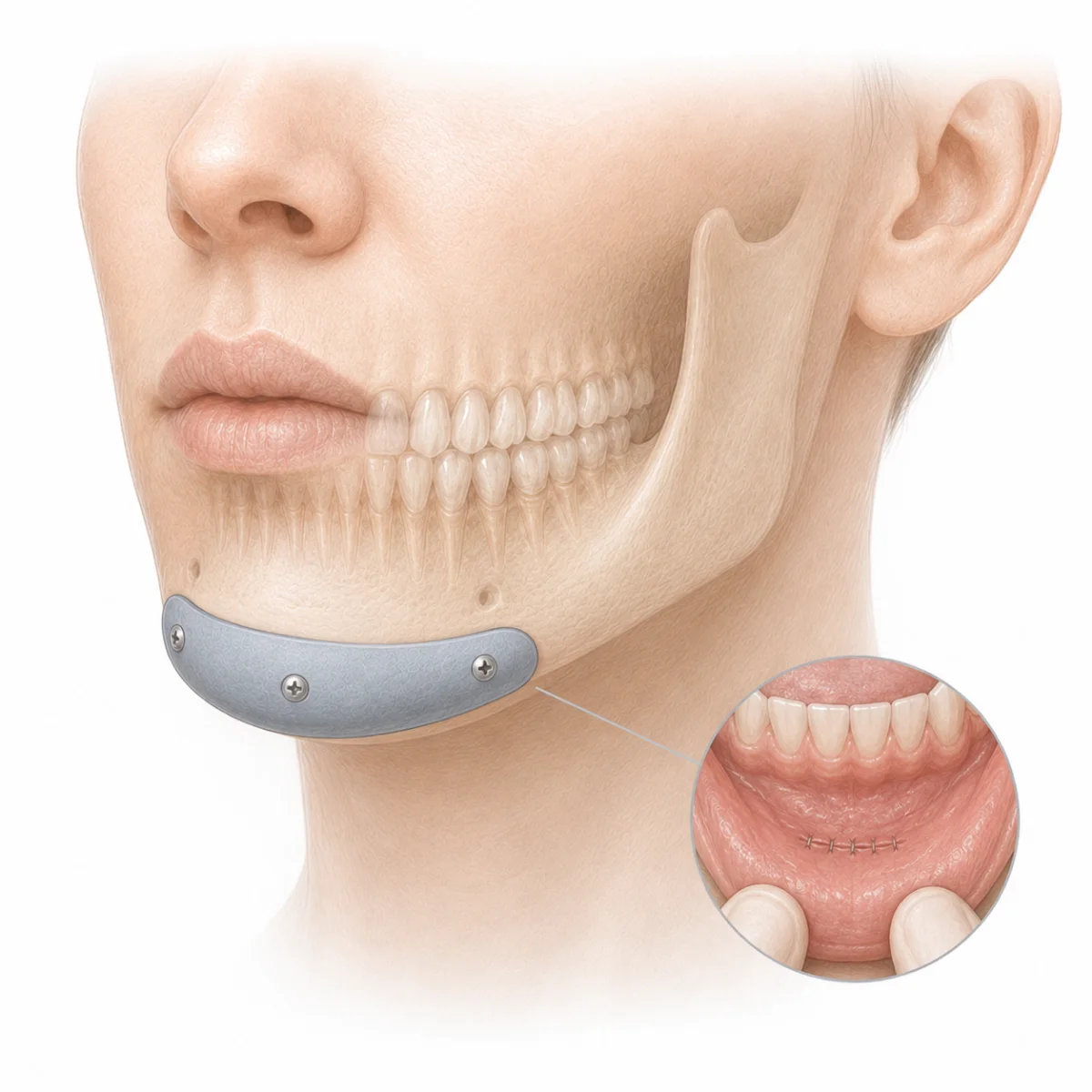
Intraoral incision
Advantages · No visible scar on the outside at all.
Limitations · Requires strict oral hygiene during recovery.
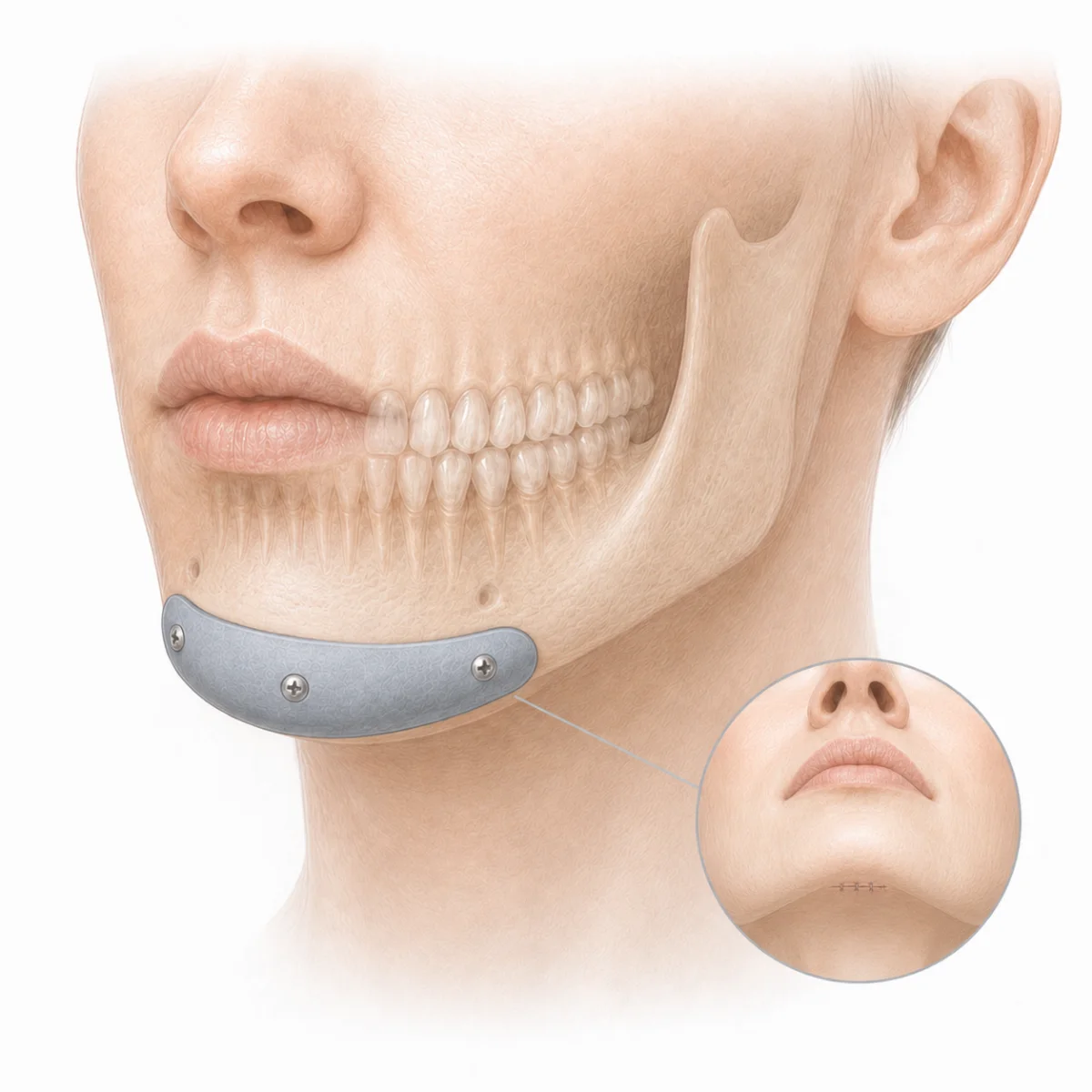
Submental incision
Advantages · A clear view for precise implant placement and easy wound care.
Limitations · A small scar under the chin, hidden in shadow and fading as it heals.
03 · Technique
Implant or moving the bone
Both add projection. They differ in whether height can be changed, and whether it can be reversed.
Chin implant
A shaped implant is placed on the chin bone through an incision inside the mouth or under the chin, and fixed in position.
Benefits: Shorter operation, faster recovery, and it can be removed or exchanged for a different size later.
Suitable for: Mainly wanting more projection, where chin height and bite are already fine.
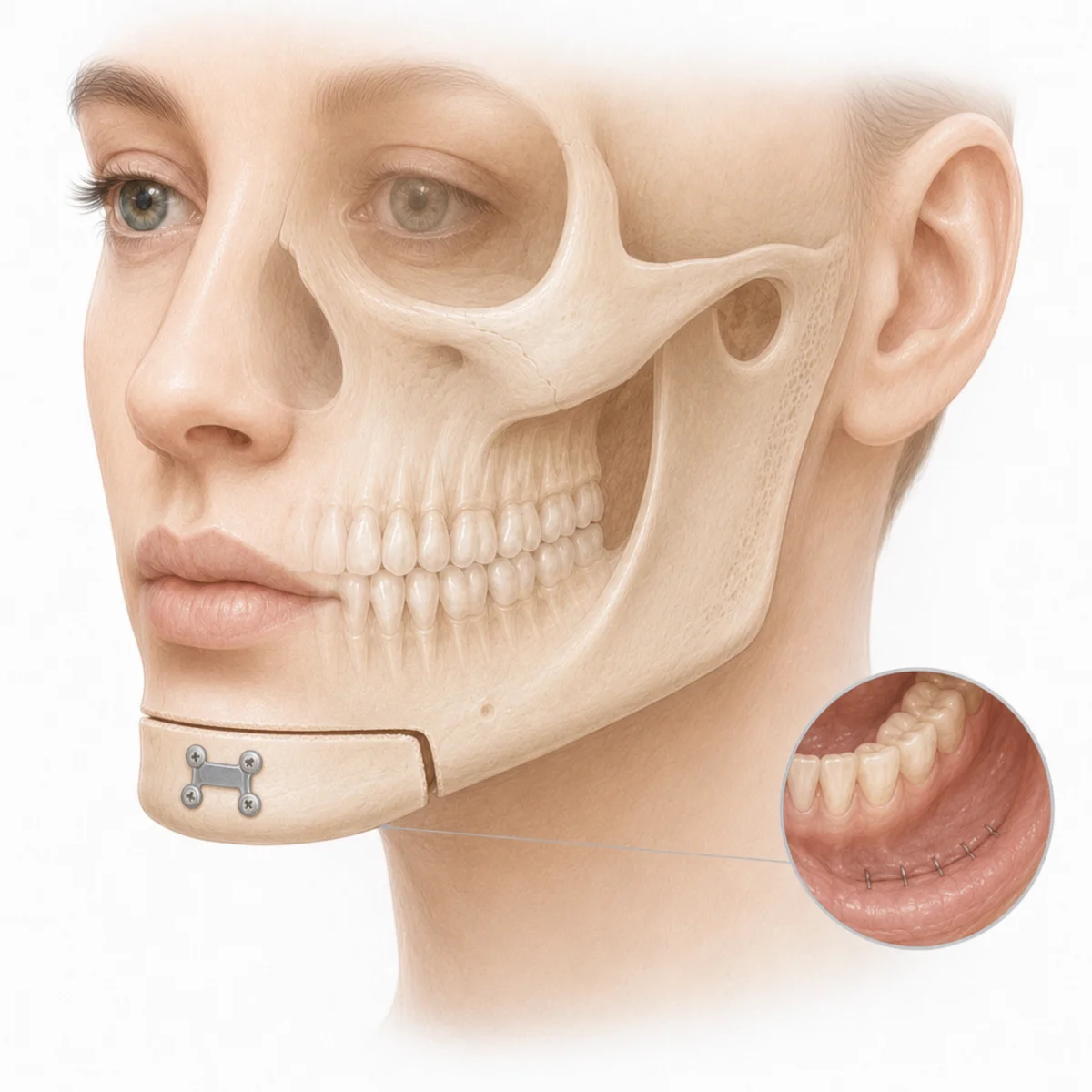
Sliding genioplasty
The lower chin bone is cut and moved forward, up, down or rotated to correct asymmetry, then fixed with a plate.
Benefits: Adjusts projection, height and asymmetry using your own bone, with no foreign material.
Suitable for: A chin that is too long or short, asymmetric, or needing several dimensions changed at once.
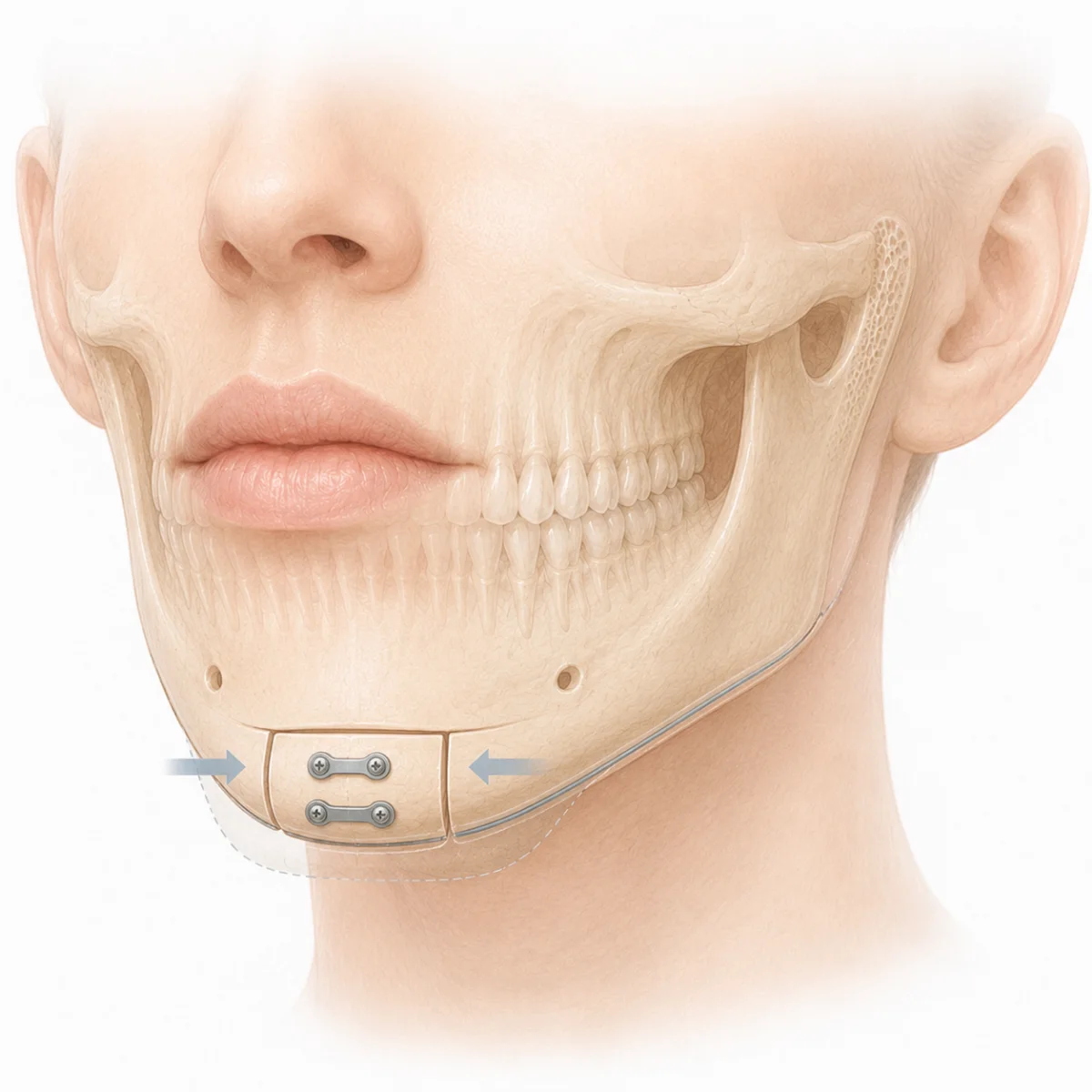
Chin reduction
Reduces the width or length of a chin bone that projects or is large relative to the face.
Benefits: Rebalances the lower face against the jaw and the midface.
Suitable for: A chin long or wide enough to look out of proportion with the rest of the face.
Coming to Bangkok for a chin implant
Send photographs straight on, in profile and at three-quarter view on WhatsApp, which is answered 24 hours a day.
A surgeon reviews them with you by video and explains whether an implant, genioplasty or filler suits what you are asking for.
Your plan and written quotation are confirmed before any deposit.
Surgery takes place at a JCI- or AACI-accredited partner private hospital in Bangkok.
For a chin implant alone, most patients plan about 7 days in Bangkok from the day of surgery and fly home after the surgeon's final review.
Read chin implant recovery for a day-by-day view, and planning a chin or jaw implant abroad for a checklist.
04 · Your team
Performed by board-certified plastic surgeons
This procedure is performed by the clinic's plastic surgeons at an accredited partner private hospital (JCI / AACI).

Dr. Phattrapohn Liangcheep
Plastic and Reconstructive Surgery
Diploma of the Thai Board of Plastic and Reconstructive Surgery
View full profile
Dr. Thanachot Kamolveerat
Plastic and Reconstructive Surgery
Diploma of the Thai Board of Plastic and Reconstructive Surgery
View full profile05 · Safety
Operating room standards and monitoring
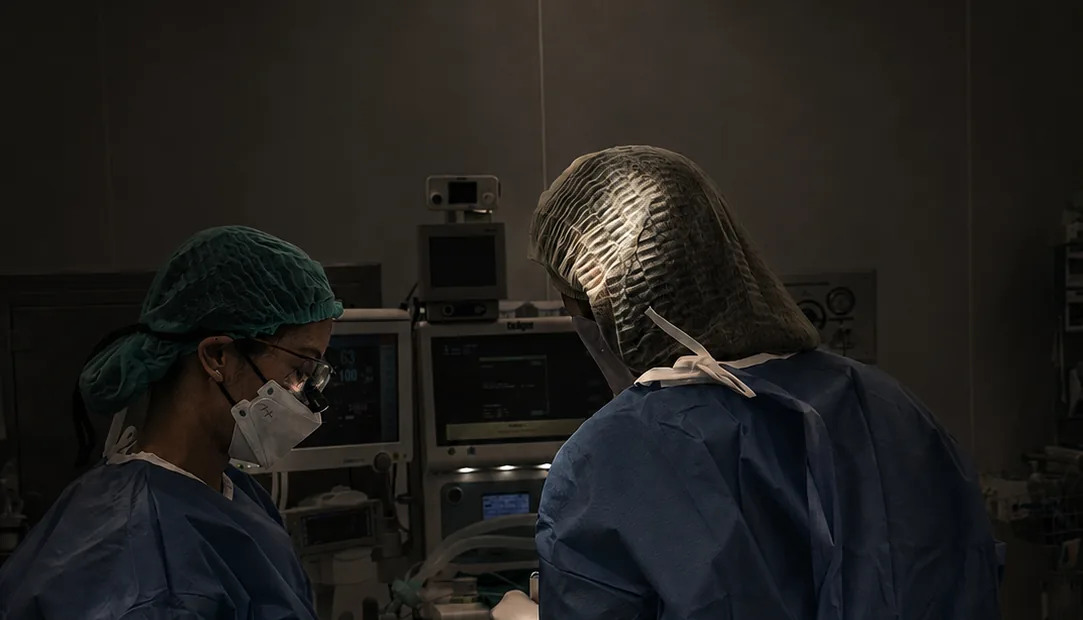
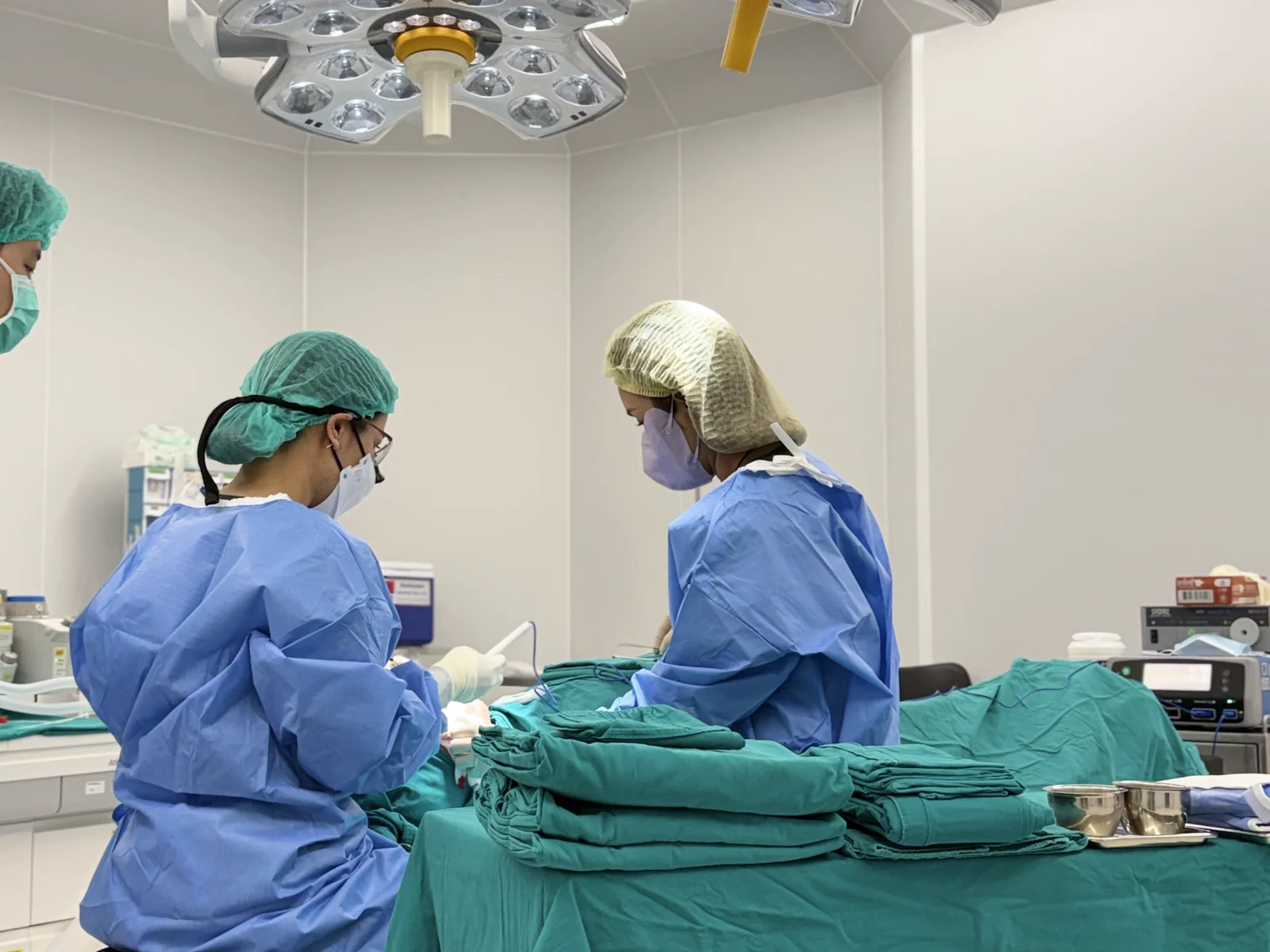
Surgery is performed in the operating room of a JCI- or AACI-accredited partner private hospital, with anesthesia care and continuous monitoring throughout.
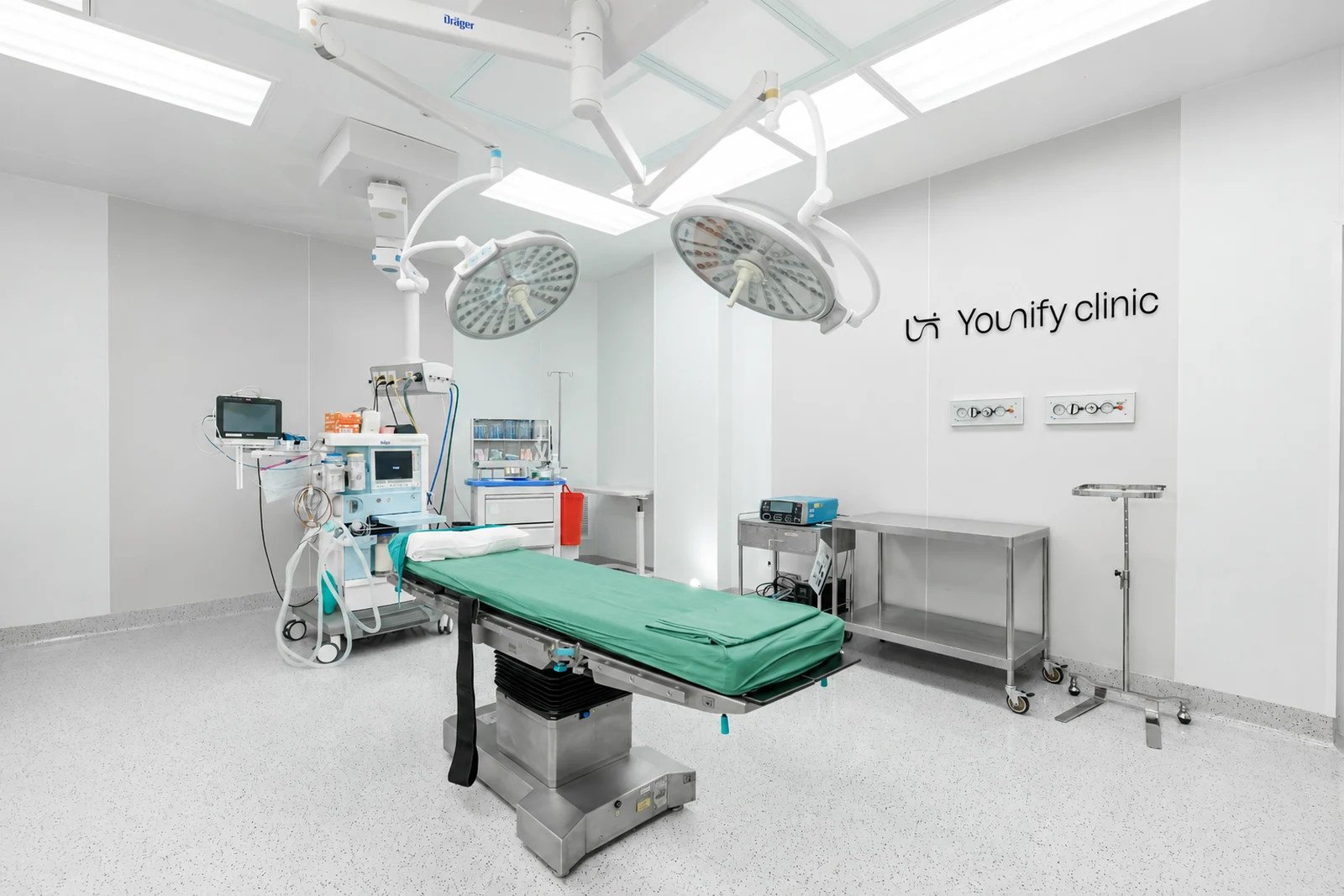
JCI- or AACI-accredited partner private hospital
Procedures are performed in a registered operating room, not a treatment room.
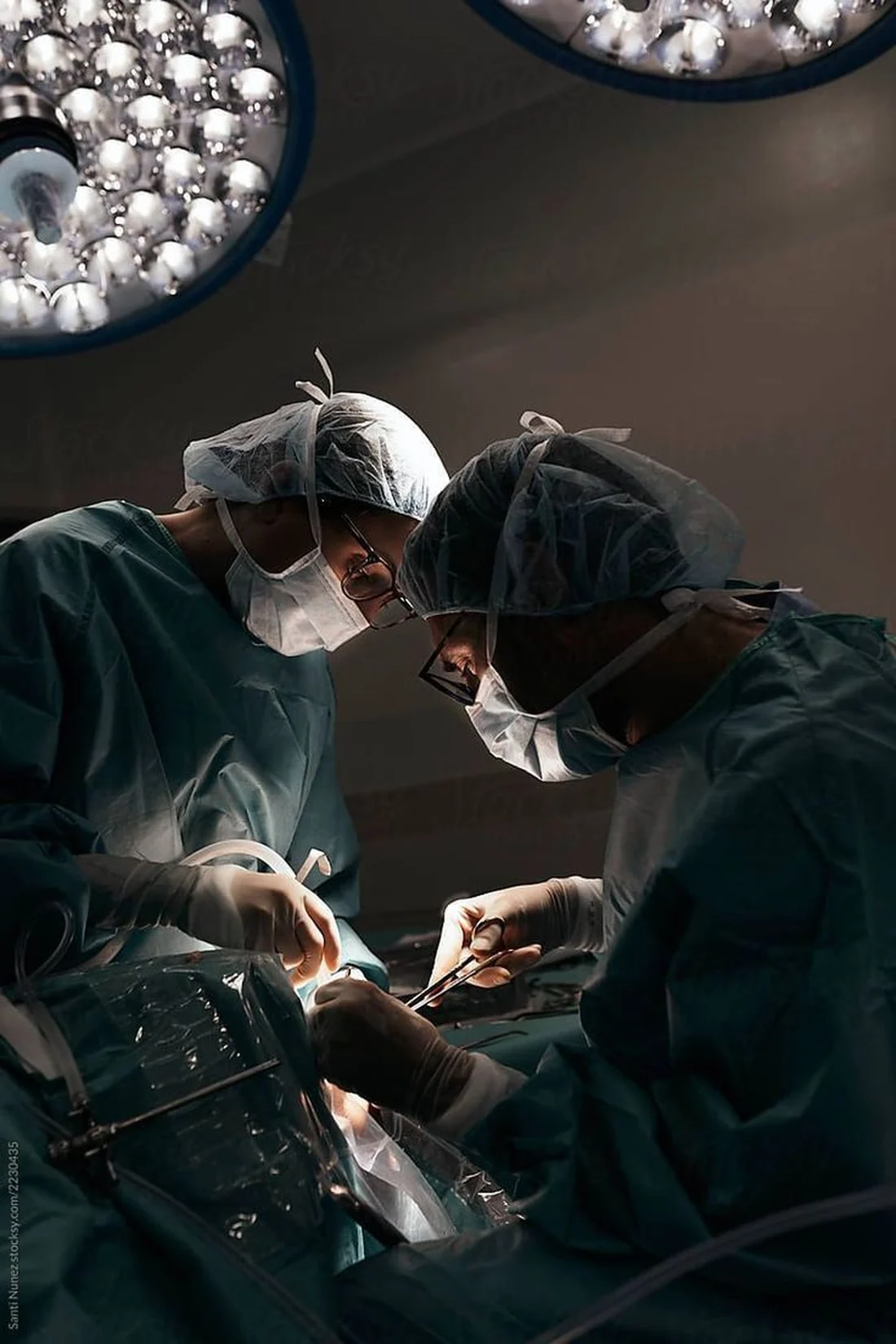
Specialist anaesthesia care
Anaesthesia is administered and monitored by a qualified anaesthesiologist for the duration of surgery.
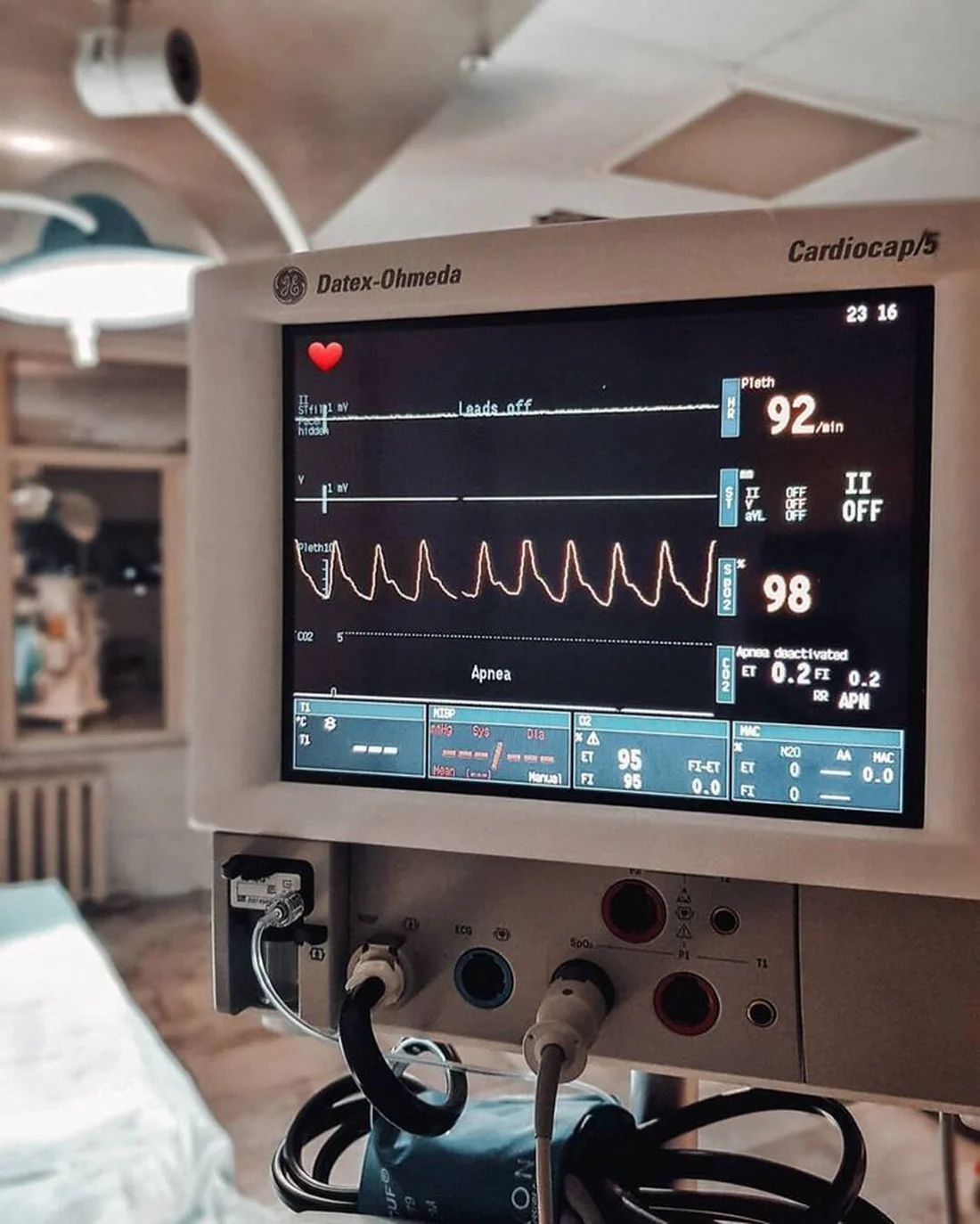
Continuous monitoring
Vital signs are monitored continuously during the procedure and through initial recovery.
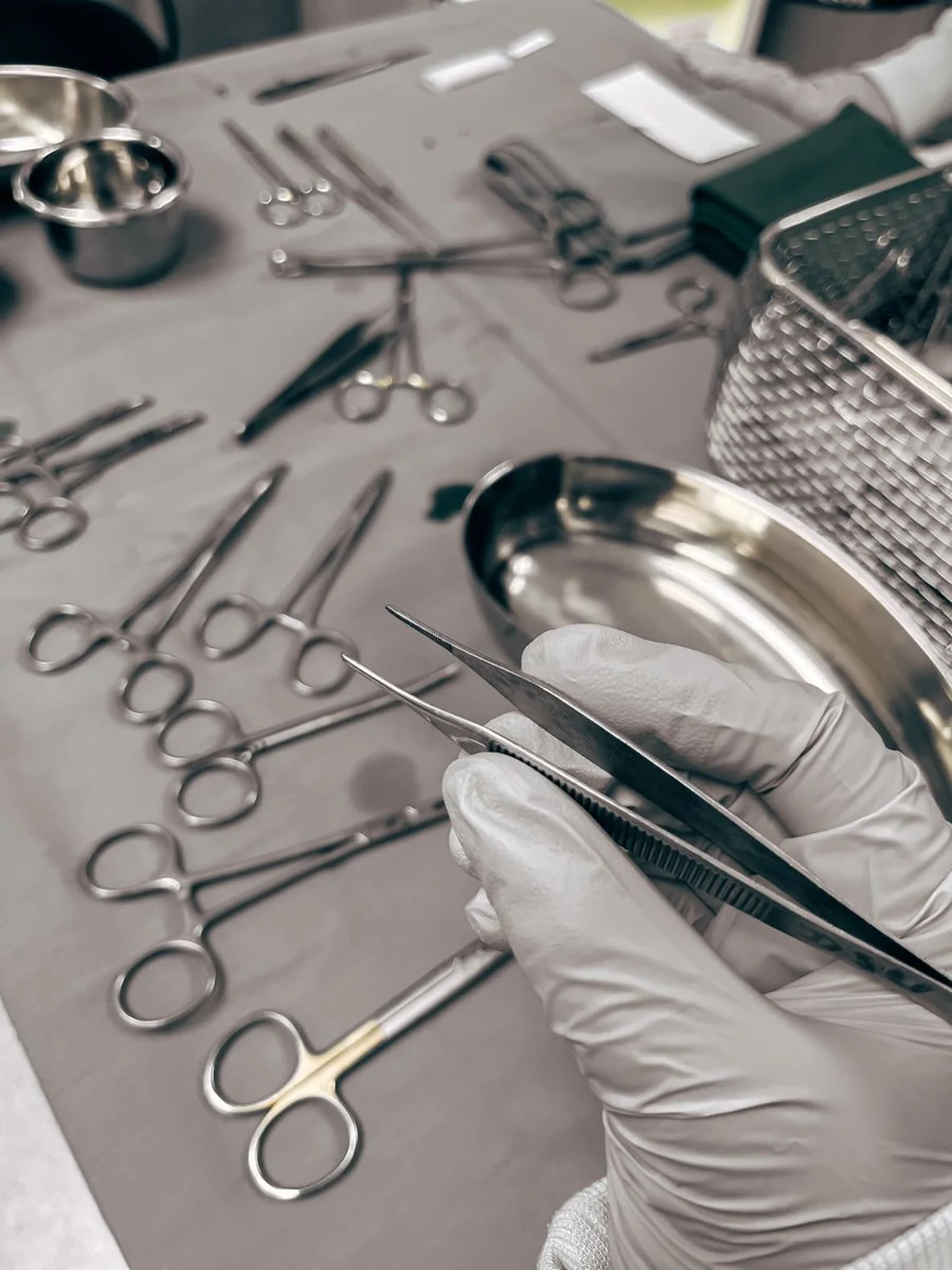
Sterile instrument protocol
Instruments and implants are handled under a documented sterile protocol.
The treatment process
Consult & analyze the profile
We assess proportion, chin position, nose, and jawline, and listen to your goals.
Plan & measure
Plan the size and shape for your structure, and explain material and incision options.
Choose material & prepare
Select the right implant/technique and complete pre-op checks.
Surgery day
Performed in a standard operating room by anesthesia and facial-surgery specialists.
Aftercare
A swelling-reduction program, wound-care guidance, and a channel to reach the team.
Follow-up
Scheduled reviews to check how the chin shape settles.
Recovery timeline
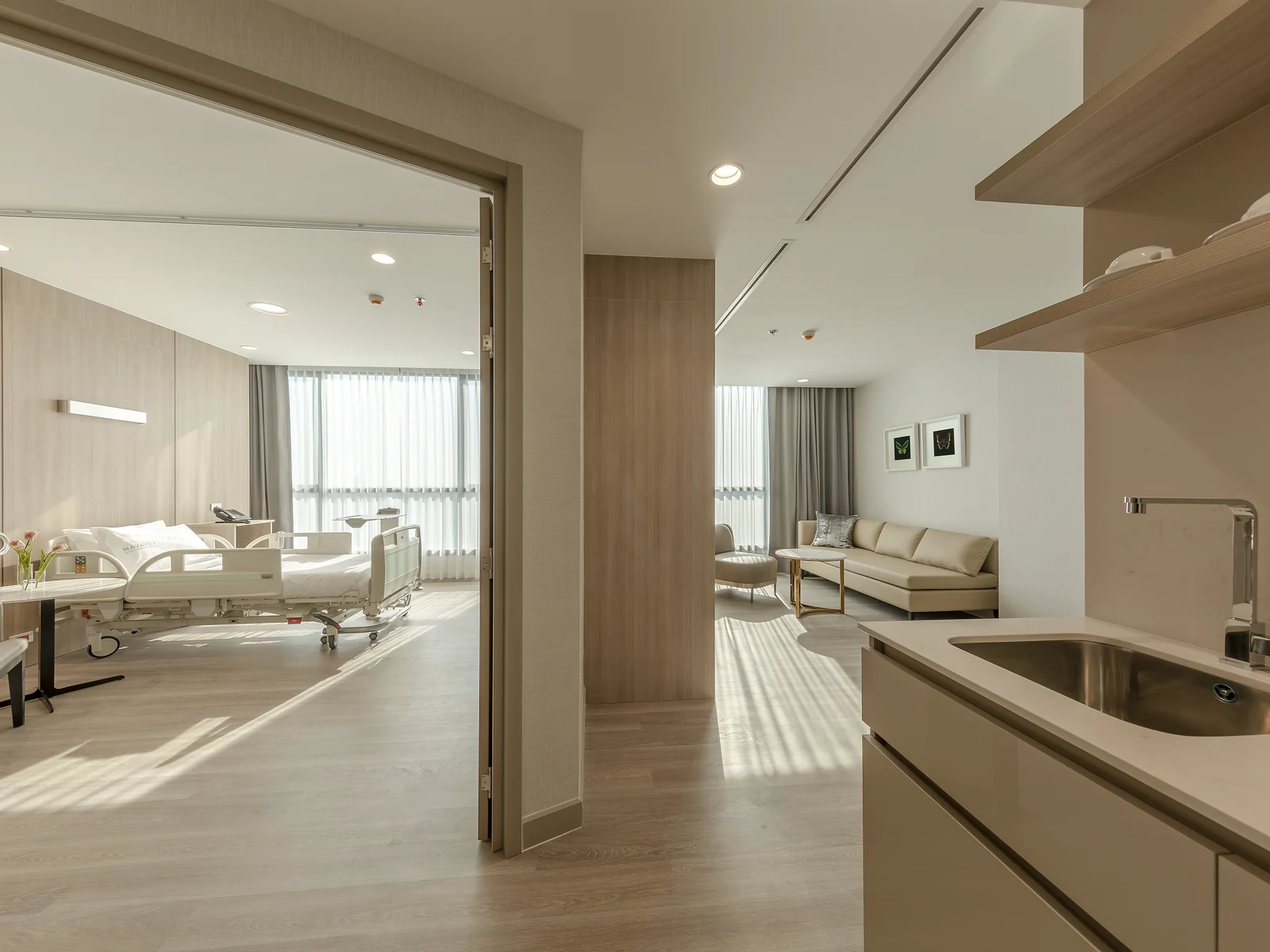
Your surgery at YOUNIFY
From the surgeon who operates to the nurses who follow up, and a private suite to recover in.

Frequently asked questions
Implant vs. filler for the chin?
An implant is permanent and supports structure better; filler is temporary and suits minor refinement.
Can a chin implant move or be removed?
Implants are designed to stay in place, and size and fixation are chosen to reduce movement. An implant can be removed or replaced if needed. Read chin and jaw implant risks.
Where is the incision?
Usually hidden inside the mouth with no external scar; some techniques use a small incision under the chin.
Is it painful?
Tightness and swelling are expected at first and controlled with pain relief, improving within a few days.
How much is a chin implant in Bangkok?
At YOUNIFY Clinic a chin implant starts from THB 59,000. Your final price is confirmed in a written quotation after assessment, before any deposit.
Is a chin implant a good option for men?
It is one of the most common ways to strengthen the profile when the chin sits behind the lower lip. Your surgeon checks whether an implant, genioplasty or a combined jaw and chin implant suits your face better.
When can I fly home after a chin implant?
Your surgeon confirms this at your final review in Bangkok, usually about 7 days after surgery.
Can I combine a chin implant with a jaw implant or rhinoplasty?
Often, yes, in one operation where your surgeon agrees it suits you. A combined jaw and chin implant starts from THB 100,000. A combined plan is priced as a plan in your written quotation, not by adding starting prices together.
* This information is for general education. Results and treatment plans depend on an individual medical assessment.
Related procedures
Interested in chin surgery?
Book a consultation to assess your profile and plan a personalized treatment with the YOUNIFY Clinic team.
Medically reviewed by Dr. Noppachai Siranart · Last reviewed
Surgery is performed by the clinic's two board-certified plastic surgeons at JCI- or AACI-accredited partner private hospitals in Bangkok.
Individual results may vary. Please consult a doctor before treatment.