Aesthetic Surgery
Nasolabial Fold Correction in Bangkok
Midface volume restored to soften the fold, planned from what is actually causing it in your face.
Clinic open daily, 11:00 to 20:00 (Bangkok time) · Online enquiries answered 24 hours a day

Price list
| Procedure | Starting Thailand price (฿) | Starting Thailand price (AUD) |
|---|---|---|
| Nasolabial correction with facelift | ||
| Nasolabial Correction with Facelift | THB 219,000 | A$9,522 |
* Indicative prices for reference only. Some items are priced per area. Final pricing depends on an individual assessment. Overseas prices are indicative market estimates for comparison only. Contact our team for a personalized quote.
Your final quote follows an individual medical assessment. You receive a written quotation before any deposit.
Care you can measure
Figures from the YOUNIFY surgical program.

01 · Planning
Assess the midface before choosing an approach
Know what is actually causing your fold.
Standardised photography plus an assessment of cheek-fat position, skin elasticity and cheekbone volume separates volume loss from tissue descent.
That distinction decides whether volume is added, tissue is repositioned, or both, and the three produce meaningfully different results.
Simulation is a planning aid. It illustrates an expected direction, not a guaranteed outcome.
What this procedure is
The nasolabial fold runs from beside the nose to the corner of the mouth. Its depth is usually not caused by the fold itself but by cheek fat descending and midface volume reducing with age.
Your surgeon first separates whether your fold is driven by volume loss, by tissue descent, or by both, because the treatment differs. Adding volume where descent is the main driver tends to under-deliver and can leave the cheek looking heavier.
Concerns it addresses
Volume-loss fold
The midface flattens, so the fold reads deeper even where skin laxity is limited.
Descent-driven fold
Cheek fat drops and gathers above the fold, sharpening its upper edge.
Asymmetric folds
Depth or length differs noticeably between the two sides.
Fold present when young
A fold set by bone structure and muscle position rather than by ageing.
Cheek Fat Grafting vs Midface Lift
A deep nasolabial fold has two different causes. Your physician plans from the cause in each individual.
| Cheek fat grafting | Midface lift | |
|---|---|---|
| Cause addressed | A fold caused by volume loss, with a flattened midface | A fold caused by tissue descent, with the cheek fat sitting lower |
| Method | The patient's own fat is grafted over the cheekbone | Midface tissue is lifted back into position |
| Result | Raises the tissue above the fold as a whole, without thickening the fold itself | Addresses the cause where tissue has descended and gathered above the fold |
| Who it suits | Those whose skin is not yet markedly lax | Those whose cheek fat has clearly descended, sharpening the upper edge of the fold |
How we plan your result
Effective correction restores volume in the right place rather than filling the crease. Filling the crease alone usually thickens that area while the fold itself remains.
Who is it for
- People whose folds make them look tired or older than they feel
- People whose midface has flattened and cheeks have lost volume
- People who have had filler and feel the cheek got heavier while the fold stayed
- People in good general health whose expectations match what the procedure can do
03 · Technique
Adding volume or repositioning tissue
The two correct different causes. Choosing wrong is why many people feel treatment did not work.
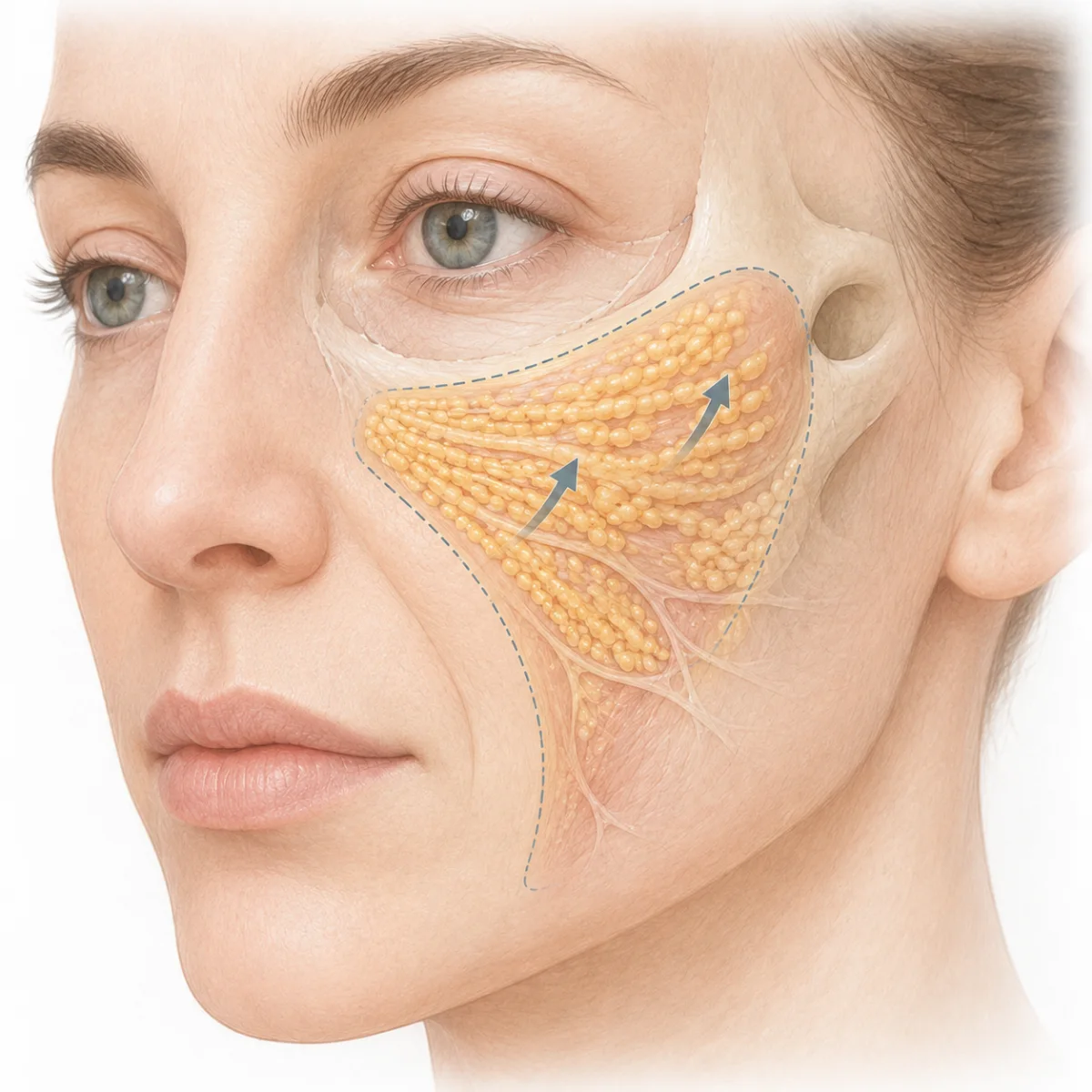
Fat grafting over the cheekbone
Your own fat is layered thinly above the crease, over the cheekbone and midface, not into the fold itself.
Benefits: Lifts the whole panel of tissue above the fold so it shallows out, without thickening the crease line.
Suitable for: A flattened midface with lost volume, where skin laxity is still limited.
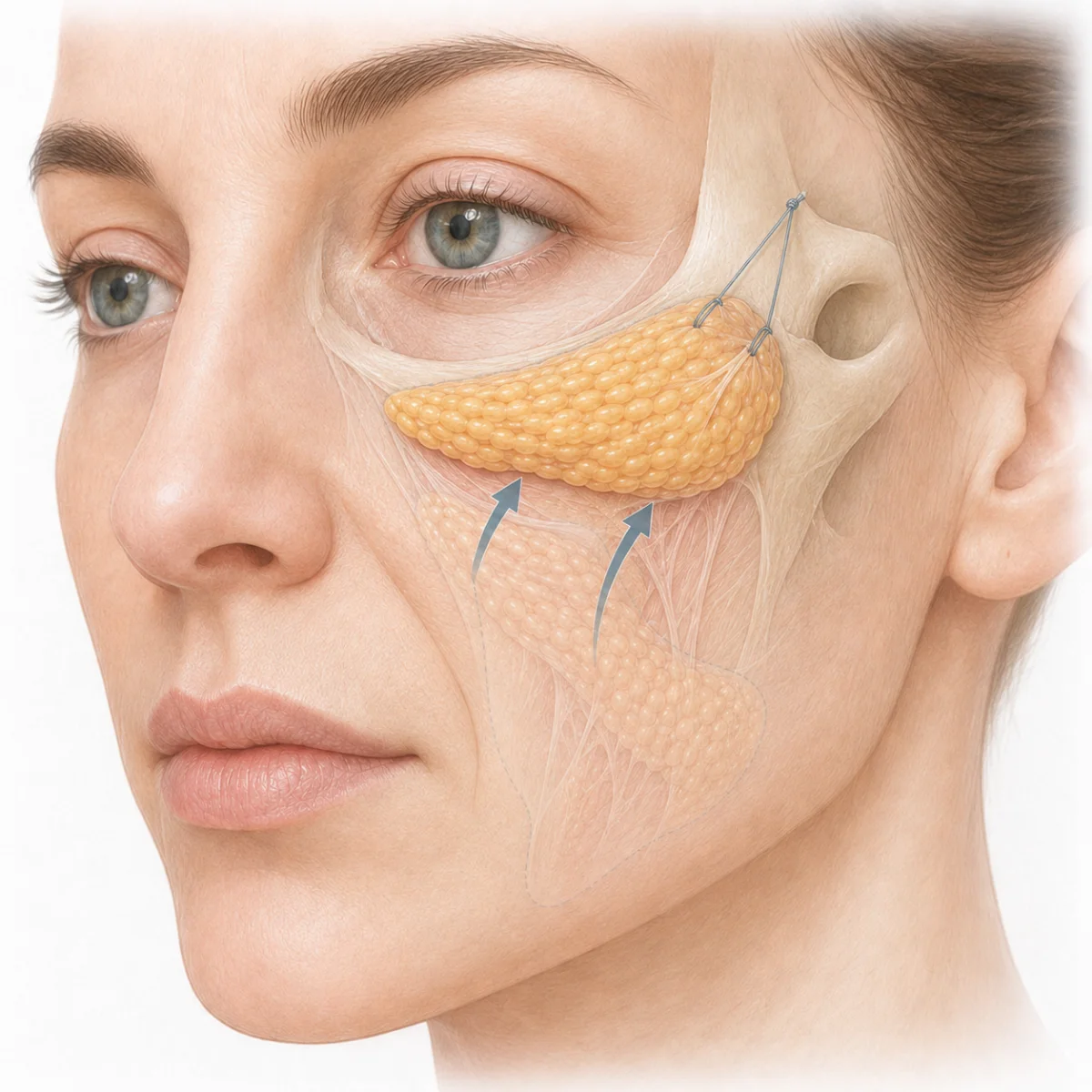
Midface lift
Descended cheek fat is released, moved back up and fixed in its new position.
Benefits: Treats the actual cause where the fold comes from tissue gathering above it. Adding volume there would only make the cheek heavier.
Suitable for: Clearly descended cheek fat with a sharpening upper edge to the fold.
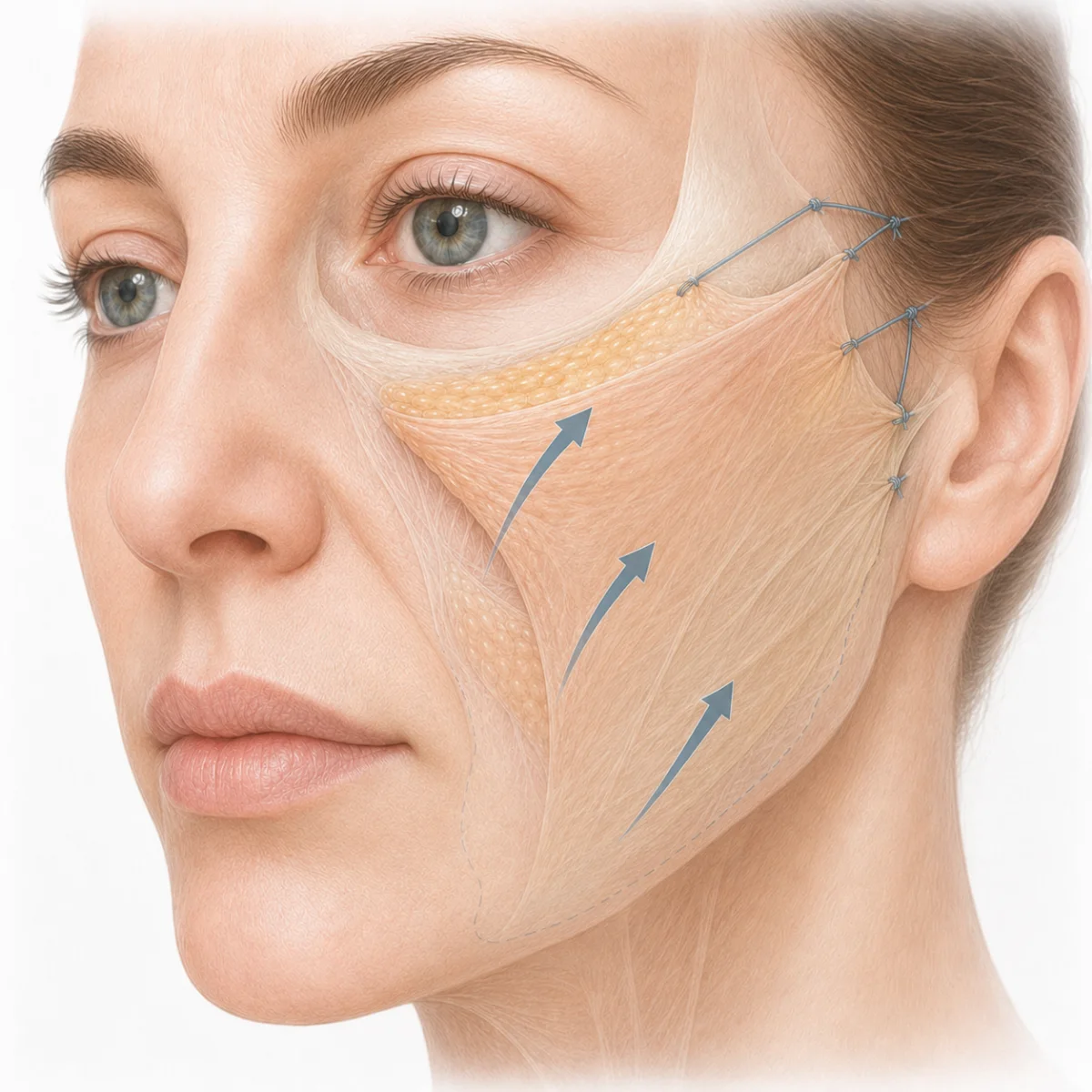
Combined with a facelift
The fold is planned together with a lower-face lift where laxity is generalised.
Benefits: Addresses the whole plane in one operation instead of correcting one crease and leaving it inconsistent with the rest.
Suitable for: Deep folds alongside a jawline that is starting to lose definition.
04 · Your team
Performed by board-certified plastic surgeons
This procedure is performed by the clinic's plastic surgeons at an accredited partner private hospital (JCI / AACI).

Dr. Phattrapohn Liangcheep
Plastic and Reconstructive Surgery
Diploma of the Thai Board of Plastic and Reconstructive Surgery
View full profile
Dr. Thanachot Kamolveerat
Plastic and Reconstructive Surgery
Diploma of the Thai Board of Plastic and Reconstructive Surgery
View full profile05 · Safety
Operating room standards and monitoring
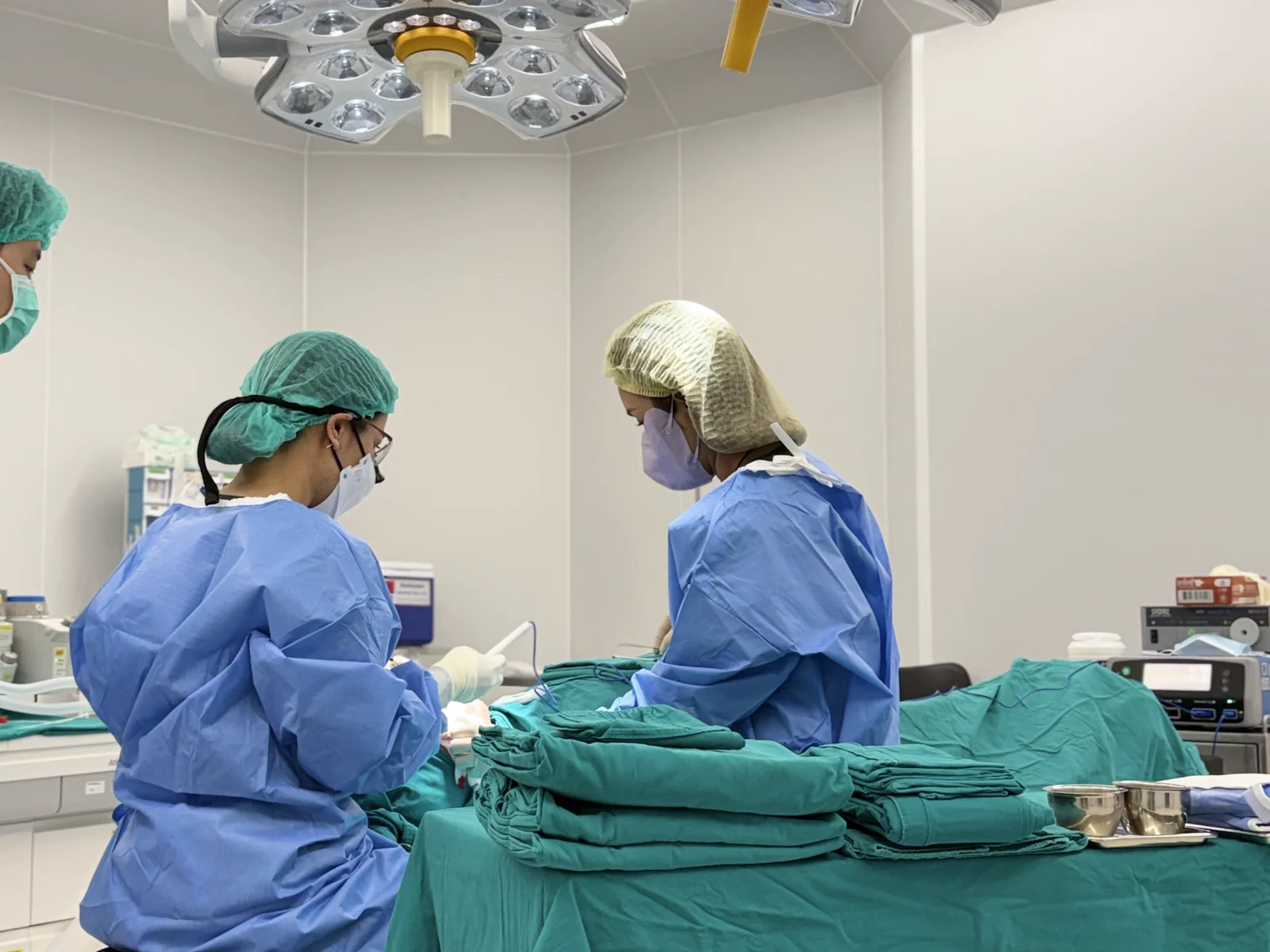
Surgery is performed in the operating room of a JCI- or AACI-accredited partner private hospital, with anesthesia care and continuous monitoring throughout.
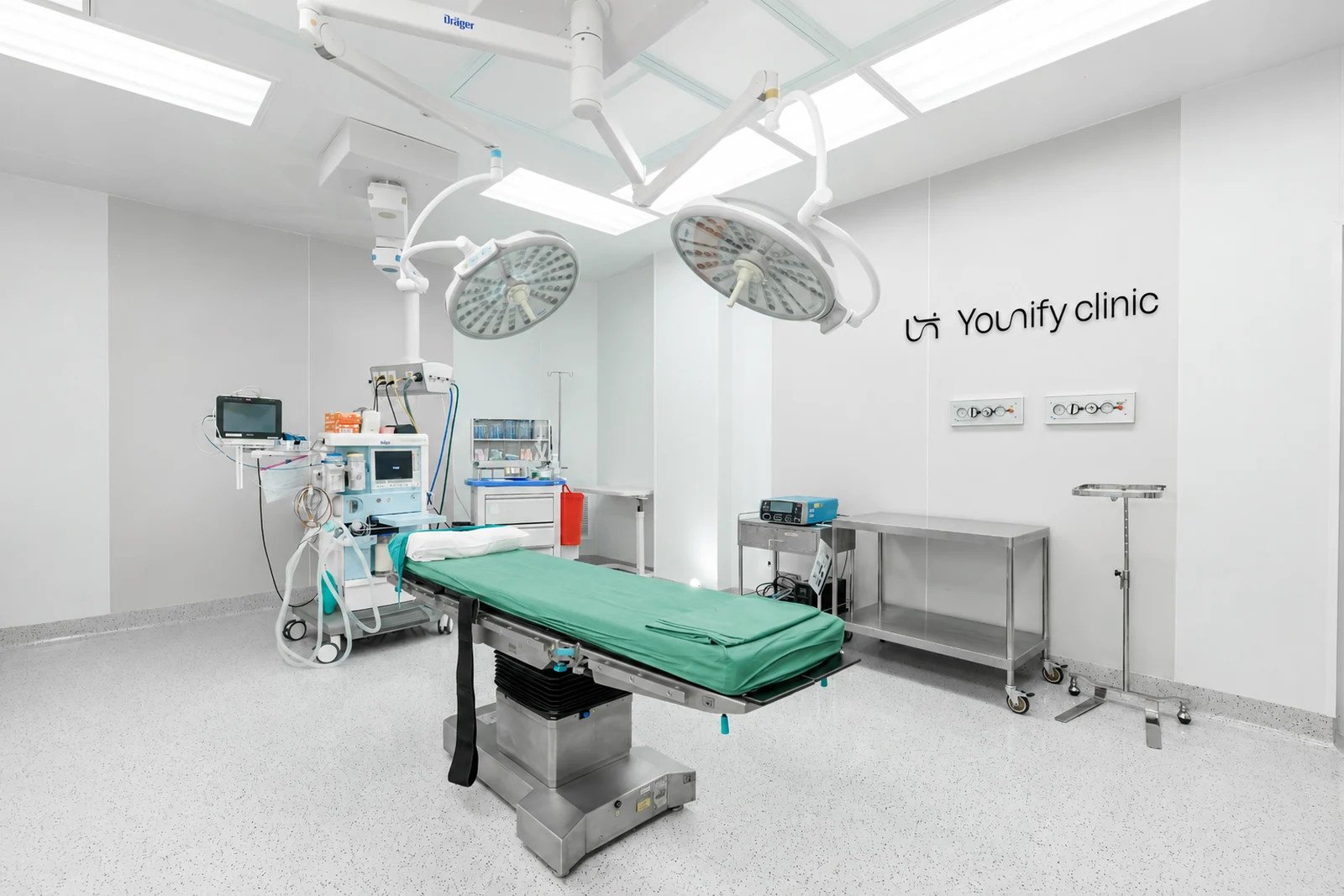
JCI- or AACI-accredited partner private hospital
Procedures are performed in a registered operating room, not a treatment room.
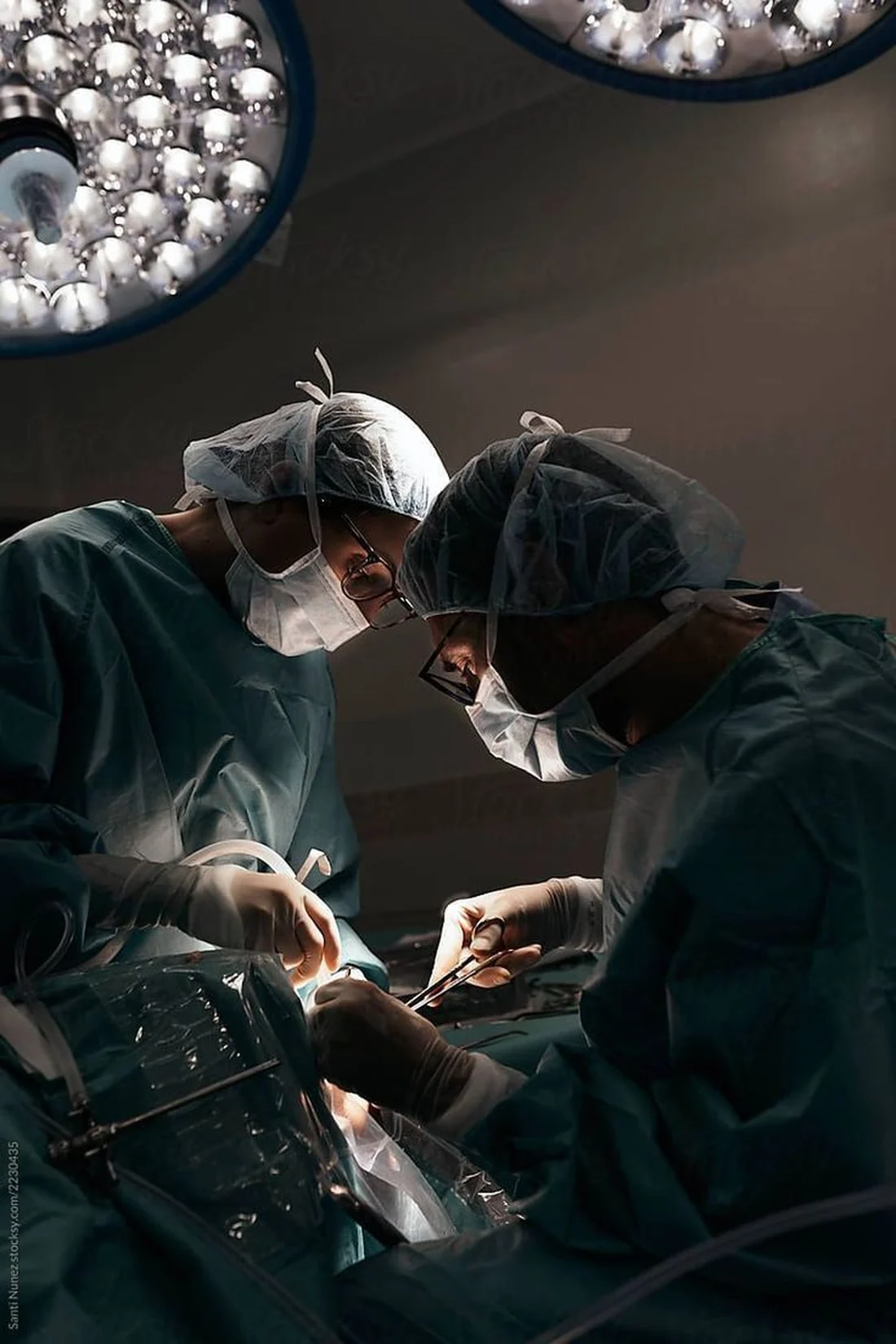
Specialist anaesthesia care
Anaesthesia is administered and monitored by a qualified anaesthesiologist for the duration of surgery.
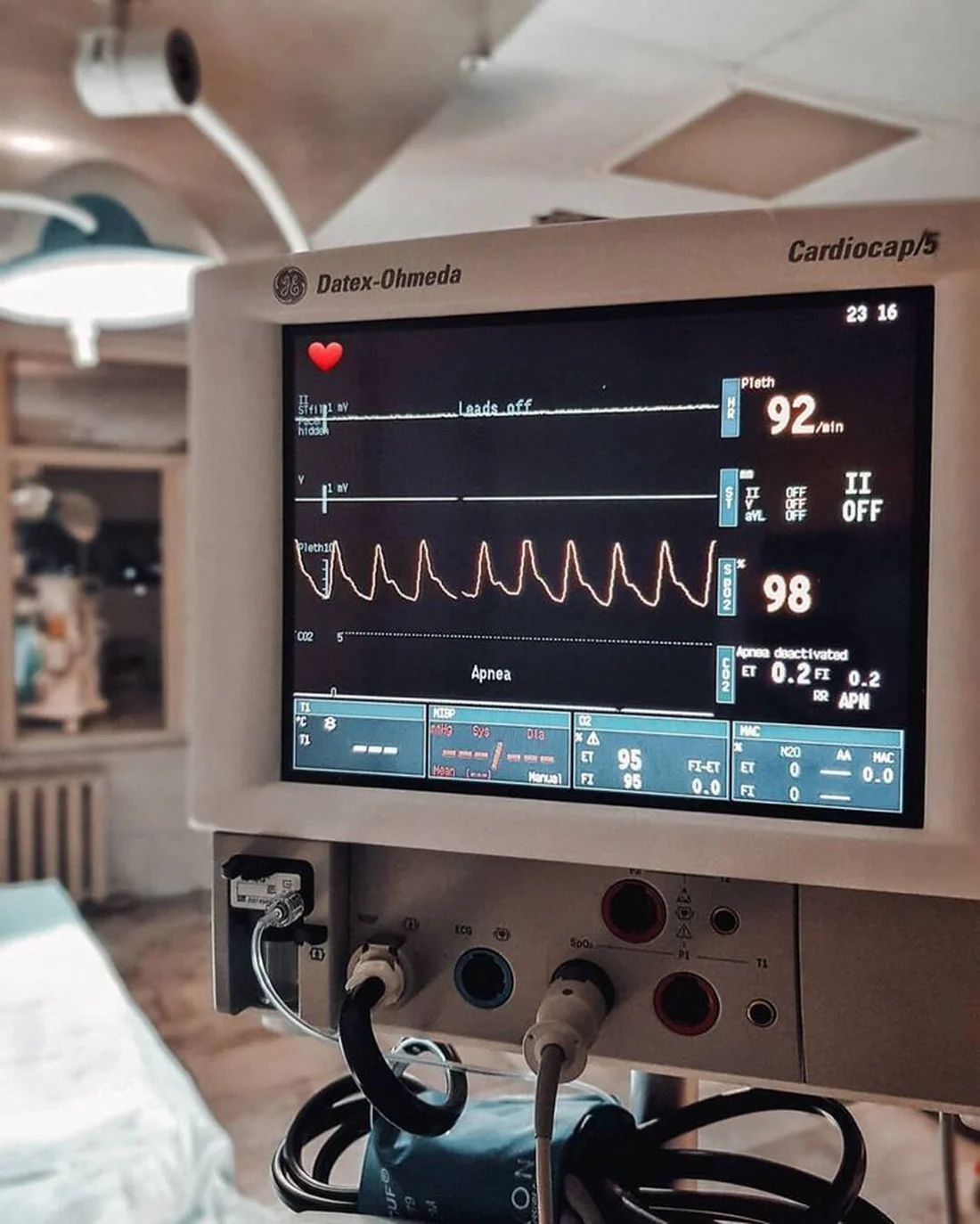
Continuous monitoring
Vital signs are monitored continuously during the procedure and through initial recovery.
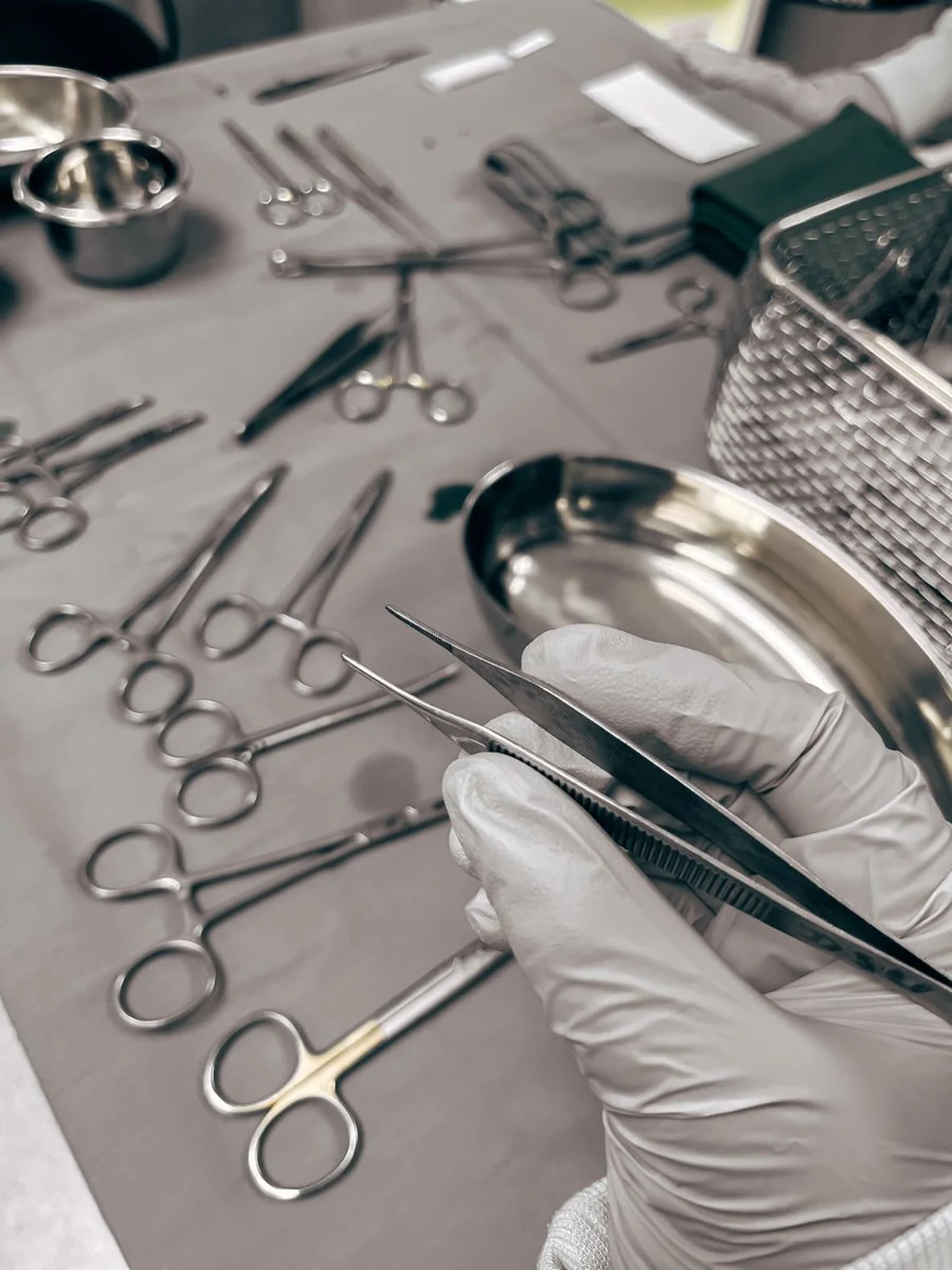
Sterile instrument protocol
Instruments and implants are handled under a documented sterile protocol.
The treatment process
Consultation & diagnosis
Establish whether the fold is driven by volume loss, descent, or both.
Placement planning
Where and how much volume is restored is agreed, with a clear account of the achievable extent.
Pre-procedure preparation
Health checks and preparation guidance, including the donor site if using your own fat.
Day of procedure
Fat is harvested, processed and layered into the planned midface positions.
Aftercare
Cold compress, avoiding pressure on the grafted area, and donor-site wound care.
Follow-up
Retained volume is assessed once swelling settles, and a second session considered if needed.
Recovery timeline
Your surgery at YOUNIFY
From the surgeon who operates to the nurses who follow up, and a private suite to recover in.


Frequently asked questions
How does this differ from filler?
Fat grafting uses your own tissue and the portion that takes stays long term; filler is a temporary material that resorbs. Your surgeon will explain the trade-offs of both. Non-surgical correction with filler is performed at the clinic.
How long does grafted fat last?
Some fat resorbs over the first 1–3 months. The portion that establishes a blood supply persists long term, and the proportion varies between individuals.
Will I need a second session?
Some people do, to reach the planned volume. That is assessed once the result has settled.
Can the fold be removed completely?
The procedure softens the depth of the fold. The nasolabial fold is a normal facial structure and cannot be eliminated entirely.
* This information is for general education. Results and treatment plans depend on an individual medical assessment. Every procedure carries risk. Please consult a doctor before deciding.
Related procedures
Considering nasolabial fold correction?
Book a midface assessment and an individual plan with the YOUNIFY Clinic medical team.
Medically reviewed by Dr. Noppachai Siranart · Last reviewed
Surgery is performed by the clinic's two board-certified plastic surgeons at JCI- or AACI-accredited partner private hospitals in Bangkok.
Individual results may vary. Please consult a doctor before treatment.