Efficacy
- Improvement or remission of type 2 diabetes in many patients
- Improvement in blood pressure, cholesterol, sleep apnea, and joint pain
- Long-term success depends on lifestyle changes and regular follow-up
- Individual results may vary.

Bariatric Surgery Pathway
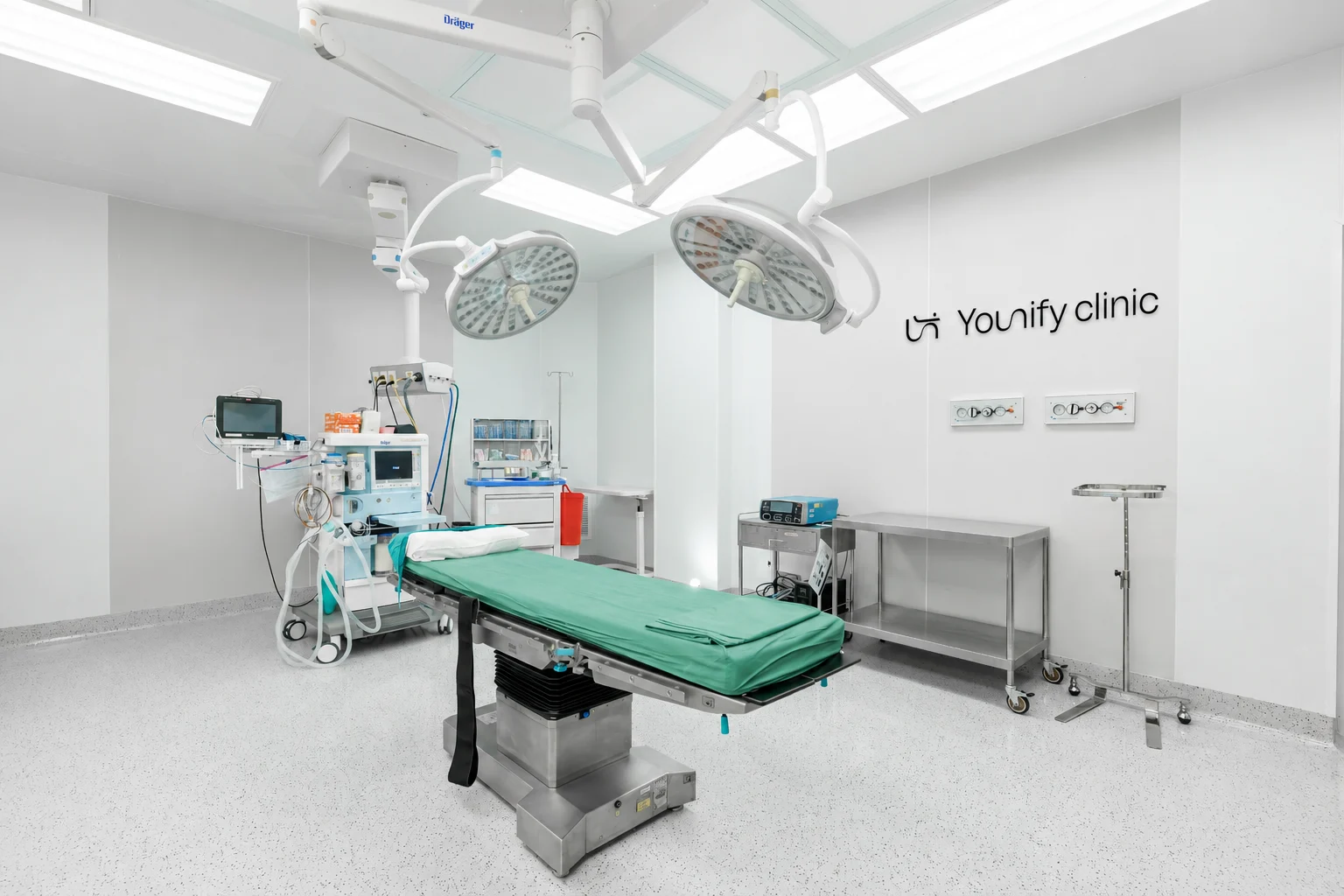
Bariatric surgery changes the stomach, and sometimes the path food takes through the bowel, to help people living with obesity lose weight and improve related health conditions. At YOUNIFY Clinic, a Healthy Aging & Wellness Center based in Bangkok, Thailand, sleeve gastrectomy starts from THB 350,000, gastric bypass from THB 449,000 and an adjustable gastric band from THB 329,000. Surgery is performed by the clinic's bariatric surgical team at JCI- or AACI-accredited partner private hospitals, and your price is confirmed in a written quotation before any deposit.
Clinic open daily, 11:00 to 20:00 (Bangkok time) · Online enquiries answered 24 hours a day
Bariatric Surgery Pathway
Bariatric surgery may suit selected patients with obesity, especially when metabolic conditions are present or prior weight-loss attempts have not been enough. The decision should include a medical team and a long-term aftercare plan.
| Point of comparison | ESG (endoscopic sleeve gastroplasty) | Laparoscopic sleeve gastrectomy | Gastric bypass |
|---|---|---|---|
| Surgical | Non-surgical, performed through the mouth | Laparoscopic abdominal surgery | Laparoscopic abdominal surgery |
| What happens to the stomach | The stomach is sutured smaller, with nothing removed | Part of the stomach is permanently removed | A small pouch is created and the digestive route is altered |
| External incision | None | Small abdominal incisions | Small abdominal incisions |
| Recovery | Most patients return home the same day | An inpatient stay of 2 to 4 days | An inpatient stay of 2 to 4 days |
| Later adjustment or revision | Possible in many cases | Revision surgery is available where the result falls short of expectation | Revision surgery is available where the result falls short of expectation |
The choice depends on weight, coexisting conditions, treatment history, and personal goals, and is assessed individually. Results vary by individual.
Laparoscopic, minimally invasive surgeries with structured follow-up care.
Minimally Invasive Approaches
Laparoscopic sleeve gastrectomy is a minimally invasive weight-loss surgery in which approximately 70–75% of the stomach is removed. The remaining stomach becomes a narrow "sleeve," reducing the amount of food you can eat and helping decrease hunger.
This procedure focuses primarily on restriction and hormonal regulation.
Sleeve gastrectomy is performed laparoscopically, reducing surgical trauma and recovery time.
When performed by experienced bariatric surgeons, complication rates are low and outcomes are well established.
Sleeve gastrectomy works through two mechanisms:
1. Restriction – The smaller stomach limits portion size.
2. Hormonal Regulation – Removal of part of the stomach reduces ghrelin (the hunger hormone), helping decrease appetite.
A full medical evaluation is required before surgery.
Assess weight, conditions, and risk
Compare ESG, medications, and surgery
Coordinate with an appropriate surgical team
Long-term nutrition, weight, and metabolic follow-up


Dr. Kittithat Tantitanawat
Gastroenterology and Hepatology
Thai Subspecialty Board of Gastroenterology
View full profile
| Procedure | Starting Thailand price (฿) |
|---|---|
| Bariatric surgery | |
| Gastric Sleeve (Vertical Sleeve Gastrectomy) | THB 350,000 |
| Gastric Bypass | THB 449,000 |
| Adjustable Gastric Band (Lap Band) | THB 329,000 |
| BPD/DS (Biliopancreatic Diversion with Duodenal Switch) | Confirmed in your written quotation after assessment. |
* Indicative prices for reference only. Final pricing depends on an individual assessment. Contact our team for a personalized quote.
There is no single right procedure. The choice depends on your BMI, your health conditions (especially type 2 diabetes and reflux), any previous surgery, and how much change you are prepared for. Two of the options below are not surgery at all: they are done with an endoscope through the mouth.
| Procedure | How it works | Typical candidates | Hospital stay | Reversible? | Starting from (THB) |
|---|---|---|---|---|---|
| Endoscopic sleeve gastroplasty (no incisions) | Sutures placed through the mouth fold and narrow the stomach; nothing is removed | People with obesity who prefer not to have surgery, or for whom surgery is not suitable | Confirmed at consultation | Not reversed as such; no stomach is removed and surgery remains possible later | 490,000 |
| Intragastric balloon | A soft balloon is placed in the stomach through the mouth and removed later | People who want a temporary, non-surgical aid alongside a nutrition programme | Confirmed at consultation | Yes; temporary, removed by endoscopy | 159,000 |
| Sleeve gastrectomy | Keyhole surgery removes a large part of the stomach, leaving a narrow tube | Many people who meet the criteria for surgery; may be less suitable with significant reflux | Confirmed at consultation | No; stomach tissue is removed | 350,000 |
| Gastric bypass | Keyhole surgery creates a small stomach pouch joined to the small bowel, so food bypasses most of the stomach | Higher BMI, type 2 diabetes, or significant reflux | Confirmed at consultation | Reversal is possible in principle but rarely done | 449,000 |
| SADI-S | A sleeve gastrectomy plus one connection between the first part of the small bowel (duodenum) and its lower part (ileum); the valve at the stomach outlet is kept | Usually considered at a higher BMI, with type 2 diabetes, or when weight has returned after a sleeve gastrectomy | Confirmed at consultation | No; stomach tissue is removed | Contact us for a written quotation |
| Sleeve gastrectomy with jejunoileal bypass (SG-JIB) | A sleeve gastrectomy plus a connection between the upper and lower small bowel, so food skips the middle section; food still passes through the stomach outlet and duodenum | People who meet the criteria for surgery and want more metabolic effect than a sleeve alone, after the limited evidence and the alternatives have been explained | Confirmed at consultation | No; stomach tissue is removed | Contact us for a written quotation |
Your final price is confirmed in a written quotation after assessment, before any deposit. If you have had weight loss surgery or ESG before and your weight has returned, see Redo ESG and endoscopic revision.
The most reliable long-term comparisons of sleeve gastrectomy and gastric bypass come from randomised trials, where patients were allocated to one operation or the other.
Two points help when reading these numbers. First, excess weight loss measures how much of the weight above a healthy reference weight was lost. It is not the same as the percentage of total body weight lost, which is how ESG results are usually reported, so the figures cannot be compared directly. Second, weight loss after any procedure tends to be greatest in the early years, and some weight often returns later. Long-term follow-up is part of the treatment, not an extra.
For ESG, for context. The IFSO Bariatric Endoscopy Committee position statement (Obesity Surgery, 2024) pooled 44 articles and 15,714 patients: total body weight loss after ESG was 17.56% at 12 months, and serious adverse events were 1.25%. ESG leads to less weight loss than surgery, with no incisions and no stomach tissue removed. Read more on the ESG page.
These are averages from published studies. Your own result depends on your starting point, your health and how you engage with follow-up. Results vary by individual.
Send your details on WhatsApp. Your height, weight, health conditions, current medicines and any previous surgery. Photographs are optional; medical records and recent blood tests help most.
Written quotation. Your plan and price are confirmed in writing before any deposit.
It may suit selected patients based on BMI, related conditions, risk, and readiness for aftercare. Assessment is individual.
It depends on weight, related conditions, prior treatment, and goals. ESG is non-surgical, while surgery may be considered when stronger weight-loss effect is needed.
Many bariatric procedures require regular vitamin, mineral, and nutrition monitoring. Your doctor will provide an individualized plan.
At YOUNIFY Clinic, sleeve gastrectomy starts from THB 350,000, gastric bypass from THB 449,000 and an adjustable gastric band from THB 329,000. Your final price is confirmed in a written quotation before any deposit.
Clinic open daily, 11:00 to 20:00 (Bangkok time) · Online enquiries answered 24 hours a day
A sleeve is a simpler operation and works well for many people. A bypass tends to give somewhat more weight loss and is often preferred when there is significant reflux or type 2 diabetes. ESG avoids surgery but leads to less weight loss. The comparison table above sets out the differences, and your surgeon explains which suits you.
There are options, including endoscopic revision through the mouth, GLP-1 medication, or further surgery. See Redo ESG and endoscopic revision, and for background, weight regain after sleeve gastrectomy.
Sometimes. GLP-1 medication may be used before surgery in selected cases, or afterwards if weight loss stalls or weight returns. Your team decides this with you. Read ESG or GLP-1 medication first for how medication fits alongside procedures.
Send your height, weight, health conditions and any previous surgery on WhatsApp. A member of the clinic's bariatric surgical team reviews them with you by video before any travel is planned.
Medically reviewed by Dr. Noppachai Siranart · Last reviewed
Individual results may vary. Please consult a doctor before treatment.