No surgery
A fine needle under ultrasound with local anesthesia only
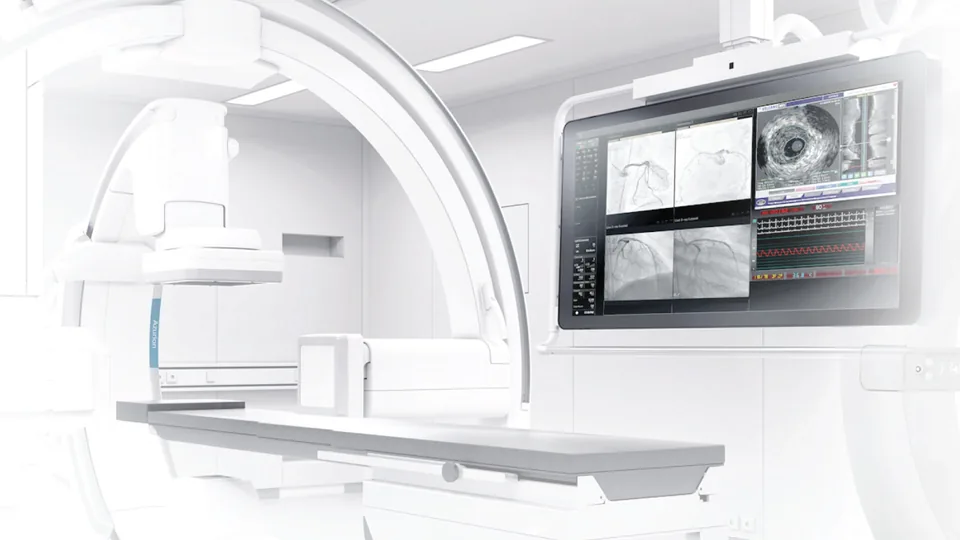
Shrink benign thyroid nodules — without surgery
A non-surgical option for benign thyroid nodules using a fine needle and thermal (radiofrequency) energy under real-time ultrasound guidance. The nodule gradually shrinks by about 50–80% of its volume over 6–12 months — with no neck incision, fast recovery, and same-day discharge for most patients. Individual results vary.
Thyroid ablation is a non-surgical treatment that delivers thermal (radiofrequency) energy through a fine needle into the nodule under ultrasound guidance, causing it to shrink gradually over several months. It is intended for benign (non-cancerous) nodules and aims to relieve symptoms such as neck tightness, difficulty swallowing, or a visible lump — while preserving normal thyroid function.
Used for thyroid nodules confirmed benign by fine-needle aspiration (FNA), typically when the nodule causes symptoms or cosmetic concern. Specific indications, such as overactive nodules, are decided case by case by the physician.
A fine needle under ultrasound with local anesthesia only
Healthy thyroid tissue is preserved
About 1 hour of observation; most go home the same day
Ultrasound at 1, 3, 6 and 12 months
Thermal energy is delivered through the needle tip into the nodule. The heat breaks down cells within the nodule, which the body gradually reabsorbs so the nodule shrinks over time — without any incision or removal of the thyroid gland, reducing the likelihood of needing thyroid hormone replacement afterward.
The physician guides the needle with ultrasound throughout the procedure for accuracy and speaks with you periodically to monitor for symptoms such as voice changes — allowing careful, attentive treatment.
Treatment options
Care for a thyroid nodule runs from simple surveillance through to surgery. Ablation sits in the middle — it does not replace surgery.
Surgery remains the correct answer for cancer and for compressive disease. Ablation is an option in the middle band only.
Comparison
This table is an overview of how the two approaches differ — not a statement that either is superior. The right choice depends on the type and size of the nodule and on an individual physician assessment.
| Comparison | Radiofrequency ablation (RFA) | Thyroid surgery |
|---|---|---|
| Anaesthesia | Local anaesthesia only, no general anaesthesia | General anaesthesia |
| Incision and scarring | A fine needle — no neck incision | A neck incision and a permanent scar |
| Hospital stay | Outpatient, around 1 hour of observation | Inpatient stay as planned by the surgeon |
| Thyroid hormone afterward | Preserves normal thyroid tissue, so replacement is usually not required | Replacement may be required, depending on how much gland is removed |
| What happens to the nodule | Shrinks gradually over several months | Removed at once, and sent for full histology |
| Which nodules it suits | Only nodules confirmed benign | Both benign and malignant nodules |
On the day
The procedure is short and performed as an outpatient. You stay awake throughout so the physician can monitor how you feel.
You lie flat with the neck slightly extended.
The physician applies local anesthesia around the nodule.
The needle is guided into the nodule under ultrasound and thermal energy is applied, while the physician talks with you periodically to monitor for hoarseness.
The needle is removed, the site is dressed, and a cold compress is applied.
You are observed for about 1 hour; if there are no complications, most patients go home the same day.
Image examples
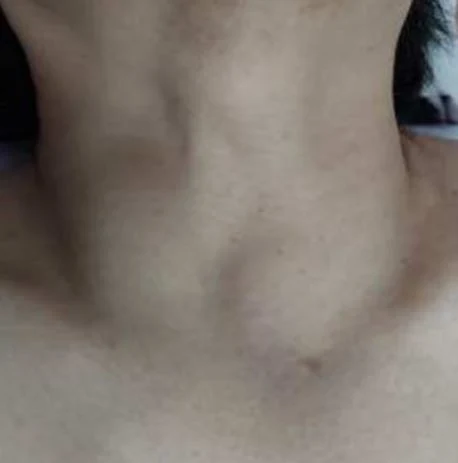
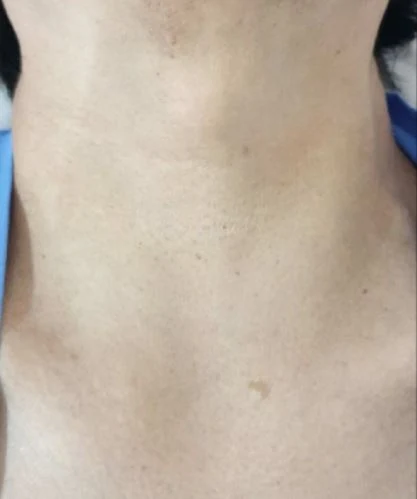
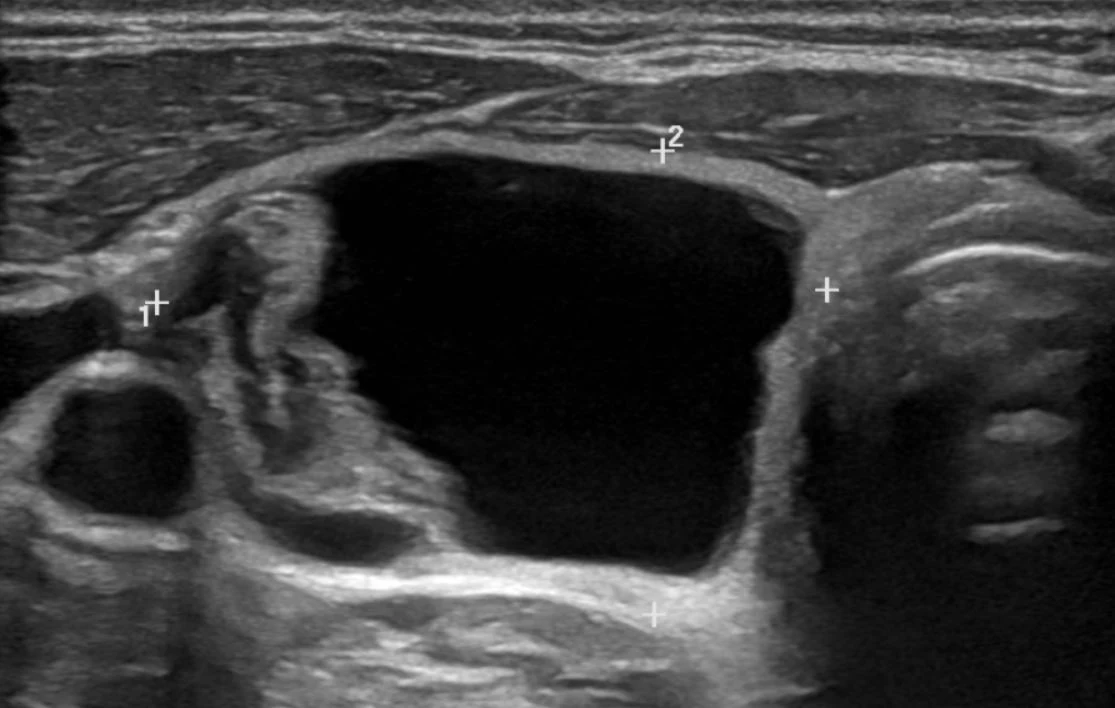
Images from our own patients, used with written consent and with identifying information removed, showing the neck contour and ultrasound appearance before and after ablation. Results vary from person to person.
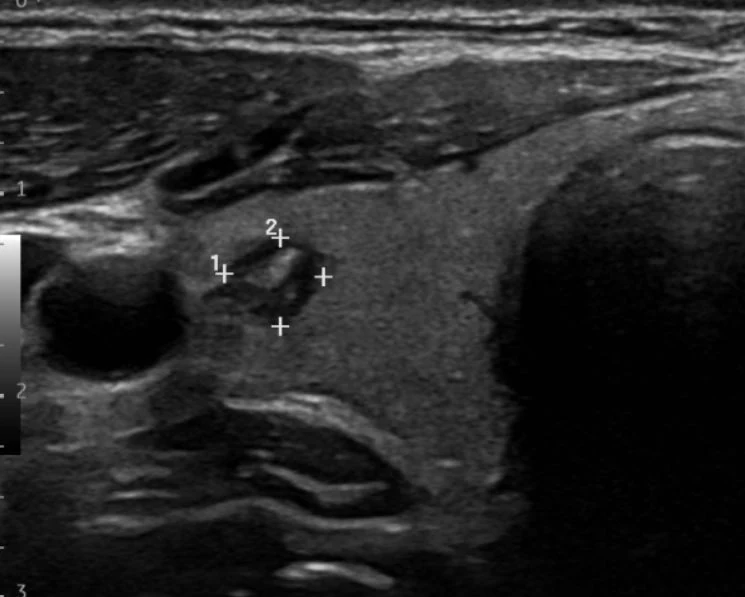
Published evidence
Published studies report that benign thyroid nodules typically lose around 50–80% of their volume in the 6–12 months after radiofrequency ablation. A randomised trial comparing ablation with observation found a significant volume reduction at 6 months, while untreated nodules remained essentially unchanged [1].
The Korean Society of Thyroid Radiology practice guideline describes the procedure as an option for symptomatic benign nodules and reports a low incidence of complications when performed by trained operators [2].
These figures come from international research and are not a guarantee of outcome. The actual reduction depends on the type, size, and position of the nodule and on an individual physician assessment.
The procedure is performed under ultrasound guidance with the medical team monitoring you throughout. Complications are generally uncommon and may include temporary voice hoarseness, bleeding or bruising at the treated area, and short-term pain, swelling, or tightness in the neck.
Stop medicines and supplements that affect blood clotting for about 1 week as directed, and take no food or drink for 4 hours beforehand. Blood tests check readiness — complete blood count (CBC), coagulation profile (coagulogram), and thyroid function test (TFT) — alongside fine-needle aspiration (FNA) to confirm the nodule type.
Use cold compresses as advised, rest well, and avoid bumping the neck area at first. Seek care promptly if you notice fever, pain, swelling, redness at the site, or hoarseness, and attend the scheduled follow-up ultrasounds.
Pre-procedure assessment
A physician assessment is required for everyone, based on the FNA result, the size and features of the nodule on ultrasound, your symptoms, and your overall health.
The number, size, and position of the nodules relative to nerves and blood vessels, along with your thyroid function results, all affect how the procedure is planned and how many sessions may be needed.
Our medical team will explain the full range of options, including surveillance and surgery, so you can decide with complete information.
Book a consultation for an ultrasound assessment and a review of your existing results.
Book a consultationConsultation and ultrasound to assess the nodule's size and features
Confirm nodule type with FNA and complete pre-procedure blood tests
Ultrasound-guided ablation performed by our medical team
Follow-up ultrasounds at 1, 3, 6 and 12 months
* Indicative prices for reference only. Final pricing depends on an individual assessment. Overseas prices are indicative market estimates for comparison only — contact our team for a personalized quote.
Traveling from overseas? See the Thailand package for this procedure.
View the Thailand packageA special needle delivers thermal (radiofrequency) energy into a benign thyroid nodule under ultrasound guidance, causing it to gradually shrink — without surgery.
Nodules confirmed benign by FNA, usually in people with symptoms or cosmetic concern about a neck lump. A physician assesses each case individually.
Only local anesthesia is used — no general anesthesia. The physician talks with you during the procedure to monitor how you feel.
It is generally an outpatient procedure with about 1 hour of observation; most patients go home the same day if there are no complications.
It shrinks gradually over several months rather than disappearing at once, which is why follow-up ultrasounds are scheduled. Results vary by individual.
Because this approach preserves normal thyroid tissue, hormone replacement is usually not required, unlike surgical removal of the gland — but this depends on the physician's individual assessment.
Recommended reads
Reviewed by The YOUNIFY Clinic medical team · Last reviewed
Individual results may vary. Please consult a doctor before treatment.