Efficacy
- Approximately 15–18% total body weight loss within 12 months
- Improvements in blood sugar, blood pressure, cholesterol, and joint stress
- Long-term success depends on lifestyle changes and ongoing care
- Individual results may vary.
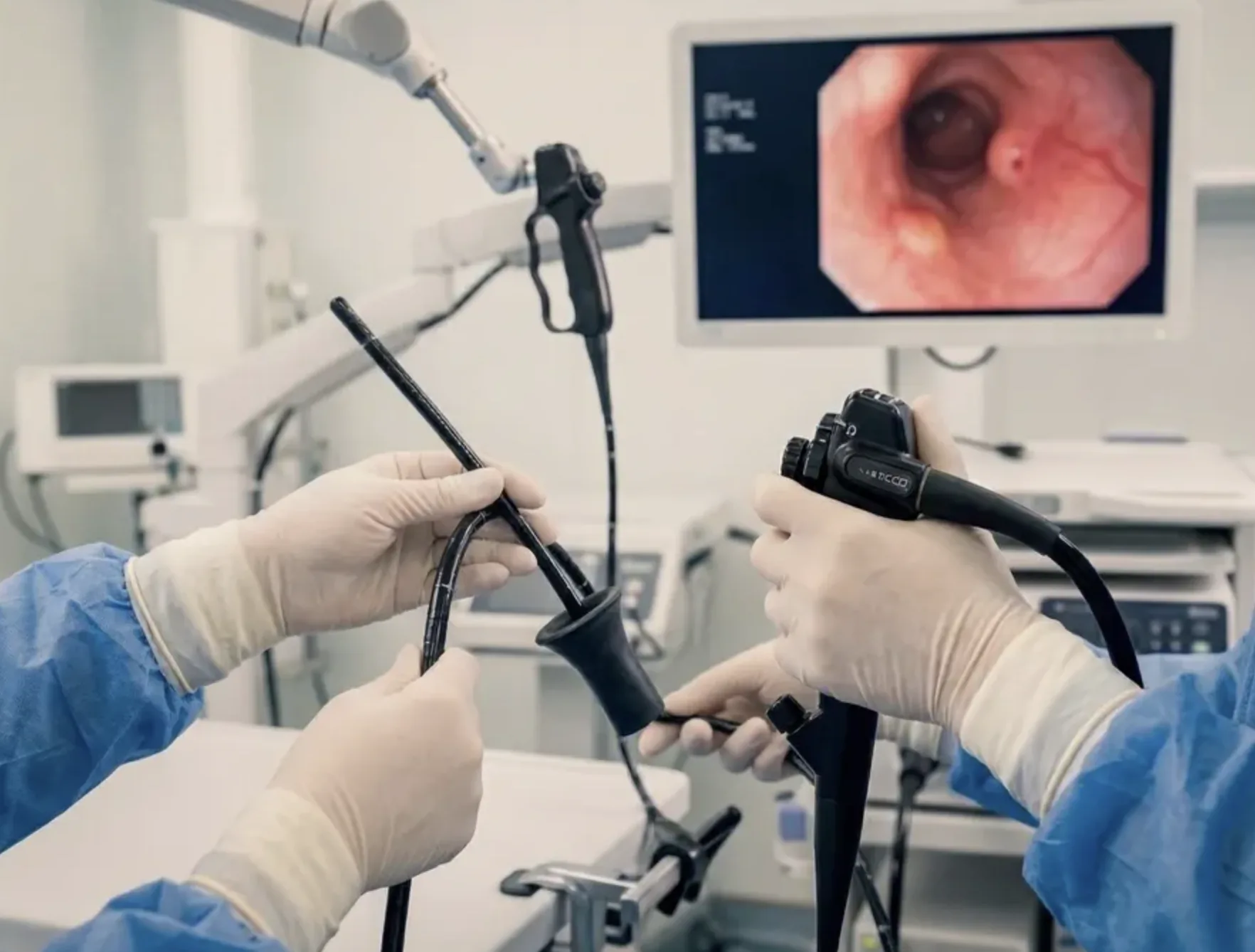
ESG Non-Surgical Weight Loss
Endoscopic sleeve gastroplasty (ESG) makes the stomach smaller from the inside, using stitches placed through the mouth, with no incisions. At YOUNIFY Clinic, a Healthy Aging & Wellness Center based in Bangkok, Thailand, ESG starts from THB 490,000. It is performed at a JCI- or AACI-accredited partner private hospital, and your plan is confirmed in a written quotation before any deposit.
Clinic open daily, 11:00 to 20:00 (Bangkok time) · Online enquiries answered 24 hours a day
ESG is designed for adults living with obesity who want a non-surgical option, or who are not ready for or not suited to a sleeve gastrectomy. It is most effective as part of a programme that includes diet, activity and follow-up, and in some people medication.
| Topic | Detail |
|---|---|
| Starting price | From THB 490,000 |
| Included | General anesthesia with an anesthesiologist, a two-night stay for observation at a partner private hospital, preoperative blood tests, chest X-ray, ECG and cardiology assessment, home medication and nutritional support, and 12 months of scheduled follow-up |
| Not included | Flights, visa, travel insurance, and hotel accommodation outside the two-night stay |
| Suturing system | Apollo ESG System |
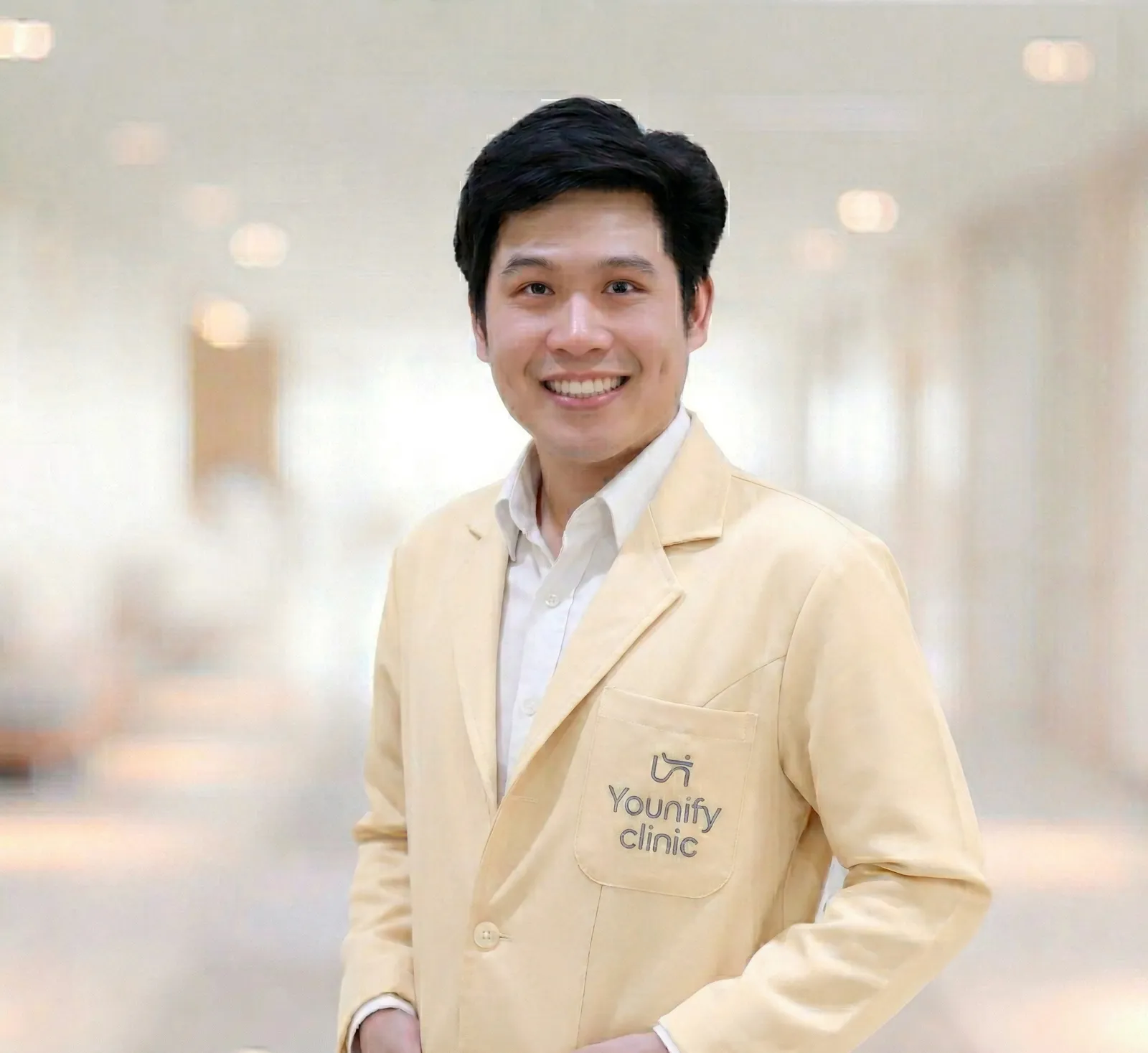
| Performed by | Dr. Noppachai Siranart and Dr. Kittithat Tantitanawat, endoscopy physicians |
| Where | The procedure is performed at a partner private hospital. Assessment and follow-up take place at YOUNIFY Clinic in Silom, Bangkok. |
| Who it may suit | BMI 30 or above, or lower in some patients after assessment by a physician |
| Typical weight loss | Typically around 15–18% of total body weight within one year. Results vary between individuals and depend on changes to eating habits and on continued follow-up. |
| Time in Bangkok | International patients usually plan to stay in Bangkok for about 7 to 10 days after hospital discharge. |
| Follow-up | 12 months of scheduled follow-up, in person or by video call |
| After you return home | A 24-hour WhatsApp line to the medical team for patients after their procedure, video reviews with the physician, an English-language treatment summary for your local doctor, and direct liaison with your local doctor or hospital when needed |
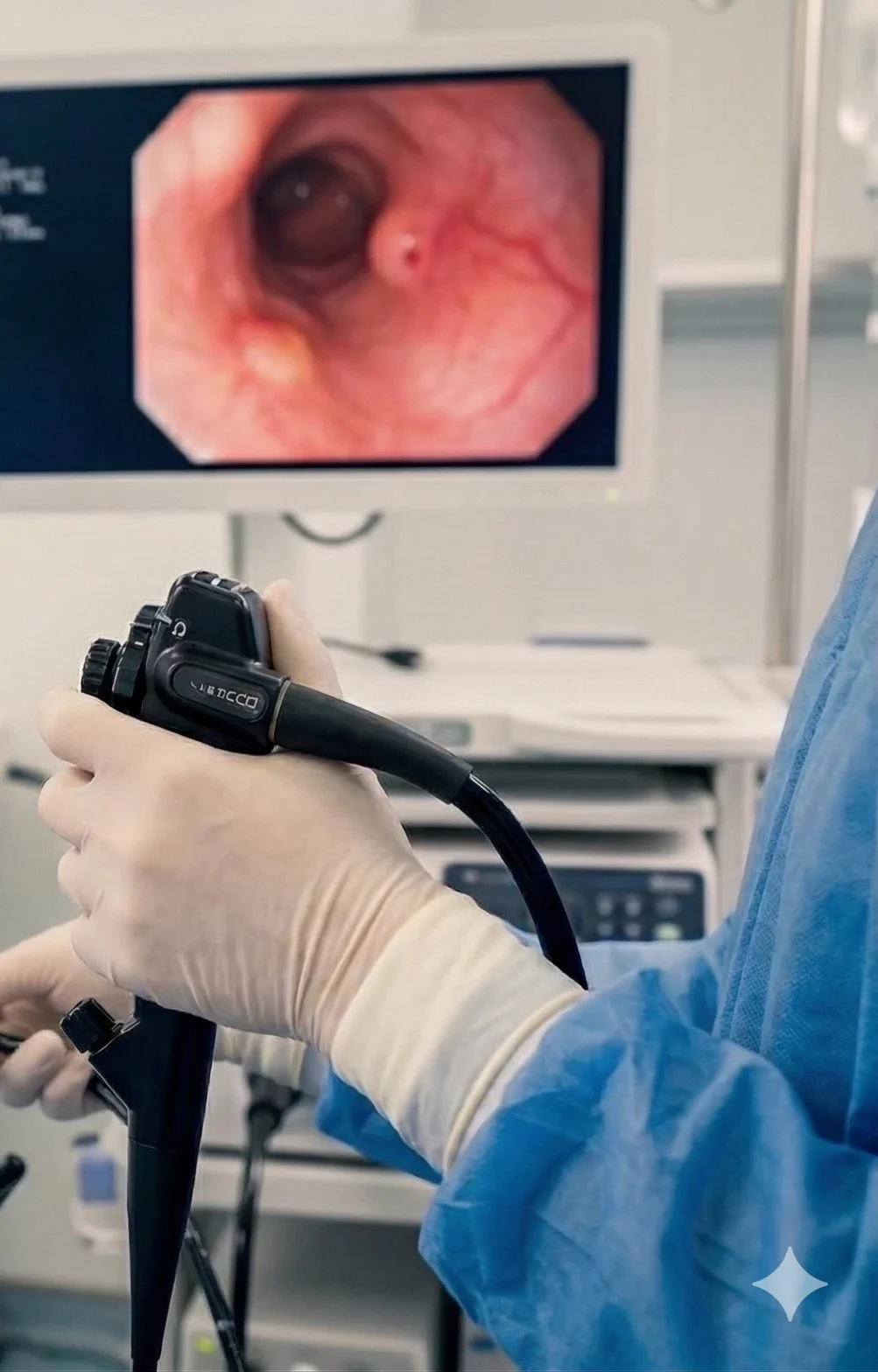
ESG Non-Surgical Weight Loss
ESG is not stomach cutting. It uses endoscopic suturing from inside the stomach to reduce capacity and support portion control. Strong outcomes require follow-up for nutrition, habits, and metabolic health.
Care led by our physician team
Our medical team has published in international medical journals on endoscopic weight-loss procedures. It means the advice you get comes from reading the evidence at source.
| Study | Journal | What it examined |
|---|---|---|
| Comparison of bariatric procedures | Digestive Diseases and Sciences (2026) | How different bariatric procedures compare in improving obesity-related comorbidities |
| Weight regain after sleeve gastrectomy | Gastrointestinal Endoscopy (2026) | Endoscopic versus surgical management of recurrent weight gain |
| GLP-1 medication and upper endoscopy | Obesity (2025) | Real-world data on endoscopy preparation in people taking GLP-1 medication |
| ESG (endoscopic suturing) | Intragastric balloon | Sleeve gastrectomy | GLP-1 medication | |
|---|---|---|---|---|
| Surgery? | No surgery, done through the mouth | No surgery, done through the mouth | Laparoscopic abdominal surgery | No procedure |
| Is stomach removed? | No | No | Permanently removed in part | Not applicable |
| External incision | None | None | Abdominal port sites | None |
| Typical weight loss | Around 15–18% of body weight in one year | Less than ESG | More than ESG | Depends on the drug and continued use |
| How long it stays | The sutures remain | Must be removed on schedule | Permanent | Effect lasts while the drug is taken |
| Recovery | Most go home the same day | Most go home the same day | Hospital stay required | No recovery period |
| Adjustable later | Possible in many cases | Can be removed | Harder to revise | Dose can be stopped or adjusted |
| Usually considered for | BMI 30 or above, or lower in some patients after assessment by a physician, not wanting surgery | Wanting to start with something reversible | Very high BMI, or a clear medical indication | Before considering a procedure, or alongside one |
No single option is right for everyone. The choice depends on BMI, other conditions, weight-loss history, readiness for long-term follow-up, and your own goals. Our medical team assesses this with you before any decision.
Minimally invasive, incision-free procedures performed through the mouth.
For patients who have not had previous stomach surgery or ESG. If you have had ESG before, see redo ESG below.
What is Endoscopic Sleeve Gastroplasty (ESG) Stomach Tightening?
Endoscopic Sleeve Gastroplasty (ESG) is a non-surgical weight loss treatment performed using a thin, flexible tube called an endoscope. The endoscope is gently passed through the mouth, allowing the doctor to see and treat the digestive system without making any cuts on the skin.
Because there are no surgical incisions, these procedures are minimally invasive and typically have a shorter recovery time compared to traditional surgery.
ESG is minimally invasive. The rate of serious complications reported in the literature is approximately 1.5–2.3% (ASGE–ESGE Joint Guideline, Gastrointest Endosc 2024;99:867-85; SOFFCOMM Position Statement, J Visc Surg 2025;162:71-78).
For patients assessed as suitable, ESG is a minimally invasive procedure with a low reported rate of serious complications. Any comparison with surgery must be considered individually with our medical team.
ESG works through:
1. Restriction – Internal sutures reduce stomach size by about 60–75%, helping you feel full sooner.
2. Hormonal & Metabolic Effects – Slows gastric emptying and supports improved appetite control.
Because the stomach is not removed, normal digestion is preserved.
A comprehensive medical evaluation is required.
Structured nutritional guidance and follow-up are essential for long-term success.
After Endoscopic Sleeve Gastroplasty (ESG), once your weight has settled, loose skin or changes in the face can be assessed separately. The same physician-led team plans that next stage with you.
Health, weight, and metabolic assessment
Choose ESG, medication, or surgery when appropriate
Procedure plus post-ESG diet planning
Ongoing weight, nutrition, and behavior follow-up
Send your details on WhatsApp, which is answered 24 hours a day: height, weight, medical history, current medication (including any GLP-1 medication) and any previous stomach procedure.
Video consultation with the medical team, who explain whether ESG, a balloon, medication or surgery suits you.
Written plan and quotation before any deposit.
In Bangkok: assessment and pre-procedure tests, the procedure at a JCI- or AACI-accredited partner private hospital, two nights of observation in the international package, and reviews before you fly. Most international patients plan 7 to 10 days after discharge.
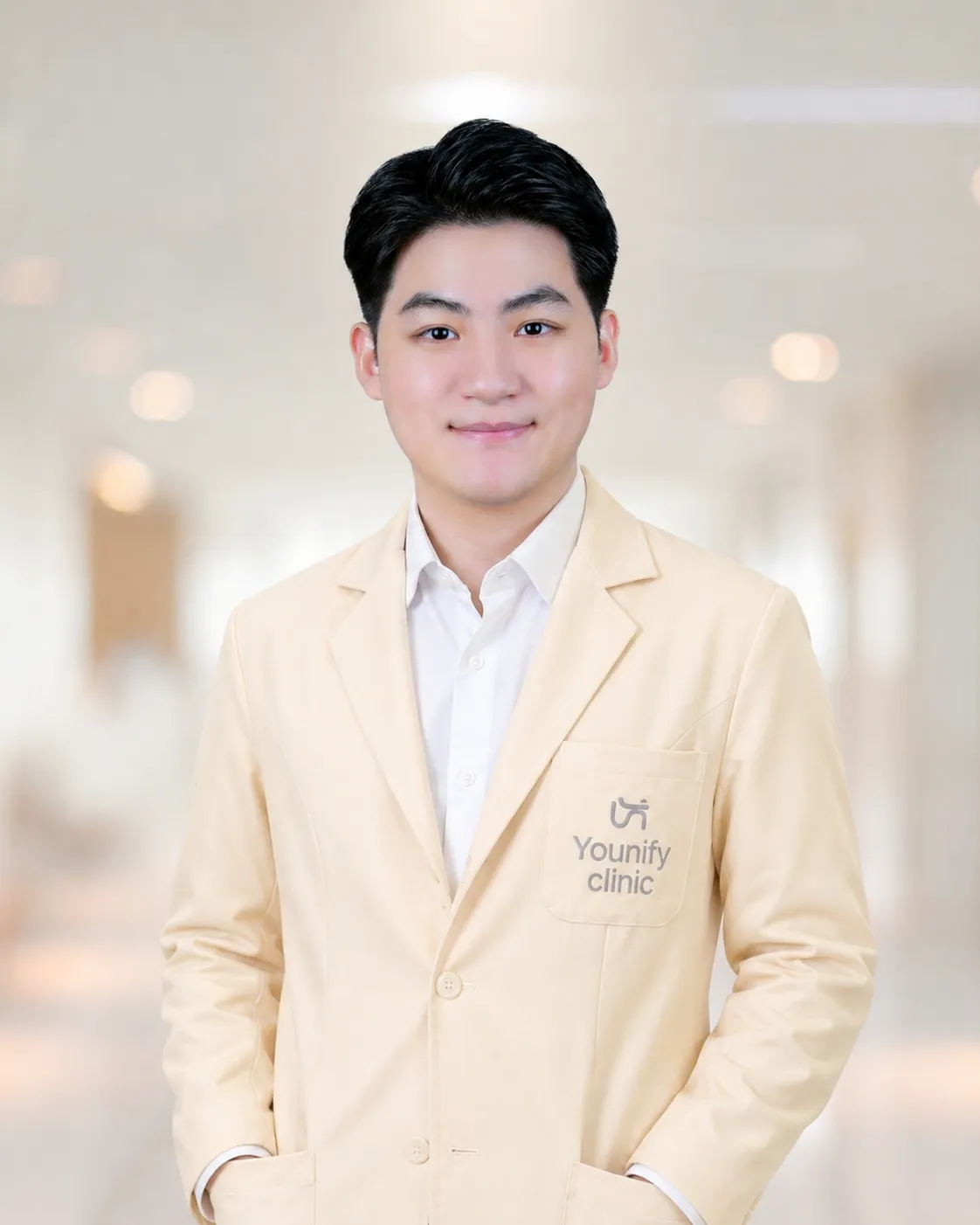
Dr. Kittithat Tantitanawat
Gastroenterology and Hepatology
Thai Subspecialty Board of Gastroenterology
View full profileIf you have regained weight after a previous ESG, including one performed elsewhere, a repeat ESG starts from THB 490,000. If you have regained weight after a sleeve gastrectomy or a gastric bypass, an endoscopic revision may be possible without further surgery. See Redo ESG and endoscopic revision.
The procedure is performed at a partner private hospital. Your assessment and follow-up take place at YOUNIFY Clinic in Silom.
Not included: Flights, visa, travel insurance, and hotel accommodation outside the two-night stay
Final pricing depends on an individual assessment. Results vary between individuals. Please consult a doctor before undergoing any procedure.
Procedures in this table start from THB 159,000 to THB 490,000 per procedure; the final plan is confirmed in a written quotation after assessment.
| Procedure | Starting Thailand price (฿) |
|---|---|
| Endoscopic weight-loss procedures | |
| Endoscopic Sleeve Gastroplasty (ESG) | THB 490,000 |
| Redo ESG (after previous ESG, including ESG performed elsewhere) | THB 490,000 |
| Intragastric Balloon | THB 159,000 |
* Indicative prices for reference only. Final pricing depends on an individual assessment. Contact our team for a personalized quote.
Results below are published averages, measured as the percentage of total body weight lost. They are not a promise of your result.
| Study | Who was studied | Result |
|---|---|---|
| MERIT randomised trial (Abu Dayyeh et al., The Lancet, 2022) | 209 adults with class 1 or 2 obesity at nine US centres | 13.6% total body weight loss at 52 weeks with ESG and lifestyle care, compared with 0.8% with lifestyle care alone. ESG-related serious adverse events occurred in 3 of 131 patients (2%), with no deaths. |
| IFSO Bariatric Endoscopy Committee position statement (Obesity Surgery, 2024) | 44 published articles, 15,714 patients | Pooled 17.56% total body weight loss at 12 months, with serious adverse events of 1.25%. |
| Five-year follow-up (Sharaiha et al., Clinical Gastroenterology and Hepatology, 2021) | 216 patients treated, 68 followed to five years | 15.9% total body weight loss at five years; 90% kept at least 5% of their weight off. |
| ASGE–ESGE guideline (2024) | Systematic review for international endoscopy societies | Recommends endoscopic gastric remodelling, which includes ESG, with lifestyle change over lifestyle change alone for people with class 1 or 2 obesity (conditional recommendation). |
In everyday terms, published studies report total body weight loss of about 15 to 18% at one year when ESG is combined with diet and lifestyle support. Results vary by individual, and keeping weight off depends on follow-up.
ESG reshapes the stomach from the inside using an endoscope passed through the mouth, making it smaller with internal sutures. There is no abdominal surgery, no external incision, and no part of the stomach is removed.
No incisions are made. ESG is performed with an endoscope passed through the mouth while you are under general anaesthesia given by an anaesthesiologist, and no part of the stomach is removed.
ESG sutures the stomach from within and removes no tissue. Sleeve gastrectomy surgically removes part of the stomach permanently. The two have different indications and different things to weigh up.
Typically around 15–18% of total body weight within one year. Results vary between individuals and depend on changes to eating habits and on continued follow-up.
ESG is performed under general anaesthesia given by an anaesthesiologist, so you are asleep and do not feel pain during the procedure. Mild nausea or abdominal discomfort in the first few days afterwards is common.
Most patients go home the same day and return to light routine within a few days. This is assessed individually: some are advised to stay overnight for observation. For overseas patients, the package includes a two-night stay for observation and comfort.
ESG is available in Thailand at several hospitals and clinics, mainly in Bangkok. At YOUNIFY Clinic in Silom, Bangkok, ESG is performed by Dr. Noppachai Siranart and Dr. Kittithat Tantitanawat, endoscopy physicians, and starts from THB 490,000. The procedure itself is performed at a partner private hospital. Whichever provider you consider, it is worth asking who performs the procedure, where it takes place, which endoscopic suturing system is used, and how follow-up works once you return home.
Clinic open daily, 11:00 to 20:00 (Bangkok time) · Online enquiries answered 24 hours a day
ESG is an endoscopic procedure performed under general anesthesia, so it needs a fully equipped endoscopy unit, an anesthesia team, and access to hospital care should a complication occur. At YOUNIFY Clinic, your assessment and follow-up take place at our clinic in Silom, and the procedure itself is performed at a partner private hospital. Most patients are medically ready to go home the same day, and the overseas package includes a two-night stay for observation.
At YOUNIFY Clinic it starts at ฿490,000. The exact figure depends on individual medical assessment. You can request a detailed quote on LINE @younifyclinic.
It is usually considered for people with a BMI of 30 or above, or lower in some patients after assessment by a physician, who have not achieved enough with behaviour change alone. The final assessment is made by the medical team.
People with an untreated stomach ulcer, a bleeding disorder, or previous stomach surgery may need special assessment or a different approach. The medical team always assesses this first.
The common effects, which usually settle on their own, are nausea, abdominal discomfort and tiredness in the first days. Serious complications are uncommon, with a rate reported in the literature of approximately 1.5–2.3% (ASGE–ESGE Joint Guideline, Gastrointest Endosc 2024;99:867-85; SOFFCOMM Position Statement, J Visc Surg 2025;162:71-78).
Weight control is a long-term matter. The sutures help with fullness, but lasting results depend on behaviour change and continued follow-up. If weight does return, there are further options, assessed case by case, including a review of nutrition and medication and, in suitable patients, redo ESG.
Yes, in suitable patients. Because ESG does not remove any part of the stomach, the original suture line can be assessed and the stomach can be tightened again with new sutures, a procedure known as redo ESG. YOUNIFY Clinic also sees patients whose first ESG was performed elsewhere. Suitability is decided after an endoscopy that shows how the original sutures have held, and redo ESG starts from THB 490,000. Published experience is still limited: in a 2026 multicenter study of 25 patients, redo ESG added an average of 10.8 percent total body weight loss at a mean of 17 months, and two patients had bleeding that settled without surgery (Espinet-Coll et al., Obesity Surgery, 2026).
It depends on the individual. For some, ESG is an alternative to staying on medication; for others the doctor may consider using both for a period. The plan is decided together after assessment.
International patients usually plan to stay in Bangkok for about 7 to 10 days after hospital discharge. The medical team advises the appropriate length of stay based on your individual plan. Please ask before booking travel, so that both the pre-procedure assessment and the follow-up are covered.
You remain under the care of the YOUNIFY medical team after you leave Bangkok. Patients who have had their procedure can reach the medical team on WhatsApp 24 hours a day, follow-up reviews with the physician take place by video call during the 12-month program, and you receive an English-language treatment summary to share with your local doctor. If you need to be seen in person at home, the team will liaise directly with your local doctor or hospital. If you have severe abdominal pain, chest pain, vomiting of blood, black stools, a fever, or you cannot keep fluids down, go to your nearest emergency department first and contact us afterward.
It depends on your policy and your medical indication. Many policies do not cover procedures for weight loss. Our team can prepare a treatment summary for you to submit, but approval is decided by your insurer. We recommend checking your policy before you book.
Medically reviewed by Dr. Noppachai Siranart · Last reviewed
Individual results may vary. Please consult a doctor before treatment.