Aesthetic Surgery
Ear Reshaping in Bangkok
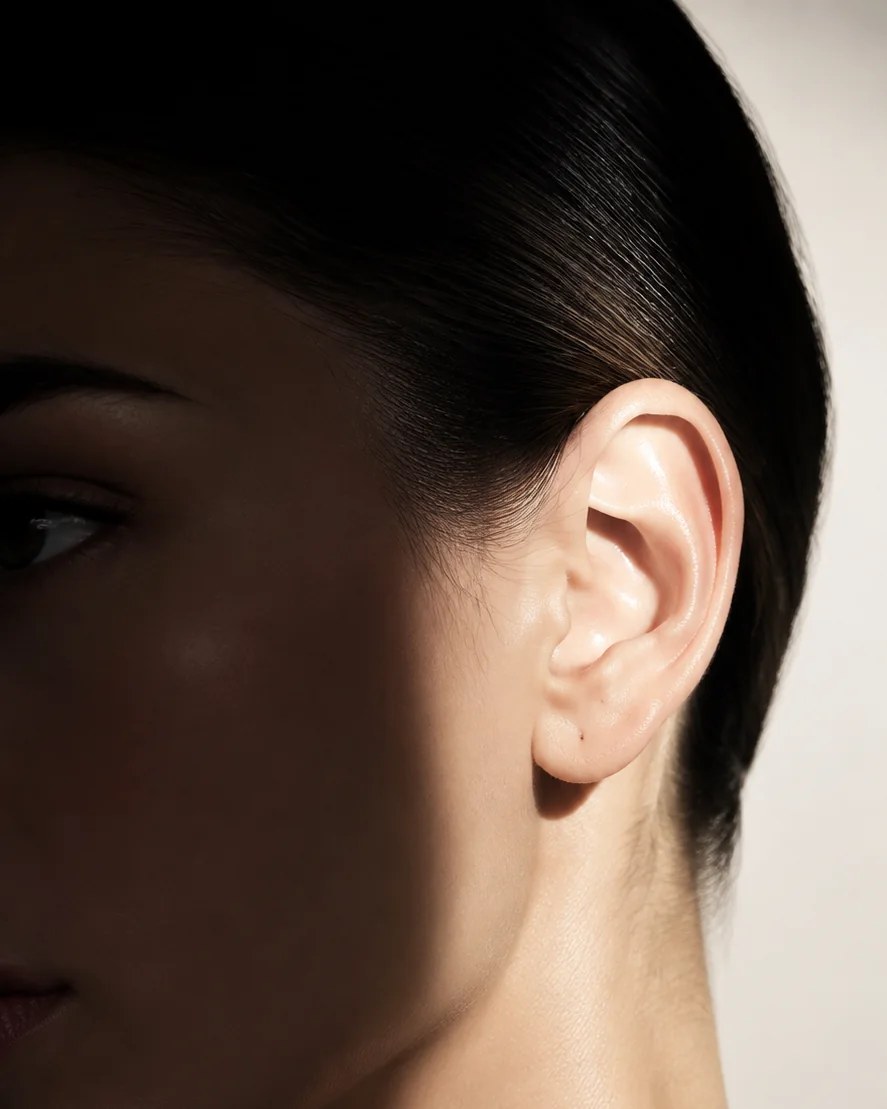
The angle and shape of the ear corrected through an incision hidden in the crease behind it.
Clinic open daily, 11:00 to 20:00 (Bangkok time) · Online enquiries answered 24 hours a day
Price list
Procedures in this table start from THB 40,000 to THB 75,000 per procedure; the final plan is confirmed in a written quotation after assessment.
| Procedure | Starting Thailand price (฿) | Starting Thailand price (AUD) | Standard Australia price (AUD) |
|---|---|---|---|
| Otoplasty | |||
| Otoplasty: Suture Antihelix Shaping | THB 40,000 | A$1,739 | A$5,294 |
| Otoplasty: Direct Cartilage Reshaping | THB 75,000 | A$3,261 | A$5,294 |
| Conchal reduction | |||
| Conchal Reduction | THB 40,000 | A$1,739 | — |
* Indicative prices for reference only. Some items are priced per area. Final pricing depends on an individual assessment. Overseas prices are indicative market estimates for comparison only. Contact our team for a personalized quote.
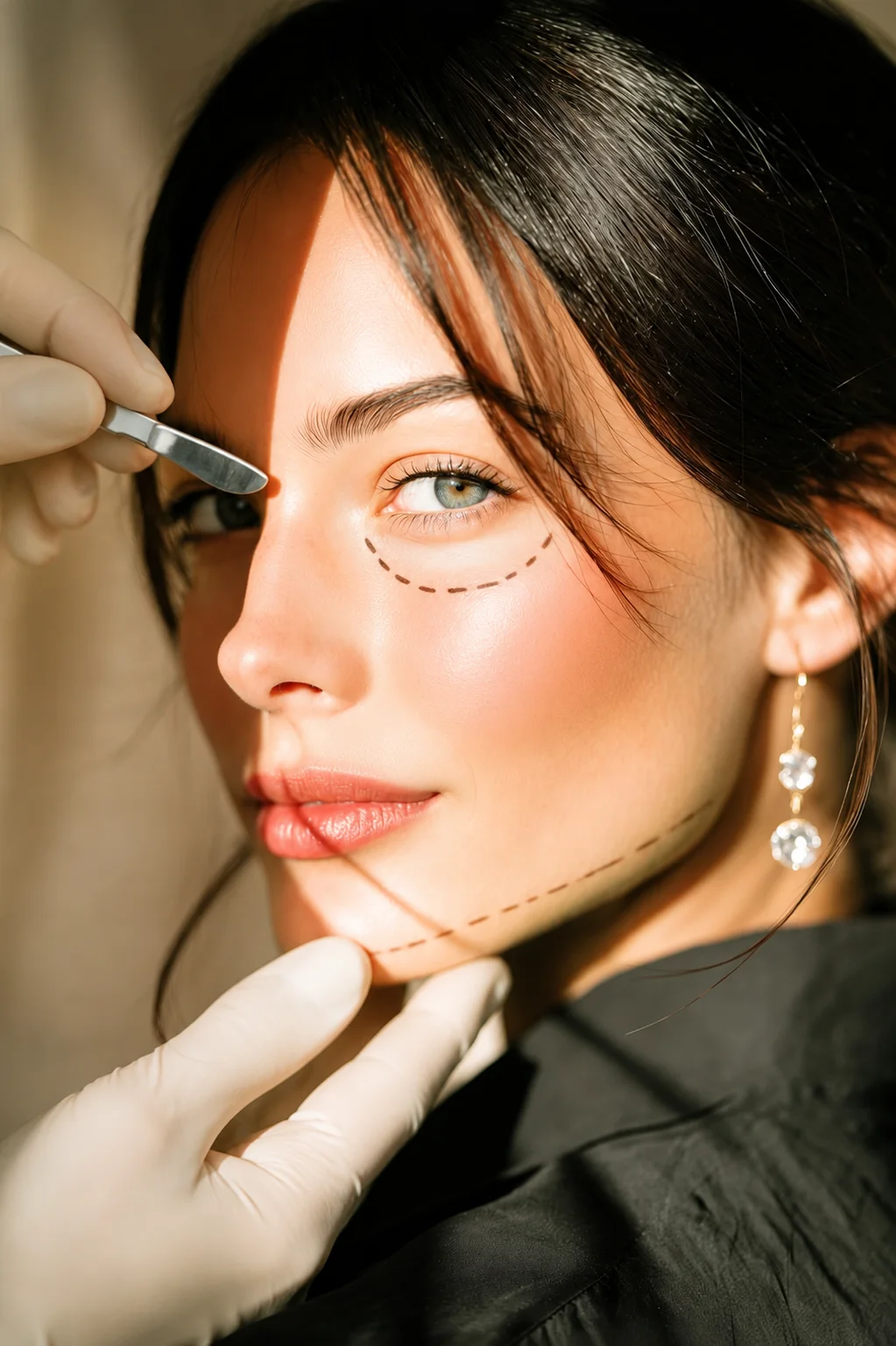
Your final quote follows an individual medical assessment. You receive a written quotation before any deposit.
Care you can measure
Figures from the YOUNIFY surgical program.
01 · Planning
Measure the ear before the day of surgery
Agree on how far the ear will be brought in.
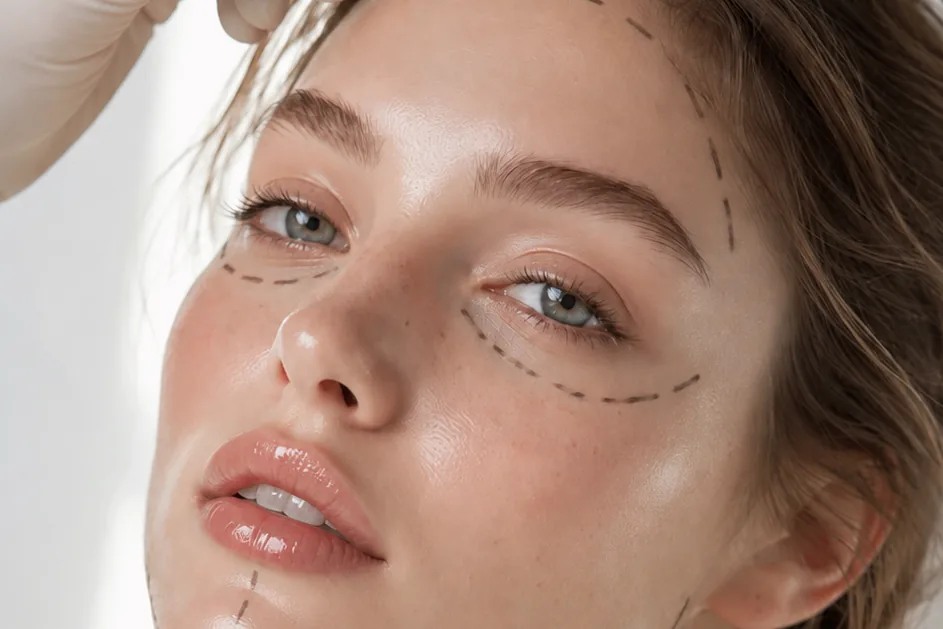
The distance from the ear rim to the scalp is measured at the upper, middle and lower ear on both sides, and your surgeon explains how the new position changes the view from the front.
Planning always compares the two sides, because the goal is facial balance rather than matching numbers on a tape measure.
Simulation is a planning aid. It illustrates an expected direction, not a guaranteed outcome.
What this procedure is
Otoplasty repositions the ear closer to the head and refines its shape. The most common reason is a prominent ear, where the cartilage has not folded into its natural antihelical ridge, or the conchal bowl is deeper than usual.
Your surgeon measures the distance from the ear rim to the scalp on both sides, assesses how flexible the cartilage is, and chooses between suture shaping and direct cartilage work. The aim is an ear that looks natural from the front and the side, not one pinned flat against the head.
Concerns it addresses
Prominent ears
The ear sits further from the head than usual, most visible from the front.
Asymmetry
Noticeable difference in size, angle or height between the two ears.
Absent antihelical fold
The cartilage has not folded into a ridge, so the ear rim reads as flat.
Congenital ear shapes
Lop, folded or otherwise atypical ear shapes present from birth.
Suture Antihelix Shaping vs Direct Cartilage Reshaping
These two techniques differ in how the cartilage is handled. Your physician assesses how flexible the ear cartilage is before recommending an approach.
| Suture antihelix shaping | Direct cartilage reshaping | |
|---|---|---|
| Method | The antihelical fold is shaped with sutures, leaving the existing structure intact | The cartilage itself is reshaped to form the fold |
| Edge of the ear | The rim keeps a soft, natural curve | Holds a defined fold in firm cartilage |
| Tension on the sutures | Tension can be adjusted during surgery | Reduces tension on the sutures |
| Who it suits | Cartilage that is still flexible, common in children and young adults | Adults with thick or firm cartilage, or a fold that relaxed after suturing |
How we plan your result
A natural-looking ear is not the one held closest to the head. It comes from a proportionate rim-to-scalp distance and a fold that still has depth when seen from the front.
Who is it for
- People with prominent ears who feel self-conscious wearing their hair back or short
- People with a noticeable difference between the two ears
- Children whose ear cartilage has largely finished developing, with timing decided together with the parents and surgeon
- People in good general health with no active infection of the ear
03 · Technique
Choosing how the cartilage is shaped by how flexible it is
Soft cartilage can be folded with sutures; stiff cartilage has to be altered directly.
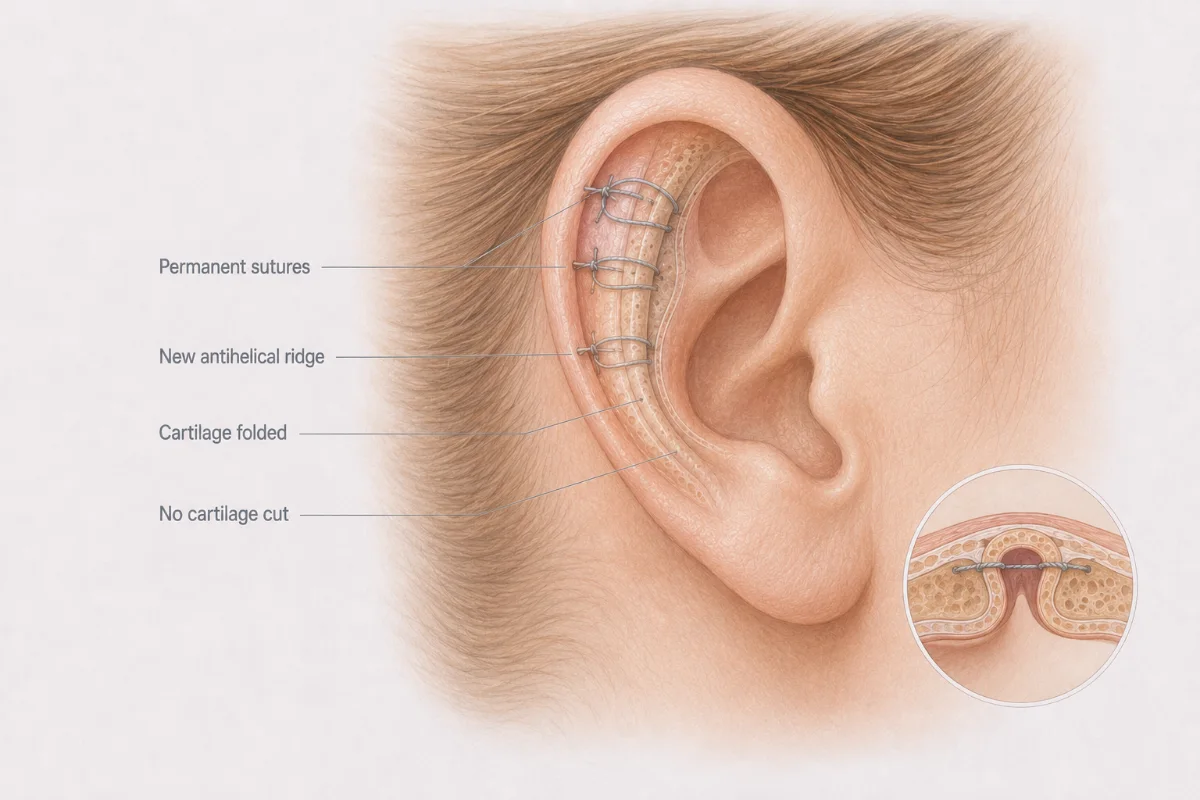
Suture antihelix shaping
Permanent sutures fold the cartilage into a new antihelical ridge without cutting it.
Benefits: Nothing is excised, so the rim keeps a soft natural curve, and tension can be adjusted during surgery.
Suitable for: Cartilage that is still flexible, common in children and younger adults.
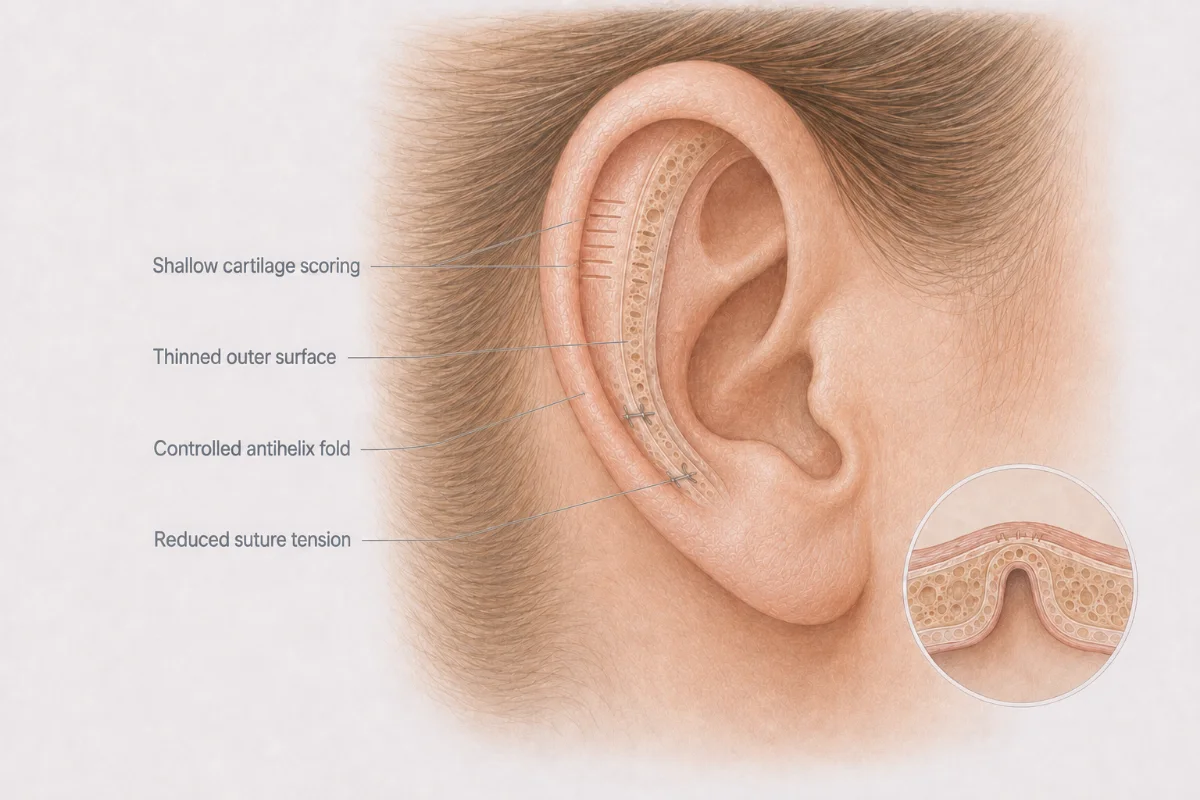
Direct cartilage reshaping
The outer surface of the cartilage is scored or thinned so it folds without excessive suture tension.
Benefits: Produces a ridge that holds in stiff cartilage and reduces the load on the sutures, lowering the chance of relapse.
Suitable for: Adults with thick or rigid cartilage, or ears that have relaxed after previous suturing.
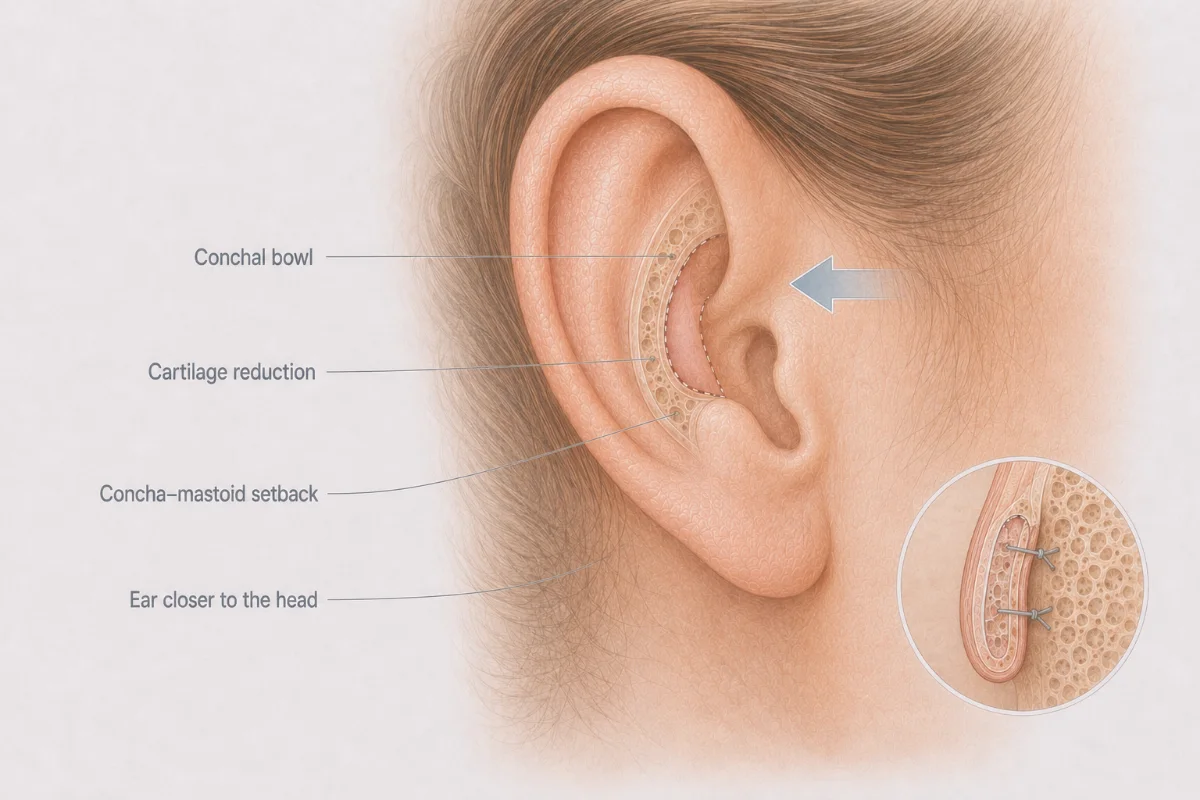
Conchal reduction
Cartilage in the conchal bowl is excised or set back so the whole ear sits closer to the head.
Benefits: Treats the actual cause where prominence comes from a deep bowl, which ridge-forming alone cannot fix.
Suitable for: A greater gap at the mid-ear than the upper ear, or a visibly deep conchal bowl.
04 · Your team
Performed by board-certified plastic surgeons
This procedure is performed by the clinic's plastic surgeons at an accredited partner private hospital (JCI / AACI).

Dr. Phattrapohn Liangcheep
Plastic and Reconstructive Surgery
Diploma of the Thai Board of Plastic and Reconstructive Surgery
View full profile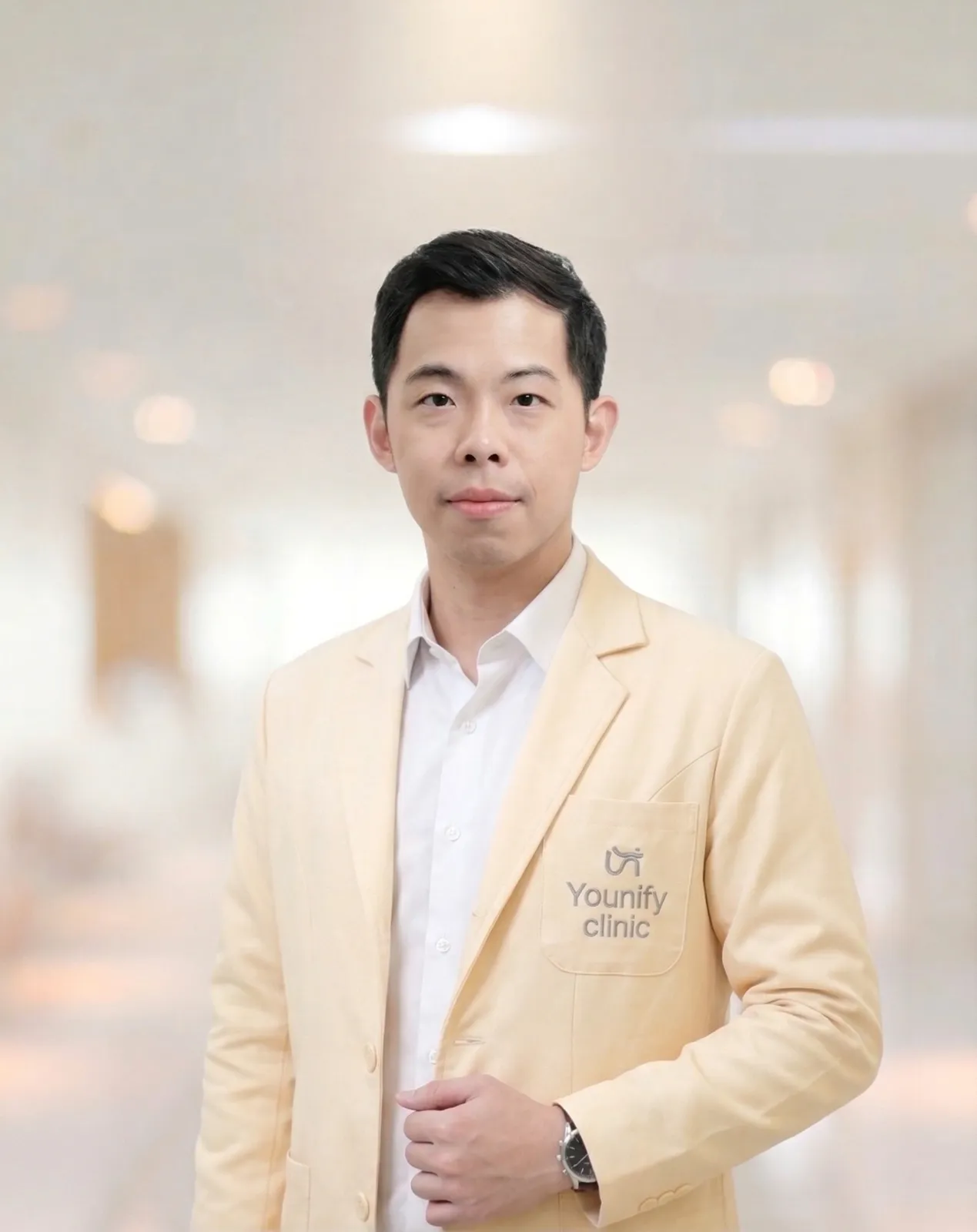
Dr. Thanachot Kamolveerat
Plastic and Reconstructive Surgery
Diploma of the Thai Board of Plastic and Reconstructive Surgery
View full profile05 · Safety
Operating room standards and monitoring
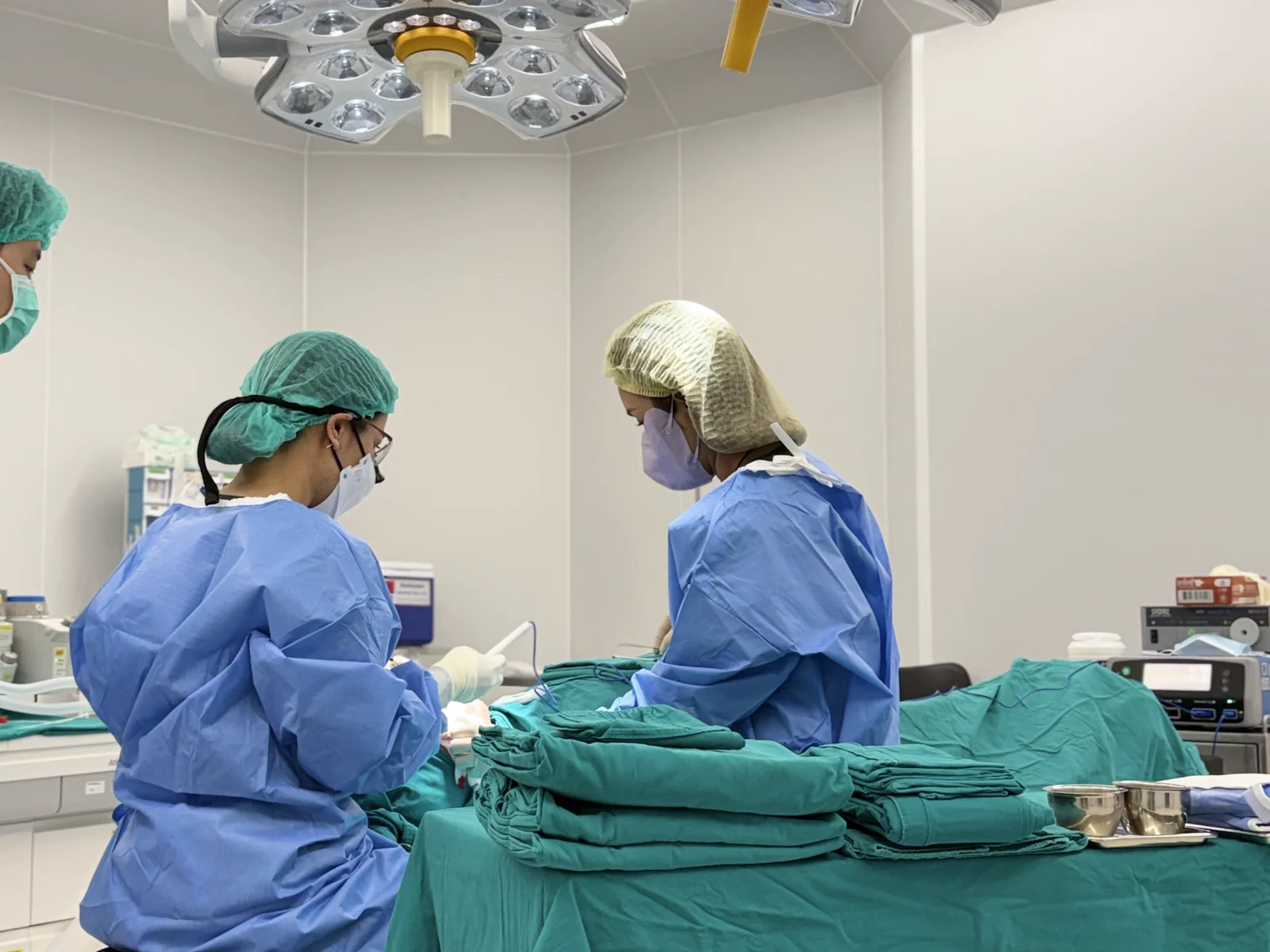
Surgery is performed in the operating room of a JCI- or AACI-accredited partner private hospital, with anesthesia care and continuous monitoring throughout.
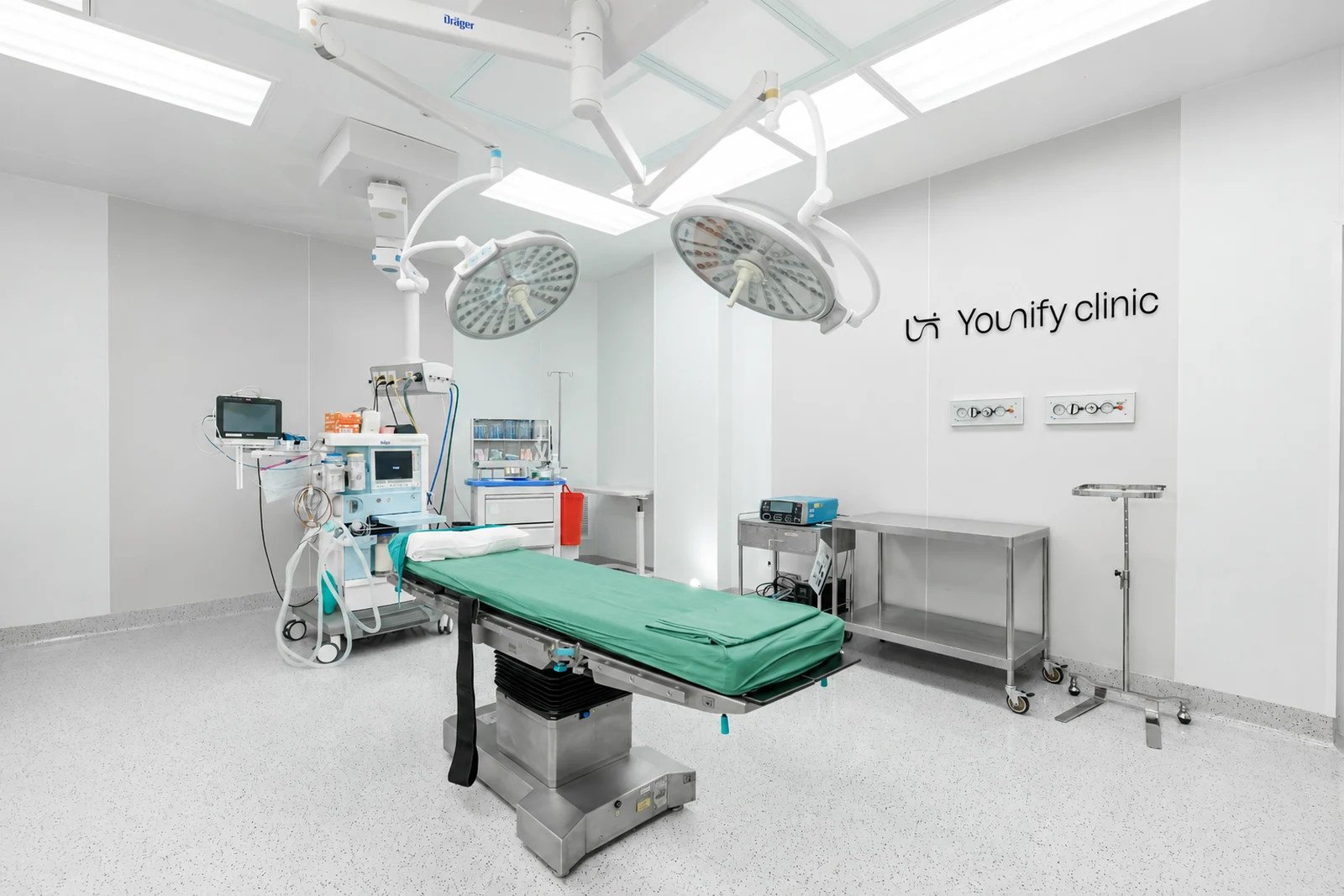
JCI- or AACI-accredited partner private hospital
Procedures are performed in a registered operating room, not a treatment room.
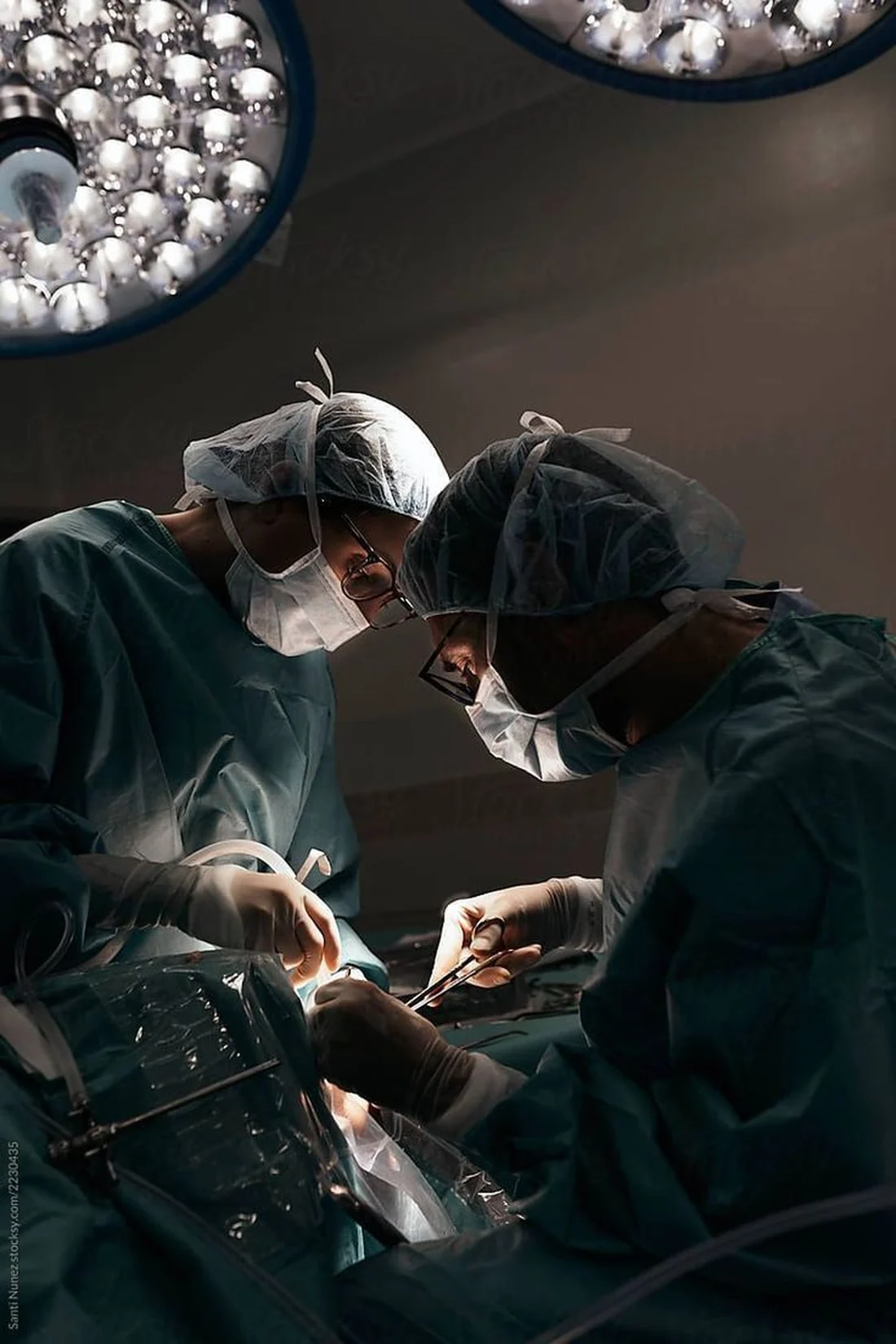
Specialist anaesthesia care
Anaesthesia is administered and monitored by a qualified anaesthesiologist for the duration of surgery.
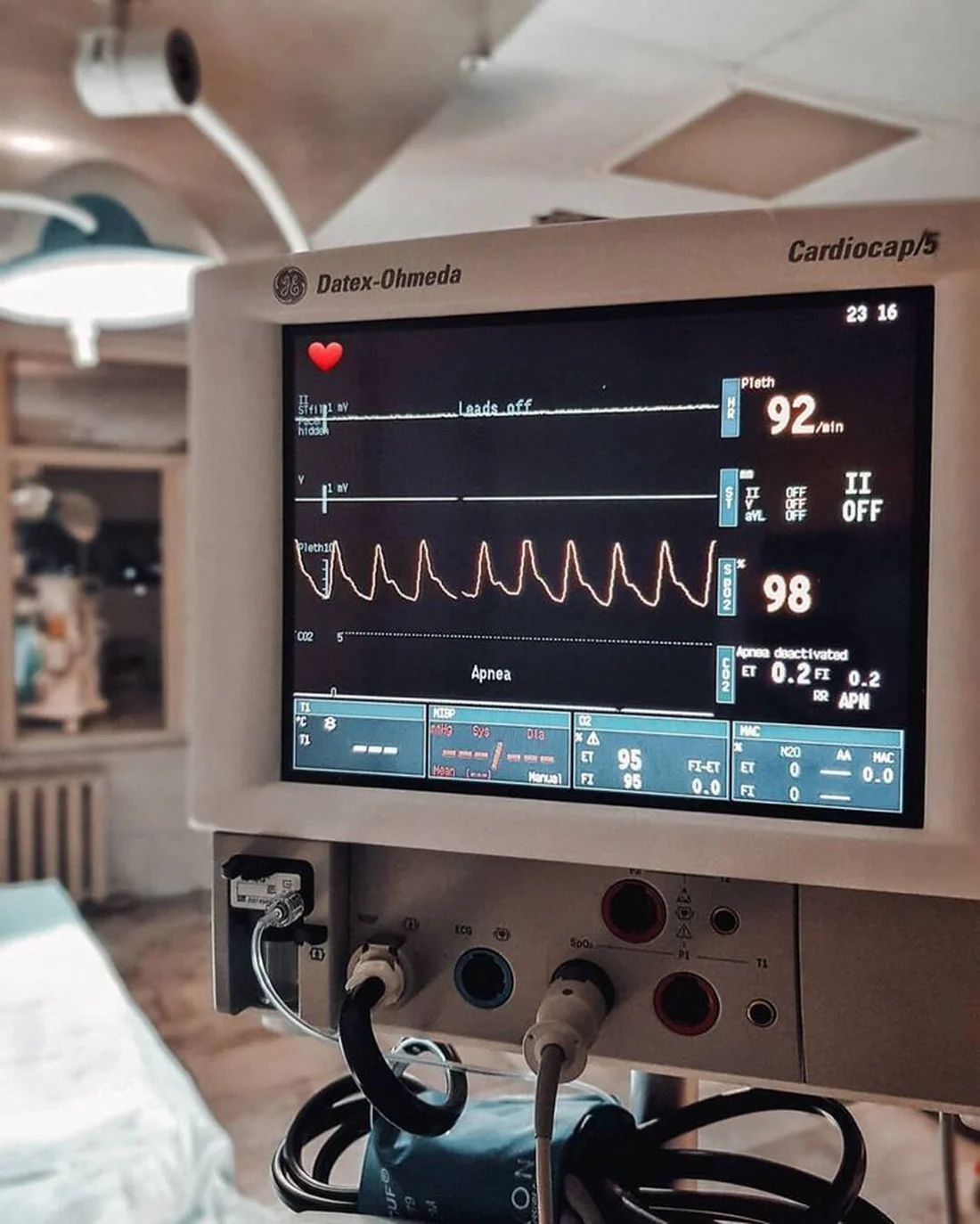
Continuous monitoring
Vital signs are monitored continuously during the procedure and through initial recovery.
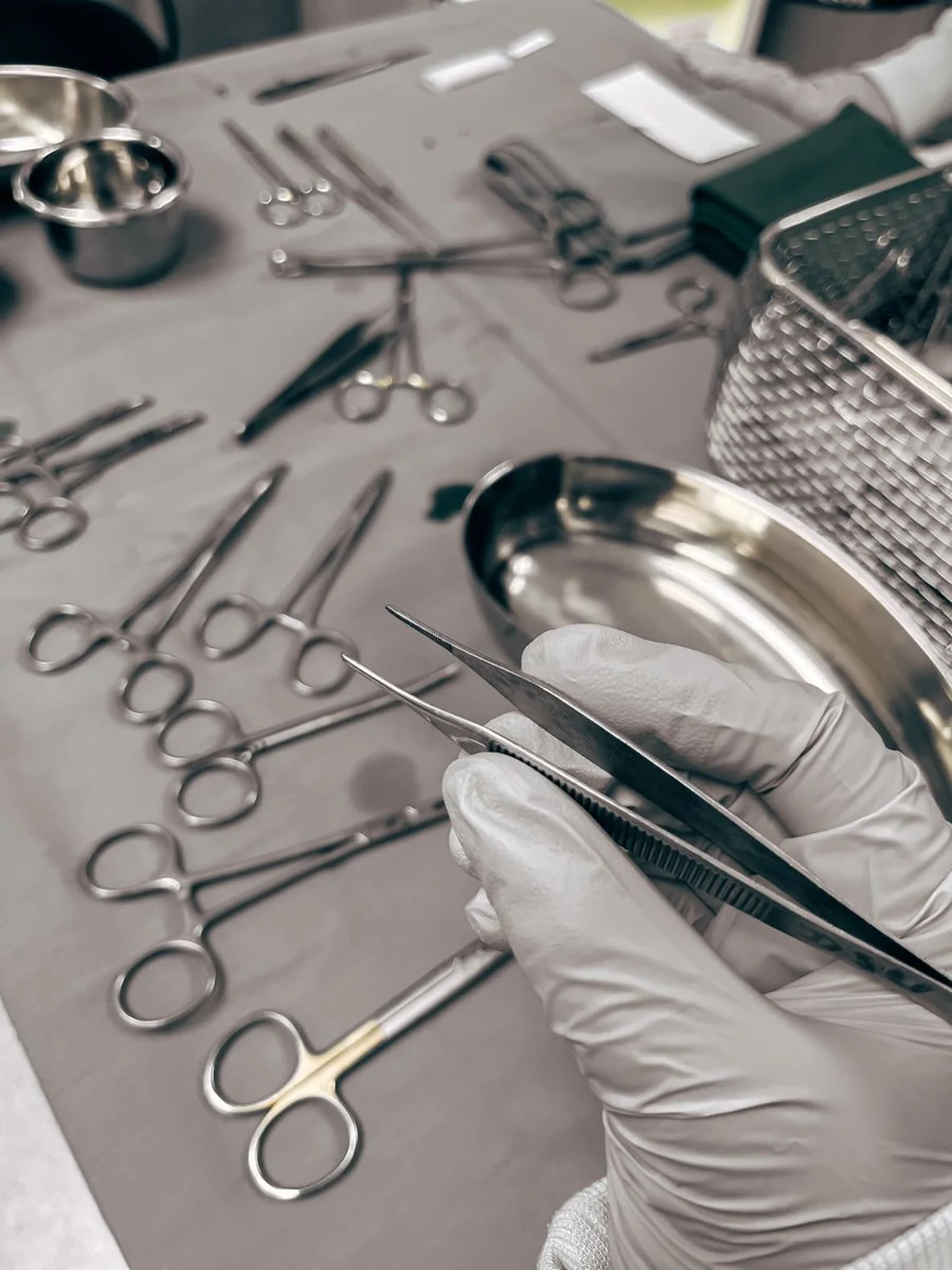
Sterile instrument protocol
Instruments and implants are handled under a documented sterile protocol.
The treatment process
Consultation & measurement
Rim-to-scalp distance is measured on both sides, with standardised front and side photographs.
Technique selection
Suture shaping or cartilage reshaping is chosen based on how flexible your cartilage is.
Pre-operative preparation
Health checks and preparation guidance, including care of the hair around the ears.
Day of surgery
Performed through an incision behind the ear; the cartilage is reshaped and the position reset.
Aftercare
A head garment supports the new position for the period your surgeon specifies.
Follow-up
Wound check, suture removal and a symmetry review once swelling settles.
Recovery timeline
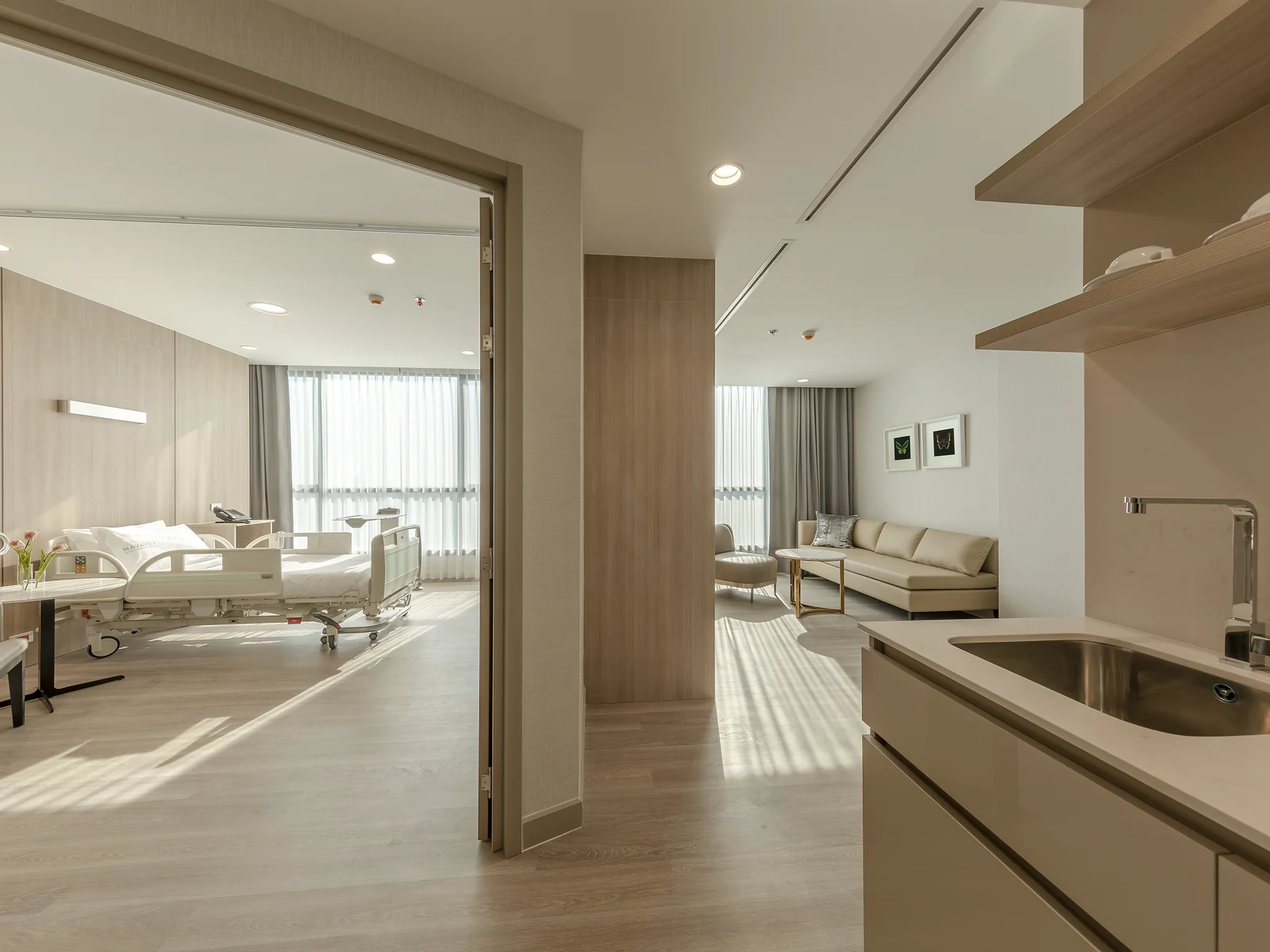
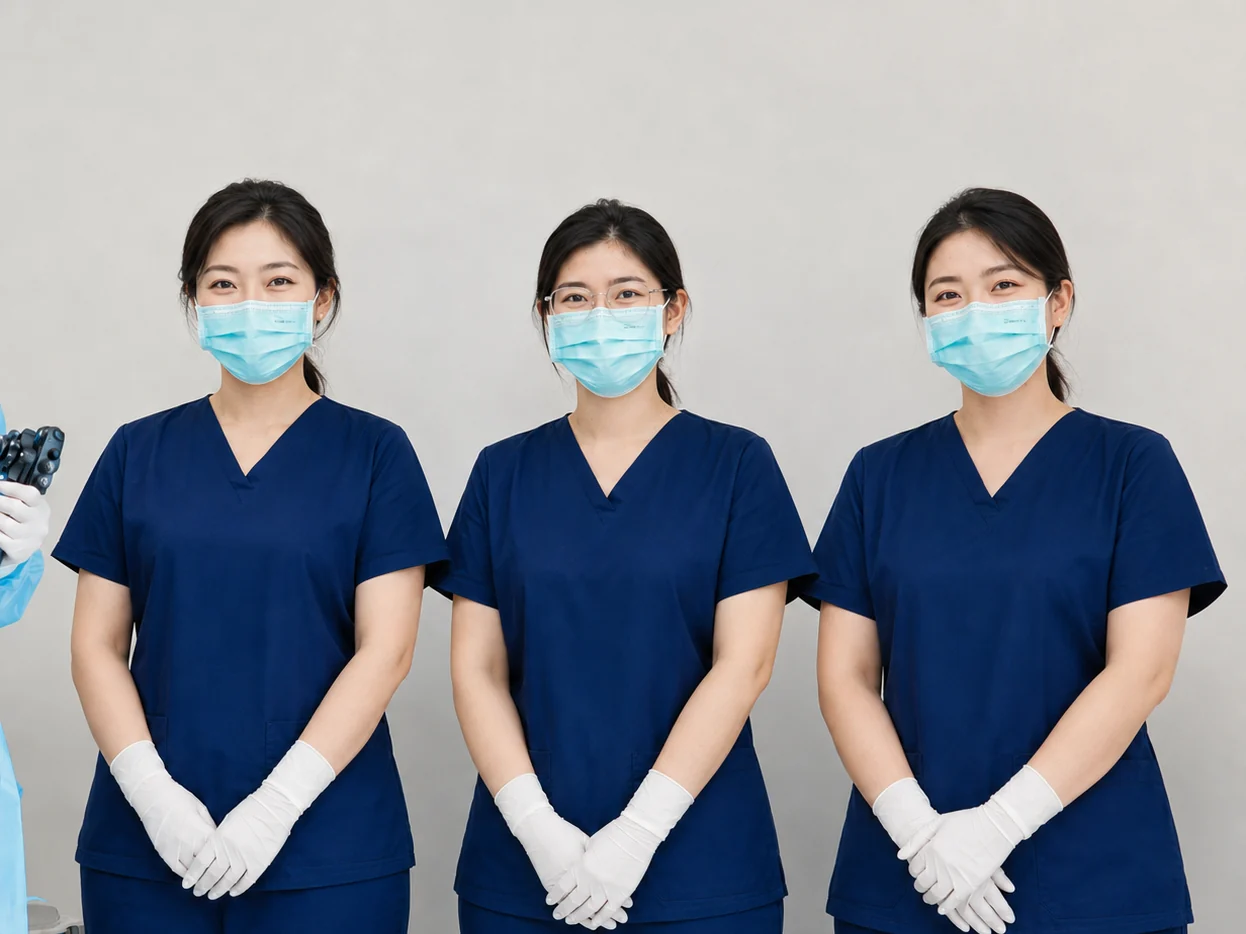
Your surgery at YOUNIFY
From the surgeon who operates to the nurses who follow up, and a private suite to recover in.
Frequently asked questions
Where is the incision?
Behind the ear, in the crease between the ear and the scalp, so it is not visible from the front.
Can the ears become prominent again?
Some relapse of position is possible, particularly if the head garment is not worn as advised early on. Your surgeon will explain how this risk is managed before you decide.
What age can a child have this?
It is generally considered once the ear cartilage has largely finished developing. Timing is assessed individually with the parents.
Can only one ear be corrected?
Yes, where only one ear is prominent, but your surgeon will always plan it against the other side for symmetry.
* This information is for general education. Results and treatment plans depend on an individual medical assessment. Every procedure carries risk. Please consult a doctor before deciding.
Related procedures
Considering ear reshaping?
Book an ear assessment and an individual plan with the YOUNIFY Clinic medical team.
Medically reviewed by Dr. Noppachai Siranart · Last reviewed
Surgery is performed by the clinic's two board-certified plastic surgeons at JCI- or AACI-accredited partner private hospitals in Bangkok.
Individual results may vary. Please consult a doctor before treatment.