Conditions
Plantar Fasciitis and Heel Pain: Your Options, from Self-Care to Procedures
About 80 percent of people with plantar fasciitis improve within 12 months with nonsurgical treatment. Care usually follows a stepwise order, with enough time given to each step: stretching, footwear, physiotherapy, then shockwave. Results vary by individual.
Key Takeaways
Medically reviewed by Dr. Noppachai Siranart · Updated August 14, 2026 · 6 min read
- Plantar fasciitis heel pain treatment works for most people without surgery, provided you start at the right step and give each step enough time. The problem we see in clinic is rarely that nothing works. It is usually skipping steps, or abandoning the first one before it has had a fair run.
- This is an orientation page rather than a deep guide. Its job is to help you locate yourself on the ladder, know when to move up, and know what to read next. The full list is under What to read next.
- ← Back to all conditions we treat
01
Does this sound like you?
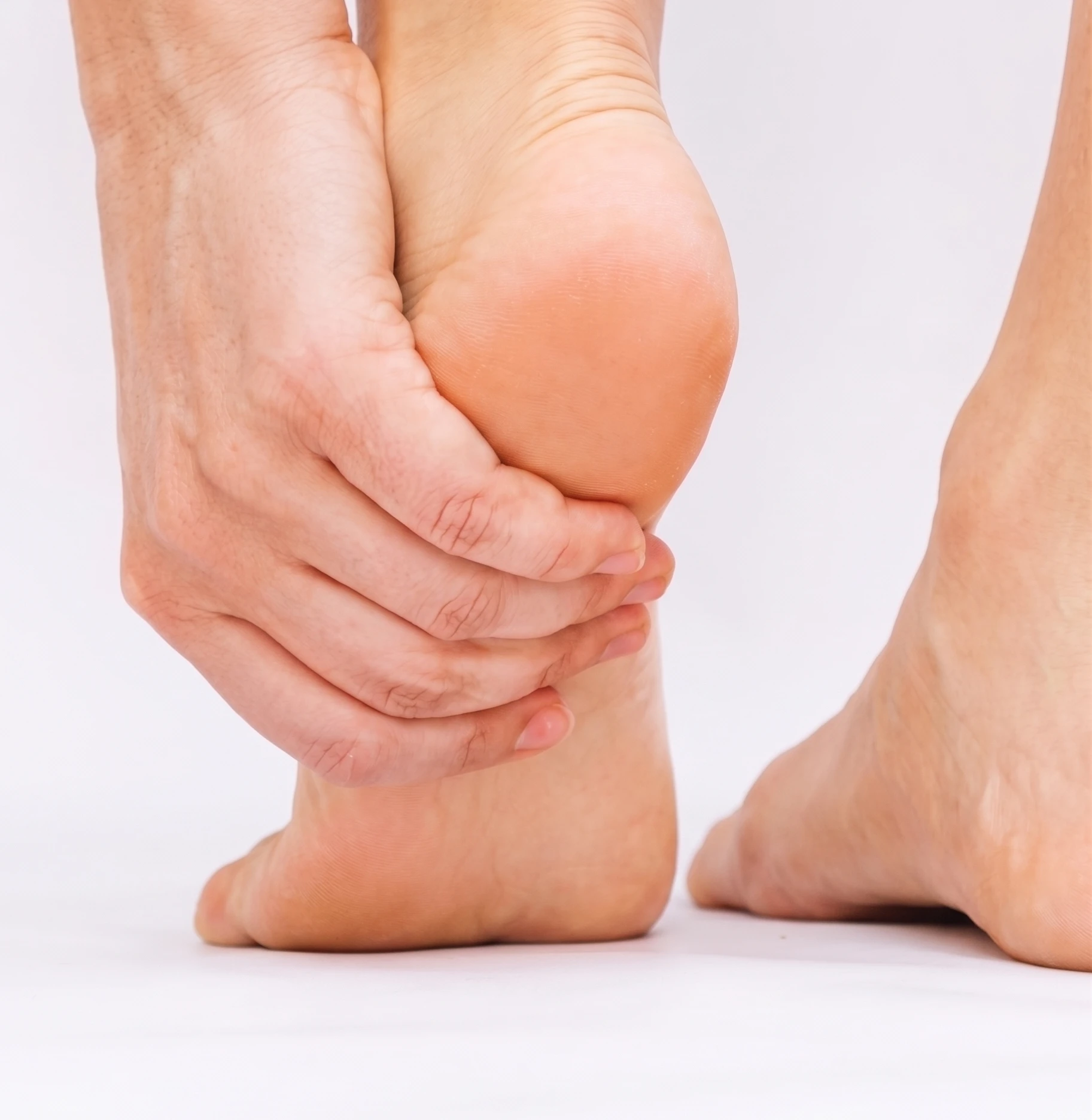
- Sharp heel pain on the first step in the morning: the most recognisable pattern; many describe stepping on something hard, easing after walking a while
- Pain when standing up after sitting: long meetings or long drives, then the first steps hurt again
- Worse the longer you stand: pain builds through the day after standing or walking
- Months of it, and it still hasn't settled. You've stretched, changed shoes, rested, and it keeps coming back
- A tender spot under the heel: pressing the middle or inner heel reproduces the pain
- Usually one side, though both heels can be affected
The pattern of "worst on the first step, eases with walking, returns after sitting" points most strongly to plantar fasciitis. Heel pain also has other causes: nerve problems around the ankle, Achilles insertion problems, or bone stress from repeated impact. Assessment confirms the picture before treatment is chosen.
02
Common causes
Plantar fasciitis is irritation and degeneration of the plantar fascia, the thick band running from the heel bone to the base of the toes, from repeated load and traction faster than the tissue can repair. Common contributors are heavy foot use (standing shifts, high walking volume, running, or increasing distance too quickly); higher body weight; tight calves and Achilles tendon, which transfer more traction to the heel attachment; foot structure such as flat or high arches; unsupportive footwear; and age, as tissue becomes less elastic. Long-term results usually depend on addressing these factors alongside symptom relief.
03
Treatment options, from least to most invasive
Many people stop at the early steps. Steps 1–2 continue alongside whatever comes after.
| Step | What it involves | When to move up | Limitations to know | Starting from (THB) |
|---|---|---|---|---|
| 1. Stretching and self-care | Regular plantar fascia and calf stretching, particularly before your feet touch the floor in the morning; reducing the repetitive loading that provokes symptoms; ice after heavy use; weight management where appropriate | Consistent for several weeks with no change | Consistency is the active ingredient; occasional stretching is usually not enough, and results take weeks not days | Self-care, no clinic fee |
| 2. Footwear and insoles | Shoes with heel support and a sole that is not too hard; foot orthoses considered | Footwear adjusted and it still hurts on normal standing or walking | Insoles help along the way rather than working as a standalone treatment · Symptoms tend to return if loading is not addressed too | Self-care, no clinic fee |
| 3. Medication and physiotherapy | An individualised programme covering stretching, calf and foot strengthening, gait adjustment and taping during painful periods, alongside short-course pain or anti-inflammatory medication as considered by the medical team | Weeks to months completed and pain still limits walking and work | Medication opens a window for rehabilitation rather than treating the mechanism · Caution with stomach or kidney conditions | Quoted after physician assessment |
| 4. Shockwave therapy (ESWT) | Energy delivered to the fascia's heel attachment to stimulate tissue repair, usually as a course of several sessions weeks apart | Full course completed and given time, with an inadequate response | It is a course, not a single session · Response varies between individuals · Physiotherapy continues alongside | Quoted after physician assessment |
| 5. TAME (TransArterial MicroEmbolization) for chronic heel pain | A catheter-based procedure blocking the tiny abnormal vessels growing into chronically inflamed tissue, without open surgery | Considered only for people who have completed standard care, still have pain, and have been reassessed | The evidence base is still emerging, so it is not a first-line option and is not suitable for everyone with plantar fasciitis · Appropriate only after individual assessment by our medical team | 129,000 |
Plantar fascia surgery is reserved for the small number of people with severe, long-standing symptoms who have completed the full course of non-surgical care. In practice, most people never need to climb that far.
On timing, said plainly: plantar fasciitis usually takes longer than people expect. Many improve gradually over several months to around a year with non-invasive care, and switching treatments too quickly makes it hard to judge what actually helped.
Which of these options is appropriate depends on your imaging, your medical history, and how your symptoms have responded to previous treatment. At YOUNIFY Clinic, a physician reviews these together with you before any treatment is planned. Results vary by individual.
This tool helps you find relevant information. It does not provide a diagnosis.

04
What assessment involves, and what can be done before you fly
- History: the first-step pattern, how long it has been there, your work and activities, your usual footwear, and everything you have already tried with how long you did each thing
- Examination: the location of tenderness, calf and Achilles tightness, arch structure, gait, and tests that help separate other causes of heel pain
- Imaging where it changes the plan: decided individually; not everyone needs it
- Sequencing agreed together: if a less invasive step has not been completed, our medical team will say so before considering a procedure, and we set measurable goals together
Much of steps 1–2 can be prepared remotely. Send a description of your symptoms, what you have tried and for how long, and any imaging from the last 12 months. We can then tell you before booking whether a procedure is a realistic part of the plan, or whether completing a structured programme first is the more useful step.
05
When to be seen without waiting
- Heel pain after a clear injury, or an inability to bear weight
- Numbness, weakness, or burning pain spreading through the sole, which may point to a nerve problem rather than the fascia alone
- Swelling, redness, warmth, or fever
- Unusual night pain, constant pain at rest, or unexplained weight loss
- Diabetes, poor circulation in the feet, or a weakened immune system, together with foot pain or a wound
06
What to read next
- "Show me every step in detail" → Plantar fasciitis treatment: a stepwise guide · the main guide for this cluster, with each step detailed and referenced
- "What exactly is that first-step morning pain?" → Morning heel pain with the first step · the mechanism behind it and the other causes to rule out
- "Give me stretches and self-care I can actually follow" → Does plantar fasciitis go away on its own? Stretches and self-care · the stretches, how often, and daily activity adjustments
- "It's been months and nothing works. Where do I go now?" → Chronic plantar fasciitis: where to get treated · what reassessment should cover, and the options for resistant cases
- "Shockwave or TAME: which one?" → Shockwave vs TAME for plantar fasciitis · how each works, who each suits, and where the evidence stands
- "Show me other conditions you treat" → All conditions
Frequently Asked Questions
Does plantar fasciitis go away on its own?
Many people improve gradually with non-invasive care over several months to around a year. But "improves on its own" is not the same as doing nothing. Consistent stretching, better footwear, and managing how much you load the foot are what shorten that path. Individual results may vary.
I've stretched for a month with no change. What now?
First check whether it has genuinely been consistent: frequency, technique, and whether activity was adjusted alongside. If it has, get assessed to confirm the diagnosis and consider the next step. See plantar fasciitis treatment.
How many shockwave sessions are needed, and does it hurt?
It is usually a course of several sessions weeks apart rather than a single treatment. You may feel a deep ache or soreness during it. The medical team adjusts energy levels to your response, and physiotherapy continues alongside.
What is TAME, and who should consider it?
TAME blocks the tiny abnormal arteries growing into chronically inflamed tissue, through a catheter and without open surgery. It is considered only for people who have completed standard care and still have pain. Its evidence base is still emerging, so it is not a first-line option and is not suitable for everyone. See shockwave vs TAME.
Will I need surgery?
Most people do not. Surgery is reserved for severe, long-standing symptoms after non-surgical care has genuinely been completed, because recovery takes longer and surgical risks come into play.
Related Articles
References
- Plantar Fasciitis (American Family Physician, 2019)
Medical Note
This article is for general information and does not replace medical examination, diagnosis, or treatment. If symptoms are severe, changing quickly, or urgent, seek medical care promptly.
Individual results may vary. Please consult a doctor before treatment.
Want to know which care plan fits you?
Share your symptoms, health history, medications or prior procedures, and personal goals. Our team can help arrange a medical assessment.