
Aesthetic Surgery
Facial Bone Contouring in Bangkok
Cheekbone, jaw angle and chin reshaped together so the facial border reads as one continuous line.
Clinic open daily, 11:00 to 20:00 (Bangkok time) · Online enquiries answered 24 hours a day

Price list
Procedures in this table start from THB 110,000 to THB 160,000 per procedure; the final plan is confirmed in a written quotation after assessment.
| Procedure | Starting Thailand price (฿) | Starting Thailand price (AUD) | Standard Australia price (AUD) |
|---|---|---|---|
| Bone reduction | |||
| Zygoma (Cheekbone) Reduction | THB 110,000 | A$4,783 | — |
| Mandible Angle Reduction | THB 130,000 | A$5,652 | — |
| Combined reduction | |||
| Zygoma + Mandible Angle Reduction (combined) | THB 120,000 | A$5,217 | — |
| Chin repositioning | |||
| Genioplasty / Chin Adjustment (with contouring) | THB 160,000 | A$6,957 | A$10,000 |
* Indicative prices for reference only. Some items are priced per area. Final pricing depends on an individual assessment. Overseas prices are indicative market estimates for comparison only. Contact our team for a personalized quote.
Your final quote follows an individual medical assessment. You receive a written quotation before any deposit.
Care you can measure
Figures from the YOUNIFY surgical program.

01 · Planning
See the real bone before surgery is planned
Planned from your own skeleton, not from a reference photograph.
Facial radiographs show the actual width of the cheekbone, the angle of the mandible and where the nerves run. Your surgeon uses that to define how much can safely be altered.
Planning also accounts for the thickness of the tissue covering the bone, because reducing more bone than the soft tissue can support risks a hollow look and earlier laxity in the long term.
Simulation is a planning aid. It illustrates an expected direction, not a guaranteed outcome.
What this procedure is
Facial bone contouring reshapes the bones that define the outline of the face (the zygoma, the mandible and the chin), planned together as one unit. Reducing a single area in isolation often just makes another area look more prominent instead.
Planning uses facial radiographs and proportional measurements to decide which bone is altered and by how much. Your surgeon explains what your existing structure allows, along with the nerve position and dental occlusion constraints that set the safe limits.
Men who would like a stronger chin or jawline, rather than a narrower one, can read about facial implants for men.
Concerns it addresses
Wide or prominent cheekbones
The midface reads as wide, most visible from the front and three-quarter view.
Square jaw angle
A wide mandibular angle makes the lower face read as square.
Discontinuous facial border
The transition between cheekbone, jaw and chin steps rather than flowing as one line.
Skeletal asymmetry
The two sides differ, so the face reads as tilted when viewed straight on.
Zygoma Reduction vs Mandible Angle Reduction
These two procedures reshape different parts of the facial skeleton and are usually planned together as one set.
| Zygoma reduction | Mandible angle reduction | |
|---|---|---|
| Area reshaped | The anterior and lateral cheekbone | The mandibular angle and the lower border |
| Concern addressed | A wide midface or projecting cheekbones | A wide jaw angle, giving the lower face a square outline |
| Method | The cheekbone is cut, moved inward, and fixed with plates | The mandibular angle is cut and the lower border is contoured into a continuous line |
| Result | Narrows the midface at the level of the bone, not by reducing the overlying fat | Turns a square lower face into a continuous curve |
| Planning caution | Reducing one area alone tends to make the other stand out | The osteotomy line is kept clear of the nerve running within the bone |
How we plan your result
A balanced facial frame comes from continuity of the border running from cheekbone down to chin, not from making the bone as small as possible. Over-reduction can leave the face looking hollow and can accelerate soft-tissue laxity.
Who is it for
- People whose face reads as wide or square because of bone rather than fat
- People whose facial border steps between cheekbone, jaw and chin
- People whose facial skeleton has finished growing
- People in good general health with no contraindication to major surgery under general anaesthesia
03 · Technique
Which part is altered and how
Each part of the facial frame is cut on a different plane and carries a different nerve constraint.
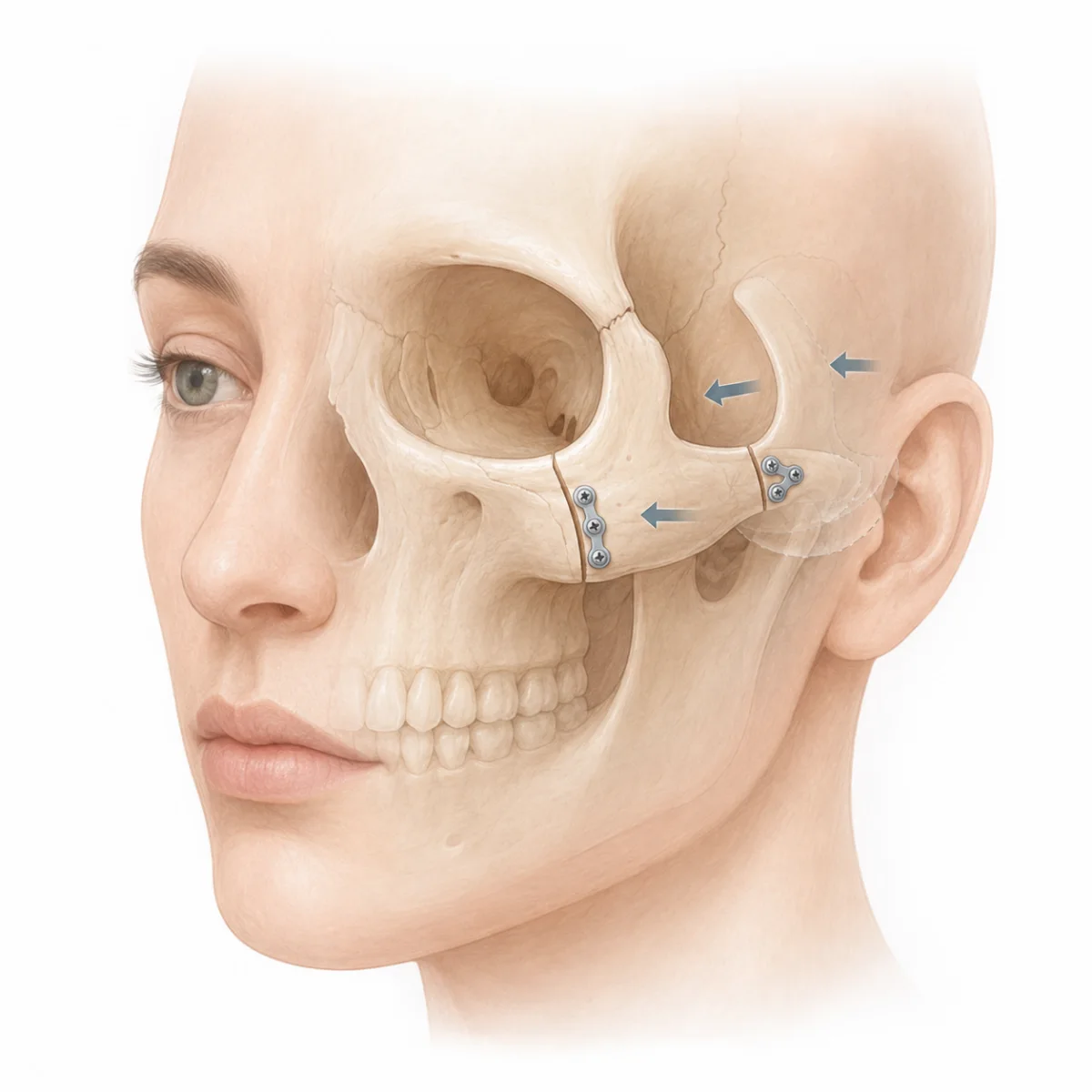
Zygoma reduction
The cheekbone is cut at both its front and side, moved inward and fixed with a plate.
Benefits: Genuinely narrows the midface at the skeleton rather than only reducing the tissue over it.
Suitable for: A wide midface or projecting cheekbones, most visible from the front and three-quarter view.
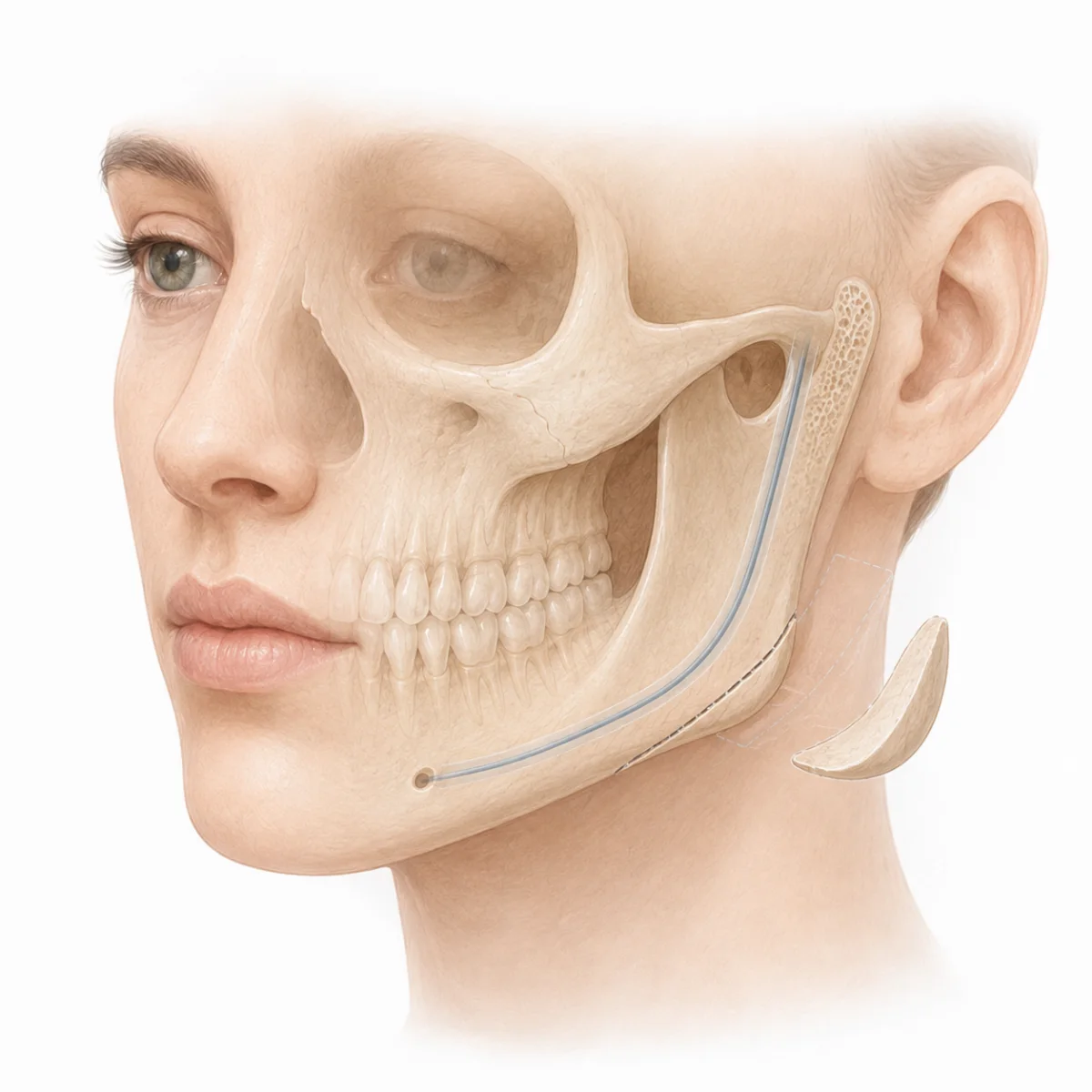
Mandible angle reduction
The jaw angle is cut and the lower border refined into a continuous line, with the osteotomy planned clear of the nerve running inside the bone.
Benefits: Turns a square lower face into a continuous curve without leaving a step at the end of the cut.
Suitable for: A wide jaw angle, often alongside a thick masseter over projecting bone.
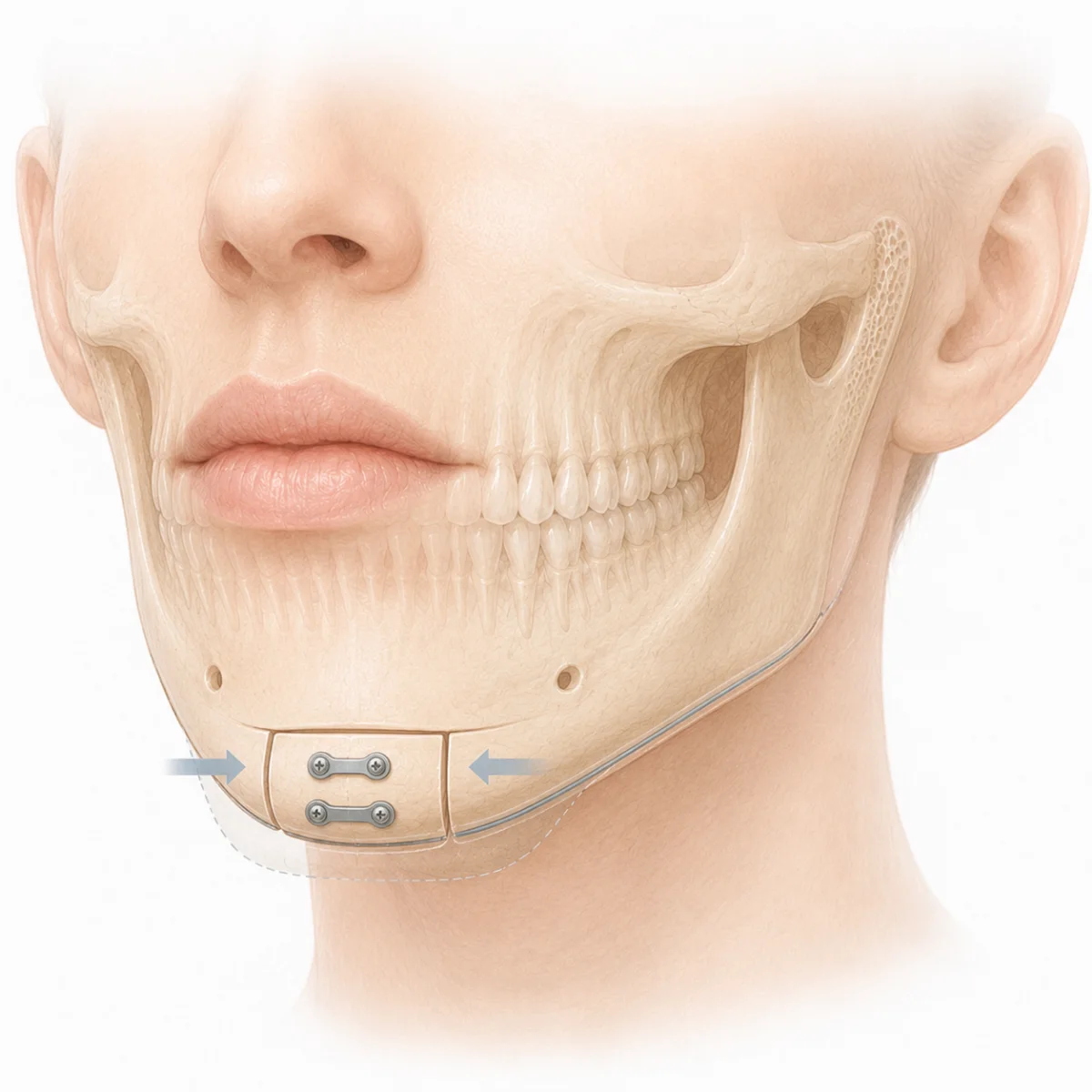
Chin adjustment alongside
The chin is repositioned or narrowed so the end of the facial border relates to the newly reshaped jaw.
Benefits: Makes the outline continuous along its whole length: reducing the jaw alone often leaves a visible junction.
Suitable for: A chin left too wide or too long relative to a jaw that has just been reduced.
04 · Your team
Performed by board-certified plastic surgeons
This procedure is performed by the clinic's plastic surgeons at an accredited partner private hospital (JCI / AACI).

Dr. Phattrapohn Liangcheep
Plastic and Reconstructive Surgery
Diploma of the Thai Board of Plastic and Reconstructive Surgery
View full profile
Dr. Thanachot Kamolveerat
Plastic and Reconstructive Surgery
Diploma of the Thai Board of Plastic and Reconstructive Surgery
View full profile05 · Safety
Operating room standards and monitoring
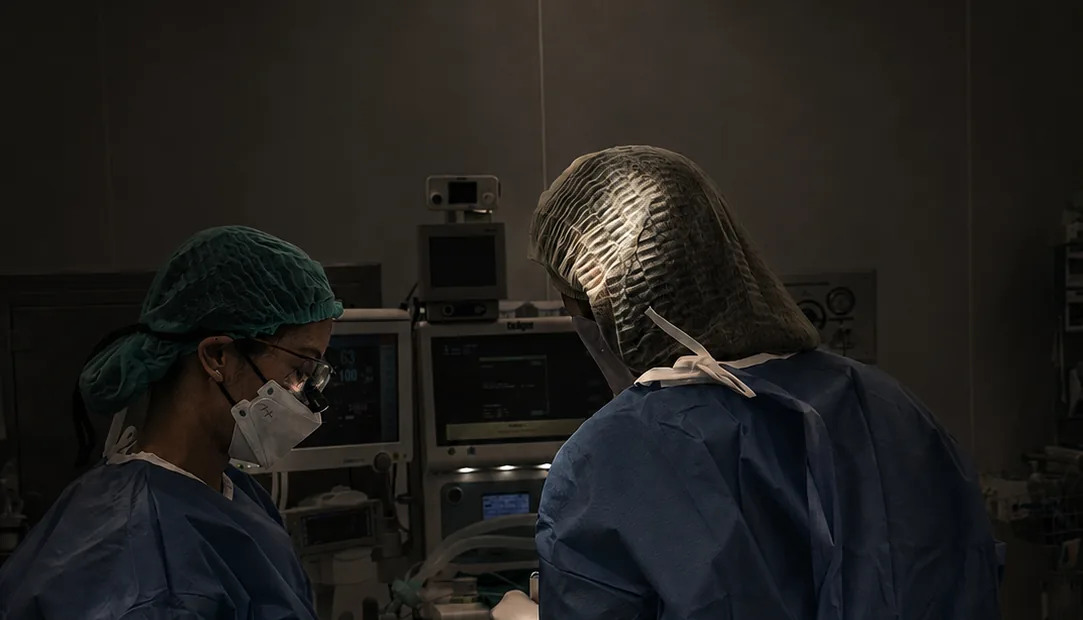
Surgery is performed in the operating room of a JCI- or AACI-accredited partner private hospital, with anesthesia care and continuous monitoring throughout.
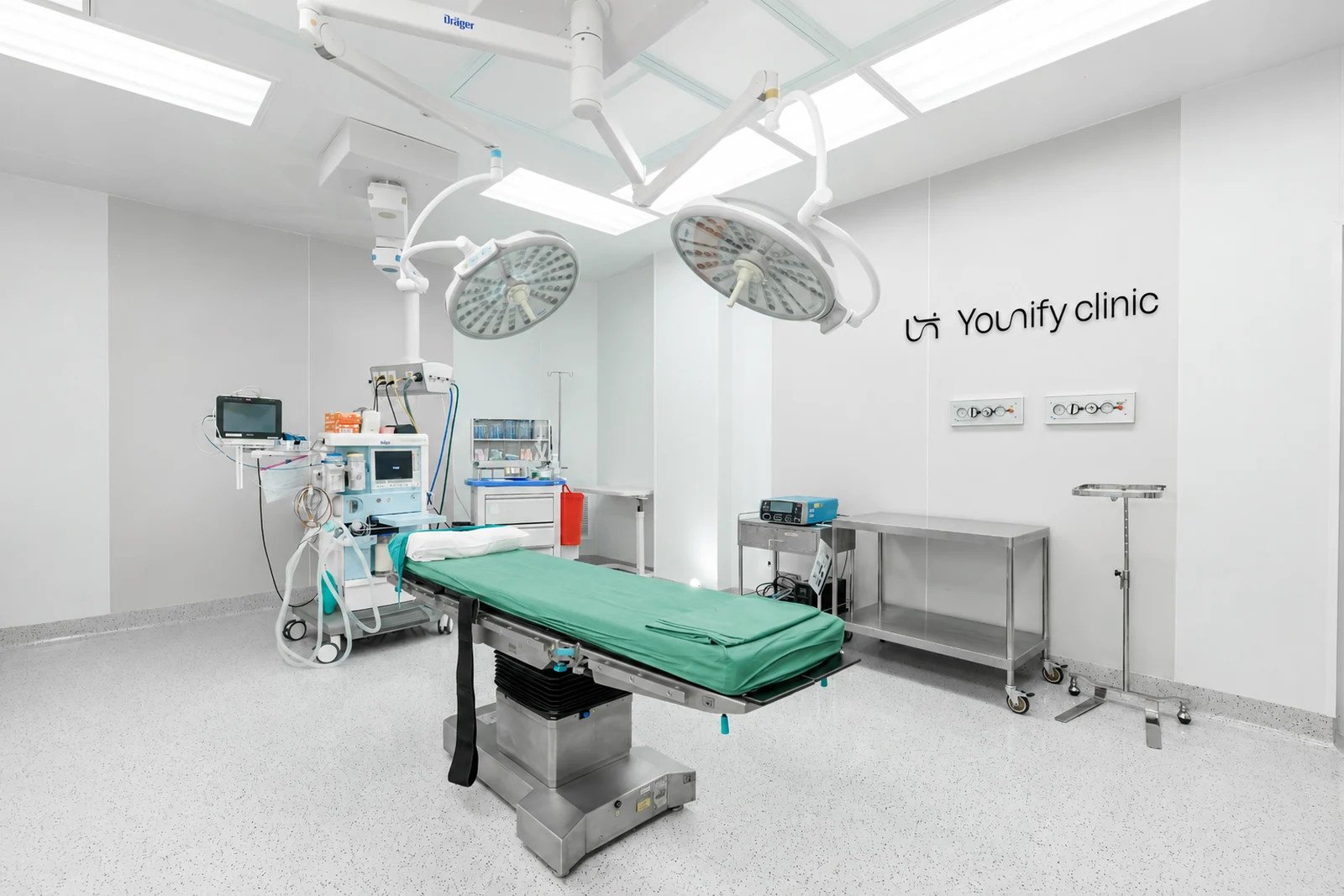
JCI- or AACI-accredited partner private hospital
Procedures are performed in a registered operating room, not a treatment room.
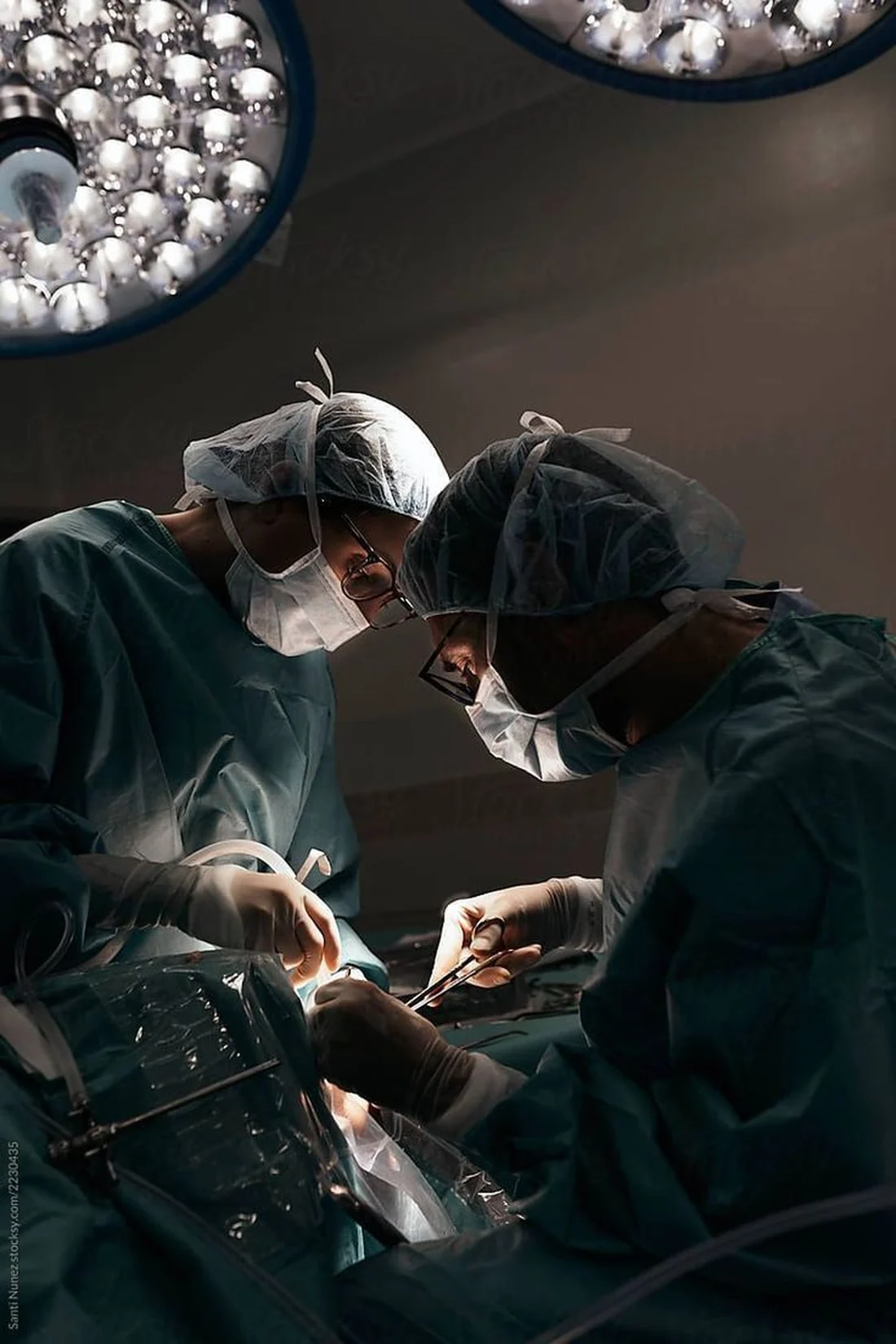
Specialist anaesthesia care
Anaesthesia is administered and monitored by a qualified anaesthesiologist for the duration of surgery.
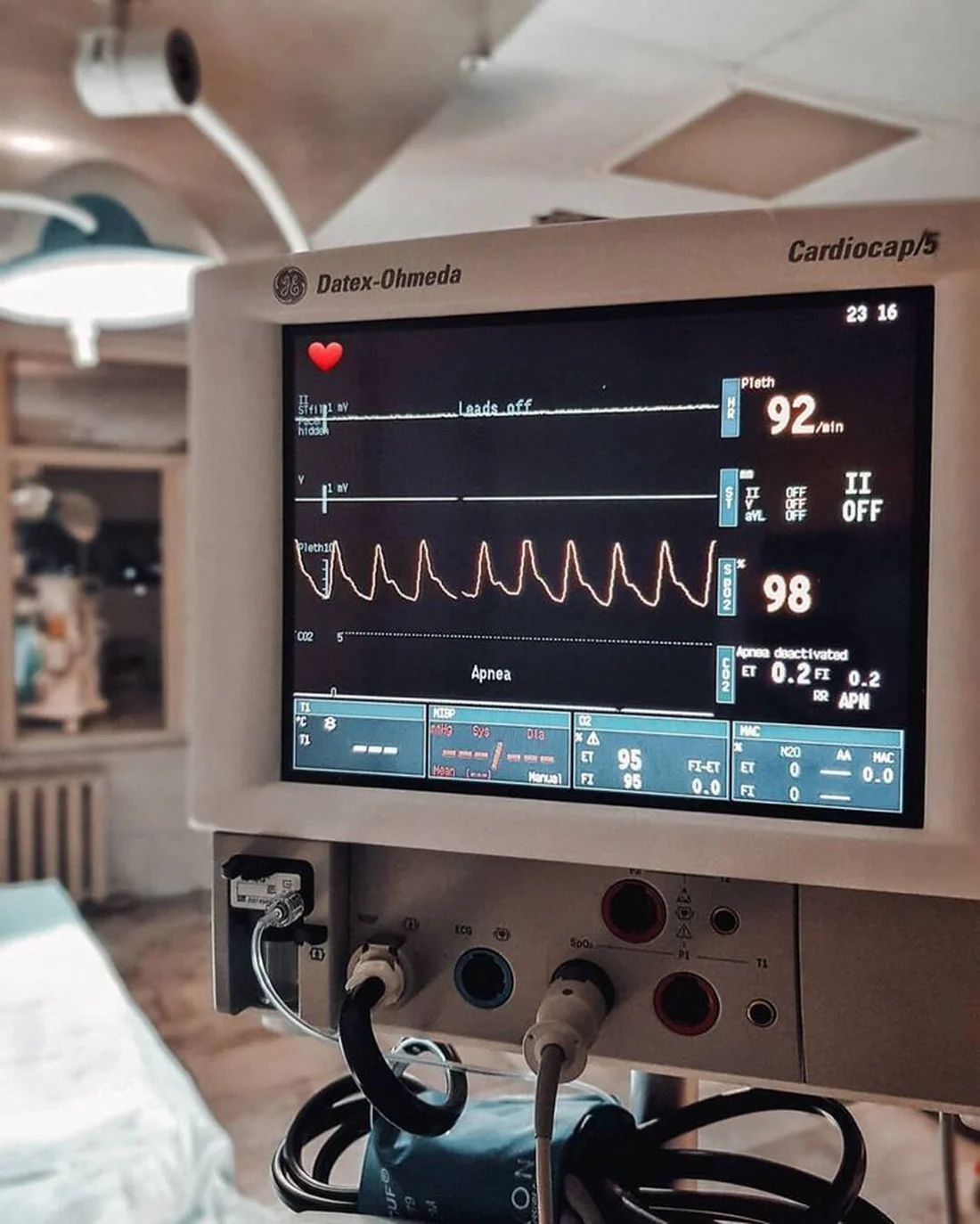
Continuous monitoring
Vital signs are monitored continuously during the procedure and through initial recovery.
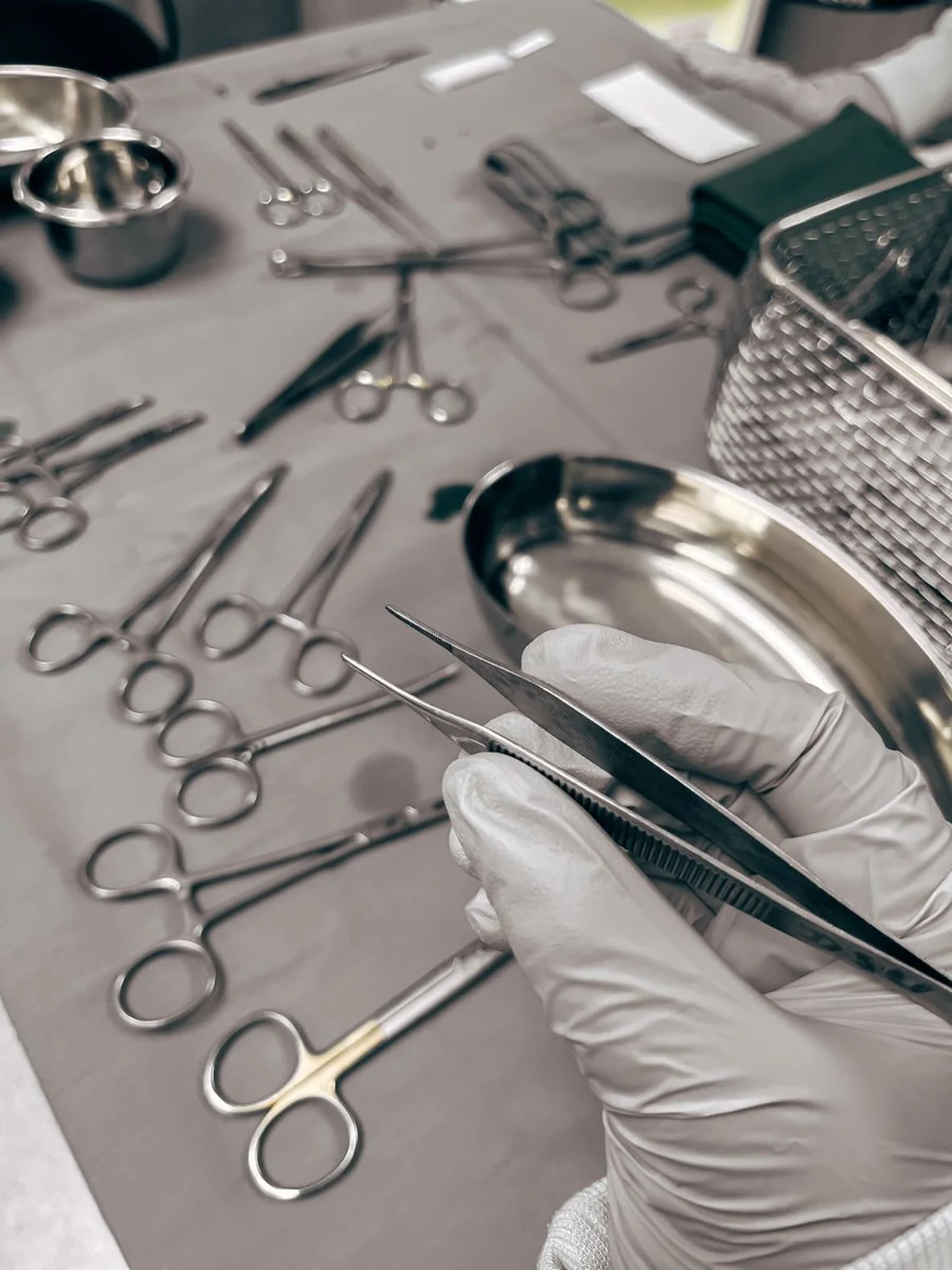
Sterile instrument protocol
Instruments and implants are handled under a documented sterile protocol.
The treatment process
Consultation & imaging
Facial radiographs and standardised photography show the real bone structure and nerve position.
Osteotomy planning
What is altered and by how much is agreed, along with the achievable extent and the risks.
Pre-operative preparation
Pre-surgical health checks, a bite assessment, and preparation for a soft diet afterwards.
Day of surgery
Performed under general anaesthesia, mostly through intra-oral incisions so there is no external scar.
Aftercare
Swelling management, oral hygiene care, and a staged return to normal diet.
Follow-up
Scheduled reviews of swelling, bite and the settling contour.
Recovery timeline
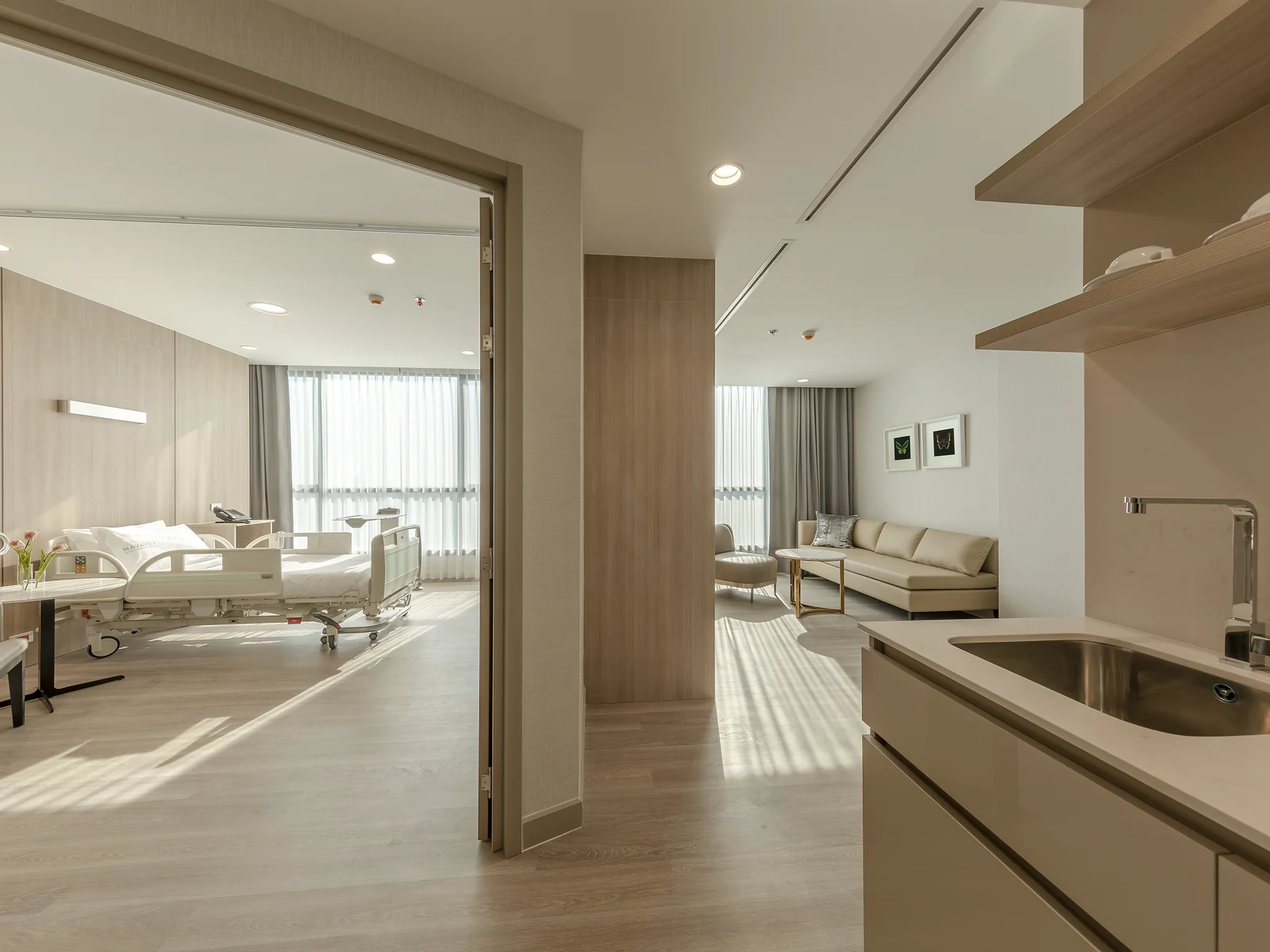
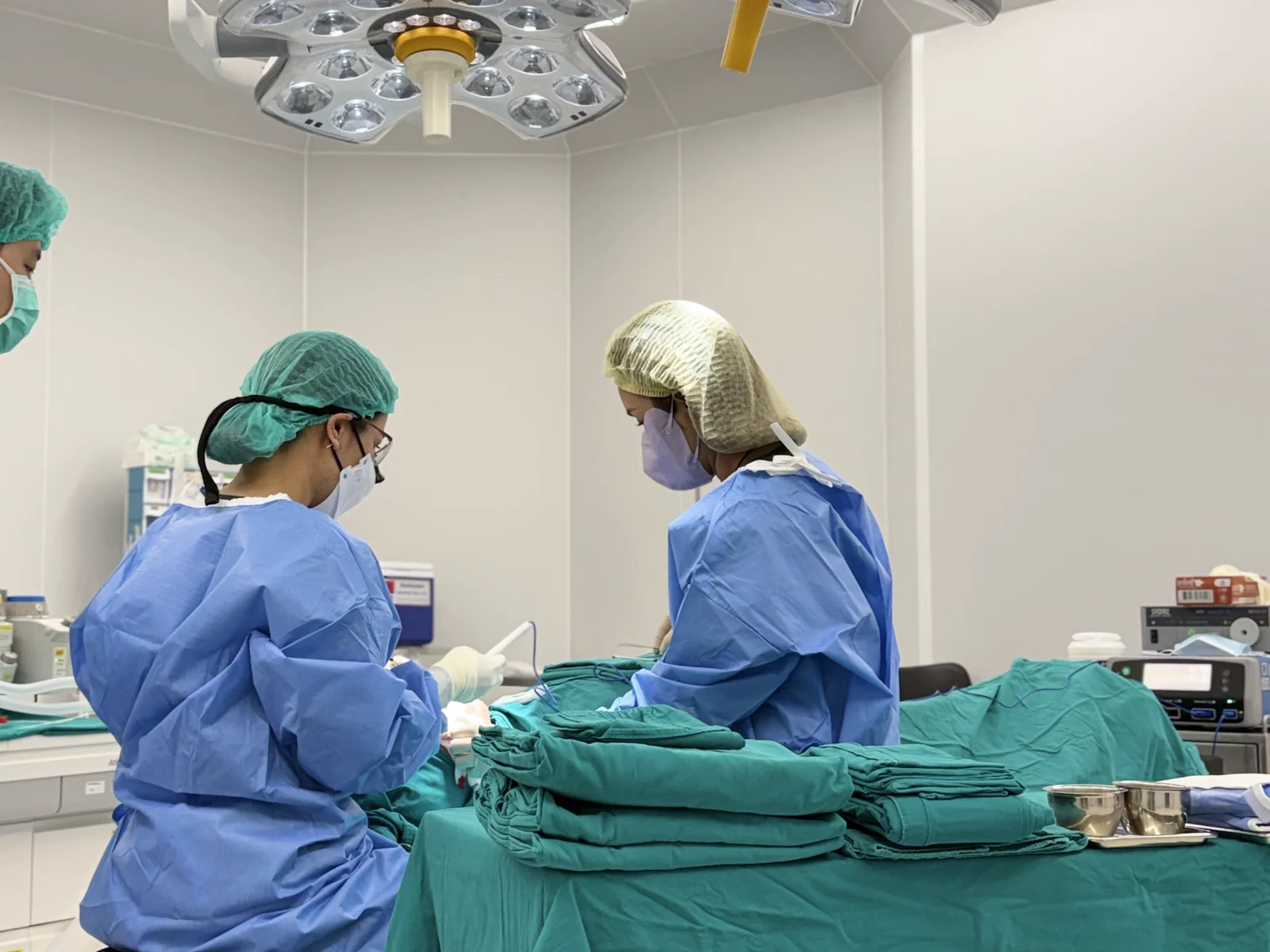
Your surgery at YOUNIFY
From the surgeon who operates to the nurses who follow up, and a private suite to recover in.

Frequently asked questions
Will there be an external scar?
Most of the work is done through incisions inside the mouth, so there is no scar on the face. Some techniques need a small external incision, which your surgeon will explain beforehand.
Will I have numbness?
Numbness of the chin, lower lip or cheek is common after surgery and usually improves over time, though in some people it takes long or does not fully resolve.
Does it change my bite?
Contouring planned for shape does not usually alter occlusion, but your bite is checked before and after surgery either way.
Can it be combined with other procedures?
It can be planned alongside chin or other facial surgery, subject to a safety assessment and total operating time.
* This information is for general education. Results and treatment plans depend on an individual medical assessment. Every procedure carries risk. Please consult a doctor before deciding.
Related procedures
Considering facial bone contouring?
Book imaging, a structural assessment and an individual plan with the YOUNIFY Clinic medical team.
Medically reviewed by Dr. Noppachai Siranart · Last reviewed
Surgery is performed by the clinic's two board-certified plastic surgeons at JCI- or AACI-accredited partner private hospitals in Bangkok.
Individual results may vary. Please consult a doctor before treatment.