
Aesthetic Surgery
Jaw Implants (Jaw Augmentation) in Bangkok, Thailand
A jaw implant adds width and definition at the angle of the jaw. At YOUNIFY Clinic, a Healthy Aging & Wellness Center based in Bangkok, Thailand, jaw augmentation starts from THB 90,000 with a stock implant and from THB 100,000 with a patient-specific implant designed from your CT scan. Surgery is performed by the clinic's two board-certified plastic surgeons, and your price is confirmed in a written quotation before any deposit.
Clinic open daily, 11:00 to 20:00 (Bangkok time) · Online enquiries answered 24 hours a day

At a glance
- Procedure
- Jaw augmentation (jaw implant), stock or patient-specific
- Starting from (THB)
- Jaw Augmentation: Stock Implant from 90,000 · Jaw Augmentation: Patient-Specific Implant from 100,000 · Jaw + Chin Augmentation (combined) from 100,000
- Hospital stay
- 1 to 2 nights
- Time in Bangkok
- Confirmed at consultation
- Who operates
- Two board-certified plastic surgeons
- Where
- Partner private hospital accredited by JCI / AACI
- Last reviewed
- August 31, 2026
Key Takeaways
- A jaw implant widens and defines the jaw angle; it does not narrow a wide jaw, which is bone contouring.
- Stock implants are selected from manufactured sizes; patient-specific implants are designed from your own CT scan.
- Jaw implants are usually placed through incisions inside the mouth, so there is no visible scar.
- Jaw augmentation starts from THB 90,000 (stock) or THB 100,000 (patient-specific), and jaw and chin together from THB 100,000.
Price list
Procedures in this table start from THB 90,000 to THB 100,000 per procedure; the final plan is confirmed in a written quotation after assessment.
| Procedure | Starting Thailand price (฿) | Starting Thailand price (AUD) |
|---|---|---|
| Jaw implants | ||
| Jaw Augmentation: Stock Implant | THB 90,000 | A$3,913 |
| Jaw Augmentation: Patient-Specific Implant | THB 100,000 | A$4,348 |
| Jaw + chin | ||
| Jaw + Chin Augmentation (combined) | THB 100,000 | A$4,348 |
* Indicative prices for reference only. Some items are priced per area. Final pricing depends on an individual assessment. Overseas prices are indicative market estimates for comparison only. Contact our team for a personalized quote.
Your final quote follows an individual medical assessment. You receive a written quotation before any deposit.
Stock or patient-specific
| Stock implant | Patient-specific implant | |
|---|---|---|
| How it is made | Selected from manufactured sizes and adjusted during surgery | Designed from your CT scan and made for your jaw |
| Often suits | A symmetrical jaw where a standard shape sits flush | Asymmetry, a larger change, or a jaw where stock shapes do not fit well |
| Imaging | Confirmed at consultation | CT scan required |
| Starting from (THB) | 90,000 | 100,000 |
Read the full comparison: jaw implant: stock or patient-specific. A stock jaw implant is made of silicone; a patient-specific implant is custom-made for you from your CT scan.
Care you can measure
Figures from the YOUNIFY surgical program.

01 · Planning
See the jawline before the day of surgery
Agree on how the jawline will change before anything is decided.
Standardised front, profile and three-quarter photographs are used to show how implant thickness and shape would change your jawline.
Planning considers the angle together with chin position and cheekbone width, so the lower face relates to the midface rather than simply becoming wider.
Simulation is a planning aid. It illustrates an expected direction, not a guaranteed outcome.
What this procedure is
Jaw augmentation adds volume at the mandibular angle so the jawline is better defined and the lower face has a clear structural border. It is commonly requested where the angle slopes away, or where the face and neck read as a single unbroken surface in profile.
Your surgeon assesses the jaw angle in profile, side-to-side symmetry, and the relationship to the chin, because augmenting the angle without accounting for chin position tends to leave a jawline that still does not read as continuous.
Jaw implants for men
A narrow jaw angle makes the face look long and tapered from the front. A jaw implant sits on the outer surface of the bone at the back of the jaw and adds width and a more defined corner, which is what most men describe as a stronger jawline. It does not change your bite or the position of your teeth.
When the chin is also short, the jaw and chin can be treated together so the lower border reads as one line from ear to chin. Jaw and chin combined starts from THB 100,000. See chin implant in Bangkok and facial implants for men.
A jaw implant adds width. If your jaw is already wide and you want it narrower, that is facial bone contouring, not an implant.
Concerns it addresses
Sloping jaw angle
The mandibular angle is indistinct, so the lower face lacks structure.
Undefined jawline
The transition from face to neck blends together with no clear border.
Angle asymmetry
One side is more defined than the other, visible from the front.
Narrow lower face
The lower third is narrow relative to the midface.
Stock Implant vs Patient-Specific Implant
These two options differ in how closely the implant sits against the bone and how well it can correct asymmetry.
| Stock implant | Patient-specific implant | |
|---|---|---|
| Method | A standard-sized implant is placed on the jaw angle | The implant is shaped to the individual bone |
| Strength | Shorter operating time, lower cost, and the implant can be removed or resized later | Closes the gap between implant and bone so the edge cannot be felt, and corrects asymmetry |
| Who it suits | Jaw angles that are similar on both sides, with moderate definition wanted | Jaw angles that differ noticeably, or a previous implant whose edge can be felt |
| Removal or exchange | Can be removed or resized later | Can be removed or exchanged at a further operation |
How we plan your result
A defined jawline does not come from the thickest possible implant. It comes from continuity of the line from angle to chin point, and from balance with the width of the midface.
Who is it for
- People with a sloping jaw angle who want more structure in the lower face
- People whose jawline is indistinct so face and neck blend together
- People with a noticeable difference between the two angles
- People whose facial skeleton has finished growing and who are in good general health
03 · Technique
Off-the-shelf implant or shaped to your bone
A defined jawline comes from a continuous shape, not from added thickness.
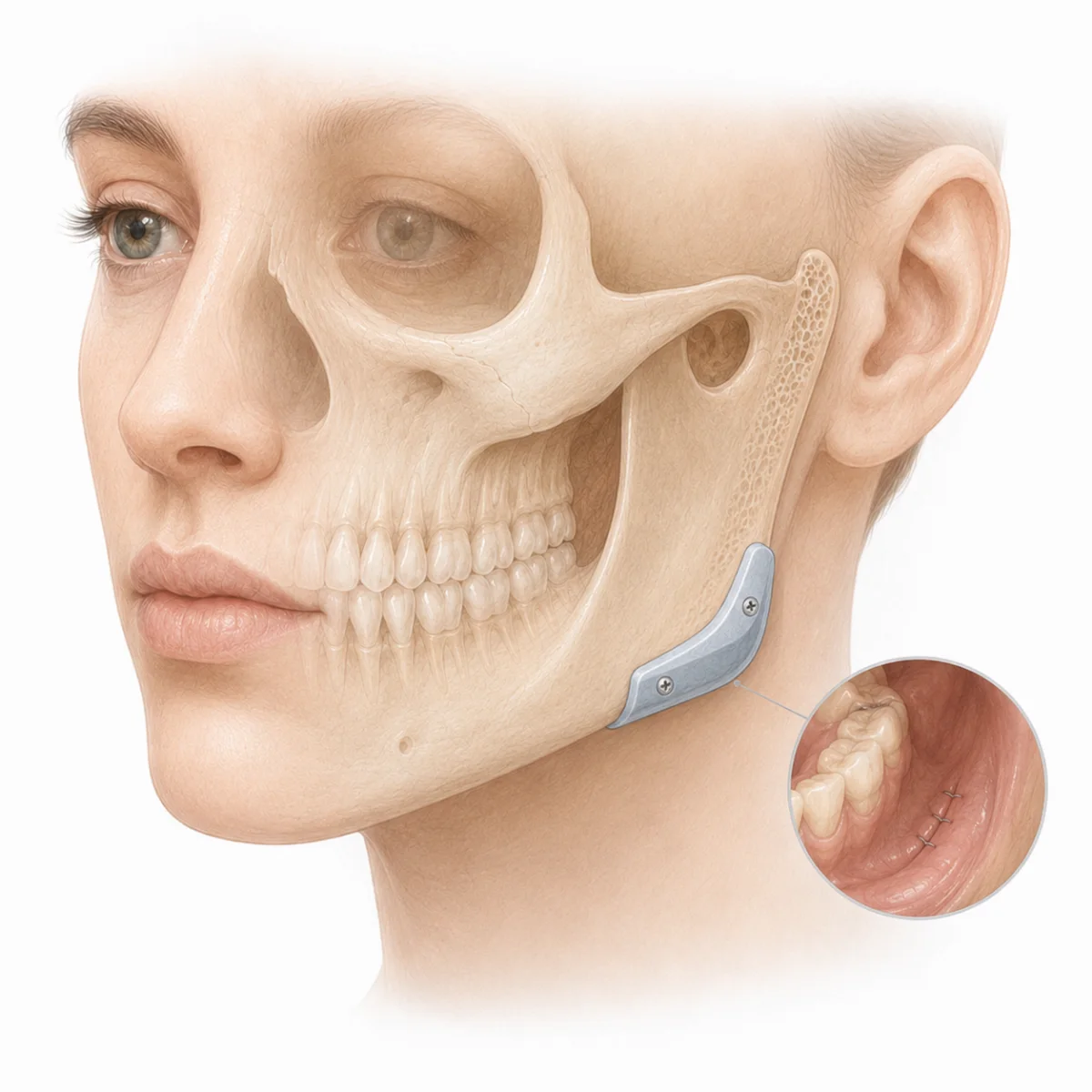
Stock implant
A standard-shaped implant closest to your existing angle is fixed to the bone through an intra-oral incision.
Benefits: Shorter operation, lower cost, and it can be removed or exchanged for a different size later.
Suitable for: Reasonably symmetric angles wanting a moderate increase in definition.
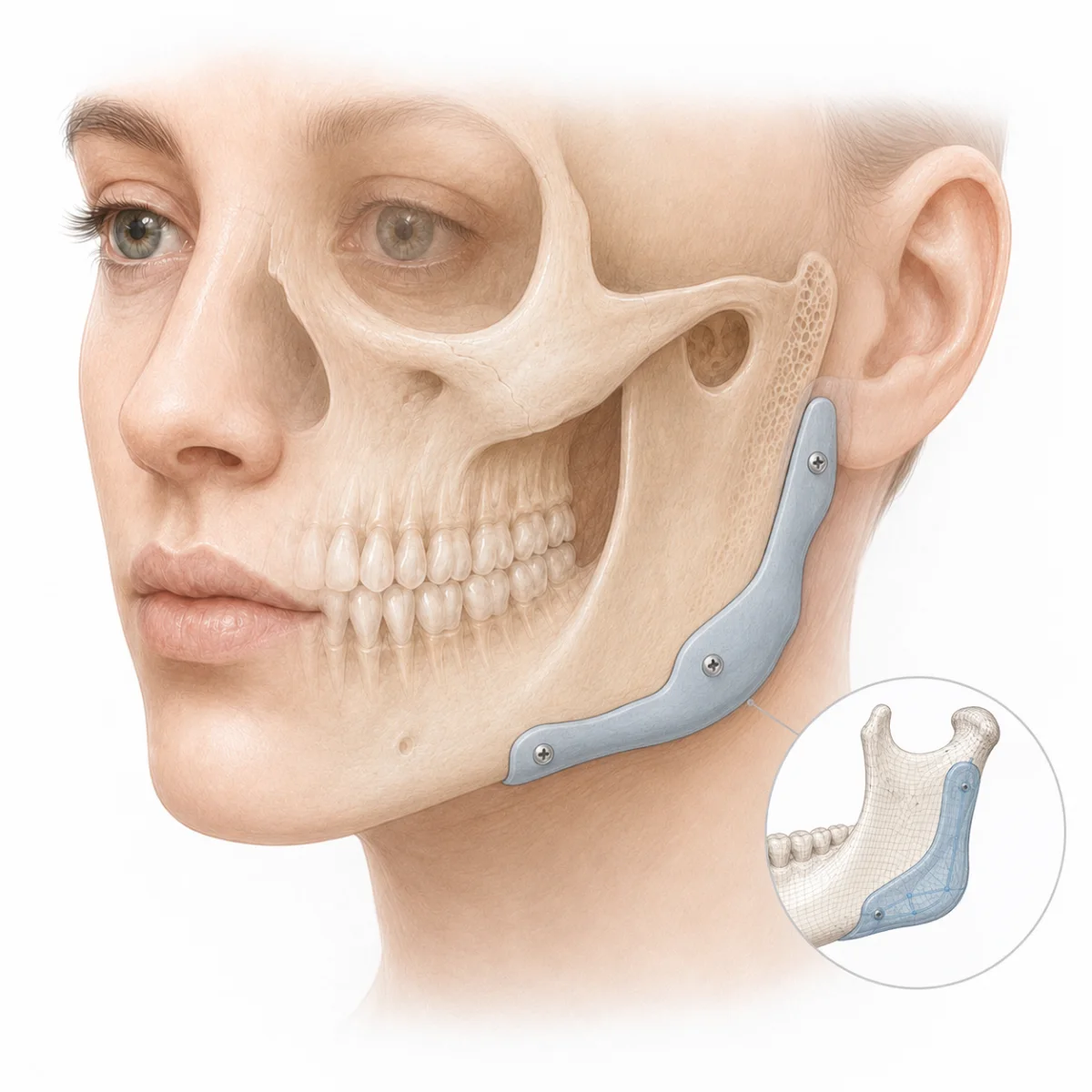
Patient-specific implant
The implant is shaped from your own imaging so it sits flush against the real bone surface at every point.
Benefits: Removes the gap between implant and bone, so no edge is palpable, and different amounts can be built on each side.
Suitable for: Clearly asymmetric angles, or a previous implant whose edge can be felt.
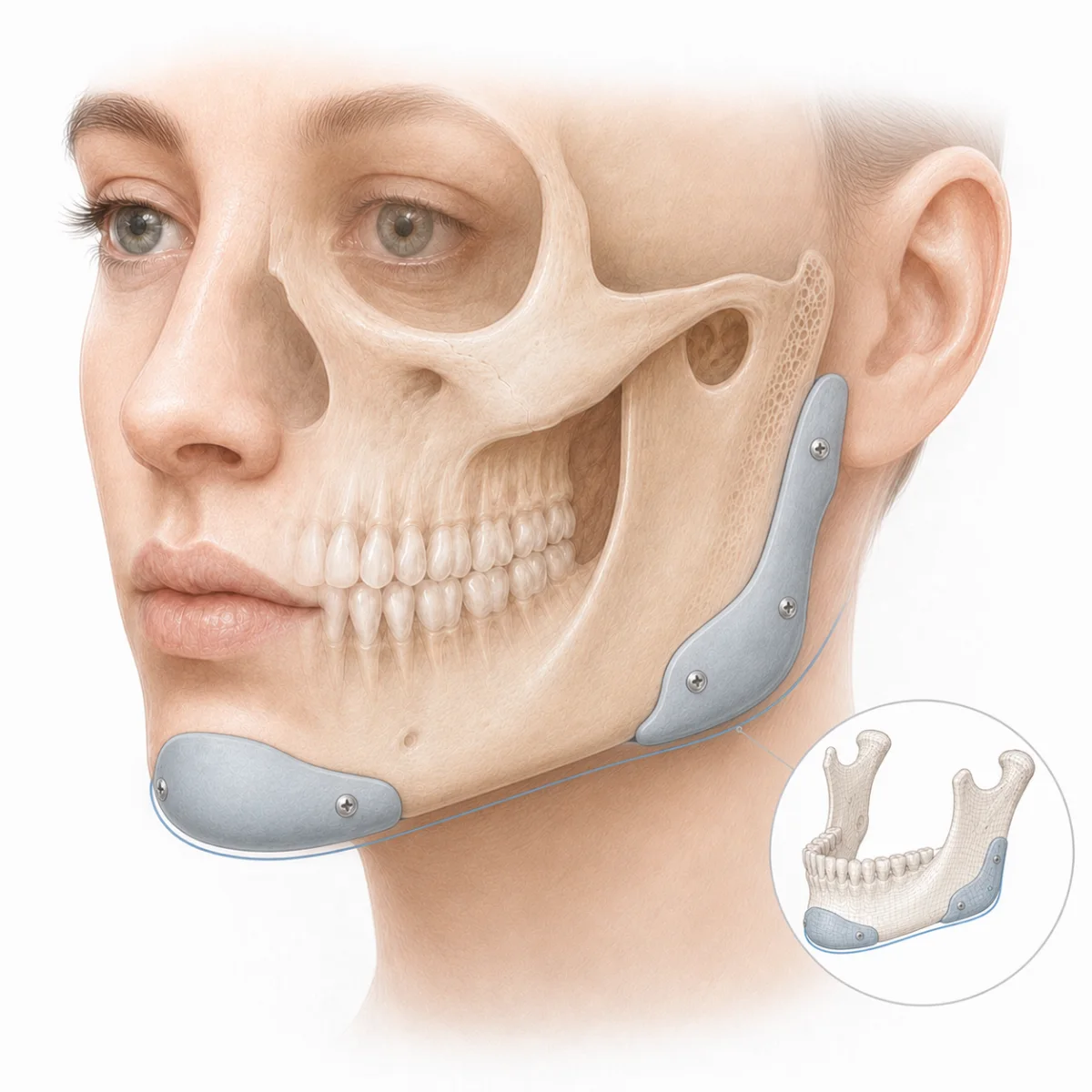
Combined with chin augmentation
Angle and chin implants are planned together so the line runs unbroken from angle to chin point.
Benefits: Produces one continuous jawline: augmenting the angle alone often leaves a hollow through the middle.
Suitable for: A sloping angle together with a recessed chin, leaving the jawline interrupted.
Coming to Bangkok for a jaw implant
Send photographs straight on, in profile and at three-quarter view on WhatsApp (answered 24 hours a day).
Video consultation with a surgeon, who explains whether a stock or patient-specific implant suits your jaw, and whether the chin should be treated too.
Your plan and written quotation are confirmed before any deposit.
For an honest account of risks and how they are managed, read chin and jaw implant risks. For a checklist, read planning a chin or jaw implant abroad.
04 · Your team
Performed by board-certified plastic surgeons
This procedure is performed by the clinic's plastic surgeons at an accredited partner private hospital (JCI / AACI).

Dr. Phattrapohn Liangcheep
Plastic and Reconstructive Surgery
Diploma of the Thai Board of Plastic and Reconstructive Surgery
View full profile
Dr. Thanachot Kamolveerat
Plastic and Reconstructive Surgery
Diploma of the Thai Board of Plastic and Reconstructive Surgery
View full profile05 · Safety
Operating room standards and monitoring
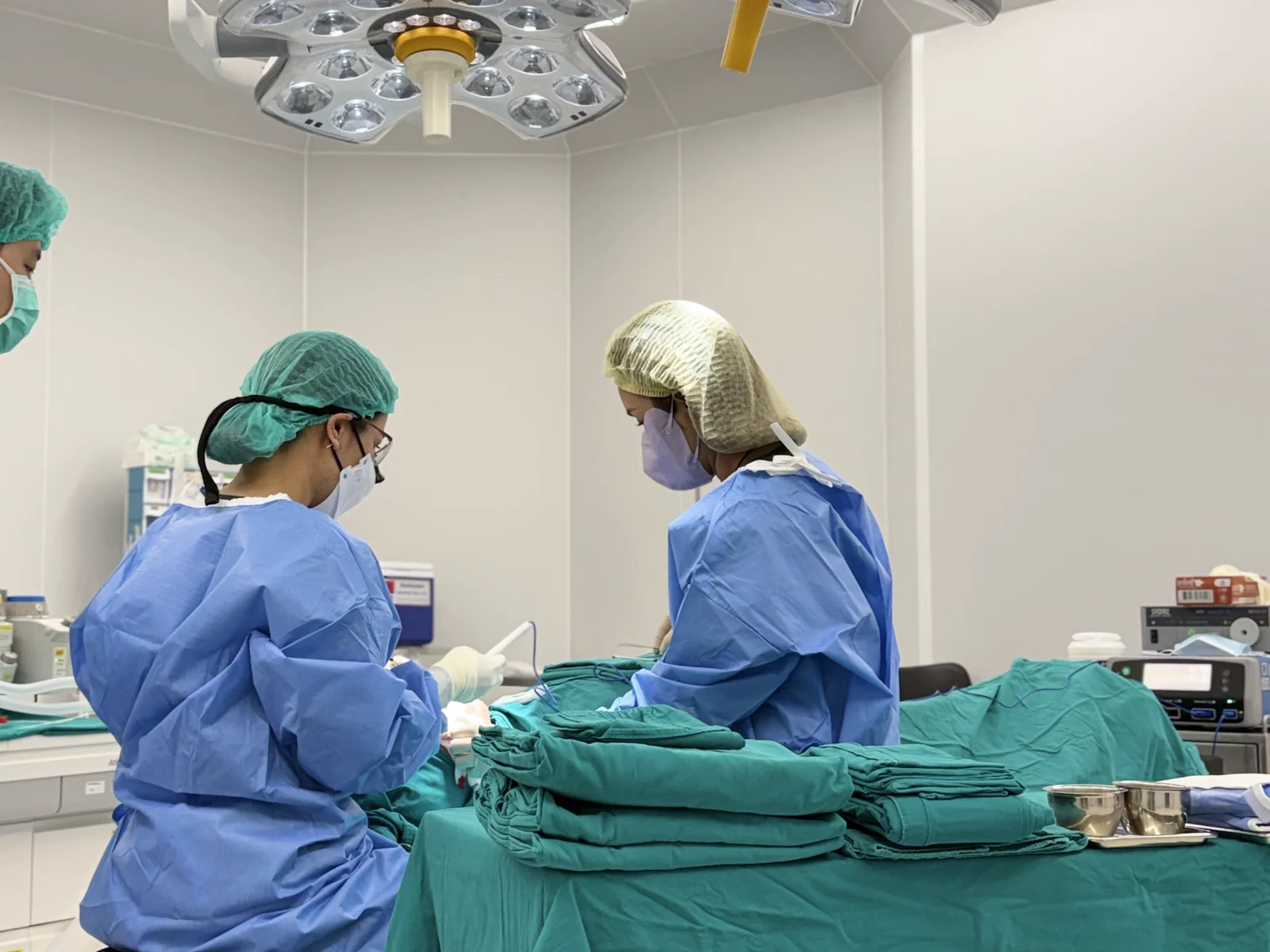
Surgery is performed in the operating room of a JCI- or AACI-accredited partner private hospital, with anesthesia care and continuous monitoring throughout.
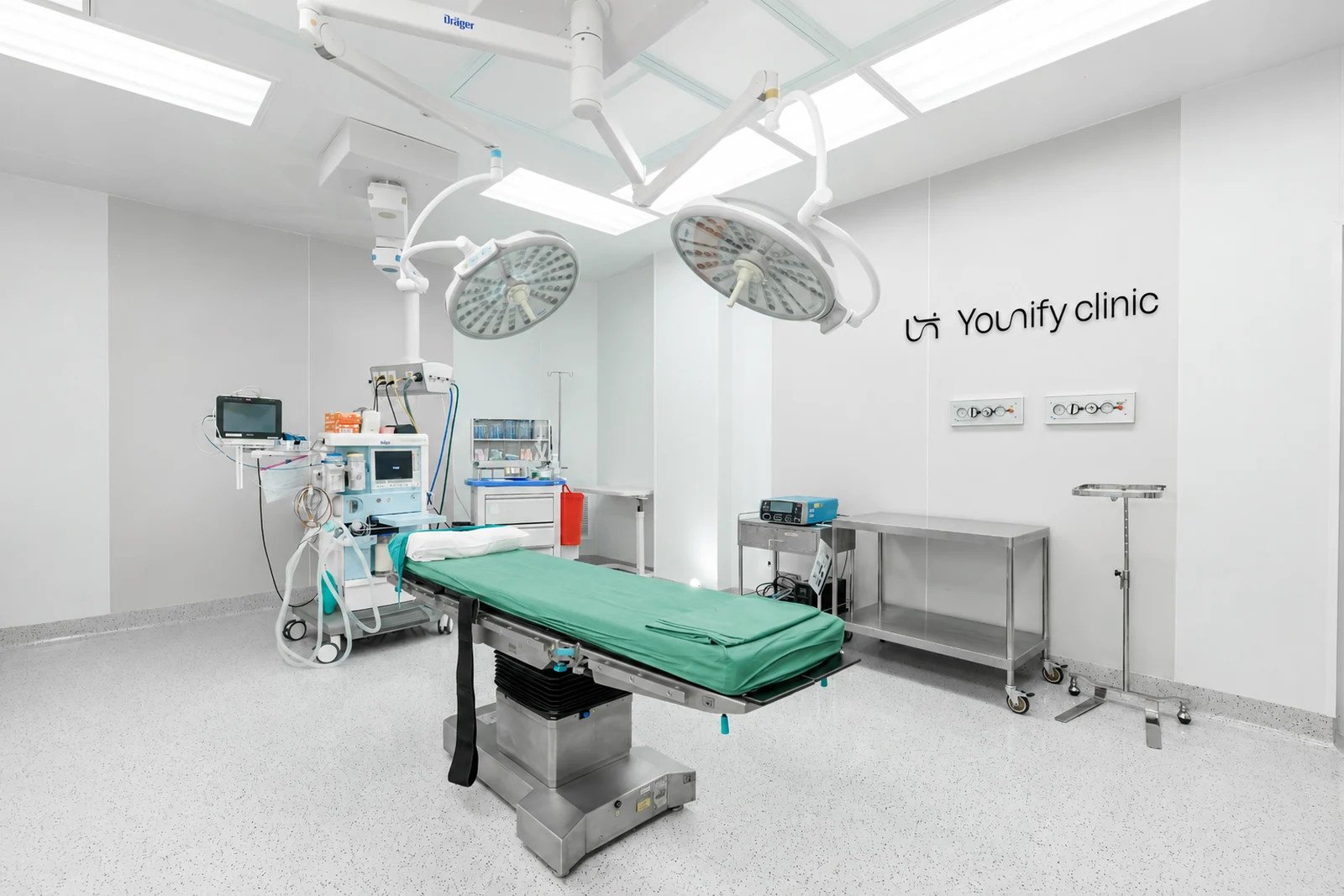
JCI- or AACI-accredited partner private hospital
Procedures are performed in a registered operating room, not a treatment room.
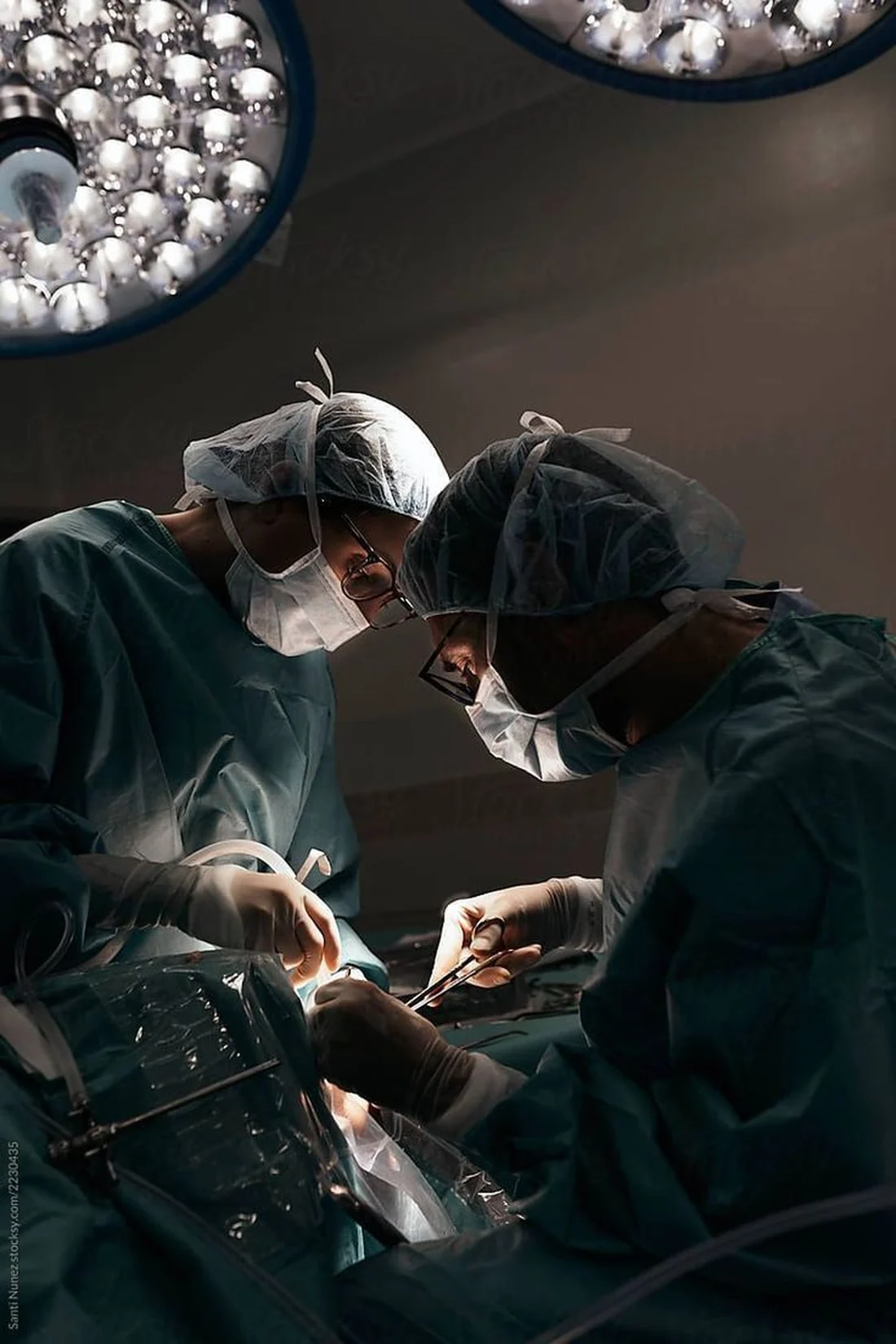
Specialist anaesthesia care
Anaesthesia is administered and monitored by a qualified anaesthesiologist for the duration of surgery.
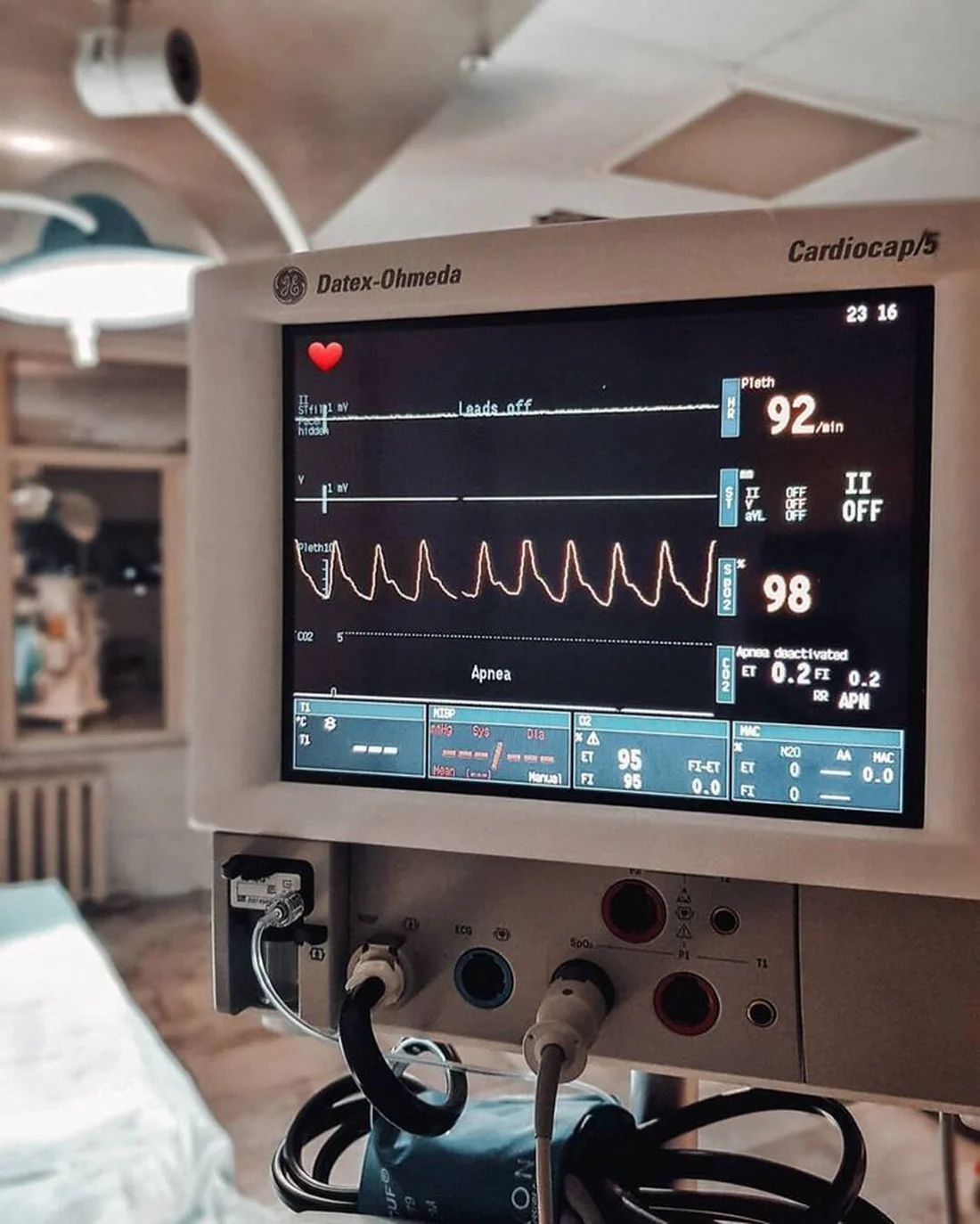
Continuous monitoring
Vital signs are monitored continuously during the procedure and through initial recovery.
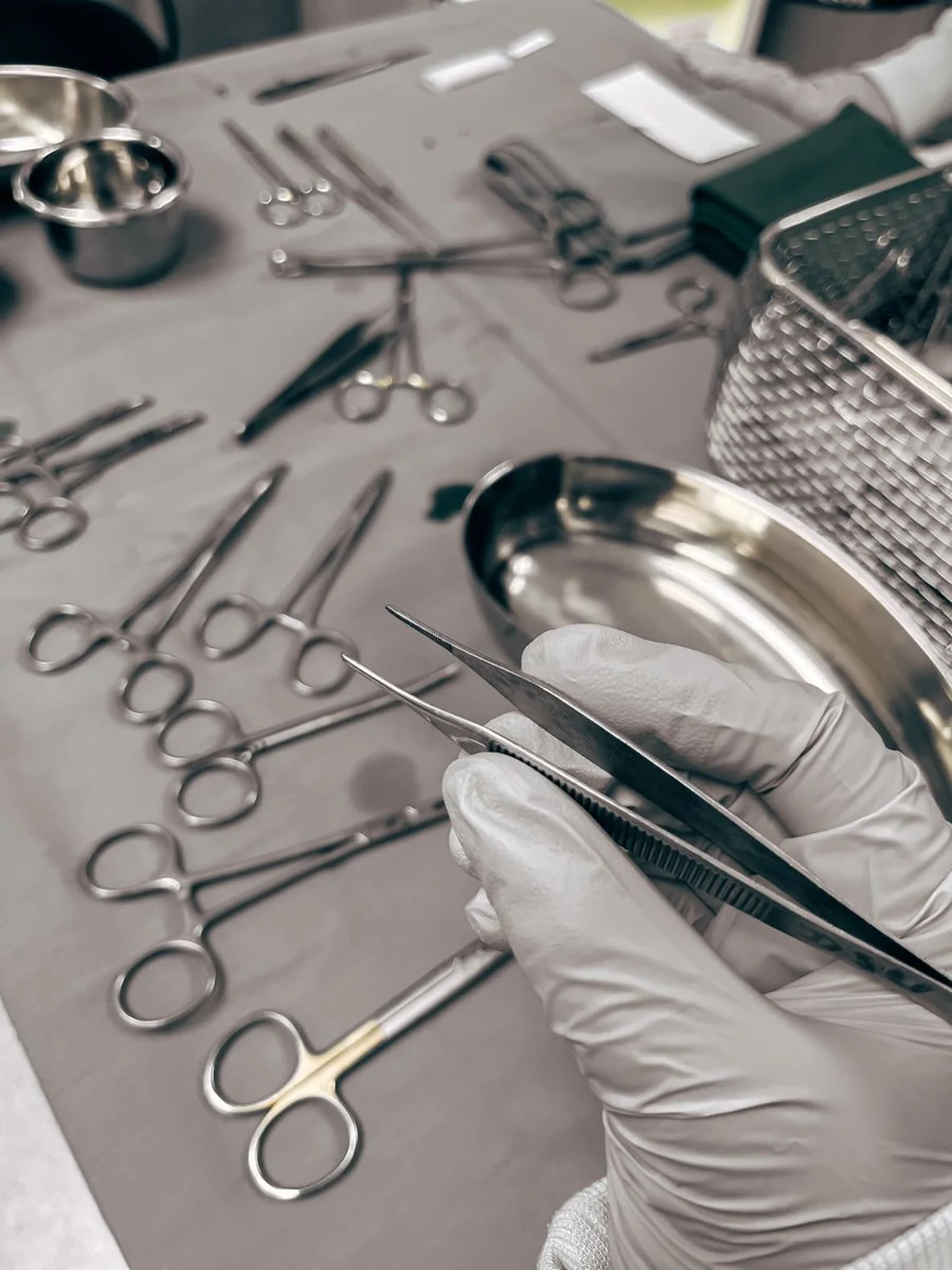
Sterile instrument protocol
Instruments and implants are handled under a documented sterile protocol.
The treatment process
Consultation & measurement
Standardised photography and radiographs assess jaw angle and symmetry.
Implant selection
Thickness and shape are matched to your existing angle, with the chin assessed alongside.
Pre-operative preparation
Health checks and preparation for post-operative oral care.
Day of surgery
Performed through intra-oral incisions; the implant is positioned and fixed to the mandible.
Aftercare
Swelling management, oral hygiene care and a soft diet in the early period.
Follow-up
Wound checks and a symmetry review of the jawline once swelling settles.
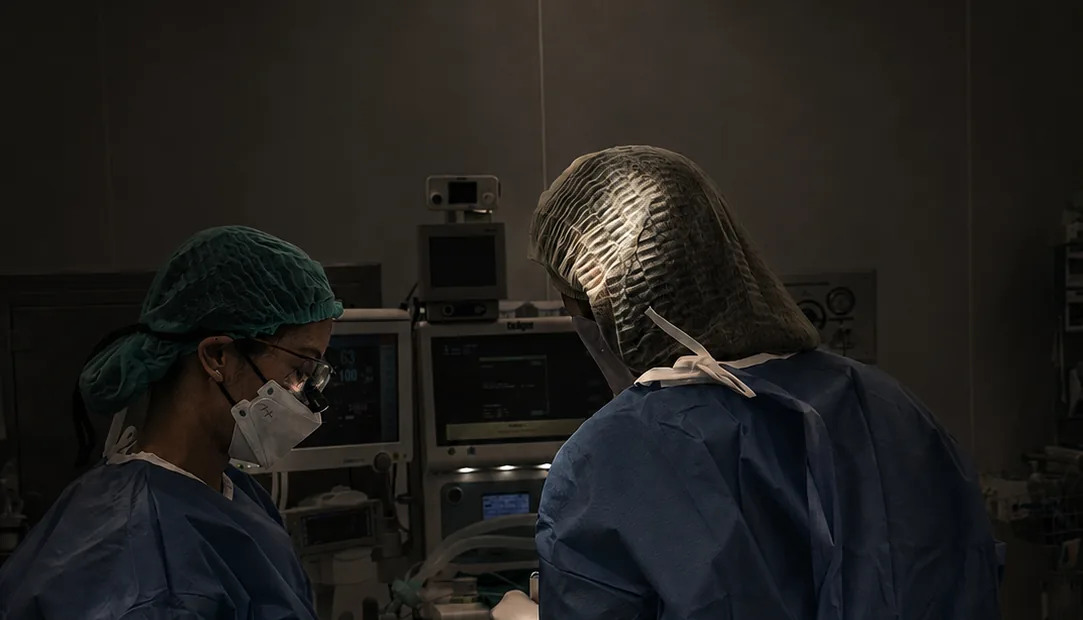
Recovery timeline
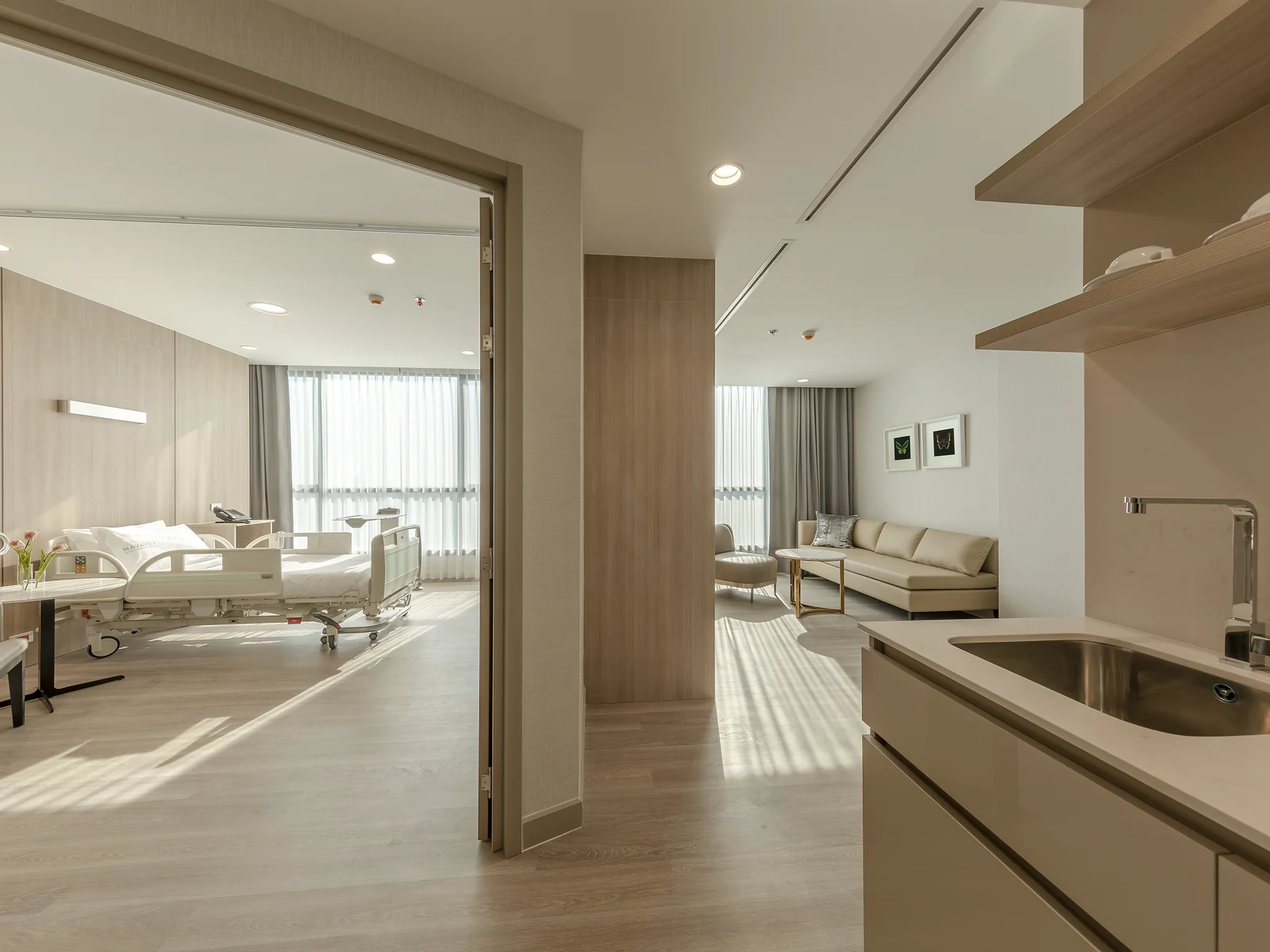
Your surgery at YOUNIFY
From the surgeon who operates to the nurses who follow up, and a private suite to recover in.

Frequently asked questions
Will a jaw implant leave a scar?
Jaw implants are usually placed through incisions inside the mouth, so there is no visible scar on the face.
Can a jaw implant shift or become infected?
Both are recognized risks of facial implants. Implant choice, fixation and aftercare are planned to reduce them, and your team stays in contact after you fly home. Read chin and jaw implant risks.
Can a jaw implant be removed later?
Yes, an implant can be removed or replaced if needed, although this is more involved with some materials. Your surgeon explains this for the implant chosen in your plan.
How does it differ from fillers?
Surgery provides structure that is stable long term; injectable filler is temporary and offers more limited shaping.
How much is a jaw implant in Thailand?
At YOUNIFY Clinic jaw augmentation starts from THB 90,000 with a stock implant and from THB 100,000 with a patient-specific implant. Jaw and chin together start from THB 100,000. Your price is confirmed in a written quotation before any deposit.
Why does a patient-specific jaw implant cost more?
It is designed from your own CT scan and manufactured for your jaw, which adds design and planning work that a stock implant does not need.
Will a jaw implant change my bite?
No. The implant sits on the outer surface of the jaw bone and does not move the teeth or the joint.
* This information is for general education. Results and treatment plans depend on an individual medical assessment. Every procedure carries risk. Please consult a doctor before deciding.
Related procedures
Considering jaw augmentation?
Book a jawline assessment and an individual plan with the YOUNIFY Clinic medical team.
Medically reviewed by Dr. Noppachai Siranart · Last reviewed
Surgery is performed by the clinic's two board-certified plastic surgeons at JCI- or AACI-accredited partner private hospitals in Bangkok.
Individual results may vary. Please consult a doctor before treatment.