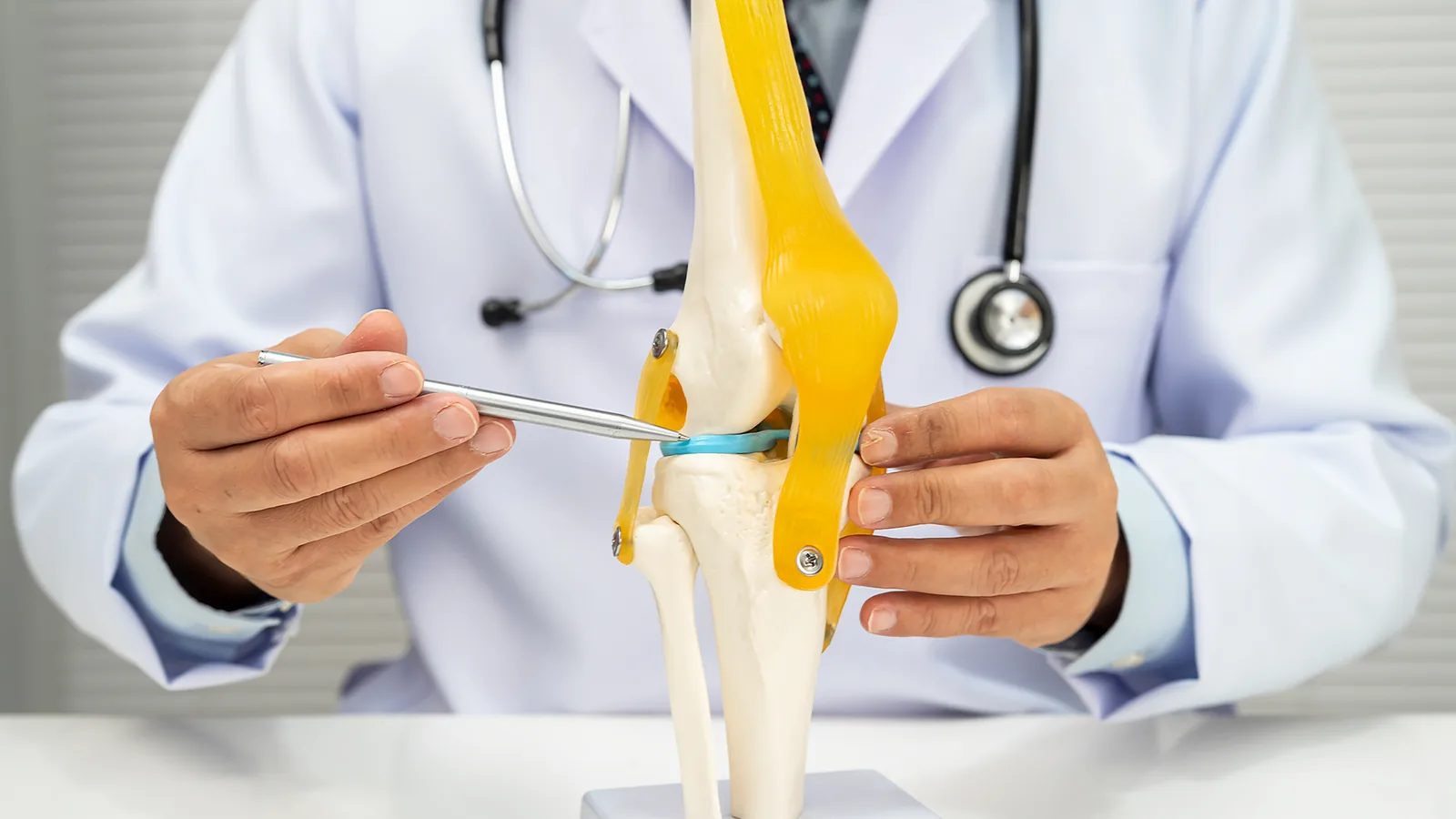
Knee still painful after a replacement: what can be done without another operation
Most people do well after a knee replacement, but some are left with pain that lingers for a year or more. At YOUNIFY Clinic, a Healthy Aging & Wellness Center based in Bangkok, Thailand, our pain medicine physician and interventional radiologist first help confirm that the implant is sound and infection has been excluded. When it is, two image-guided, non-surgical options may help: genicular nerve radiofrequency and genicular artery embolization.
Last updated:
When to seek medical care the same day
Some symptoms after a knee replacement need urgent assessment by your surgeon or a hospital emergency department rather than a clinic appointment:
- Fever, chills, or feeling generally unwell with a painful knee
- Increasing redness, heat, or swelling of the knee
- Discharge from the wound or an opening in the scar
- Pain or swelling in the calf
- Chest pain or sudden shortness of breath
- Sudden inability to bear weight, or the knee giving way after a fall
Does this sound like you
- Your knee replacement was more than a few months ago, and pain has not settled as expected.
- The pain returned after a good recovery, or is worse at night or after walking.
- You have been told the implant looks fine on X-ray, but the knee still hurts.
- You would prefer not to have another operation, or have been told revision surgery is not needed.
- Pain medicines help only a little, or cause side effects you would rather avoid.
Why a replaced knee can stay painful
A knee that has been replaced can still hurt for several reasons, and more than one can be present at once. The NHS lists ongoing pain and stiffness among the possible problems after a knee replacement. Some causes need a surgeon, such as infection, loosening, or instability. Others do not change the implant but keep pain signals going: small nerves around the knee that stay sensitized, an inflamed joint lining with increased blood supply, irritated skin nerves near the scar, and pain referred from the hip or lower spine.
Similar pain, different cause
| Possible cause | Typical feature | How it is checked |
|---|---|---|
| Infection of the implant | Pain with warmth, swelling, or feeling unwell, sometimes months or years after surgery | Blood tests for inflammation and, when needed, a sample of joint fluid, led by an orthopedic surgeon |
| Loosening or instability | Pain on standing or walking, a sense of the knee giving way or shifting | Examination and X-rays, reviewed by an orthopedic surgeon |
| Stiffness | Limited bending or straightening since surgery | Range-of-motion examination and physiotherapy assessment |
| Hip pain | Pain felt in the knee but worse with hip movement, often with groin pain | Hip examination, with X-ray when needed |
| Sciatica | Knee or leg pain together with back pain, tingling, or numbness below the knee | Neurological examination and lumbar spine MRI when indicated |
| Nerve pain near the scar | Burning, sharp, or electric pain with a numb or sensitive patch of skin | Examination and, in some cases, a diagnostic nerve block |
How we assess a painful replaced knee
- Review of your records: operation date, surgeon's letters, recent X-rays, and any scans.
- Confirming the implant is sound: if infection, loosening, or instability has not been excluded, we ask your orthopedic surgeon to review this first.
- Examination: the knee, the hip, the lower spine, and the skin around the scar.
- Matching the pain to a target: nerve-driven pain points toward genicular nerve treatment, and signs of an inflamed joint lining point toward embolization.
- A written plan and quotation before any procedure is booked.
Step-by-step care
| Step | Option | What it involves | Price |
|---|---|---|---|
| 1 | Exercise plan and physiotherapy | Strength and range-of-motion work, especially for stiffness and weakness | Discussed at consultation |
| 2 | Pain medicine review | Adjusting pain and nerve medicines, with attention to side effects | Quoted after a physician assessment |
| 3 | Diagnostic genicular nerve block | A local anesthetic placed near the small nerves around the knee under imaging, to test whether they carry your pain | Quoted after a physician assessment |
| 4 | Genicular nerve radiofrequency (cooled RFA) | Cooled radiofrequency energy applied to those nerves under imaging, when the diagnostic block helped | Starting from THB 280,000 |
| 5 | Genicular artery embolization (GAE) | Tiny particles delivered through a thin catheter in an artery to reduce abnormal blood vessels feeding an inflamed joint lining | Starting from THB 129,000 |
| 6 | Revision surgery | For a loose, unstable, infected, or poorly positioned implant | Decided by an orthopedic surgeon |
What the research shows
The evidence in people with a painful but well-functioning replaced knee is still early. A 2024 systematic review found 3 studies with 53 patients treated with genicular nerve radiofrequency for this problem; they reported improvement in pain and function, no adverse events, and relief that lasted from a few weeks to about a year. In a 2026 prospective series of 37 patients treated with genicular artery embolization, 24 (64.9%) reported at least a 50% reduction in pain at three months, with no serious complications, but there was no comparison group. We share these figures so that you can weigh the options with realistic expectations.
When a procedure is not advised
- Infection or implant loosening has not been excluded
- Blood thinners or antiplatelet medicines have not been reviewed and planned
- There is an active infection anywhere in the body
- For embolization: kidney function, an allergy to contrast dye, or narrowed leg arteries make an arterial procedure unsafe
- The pain clearly comes from the hip, the spine, or another source
- The hoped-for result is something a procedure cannot offer, such as fixing a loose implant
Your physicians
Genicular nerve block and radiofrequency are performed by our pain medicine physician, Dr. Rarinthorn Choomsai Na Ayuthaya. Genicular artery embolization is performed by our interventional radiologist, Dr. Thanakrit Mangklapaiboon. Both review your case together when either option may apply, and procedures are performed at our accredited partner private hospital, with most patients going home the same day.
Speak with our pain medicine team
If your replaced knee is still limiting your walking, sleep, or travel, a careful review of your records is the first step toward a clear plan.
Send your X-rays and a short history to our physician on WhatsApp
Phone: +66 81 556 9696
Related reading: My knee replacement still hurts: what could be causing it, and what can be done? · Knee osteoarthritis · Chronic pain services · Our doctors
Healthcare facility licence no. 10101005069 · Advertising approval no. ฆสพ.สบส 2476/2569
Sources
- Complications of a knee replacement (NHS)
- Genicular nerve radiofrequency ablation: a systematic review of application for perioperative pain control in total knee arthroplasty and as treatment for chronic pain in well-appearing total knee arthroplasty (Knee Surgery & Related Research, 2024)
- Genicular Artery Embolization as a Treatment Option for Refractory Knee Pain Post Total Knee Arthroplasty: A Prospective Series (CardioVascular and Interventional Radiology, 2026)
Frequently asked questions
Which is better for me: genicular nerve radiofrequency or genicular artery embolization?
They work in different ways. Radiofrequency quiets the small nerves that carry pain from the knee, and is usually tested first with a diagnostic nerve block. Embolization reduces abnormal blood vessels feeding an inflamed joint lining. Your examination and imaging guide which one suits you, and some people are advised to try one before the other.
Will these procedures damage my knee implant?
No. Both procedures work on tissue around the joint, not on the implant itself. Radiofrequency uses needles placed around the knee under imaging, and embolization uses a thin catheter in an artery. Neither can fix a loose or poorly positioned implant, which is why the implant is checked first.
Can I receive English-speaking care?
Yes. Consultations, explanations of your options, and written aftercare instructions are available in English, and your medical report can be prepared in English. Interpreters and coordinators are available for other languages supported on our website.
Can I claim treatment with my insurance?
The clinic provides a medical report and an itemized receipt so that you can submit a claim to your insurer yourself. Coverage depends on your policy, so please check with your insurer before your visit, including whether pre-authorization is needed.
What should I send before my visit?
Please send your latest knee X-rays, any scans, your operation date and surgeon's letters, and a list of current medicines, especially blood thinners. You can share them on WhatsApp so that our physician can review them before you travel or book.
How long does relief last?
It varies. In published studies of people with a painful replaced knee, improvement after nerve radiofrequency lasted from a few weeks to about a year, and the embolization study followed patients for three months. Nerve treatments can often be repeated if they helped before.
YOUNIFY Clinic · 2nd Floor, Room 214, United Center Building, 323 Silom Road, Silom, Bang Rak, Bangkok 10500, Thailand · Near BTS Sala Daeng (5-min walk) · Open daily 11:00–20:00
WhatsApp +66 81 556 9696 · LINE @younifyclinic · Instagram @younifyclinicthailand · info [at] younifyclinic.com
Individual results may vary. Please consult a doctor before treatment.