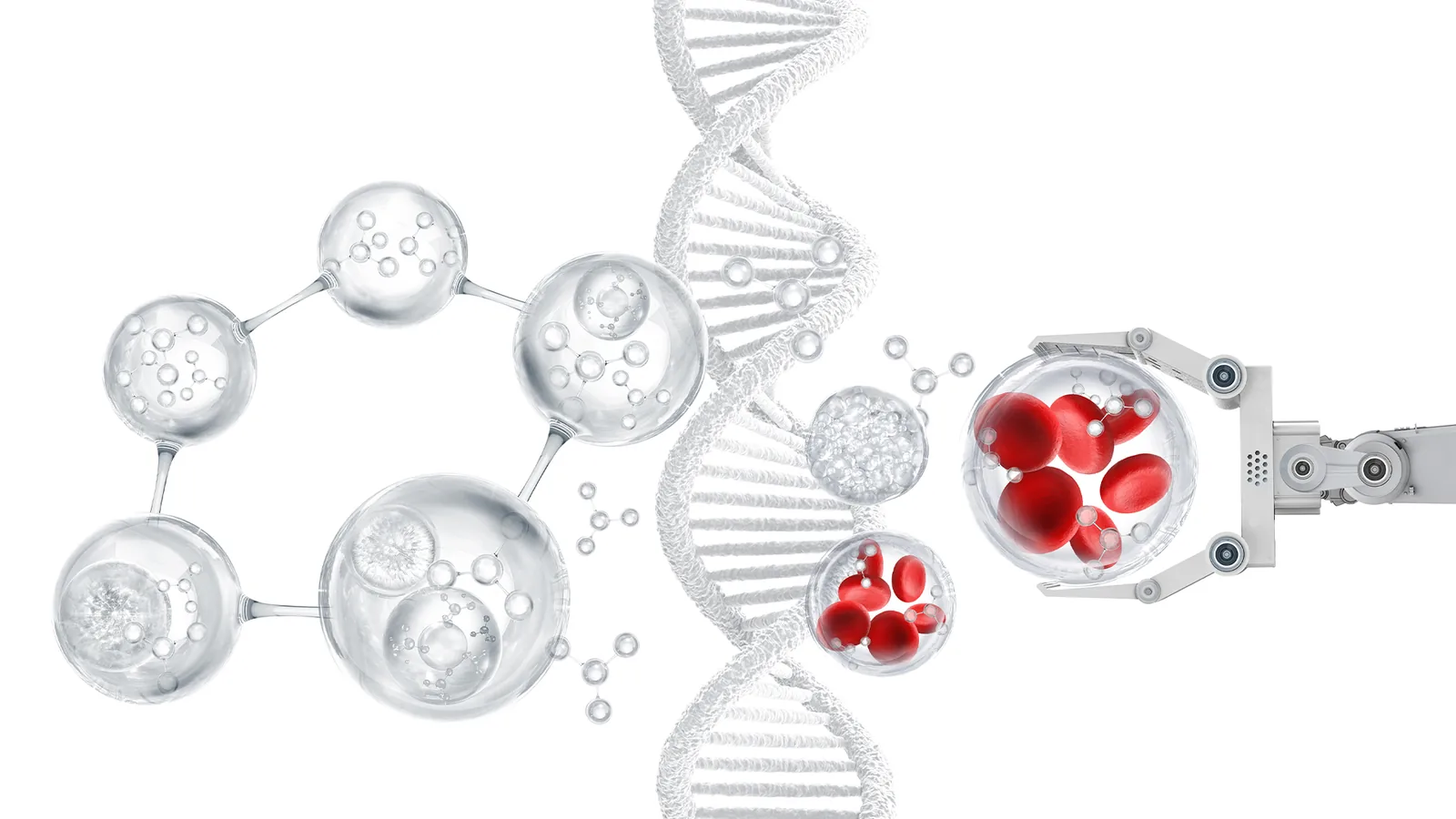
Liquid biopsy detects ctDNA, tumour DNA fragments circulating in blood. Learn how it differs from tissue biopsy, when it is used, and its key limitations.
Contents
Key Takeaways
- A liquid biopsy is a blood draw analysed for ctDNA, the fragments of tumour DNA circulating in the bloodstream.
- Blood-based and tissue-based testing answer different questions. In practice they are complementary far more often than interchangeable.
- A negative result does not rule out an alteration, because some tumours shed very little ctDNA into the blood.
- Not every tumour carries a genomic alteration for which a targeted drug exists, even when tumour DNA is successfully detected.
- This is not a screening test for people without a cancer diagnosis, and it does not replace established screening programmes.
What is a liquid biopsy?
Many patients hear that a blood test can now do genomic testing, and conclude that a tissue biopsy is no longer necessary. In reality the two answer different questions and are usually used to complement one another. This article, prepared by the YOUNIFY Clinic medical team, explains what a liquid biopsy is, how it works, when it fits, and the limitations worth knowing before deciding anything. For the wider picture see what precision oncology is and our precision oncology service.
A liquid biopsy detects tumour genetic material in a body fluid sample, which in practice almost always means blood. The sample is analysed for ctDNA, the fragments of tumour DNA circulating in the bloodstream, to see whether any genomic alteration is present that could inform treatment planning.
The principle behind it is that cells throughout the body die and are replaced constantly. When a cell dies, some of its DNA enters the bloodstream as short fragments, collectively called cfDNA, which comes from all cells in the body. The portion originating specifically from cancer cells is ctDNA, and it is usually a very small fraction compared with DNA from normal cells. Assays therefore have to be extremely sensitive to detect that small signal.
Depending on the panel used, a liquid biopsy can detect point mutations, gene fusions, copy number changes and some indicators such as blood-based TMB. What it cannot show is what the tissue looks like under the microscope, which still requires a tissue sample.
How it differs from a tissue biopsy
The core difference is where the sample comes from. A tissue biopsy takes tissue directly from the tumour, so it yields both pathology and genomic information. A liquid biopsy needs only a blood draw, so it is easier to repeat and carries less procedural risk, but it returns genomic information only. Tissue-based sequencing is covered in detail in comprehensive genomic profiling.
| Aspect | Tissue biopsy | Liquid biopsy (blood-based) |
|---|---|---|
| How the sample is taken | A procedure to collect tissue from the tumour | A standard blood draw |
| Information returned | Tissue appearance, special stains and genomic data | Mainly genomic data from ctDNA |
| Can it confirm the diagnosis | Yes, it can confirm a diagnosis | It does not replace pathological diagnosis |
| Coverage of tumour variation | Reflects only the site sampled | May reflect several sites that shed ctDNA into the blood |
| Repeating during treatment | Harder to repeat, with procedural risk | Easier to repeat |
| Lesions in hard-to-reach locations | May not be feasible, or carries higher risk | A reasonable option to consider |
| Key limitation | Tissue may be insufficient, or too old to reflect current disease | If the tumour sheds little ctDNA, an alteration that is genuinely present may not be detected |
The practical conclusion is that the two are not in competition. In many situations a liquid biopsy is used first because it returns faster and requires no procedure, with tissue used afterwards to confirm or add information where needed, or the other way round.
When it is used
A liquid biopsy is generally considered when there is a clinical question a blood test can answer, and a tissue biopsy is not feasible, is difficult, or would not return in time. The situations that come up most often are:
- Tissue is insufficient for genomic testing, because little was obtained or it was used up on special stains
- The lesion sits somewhere a biopsy would carry high risk, or the patient's general condition makes a procedure inadvisable
- A faster result is needed because timing affects the treatment plan
- Disease is progressing on targeted therapy and the question is whether a new resistance mechanism has emerged. This is where liquid biopsy has a particularly clear role, because resistance may arise from an alteration that was not present at the start; see targeted therapy and immunotherapy basics
- The disease is suspected of varying between sites, so sampling a single site may give an incomplete picture
Using ctDNA to track minimal residual disease after treatment, and using it to screen the general population, both remain under study and carry substantial limitations. Neither should be substituted for established follow-up or screening pathways.
Who this test may suit
This test is designed for people who already have a cancer diagnosis and a clinical question behind the request. It is not a test for someone without a diagnosis, and it is not cancer screening for the general population.
- Advanced or metastatic disease, where genomic information is needed to plan the next line of treatment
- Insufficient tissue, or archived tissue so old it may not reflect the current disease
- Situations where repeating a tissue biopsy carries high risk relative to the benefit expected
- Disease beginning to progress on targeted therapy, where a resistance mechanism may explain what is happening
- Patients travelling from abroad with limited time, for whom a blood draw is far easier to arrange than a procedure
Who this test is not designed for: someone without a cancer diagnosis who wants a blood test to find out whether they have cancer. A normal result from this kind of test cannot be used to conclude that no disease is present.
Limitations you should know
The limitations matter as much as the benefits, and they are the reason this test has not replaced tissue biopsy in every situation. Patient and family should know the following before deciding.
- A negative result does not rule out an alteration. Some tumour types, and some disease states, shed very little ctDNA into the blood, so a genuine alteration may go undetected. Where that happens, tissue testing is usually recommended if it is feasible.
- Not every tumour carries a genomic alteration for which a targeted drug exists, even when tumour DNA is detected in the blood.
- Signals may appear that did not come from the tumour, for example from clonal haematopoiesis, mutations that accumulate in blood stem cells with age. Without clinical context these can be misread.
- It does not replace pathological diagnosis. A liquid biopsy cannot describe tissue type or pathological grade.
- It is not yet suitable as a screening tool for the general population and should not replace established screening programmes with clear indications.
- It does not predict how treatment will go. Even where a matched target is found, no one can say in advance whether an individual will respond. Outcomes vary from person to person.
- Turnaround depends on the type of test and the laboratory. The medical team will give the expected time frame before anything is sent.
- A result from this test is not a reason to stop or delay treatment you are currently receiving. Decide together with the oncologist treating you, and do not adjust or stop existing treatment on your own.
Costs depend on which tests are used and on the treatment plan. The medical team will assess and explain all costs in full before anything begins.
What to expect at YOUNIFY
At YOUNIFY Clinic the question asked before a liquid biopsy is the same one asked before any test: how would this result change the decision, and should the sample come from blood, from tissue, or from both? For international patients the blood draw itself is straightforward to schedule, and English-speaking coordination is arranged so records can be reviewed before you travel.
- 1. Consultation and review of existing information — pathology, imaging, treatment history and any genomic testing already done.
- 2. Assessing whether usable tissue exists — if there is sufficient and reasonably current tissue, tissue testing may come first.
- 3. Taking the blood sample — a standard blood draw. In most cases no fasting is required, and the nursing team explains any preparation in advance.
- 4. Explaining the limitations beforehand — particularly that a negative result does not rule out an alteration, and what the fallback plan would be.
- 5. Molecular tumour board review — see molecular tumour board, where the result is interpreted alongside clinical and imaging information.
- 6. Summarising the plan with patient and family — including an appropriate follow-up interval.
If the plan calls for chemotherapy, radiotherapy, cancer surgery or any intravenous treatment, the medical team arranges a coordinated referral to a partner facility.
If you are unsure whether testing should come from blood, from tissue, or from both, you can read about our precision oncology service or contact the medical team on WhatsApp at +66 81 556 9696. The team can explain what each option would answer in your particular situation. Please take that back to the oncologist treating you before making any change, and continue your current treatment unless they advise otherwise.
Frequently Asked Questions
Can a blood test simply replace a tissue biopsy?
Not always. A tissue biopsy is still required for pathological diagnosis and provides information a blood test cannot. In practice the two are used to complement one another, depending on the individual situation.
If the blood test finds nothing, is that good news?
No. A negative result does not rule out an alteration, because some tumours shed very little ctDNA into the blood. If the clinical picture still raises the question, tissue testing is usually recommended where feasible.
Can liquid biopsy be used to screen people with no symptoms?
Its use for screening the general population remains under study and carries substantial limitations. It should not replace established screening programmes, and a normal result cannot be used to conclude that no disease is present.
Does it hurt, and how should I prepare?
It is a standard blood draw rather than a procedure requiring a treatment room. In most cases no fasting is needed, and the nursing team will explain any preparation in advance.
Why would my doctor repeat the test when the disease progresses?
Because tumours change over time and with treatment. Repeat testing looks for a new resistance mechanism that may not have been present in the first result.
Can this test tell me how long I have, or whether I will recover?
No. It provides genomic information to inform the choice of treatment. It cannot predict treatment outcome or time frames, and outcomes vary from person to person.
References
- ASCO / CAP — Circulating Tumor DNA Analysis in Patients With Cancer: Joint Review
- ESMO — Recommendations on the Use of Circulating Tumour DNA Assays for Patients With Cancer
- National Cancer Institute (NCI) — Liquid Biopsy and Blood-Based Tumor Testing
- NCCN Guidelines — Biomarker and Molecular Testing in Oncology
Medical Note
This article is for general information and does not replace medical examination, diagnosis, or treatment. If symptoms are severe, changing quickly, or urgent, seek medical care promptly.
Individual results may vary. Please consult a doctor before treatment.
Want to know which care plan fits you?
Share your symptoms, health history, medications or prior procedures, and personal goals. Our team can help arrange a medical assessment.
Consult YOUNIFY Clinic