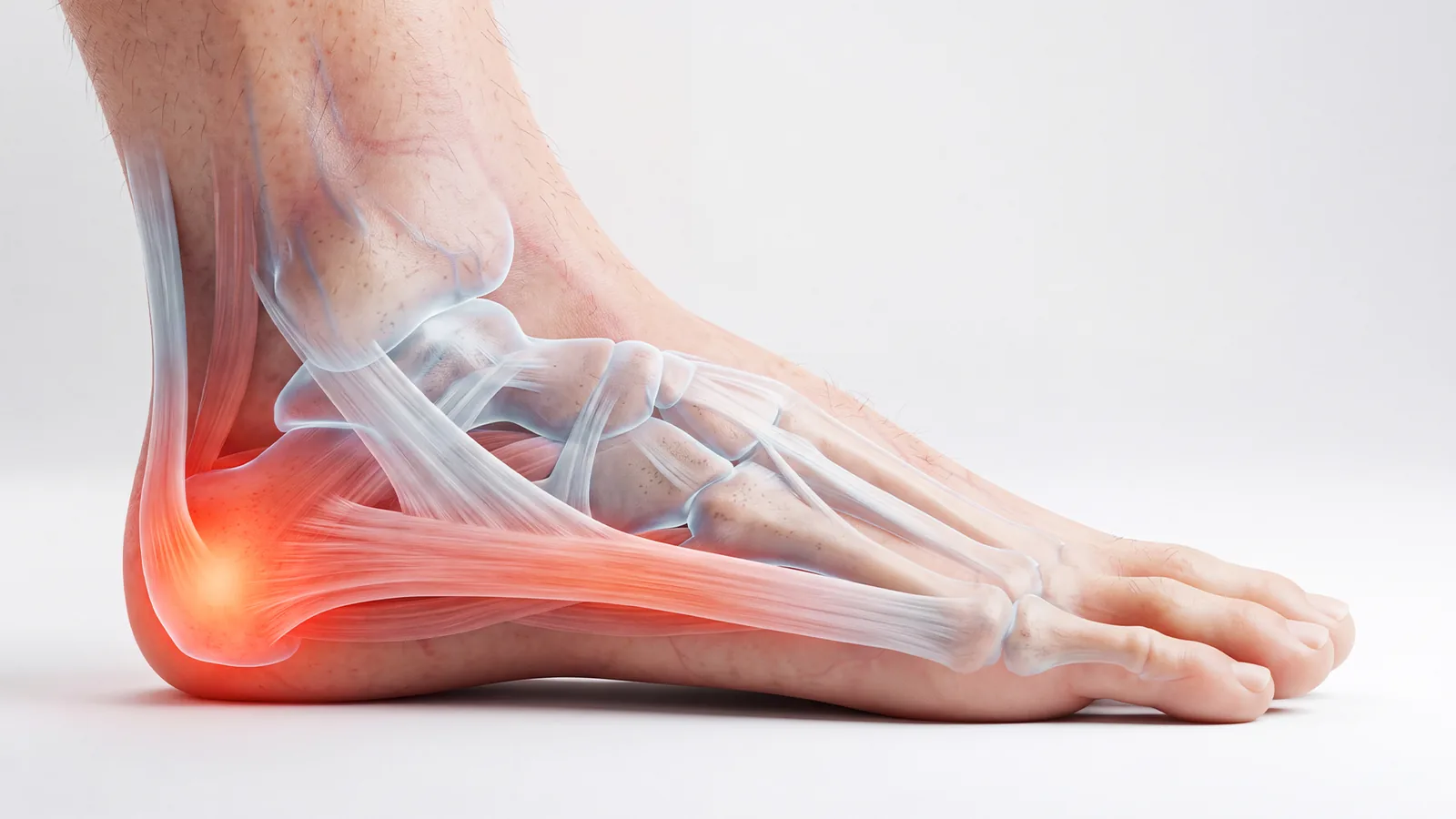
Plantar fasciitis is a common cause of heel pain. Learn why it happens, what helps, and when to see our medical team at YOUNIFY Clinic, Bangkok.
สารบัญ
สรุปสำคัญ
- If your heel hurts with your first steps in the morning or after sitting for a while, plantar fasciitis is one of the most common reasons. It is uncomfortable and can linger, but the encouraging part is that most people improve with patient, consistent care. This article explains what is happening in your foot and the sensible steps that help.
What is plantar fasciitis?
Plantar fasciitis is irritation of the plantar fascia = the thick band of tissue along the sole of your foot that runs from your heel bone to the base of your toes. This band acts like a spring, supporting your arch and absorbing load every time you stand, walk, or run.
When the fascia is repeatedly overloaded, tiny areas near the heel become irritated and sensitive. Despite the name ending in "-itis" (which usually means inflammation), the tissue often shows signs of wear and disrepair rather than pure inflammation. That is why simply resting is rarely the whole answer.
Why does the heel hurt?
Heel pain from plantar fasciitis usually builds up over time rather than starting from one injury. Common contributors include:
- A sudden increase in activity - more walking, standing, running, or a new sport without a gradual build-up.
- Footwear - flat, worn-out, or unsupportive shoes, or long hours barefoot on hard floors.
- Calf and Achilles tightness - tight calf muscles pull on the heel and increase strain on the fascia.
- Body weight and load - extra load through the foot, including during pregnancy or weight gain, raises demand on the tissue.
- Foot shape and mechanics - very high or very flat arches can change how load spreads across the sole.
- Work demands - jobs that keep you on hard surfaces for long hours.
Age matters too: plantar fasciitis is common in adults between roughly 40 and 60, though it can affect anyone.
What it typically feels like
The classic pattern is a sharp or bruise-like pain under the heel, worst with the first steps in the morning or after rest, easing as you warm up, then sometimes returning after long periods on your feet. If your symptoms differ - numbness, night pain, swelling, or pain that spreads - it is worth having our medical team check for other causes.
How is it "fixed"? The honest picture
There is no single switch that turns heel pain off. For most people, plantar fasciitis settles gradually over weeks to months with conservative care - a steady combination of small changes rather than one dramatic treatment. The goal is to reduce the load that irritates the fascia while keeping the tissue healthy and mobile.
Foundations that help most people
- Load management - reduce the aggravating activity for a while, then rebuild gradually. This is often more useful than complete rest.
- Stretching and strengthening - calf and plantar fascia stretches, plus progressive foot and calf strengthening, are among the most evidence-supported steps. (See our guide on plantar fasciitis stretches and exercises.)
- Supportive footwear - cushioned, well-fitting shoes with reasonable arch support; avoid long stretches barefoot on hard floors.
- Simple additions - over-the-counter heel cups or insoles, and short-term use of pain relief when appropriate.
- Patience and consistency - doing a little every day usually beats occasional bursts of effort.
When to consider more
If pain persists despite several months of honest, consistent conservative care, additional options exist - from shockwave therapy to image-guided injections performed by our pain medicine team. These are considered for stubborn cases, not first steps. You can read more in our treatment options article.
Talk to our team
If heel pain is not improving, our medical team can assess the cause and options. Contact us on LINE (@younifyclinic) or WhatsApp +66 81 556 9696.
YOUNIFY Clinic - 2nd Floor, Room 214, United Center Building, 323 Silom Road, Silom, Bang Rak, Bangkok 10500. Open daily 11:00–20:00.
คำถามที่พบบ่อย
Will plantar fasciitis go away on its own?
For many people it gradually improves with conservative care over weeks to months. Ignoring it entirely, however, can let symptoms drag on, so early self-care usually helps.
Should I stop walking completely?
Usually no. Complete rest is rarely needed. Reducing the aggravating load and rebuilding gradually tends to work better than stopping all activity.
When should I see a doctor?
If heel pain lasts beyond a few weeks despite self-care, is severe, or comes with numbness, swelling, or night pain, have our medical team assess it.
แหล่งอ้างอิง
- Plantar Fasciitis and Bone Spurs (AAOS OrthoInfo)
- Heel Pain (AAOS OrthoInfo)
- Heel Pain - Plantar Fasciitis: Revision 2023 (Koc et al.) (JOSPT / Academy of Orthopaedic Physical Therapy 2023;53(12):CPG1-CPG39 · DOI 10.2519/jospt.2023.0303)
หมายเหตุทางการแพทย์
บทความนี้ให้ข้อมูลทั่วไป ไม่แทนการตรวจ วินิจฉัย หรือรักษาโดยแพทย์ หากมีอาการรุนแรง อาการเปลี่ยนเร็ว หรือมีภาวะฉุกเฉิน ควรพบแพทย์ทันที
ผลลัพธ์ขึ้นอยู่กับแต่ละบุคคล ควรปรึกษาแพทย์ก่อนเข้ารับบริการ
อยากรู้ว่าแผนดูแลแบบไหนเหมาะกับคุณ?
ส่งรายละเอียดอาการ ประวัติสุขภาพ ยาหรือหัตถการที่เคยทำ และเป้าหมายที่ต้องการ ทีมงานจะช่วยนัดหมายเพื่อประเมินกับแพทย์
ปรึกษาอาการกับ YOUNIFY Clinic