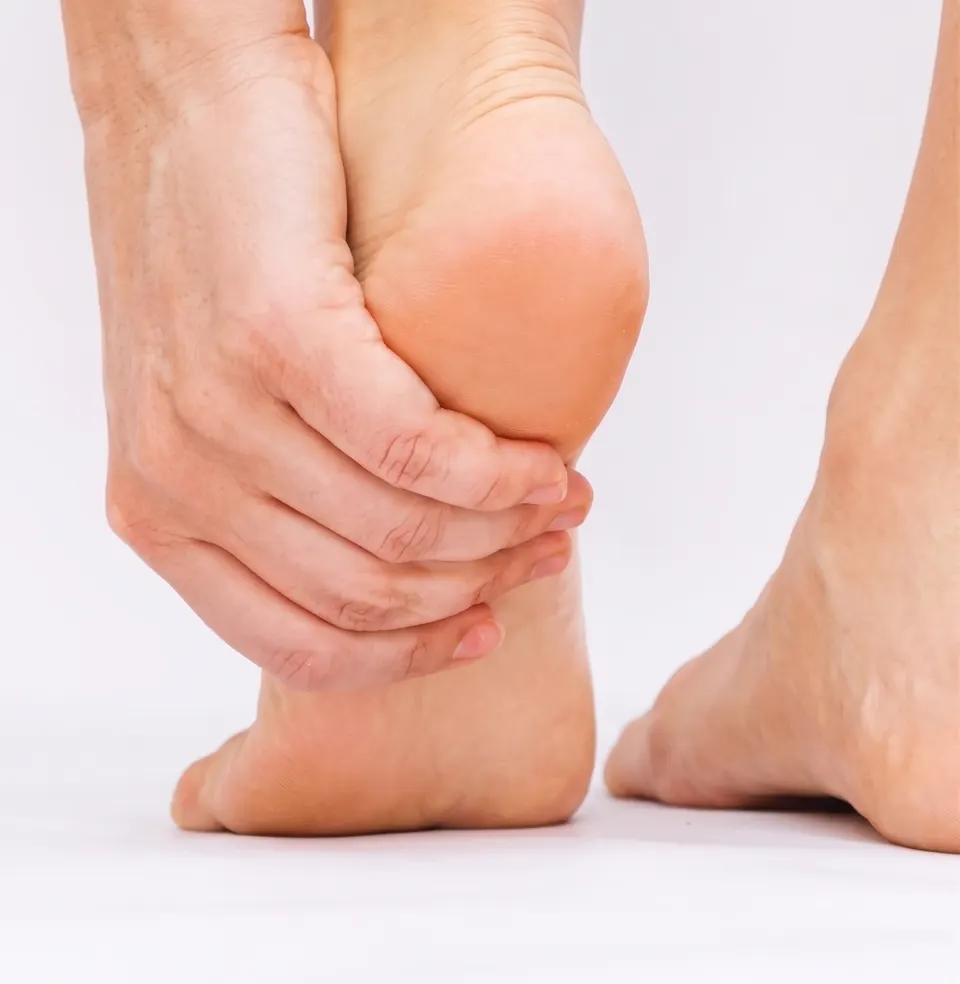
Sharp heel pain with your first steps each morning is a classic plantar fasciitis sign. Learn what it means and when to see our team in Bangkok.
Contents
Key Takeaways
- That stab of pain in your heel when your feet first touch the floor in the morning is one of the most recognizable symptoms in foot care. In many cases it points to plantar fasciitis. This article explains why the first steps hurt, how to tell it apart from other causes, and what usually helps.
Why the first steps hurt most
The plantar fascia = the thick band of tissue along the sole of your foot. While you sleep, your foot rests in a relaxed, pointed-down position, and the fascia tightens and settles overnight. When you stand and put your full weight on it, that shortened, sensitive tissue is suddenly stretched and loaded - which produces the classic sharp or bruise-like pain under the heel.
After a few minutes of walking, the tissue warms up and lengthens, and the pain often eases. The same "start-up" pain can return after you have been sitting for a while, then stand again.
The classic plantar fasciitis pattern
Signs that fit plantar fasciitis include:
- Worst with the first steps in the morning or after rest.
- Pain located under the heel or slightly toward the arch.
- Eases as you warm up, then may return after long standing or walking.
- Tenderness when you press the inner part of the heel.
- A gradual onset, often after a change in activity, footwear, or time on your feet.
If that sounds like your experience, plantar fasciitis is a reasonable explanation - though only an assessment can confirm it.
What else could cause morning heel pain?
Not all heel pain is plantar fasciitis. Other possibilities our medical team may consider include:
- Achilles or heel-cord problems - pain more at the back of the heel.
- Heel fat pad irritation - a deeper, bruise-like ache in the center of the heel.
- Nerve-related pain - burning, tingling, or numbness may suggest a trapped nerve.
- Stress reactions in the heel bone - pain that worsens steadily with activity and does not warm up.
- Inflammatory joint conditions - heel pain alongside stiffness in other joints may need blood tests.
This is why persistent or unusual heel pain deserves a proper look rather than guesswork.
A quick self-check
Ask yourself: Is the pain worst on the first steps and better as you move? Is it under the heel rather than behind it? Did it start after more walking, standing, or new shoes? "Yes" answers make plantar fasciitis more likely - but watch for warning signs below.
Red flags - when to have it checked sooner
See our medical team promptly if morning heel pain comes with:
- Numbness, tingling, or a burning feeling in the foot.
- Noticeable swelling, redness, or warmth.
- Pain at night or at rest, not just with the first steps.
- A recent fall or injury, or an inability to bear weight.
- Fever or heel pain along with several stiff, swollen joints.
What usually helps morning heel pain
For classic plantar fasciitis, the same sensible steps help most people over weeks to months:
- A gentle morning routine - before your first steps, do a few calf and foot stretches, or roll your arch over a bottle, to ease the start-up pain.
- Supportive footwear from the moment you get up - avoid walking barefoot on hard floors first thing.
- Load management - trim back the activity that aggravates it, then rebuild gradually.
- Consistent stretching and strengthening - see our stretches and exercises guide.
If several months of honest self-care do not help, our pain medicine team can discuss further options, including image-guided approaches described in our advanced options article.
Talk to our team
If heel pain is not improving, our medical team can assess the cause and options. Contact us on LINE (@younifyclinic) or WhatsApp +66 81 556 9696.
YOUNIFY Clinic - 2nd Floor, Room 214, United Center Building, 323 Silom Road, Silom, Bang Rak, Bangkok 10500. Open daily 11:00–20:00.
Frequently Asked Questions
Is morning heel pain always plantar fasciitis?
No. It is a classic sign, but heel fat pad irritation, Achilles problems, nerve issues, and other conditions can feel similar. An assessment helps confirm the cause.
How long does the morning pain last each day?
Often it eases within several minutes of walking as the tissue warms up. Pain that does not improve as you move may point to another cause.
Can stretching before I get out of bed help?
Many people find gentle calf and foot stretches before their first steps reduce the sharp start-up pain.
Medical Note
This article is for general information and does not replace medical examination, diagnosis, or treatment. If symptoms are severe, changing quickly, or urgent, seek medical care promptly.
Individual results may vary. Please consult a doctor before treatment.
Want to know which care plan fits you?
Share your symptoms, health history, medications or prior procedures, and personal goals. Our team can help arrange a medical assessment.
Consult YOUNIFY Clinic