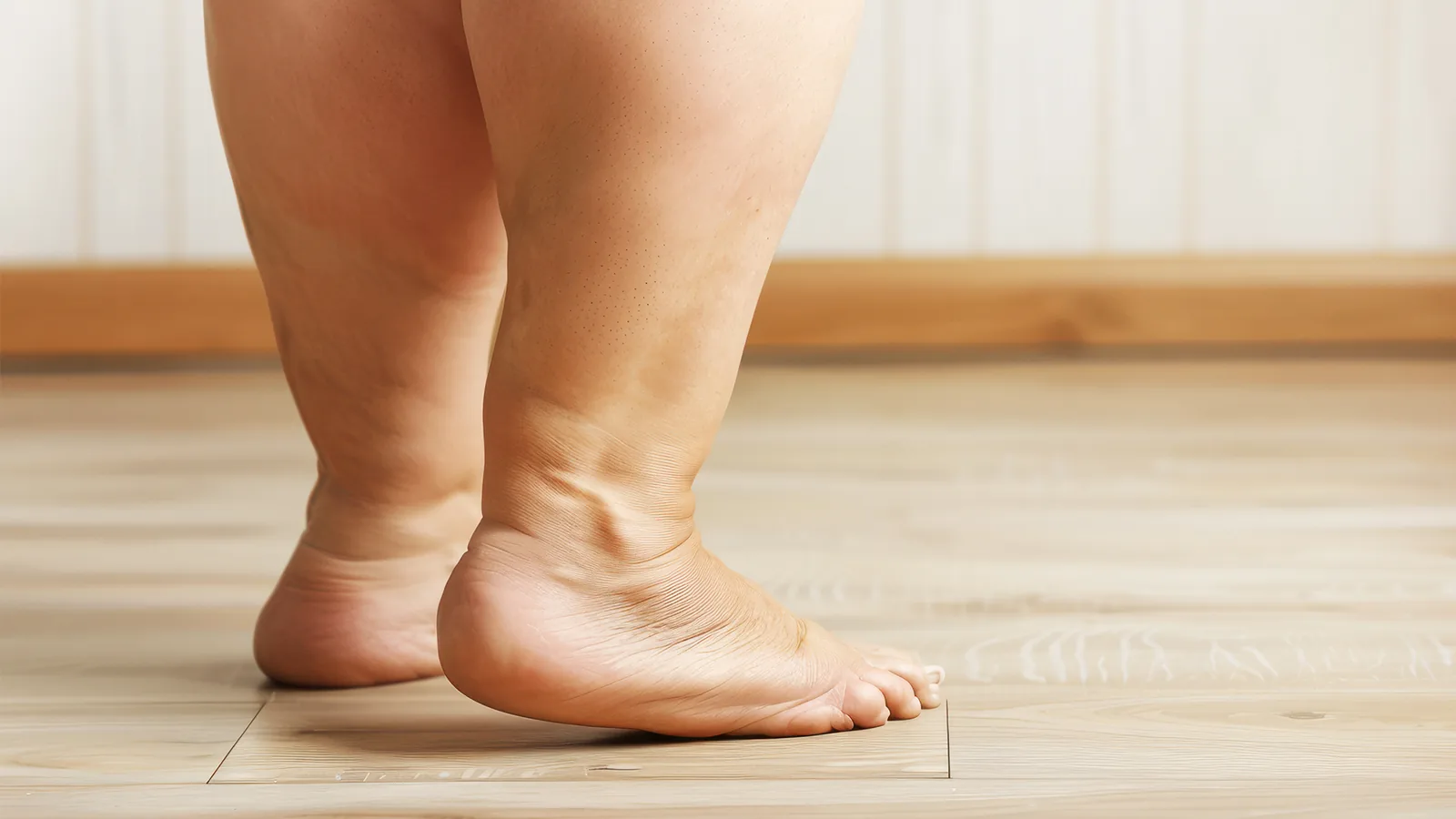
Heel pain on the first step in the morning: telling plantar fasciitis from Achilles tendinopathy, heel spur and nerve pain, plus red flags. YOUNIFY Bangkok.
Contents
Key Takeaways
- The first step hurts most because, while you sleep, the plantar fascia and the Achilles tendon stay shortened for hours, so that already-irritated tissue is stretched abruptly when you first load the foot.
- First step pain in the heel is often plantar fasciitis, but Achilles tendinopathy, heel spur and nerve entrapment at the ankle can tell a very similar story — what separates them in practice is the location and quality of the pain.
- See a doctor if symptoms have not improved after roughly four to six weeks of consistent self-care, or if a red flag appears: night pain that wakes you, a swollen red hot heel, numbness or weakness, fever, or unexplained weight loss.
Why does the first step in the morning hurt the most?
Heel pain on the first step in the morning sends a lot of people searching for answers before breakfast — that stab under the heel as you get out of bed, as if you had stepped on a stone. It eases after a few minutes of walking, then returns the next morning. This pattern is often plantar fasciitis, but not everyone with first step pain in the heel has it: several other conditions tell a very similar story yet need a different plan of care. Here, YOUNIFY's medical team in Bangkok explains why the first step hurts, which conditions need to be told apart, which warning signs should not wait, and when to have it assessed. If you already know you have plantar fasciitis, start with plantar fasciitis treatment in Bangkok: full overview.
Please read this first: this article is written to help you understand your symptoms. It is not a diagnostic tool. Only a clinical assessment by a doctor can confirm what is actually causing your heel pain.
While you sleep, the foot rests in a slightly pointed position, so the plantar fascia and the Achilles tendon stay shortened for hours. When you stand and load the foot for the first time, that shortened, already-irritated tissue is stretched abruptly. The pain signal is therefore sharpest in the first few steps of the day. At YOUNIFY Clinic in Silom, Bangkok, our doctors see this pattern often.
The plantar fascia is a thick band running from the heel bone to the base of the toes, working like a bowstring that supports the arch. Repeated loading at the heel attachment irritates it, and the tissue your body repairs during rest is less elastic than the original — so a sudden stretch provokes pain.
That gives the symptom a recognisable pattern:
- Sharp pain on the first steps after waking, easing within a few minutes to around half an hour.
- Pain returning after sitting and then standing up — after a long meeting, flight or drive. Travellers often notice it a few days into a trip.
- A duller ache late in the day, reflecting accumulated load rather than overnight shortening.
That sequence is a meaningful clue, not a diagnosis: other conditions also flare in the morning, in a different place and with a different quality. If your symptoms are recent, read does plantar fasciitis go away on its own.
What else can cause morning heel pain? Four conditions compared
Plantar fasciitis is the most frequent explanation for first step pain in the heel, but at least three other conditions overlap with it: Achilles tendinopathy, heel spur, and nerve entrapment at the ankle (tarsal tunnel syndrome). Each has its own location and its own aggravating factors. Noticing those details makes your consultation far more productive.
| Condition | Where it hurts | When it hurts | What it feels like | What typically makes it worse |
|---|---|---|---|---|
| Plantar fasciitis | Under the heel, slightly toward the inner side, at the fascia's attachment | First steps in the morning, and on standing up after sitting | Sharp, stone-under-the-heel pain that eases after walking a while | Barefoot walking on hard floors, flat unsupportive shoes, all-day standing, ramping up running mileage too fast, weight gain |
| Achilles tendinopathy | Behind the heel and upward along the Achilles tendon | Morning stiffness behind the heel; pain at the start of exercise | Tightness and stiffness with tenderness on the tendon itself; the tendon may feel thickened or slightly swollen | Hill running, jumping, calf raises, shoes with a stiff rim pressing on the tendon |
| Heel spur | Under the heel, in much the same place as plantar fasciitis | Usually the same pattern as plantar fasciitis | Often causes no symptoms by itself; commonly an incidental X-ray finding alongside an irritated fascia | The same factors as plantar fasciitis — accumulated load and pull at the heel |
| Tarsal tunnel syndrome (nerve entrapment) | Below the inner ankle bone, radiating into the sole and sometimes the toes | Day or night; some people are woken by it | Numbness, burning, electric or pins-and-needles quality rather than focal tenderness | Prolonged standing or walking, tight ankle straps; in some people symptoms are more noticeable at rest |
How to read this table. What separates these four in practice is the location and quality of the pain rather than its severity: pain under the heel that eases with walking points toward the fascia, stiffness behind the heel toward the Achilles, and numbness or burning radiating into the sole toward a nerve — which is managed quite differently.
Two caveats. A heel spur on X-ray is not automatically the cause: many people have one with no symptoms, so imaging is always read alongside history and examination. And more than one problem can coexist — tight calves increase the pull transmitted down to the fascia — so assessment covers the whole chain from calf to arch, not just the sore spot.
Which less common conditions need extra caution?
Beyond those four, two groups deserve specific mention: a calcaneal stress fracture of the heel bone from accumulated impact, and inflammatory arthritis, which typically brings morning stiffness in other joints as well. Both need a different line of investigation from ordinary plantar fasciitis.
Calcaneal stress fracture. This develops when repetitive impact outpaces the bone's ability to repair itself — after a rapid increase in running, walking or standing, heavy training on hard surfaces, or with lower bone density. The clues that differ from plantar fasciitis: a deep, diffuse ache within the heel rather than one pinpoint spot, worsening progressively with weight-bearing, and not settling as you keep walking.
Inflammatory arthritis. Conditions in the spondyloarthritis family can present as pain at the tendon attachment on the heel. Worth reporting: morning stiffness beyond roughly half an hour, heel pain on both sides without an obvious mechanical cause, stiffness in other joints or the lower back, night-time back pain that improves with movement, onset at a young age, or a history of psoriasis, inflammatory bowel disease or eye inflammation.
Neither is common, but each is managed differently — one around unloading, the other as a whole-body assessment. That is why guessing from symptoms alone is not enough.
Which red flags mean you should see a doctor without waiting?
Most heel pain is not dangerous. A few features, however, mean the symptom should be assessed rather than watched: unusual night pain, a swollen red hot heel, numbness or weakness, a clear injury, fever, or unexplained weight loss.
- Night pain that wakes you, or pain at rest without weight-bearing — this does not fit the usual load-related pattern.
- A swollen, red, hot or discoloured heel — may point to a significant inflammatory process or an infection.
- Numbness, burning or weakness in the foot or toes — a clue that a nerve is involved.
- A clear injury — a fall, bad landing or audible snap, after which you cannot bear weight.
- Fever, chills or feeling generally unwell.
- Unexplained weight loss, or a condition affecting immunity — including poorly controlled diabetes, where any foot problem warrants earlier review.
- Bilateral heel pain with prolonged morning stiffness in other joints.
If any apply, arrange an assessment rather than giving it "a few more months".
How can you assess your own symptoms at home?
Observing systematically at home will not let you diagnose yourself, but it makes your consultation far more useful. Note the exact spot that is tender, how long the pain lasts in the morning, which activities make it worse, and what changed in your routine before it started.
- Localise it. Press with your thumb: under the heel toward the inner side (typically the fascia), behind the heel (the Achilles), or below the inner ankle bone with radiation into the sole (suggestive of a nerve).
- Time the morning symptom. How many minutes until it eases? Beyond roughly half an hour, alongside other joint symptoms, is worth reporting.
- Track the pattern across the day. Improving as you walk, or worsening with weight-bearing? Those point in different directions.
- Review the four to eight weeks before onset. More mileage, new shoes, a new job on your feet, a walking holiday, a change in body weight.
- Bring the shoes you wear most — uneven wear or a collapsed heel counter is useful information — and note what you have already tried and what happened.
One caution: do not settle on "it must be plantar fasciitis" and start buying devices on your own — treating the wrong target can waste months.
When should you see a doctor, and what will the assessment involve?
As a general rule, see a doctor if symptoms have not improved after roughly four to six weeks of consistent self-care, if any red flag is present, or if the pain is clearly disrupting walking, work and sleep. There is no need to wait several months once your quality of life is affected.
In the consulting room, our medical team starts with a detailed history of the pain pattern — where, when, what helps, what aggravates — then examines: palpating the tender point, assessing calf and Achilles tightness, looking at arch structure and gait, and testing sensation where a nerve is suspected. Ultrasound or X-ray is considered case by case, and blood tests added if the history suggests inflammatory arthritis. For international patients we try to plan assessment and imaging into a single visit.
Once the source is clear, care begins with the least invasive options: activity modification, stretching and strengthening, footwear and insoles, physiotherapy. For confirmed plantar fasciitis that persists despite complete standard care, a non-surgical option such as TAME (transarterial microembolization) may come up in discussion — not a first-line choice, and not right for everyone. See chronic plantar fasciitis: where to get treated.
To repeat: only a clinical assessment can confirm what is causing your morning heel pain.
Doctors

Dr. Thanakrit Mangklapaiboon
Interventional Radiology
Fellowship in Body Interventional Radiology
View full profile
Frequently Asked Questions
My heel hurts in the morning but it goes away after I walk. Do I need to see a doctor?
If the symptom is recent and not disrupting daily life, consistent activity modification, stretching and supportive footwear often help early on. If there is no improvement after roughly four to six weeks, or any red flag appears, arrange an assessment.
I get first step pain in the heel every morning — does that definitely mean plantar fasciitis?
Not necessarily. Achilles tendinopathy, nerve entrapment at the ankle, a calcaneal stress fracture and some inflammatory arthritis conditions can all cause morning heel pain. A physical examination is needed to tell them apart.
My X-ray shows a heel spur. Does that mean I need surgery?
Not automatically. Many people have a heel spur with no symptoms, and pain is usually related to the irritated fascia rather than the spur itself. Our medical team reads imaging alongside your symptoms and examination.
I have sharp heel pain waking up on both sides. Is that unusual?
Both heels can be affected by load — all-day standing or weight gain, for example. But bilateral pain without an obvious mechanical cause, with prolonged morning stiffness in other joints, is worth mentioning so an inflammatory cause can be considered.
Should I stop walking and exercising completely?
Usually the advice is to reduce and modify rather than stop everything: lower the impact, switch to activities that load the heel less, keep stretching. The right plan should be set with our medical team once the cause is known.
References
- Buchbinder R. Plantar fasciitis. N Engl J Med. 2004;350(21):2159–2166. (New England Journal of Medicine)
- Morrissey D, Cotchett M, Said J'Bari A, et al. Management of plantar heel pain: a best practice guide informed by a systematic review, expert clinical reasoning and patient values. Br J Sports Med. 2021;55(19):1106–1118. (British Journal of Sports Medicine)
- Landorf KB, Keenan AM, Herbert RD. Effectiveness of foot orthoses to treat plantar fasciitis: a randomized trial. Arch Intern Med. 2006;166(12):1305–1310. (Archives of Internal Medicine)
Read next in this series
This tool helps you find relevant information. It does not provide a diagnosis.
Medical Note
This article is for general information and does not replace medical examination, diagnosis, or treatment. If symptoms are severe, changing quickly, or urgent, seek medical care promptly.
Individual results may vary. Please consult a doctor before treatment.
Want to know which care plan fits you?
Share your symptoms, health history, medications or prior procedures, and personal goals. Our team can help arrange a medical assessment.
Consult YOUNIFY Clinic