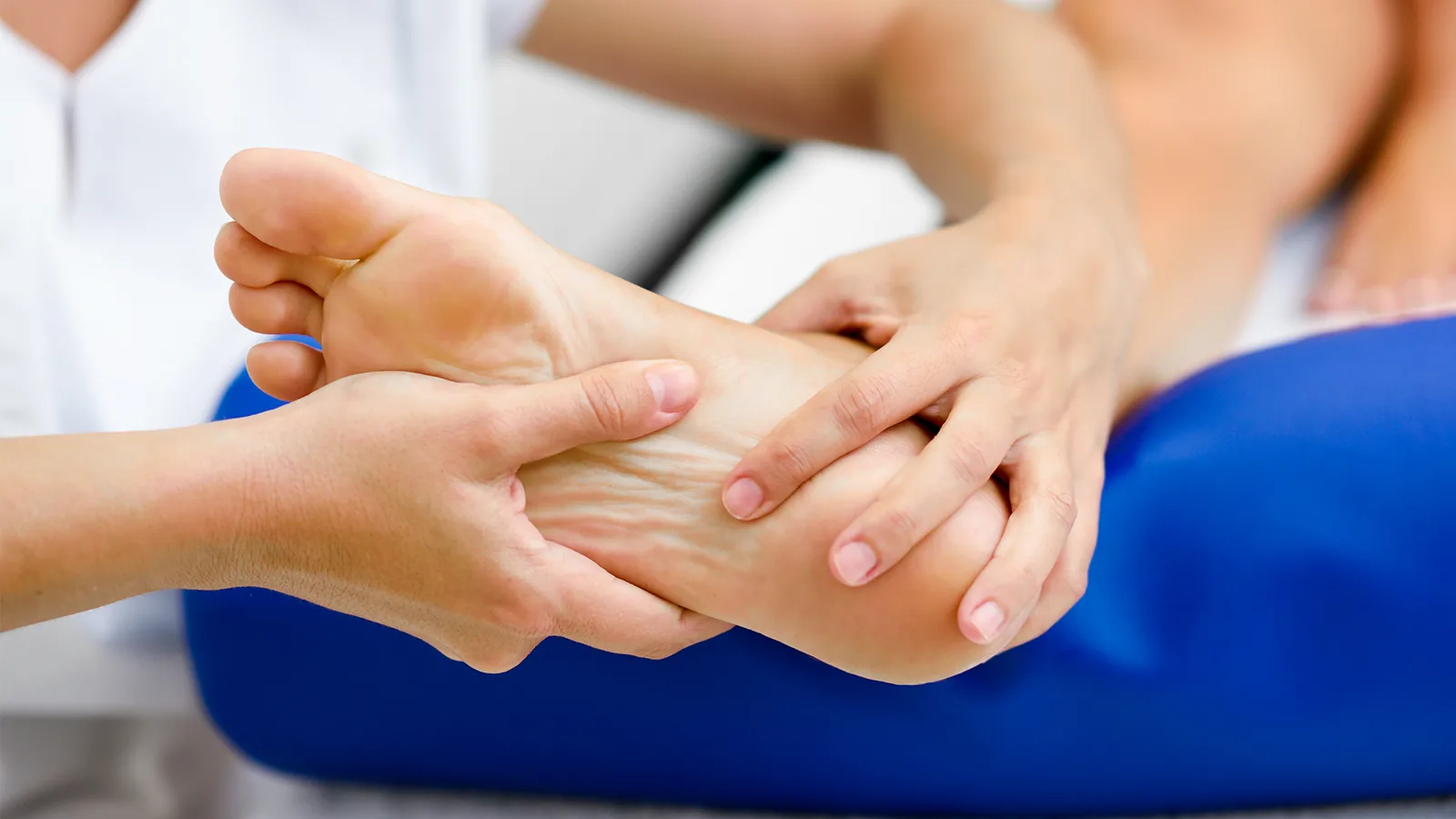
Chronic plantar fasciitis treatment: where to go and how to choose. A doctor-led comparison of procedure options plus a neutral checklist of questions to ask any clinic in Bangkok.
Contents
Key Takeaways
- Chronic plantar fasciitis means heel pain that has persisted for many months — commonly from around six months onward. "Refractory" is a stricter label: it applies only once you have genuinely worked through stepwise care, consistently and for long enough, and pain still limits your walking and daily life.
- When symptoms do not respond, the first move is not to find a new procedure — it is to question the original diagnosis, and to review the factors that were never addressed: load, footwear, body weight and inconsistent rehabilitation.
- The higher you climb the ladder, the thinner the evidence becomes and the more patient selection matters. TAME is not a first-line option, not right for everyone, and its evidence base is still emerging. Results vary by individual.
What does "chronic" really mean, and when is basic care no longer enough?
Chronic plantar fasciitis treatment — where to go is the question most people reach after months of heel pain that has outlasted stretching, new shoes, physiotherapy, injections or shockwave. This guide from the YOUNIFY Clinic medical team is not written to tell you to come to us. It is written to give you a way to judge: what "chronic" and "refractory" actually mean, why some people fail treatment because the diagnosis was never right, an honest side-by-side comparison of the procedure options, and a checklist of questions that works at any clinic anywhere. If you have not yet seen the full ladder of care, start with plantar fasciitis treatment in Bangkok: full overview and come back here afterwards.
In practice, chronic plantar fasciitis means heel pain that has persisted for many months — commonly from around six months onward. "Refractory" is a stricter label: it applies only once you have genuinely worked through stepwise care, consistently and for long enough, and pain still limits your walking and daily life.
The most common misunderstanding is counting only how long you have hurt. What matters more is what you have actually done, and for how long. Many people improve gradually over several months to about a year with non-invasive care [1]. Someone with ten months of pain who stretched occasionally and never changed footwear is not treatment-resistant — they have simply not completed the lower rungs.
Signs it is time for a fresh assessment:
- Months on the same plan, with neither pain level nor walking distance shifting
- Clear improvement, then relapse every time you return to your normal load
- The character of the pain has changed — numbness, burning, radiating pain, or pain at rest
- Symptoms now affect work, sleep, or make you avoid activities you used to manage
- Several treatments tried, but never a structured assessment by a medical team
If you are unsure whether your self-care was truly complete, review it against does plantar fasciitis go away on its own before moving up to anything more invasive.
Before you change the treatment, re-open the diagnosis
When symptoms do not respond, the first move is not to find a new procedure — it is to question the original diagnosis. Failed treatment usually falls into two groups: the diagnosis was not correct, or the diagnosis was correct but the factors driving the pain were never addressed.
Conditions that mimic plantar fasciitis. Pain under the heel does not always come from the plantar fascia. Conditions typically ruled out include nerve entrapment around the foot and ankle (more often with numbness, burning or radiating pain), stress-related bone injury in the heel, a heel fat pad that thins with age, Achilles tendon problems at its insertion, and inflammatory arthritis causing pain at several tendon attachments at once. Each changes the plan completely — treating "plantar fasciitis" in someone who does not have it will not work in any clinic, in any country.
Why genuine plantar fasciitis becomes resistant. For people who do have it, the reasons are usually unglamorous and frequently overlooked.
- Load was never managed — the same daily hours on your feet, or running volume returned to too quickly at the first sign of improvement
- Footwear never changed — hard, flat soles with no heel support, or frequent high heels
- Body weight, adding pressure to the sole with every step, to be addressed alongside the pain
- Inconsistent rehabilitation — stretching only when it hurts, stopping the moment it eases, or stretching without calf and foot strengthening, which sits within core management [2]
- Switching too quickly — before any one approach has had time to work, so nothing can be evaluated
- Medical conditions and medication that affect tissue repair and belong in the plan
A careful clinic spends time on both before proposing any procedure. If a first visit ends with a procedure recommendation and no review of the diagnosis or the factors above, that is the moment to ask more questions.
What are the procedure options once basic care is not enough?
When stepwise care has genuinely been completed and pain persists, only a handful of option groups are usually discussed. Each has a different mechanism, a different weight of evidence, and different limitations. The table below sets them out neutrally so you can use it in conversation with any doctor.
| Option | How it works | Current evidence | Sessions / timeframe | Who it may suit | Limitations |
|---|---|---|---|---|---|
| Extracorporeal shockwave (ESWT) | Wave energy delivered from outside the body to the fascia's attachment at the heel to stimulate tissue repair | Mixed — one randomised controlled trial found no clear difference from the comparison group [4], while current guidance still lists it as an option for non-responders to basic care [2] | A course of sessions a week or more apart | People still in pain after basic care who prefer a needle-free option | Can be uncomfortable, needs repeat visits, response varies widely |
| Targeted corticosteroid injection | Reduces local inflammation to bring pain down for a short period | A Cochrane review found the benefit small and confined to around one month, with no clear long-term evidence [3] | A single injection or a limited number | People in too much pain to rehabilitate | Temporary relief that does not address the cause; repeated injections carry precautions |
| PRP / prolotherapy | Injections intended to stimulate repair in degenerated tissue | Limited and inconsistent; not established as a primary treatment | Varies by indication and response | Not a first-line treatment; evidence is still limited, and YOUNIFY does not offer it. | Needs further research; preparation and technique are not standardised |
| TAME (transcatheter arterial microembolization) | A very fine catheter releases particles to block the abnormal vessels growing into chronically inflamed tissue | Still emerging; available studies are mostly small case series, with no large randomised controlled trial [5] | Usually a single procedure, then review over several weeks | Selected patients who completed stepwise care, still have pain, and were assessed as suitable | Not first-line, not for everyone; has contraindications and possible side effects, and needs imaging equipment and a prepared team |
| Surgery | Surgical release of the plantar fascia | A late option for a small minority who have genuinely completed non-surgical care [1] | A single operation, longer recovery | Severe, long-standing symptoms unresponsive to every earlier rung | Surgical risk and a long recovery; many people never need this rung |
The point of this table is not to crown a winner. It is that the higher you climb the ladder, the thinner the evidence becomes and the more patient selection matters. If you are weighing the two options patients ask about most, read the detailed comparison in shockwave vs TAME for plantar fasciitis.
What is TAME, and where does it sit on the ladder?
TAME (TransArterial MicroEmbolization, also described as transcatheter arterial microembolization) is a catheter-based procedure: a very fine catheter is guided through the blood vessels and tiny particles are released to block the abnormal vessels growing into chronically inflamed tissue. It belongs to the same family of techniques as GAE, the knee artery embolization used in knee osteoarthritis. Its position on the ladder is clear — near the top, not the bottom: an option for selected patients who have genuinely worked through stepwise care and still have pain that limits daily life.
The evidence has to be stated plainly: the evidence base for TAME in plantar fasciitis is still emerging, the available studies are mostly small, and there is no large randomised controlled trial [5]. We can explain the mechanism and what has been reported in carefully selected groups, but we cannot tell you in advance whether you will respond. TAME is therefore not a first-line option, not right for everyone, and the decision should follow an individual discussion weighing benefits against limitations. For the mechanism, procedure and recovery in detail, read what TAME is and how it is used in chronic plantar fasciitis.
How do you evaluate a clinic? Questions to ask before deciding
This checklist is designed to be used anywhere, not only here. A good answer is not the most confident-sounding one — it addresses the question, explains the reasoning, and is willing to acknowledge uncertainty. If a question is deflected or met with pressure to decide today, that is useful information too.
- Who performs the procedure, and what is their training background? Interventional radiology, pain medicine, or another discipline — and is that the same doctor who assesses you?
- What imaging guidance is used? Ultrasound, X-ray or another modality, in what kind of room, and with what team and equipment on hand if extra care is needed
- How was it established that the pain is genuinely from the plantar fascia? Which history, examination findings and imaging were used, and how the mimicking conditions were ruled out
- What level of evidence supports this procedure? Well-established standard care, or an option whose evidence is still accumulating — in plain language
- What is the chance of not responding, and what happens then? Is there a fallback, would it be repeated, and when would it be judged as not working
- What are the side effects and contraindications? What is common, what is uncommon but important, and whether anything in your history rules it out
- What is the follow-up plan, and how will the underlying cause be managed? When reviews happen, what is measured, and whether physiotherapy, load management and footwear work continue — a procedure alone is rarely enough
- What does the quoted amount include? Assessment, imaging, the procedure and follow-up — and what might be charged separately later. Ask for it in writing
- Is there anything I should try first? If the answer is no, expect an explanation of why the lower rungs do not fit your case
- What happens if I do nothing right now? Often forgotten, and a good test of whether you are talking to someone willing to explain both sides
International patients should add two: who sees me if there is a problem after I fly home, and can follow-up be done remotely with my doctor at home.
What determines the cost?
There is no single figure for chronic heel pain care, because each plan differs from the assessment stage onward. So the useful thing to understand before asking about price is what drives it — then ask for an itemised quote.
- Assessment and any necessary imaging — some cases are clear from history and examination, others need imaging to exclude the mimicking conditions
- Which procedure is chosen — each uses different equipment, settings and team
- How many sessions — some options run as a course, others are done once
- Follow-up and rehabilitation — review appointments and the physiotherapy programme afterwards, the part most often left out of a quote
At YOUNIFY Clinic we quote after assessment, so the figure you receive reflects your actual plan. When comparing clinics, compare what is included rather than the headline number alone.
How should you prepare for the consultation?
The first consultation is far more useful when the medical team can see the whole arc of what you have already been through. A little preparation saves time and avoids repeating tests unnecessarily.
What to bring:
- A symptom timeline — when it started, where exactly it hurts, which part of the day is worst, and what preceded it
- What you have tried and what happened — what, for how long, how much it helped in your own judgement, and why you stopped
- Your current medication, including regular prescriptions and supplements
- Any imaging you already have — ultrasound, X-ray or MRI files with the reports
- The shoes you actually wear — the pair you use most; the wear pattern says a great deal about how you load the foot
- Your goals — walking for longer, returning to a sport, or standing through a workday without pain. Clear goals make progress measurable
If you are travelling to Bangkok, send your history and previous imaging ahead so the team can form a preliminary view before you arrive. Allow enough time in the city for the assessment, the procedure if one is indicated, and short-term follow-up before flying — the appropriate window is confirmed once we know your details. Longer-term follow-up can be arranged remotely alongside your doctor at home, and it is worth planning for reduced walking in the days after any procedure.
At YOUNIFY Clinic, chronic heel pain is managed within our Chronic Pain service, where the medical team starts by reviewing the diagnosis and the factors limiting your response before discussing which options fit — including not proceeding with a procedure at all. To arrange an initial assessment, contact us through the channels below.
Doctors

Dr. Thanakrit Mangklapaiboon
Interventional Radiology
Fellowship in Body Interventional Radiology
View full profile
Dr. Rarinthorn Choomsai Na Ayuthaya
Pain Medicine / Anesthesiologist
Diploma of Pain Medicine
View full profile
Frequently Asked Questions
How long does pain have to last before it counts as refractory chronic plantar fasciitis?
Commonly from around six months onward, but duration matters less than whether you have genuinely completed stepwise care, consistently and for long enough. A medical team assesses both together. Results vary by individual.
I have tried several treatments without improvement — what should I do next?
The first step is not another procedure but a re-assessment: is the diagnosis correct, is a mimicking condition hiding underneath, and which factors remain unaddressed — daily load on the feet, footwear, body weight, or inconsistent rehabilitation.
Is TAME right for everyone with plantar fasciitis?
No. TAME is an option only for selected patients who have completed stepwise care, still have pain, and have been assessed as suitable. Its evidence base is still emerging with no large randomised trial, so it is not a first-line choice, and it has contraindications our medical team explains beforehand.
What does treatment for chronic plantar fasciitis cost?
It depends on individual assessment, because plans differ in the type of procedure, the number of sessions, the imaging required and the follow-up. YOUNIFY Clinic quotes after assessment. Message us for details.
What happens if the procedure does not work?
Ask this before you commit. A sound plan states in advance when the result will be reviewed, what will be measured, and how a non-response would be handled — re-examining the diagnosis, adjusting the underlying care, or considering other options.
References
- Buchbinder R. Plantar fasciitis. 2004;350(21):2159–2166. PMID: 15152061 (New England Journal of Medicine)
- Morrissey D, Cotchett M, Said J'Bari A, et al. Management of plantar heel pain: a best practice guide informed by a systematic review, expert clinical reasoning and patient values. 2021;55(19):1106–1118. PMID: 33785535 (British Journal of Sports Medicine)
- David JA, Sankarapandian V, Christopher PRH, Chatterjee A, Macaden AS. Injected corticosteroids for treating plantar heel pain in adults. 2017;6:CD009348. PMID: 28602048 (Cochrane Database of Systematic Reviews)
- Buchbinder R, Ptasznik R, Gordon J, Buchanan J, Prabaharan V, Forbes A. Ultrasound-guided extracorporeal shock wave therapy for plantar fasciitis: a randomized controlled trial. 2002;288(11):1364–1372. PMID: 12234230 (JAMA)
- Gandhi R, Banker M. Early outcomes of transcatheter arterial embolization using imipenem/cilastatin for plantar fasciitis refractory to conservative therapy. 2024;97(1155):544–548. PMID: 38281074 (British Journal of Radiology)
Medical Note
This article is for general information and does not replace medical examination, diagnosis, or treatment. If symptoms are severe, changing quickly, or urgent, seek medical care promptly.
Individual results may vary. Please consult a doctor before treatment.
Want to know which care plan fits you?
Share your symptoms, health history, medications or prior procedures, and personal goals. Our team can help arrange a medical assessment.
Consult YOUNIFY Clinic