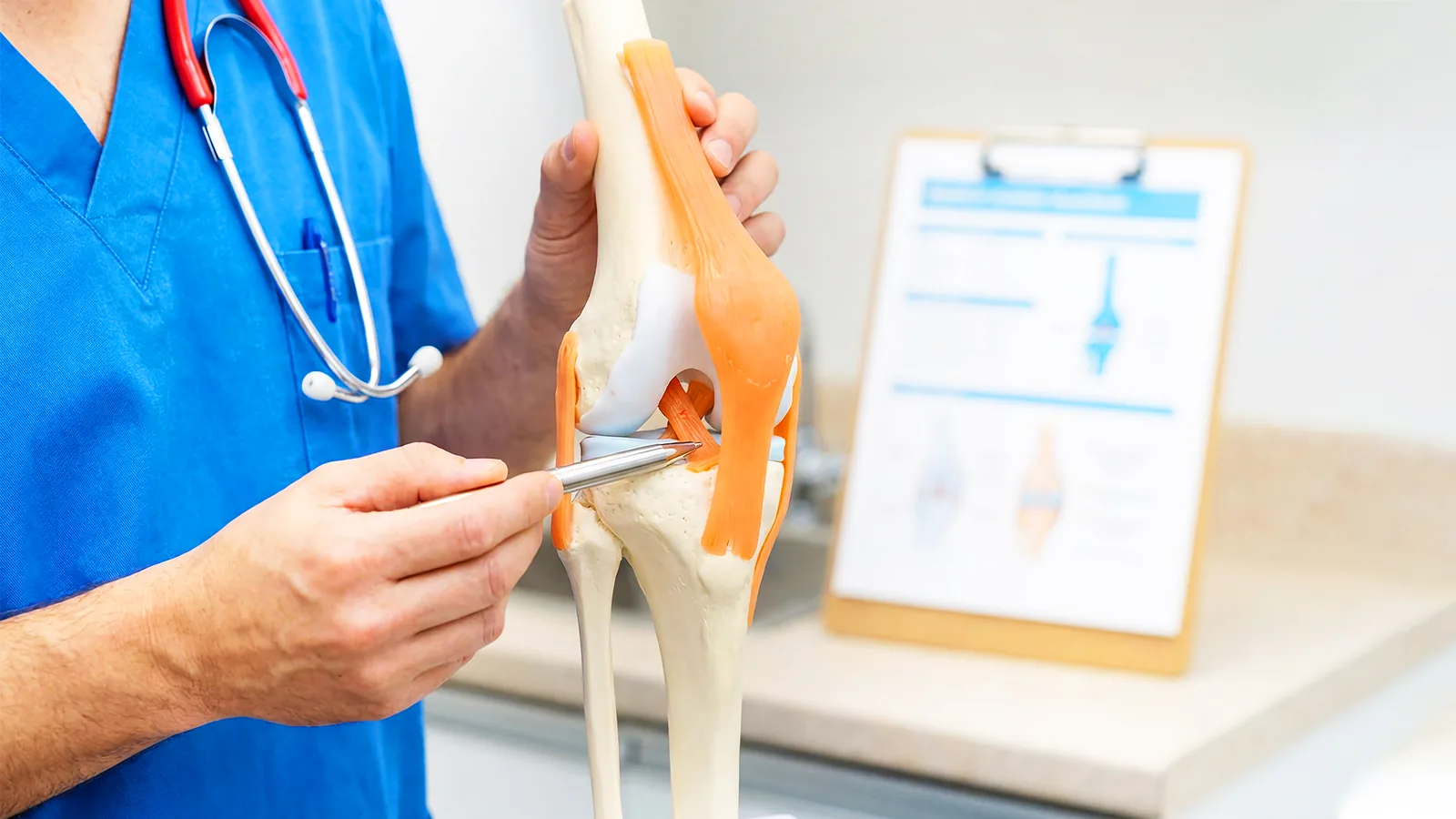
A step-by-step guide to the GAE procedure: how to prepare, what happens on the day, and what to expect afterwards at YOUNIFY Clinic.
Nội dung
Điểm Chính Cần Nhớ
- Knowing what actually happens can take a lot of the worry out of any procedure. This article walks through genicular artery embolization (GAE) - the minimally invasive treatment that blocks tiny abnormal blood vessels in an arthritic knee to ease pain - from preparation through to the hours after. Your own plan may differ; this is a general guide. If you are still comparing GAE with other options, our guide to knee osteoarthritis treatment without surgery sets out all six side by side.
Before the day: preparation
Once GAE has been agreed as appropriate for you, preparation usually involves:
- Assessment and imaging. X-rays and often an MRI help the team plan which vessels to target. Blood tests check kidney function and clotting.
- Medication review. You will be asked about all medicines and supplements. Some blood-thinning medicines may need to be paused beforehand - always follow the specific instructions your team gives you.
- Practical planning. You will usually be advised on when to stop eating and drinking, what to wear, and to arrange for someone to take you home afterwards.
- Your questions. This is the time to ask about anything - the plan, the risks, and what recovery looks like. Our GAE risks and safety article is a good companion read.
On the day: what happens during GAE
GAE is performed by a physician-led interventional team using internationally accredited techniques and equipment. You stay awake but relaxed; the procedure is done with local anesthetic and usually light sedation to keep you comfortable.
Here is the general sequence:
1. Settling in. You lie on a table in an imaging suite. The team monitors your heart rate, blood pressure, and oxygen throughout.
2. Numbing and access. A small area - commonly at the top of the thigh or the wrist - is cleaned and numbed. A very thin tube (catheter) is guided into an artery through a tiny pinhole.
3. Mapping the vessels. Using live X-ray and a small amount of contrast dye, the team maps the genicular arteries around the knee and locates the abnormal vessels feeding the inflamed joint lining.
4. Embolization. Tiny particles are released through the catheter to block only those targeted vessels. You may feel warmth or mild discomfort in the knee as this happens.
5. Finishing up. The catheter is removed and gentle pressure or a small closure device seals the pinhole. No stitches are usually needed.
The procedure commonly takes somewhere in the region of one to two hours, depending on the anatomy. The joint itself is never opened.
Right after: the recovery area
Once GAE is finished, you rest in a recovery area for a period while the team monitors you and the access site. Because it is minimally invasive, most patients can return home the same day, though this is confirmed on the day based on how you are doing.
You may notice:
- Mild knee ache, warmth, or swelling as the treated area settles - this is common and usually eased with simple pain relief.
- A small bruise at the access point.
- Instructions to rest the leg and limit strenuous activity for a short period.
Your team will give you clear aftercare instructions, including what is normal, what to watch for, and who to contact with concerns.
When relief tends to appear
GAE is not an instant switch. Some people notice improvement within days to a few weeks, while for others it builds more gradually as inflammation settles. Where it works, relief may last several years in some cases, typically 1-5 years, though results vary by individual. Our week-by-week recovery timeline explains what the following weeks can look like.
A note on comfort and care
At YOUNIFY Clinic, GAE is delivered by our medical team with attention to comfort, clear explanation, and follow-up. You are never rushed, and every step is explained before it happens.
Next step
To find out whether GAE is right for you, our medical team can arrange an initial assessment. Contact us on LINE (@younifyclinic) or WhatsApp +66 81 556 9696.
Bác sĩ

Dr. Thanakrit Mangklapaiboon
Điện quang can thiệp
Fellowship Điện quang can thiệp vùng thân
Xem hồ sơ đầy đủ
Câu hỏi thường gặp
Will I be asleep during GAE?
Usually not fully. It is done with local anesthetic and light sedation, so you are relaxed and comfortable but not under general anesthesia in most cases.
Does it hurt?
Most people feel little at the pinhole thanks to numbing, and perhaps warmth or mild ache in the knee during embolization. Discomfort afterwards is usually manageable with simple pain relief.
Can I really go home the same day?
Because GAE is minimally invasive, most patients can return home the same day. This is confirmed on the day based on your recovery.
Tài liệu tham khảo
- Chlorogiannis DD, Vasilopoulou A, Konstantinidis CI, Pagona AE, Filippiadis DK. Knee pain improvement after genicular artery embolization for the management of knee osteoarthritis: an updated systematic review and meta-analysis of 21 studies. Radiologie. 2024;64(Suppl 1):S32-S46.
- Alves LH, Barbosa D, Merighi MC, et al. Genicular artery embolization as a minimally invasive treatment for knee osteoarthritis: systematic review and meta-analysis. Skeletal Radiol. 2026.
- Correa MP, Michelin AF, Aguiar LA, et al. Genicular artery embolization using imipenem/cilastatin vs. microsphere for knee osteoarthritis (GAUCHO): 12-month clinical results of a single-blind randomized controlled trial. Cardiovasc Intervent Radiol. 2026;49:1825-1837.
- Outcome and safety of genicular artery embolization for knee osteoarthritis: systematic review and meta-analysis. Cardiovasc Intervent Radiol. 2026.
Lưu Ý Y Khoa
Bài viết này chỉ mang tính thông tin chung và không thay thế cho việc thăm khám, chẩn đoán hay điều trị y khoa. Nếu triệu chứng nặng, thay đổi nhanh hoặc cấp bách, hãy đi khám ngay.
Kết quả có thể khác nhau ở mỗi người. Vui lòng tham khảo ý kiến bác sĩ trước khi điều trị.
Quý khách muốn biết kế hoạch chăm sóc nào phù hợp với mình?
Chia sẻ triệu chứng, tiền sử sức khỏe, thuốc đang dùng hoặc các thủ thuật đã thực hiện trước đây và mục tiêu cá nhân của Quý khách. Đội ngũ của chúng tôi có thể hỗ trợ sắp xếp buổi đánh giá y khoa.
Tư vấn cùng YOUNIFY Clinic