Conditions
Knee Osteoarthritis: Your Treatment Options in Bangkok, from Conservative Care to Surgery
Knee osteoarthritis has 5 treatment options, from least to most invasive: lifestyle and physiotherapy, medication, image-guided intra-articular injection, GAE, and total knee replacement. Many people improve at the early steps without surgery.
Điểm Chính Cần Nhớ
Nội dung y khoa được kiểm duyệt bởi BS. Noppachai Siranart · Cập nhật 14 tháng 8, 2026 · 6 min read
- Knee osteoarthritis treatment options follow one principle used worldwide: start with what disturbs the body least, and move up only when symptoms still interfere with daily life. Many people improve at the early steps without surgery, and knee replacement remains a good answer for those with clear indications.
- This is an orientation page rather than a deep guide. Its job is to help you locate yourself on the ladder and know what to read next. The detail for each option lives in the linked articles under What to read next.
- ← Back to all conditions we treat
01
Does this sound like you?
People rarely arrive saying "osteoarthritis". They usually arrive with one of these.
- Knee pain on stairs: going down hurts more than going up; you hold the rail, or take one step at a time
- Morning stiffness: the knee feels tight on waking and needs a while to loosen before you walk normally
- Night pain: a deep ache that wakes you or makes it hard to settle, especially after a heavy day
- Shorter walking distance: you used to walk all day; now you look for a seat within ten minutes
- Injections that don't last: the first one worked well, but the gap between injections keeps shrinking
- Told you need a knee replacement, but not ready, because of work, recovery time, caring for family, or health conditions that make major surgery higher risk
These patterns do not always mean osteoarthritis. Knee pain also comes from a torn meniscus, tendon problems around the knee, or pain referred from the hip, so assessment by our medical team comes before choosing a treatment.

02
Common causes
Knee osteoarthritis is the gradual deterioration of joint cartilage with chronic inflammation of the joint lining, producing pain, stiffness, and reduced function. Contributing factors include age; body weight, since every step loads the joint surface; cumulative use from squatting, kneeling, stairs, or carrying loads; previous injury such as a cruciate ligament or meniscal tear; quadriceps weakness; and leg alignment that overloads one compartment.
03
Treatment options, from least to most invasive
Not everyone climbs every step, and many people stop early. Step 1 runs alongside every other option.
| Step | What it involves | Who it suits | Limitations to know | Starting from (THB) |
|---|---|---|---|---|
| 1. Lifestyle, physiotherapy, weight management | Strengthening the thigh and hip muscles, modifying activities that provoke symptoms, weight reduction where appropriate, walking aids where useful | Every stage; the foundation under all other options | Takes weeks to months of consistency before change shows, and benefit tends to fade if the programme stops | Quoted after physician assessment |
| 2. Medication | Oral and topical pain or anti-inflammatory medication as considered by the medical team (generic names only) | Mild to moderate symptoms, or flare-ups | Manages symptoms rather than joint structure · Caution with stomach, kidney, or cardiac conditions | Quoted after physician assessment |
| 3. Image-guided intra-articular injection | Anti-inflammatory or lubricating injection into the joint, with ultrasound or X-ray guiding the needle into position | People for whom medication and physiotherapy are not enough, or who need a window to make progress in rehabilitation | Effect typically lasts a period, then repeat injection is considered · Frequent repetition carries cautions the medical team explains individually | 15,000 |
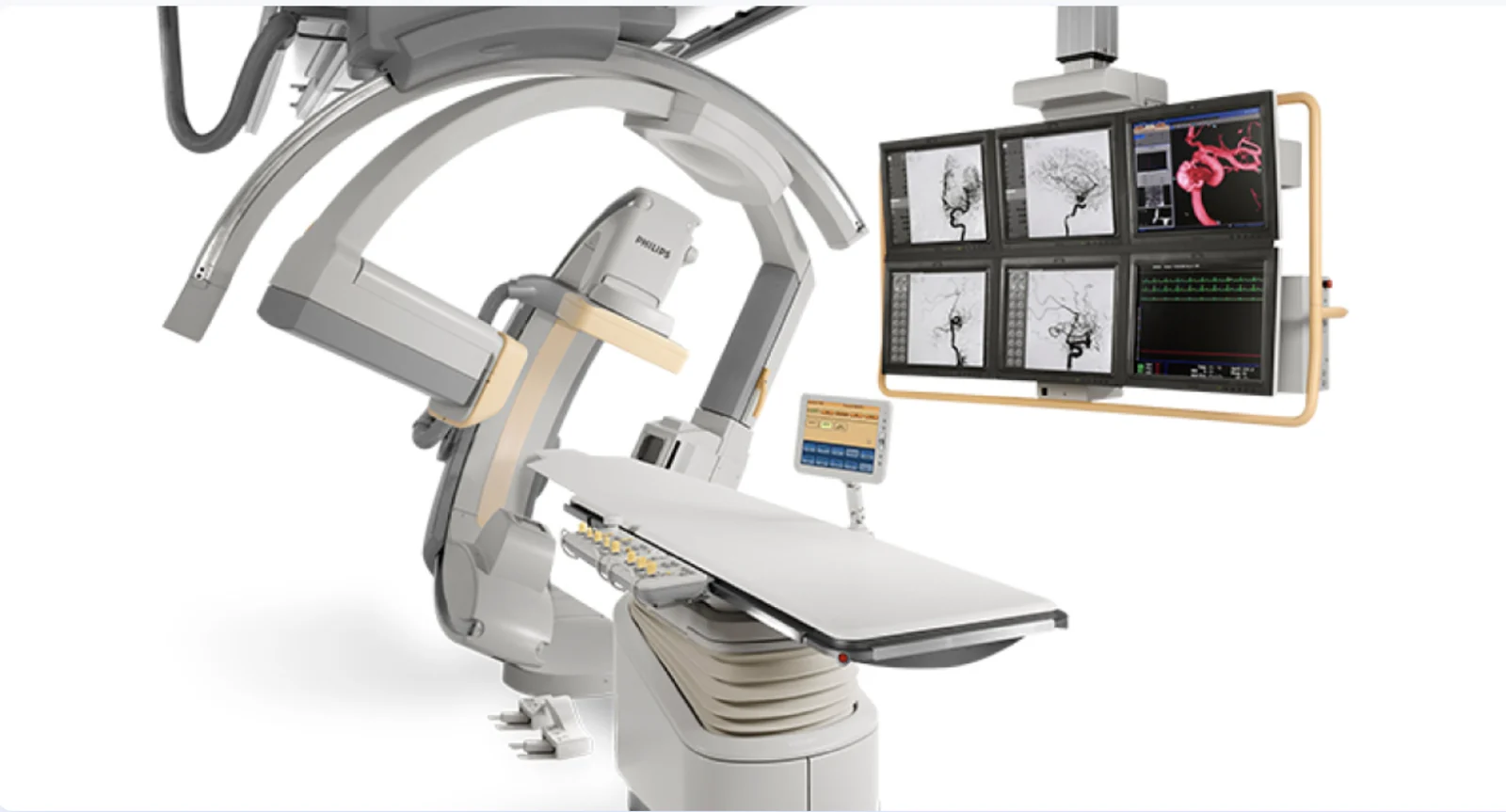
| 4. GAE (Genicular Artery Embolization) | Interventional radiology through a fine catheter, blocking the abnormal small vessels tied to inflammation around the knee, entered through a pinhole at the wrist or groin | Chronic pain from mild-to-moderate knee osteoarthritis, where basic care is no longer enough and major surgery is unwanted or not yet appropriate | Does not regrow cartilage or reverse degeneration; it addresses inflammation and pain · Degree of response varies between individuals · In severe end-stage joints with deformity or bone-on-bone change, response may be limited | 129,000 |
| 5. Total knee replacement (TKA) | Major surgery replacing the damaged joint surfaces with an implant | End-stage disease with clear indications, pain that dominates daily life, other care exhausted | Considerably longer recovery, committed post-operative rehabilitation, and the risks of major surgery weighed individually | 350,000 |
Said plainly: GAE does not replace knee replacement in every case and is not a first option for everyone. It fills the middle ground for people whose medication and injections are no longer enough but who are not at the point of major surgery, or are not ready for it. On durability, current evidence suggests results may last several years in some cases, typically 1–5 years, depending on the individual, and GAE generally does not close off a future knee replacement.
Which of these options is appropriate depends on your imaging, your medical history, and how your symptoms have responded to previous treatment. At YOUNIFY Clinic, a physician reviews these together with you before any treatment is planned. Results vary by individual.
For a side-by-side comparison of all six options with their starting prices, see knee osteoarthritis treatment without surgery.
This tool helps you find relevant information. It does not provide a diagnosis.

04
What assessment involves, and what can be done before you fly
Choosing the right step is not decided by an X-ray alone. It comes from the symptom picture and how you actually live.
- History and examination: the character of the pain, the distance you can genuinely walk, provoking positions, range of motion, joint stability, and muscle strength around the knee
- Review of what you have already tried: physiotherapy and for how long, current medication, previous injections and how long each one held. This history often tells us more than imaging does
- Imaging: knee X-ray, and MRI where individually indicated, to grade the degeneration and rule out other causes
- Options discussed together: our medical team explains what each step does and does not offer. If a procedure is not appropriate for you, we say so directly and set out the alternatives
Steps 1–3 can largely be prepared remotely. Send your symptom history, current medication, and any knee X-ray or MRI from the last 12 months, and we can tell you before you book flights whether you are broadly in range. Most patients treated with GAE recover quickly and can usually go home the same day, so the trip can be built around consultation, procedure, and early follow-up in one visit.
05
When to be seen sooner
Most knee osteoarthritis is gradual and not urgent. Seek assessment without waiting if you have a hot, swollen, red knee with fever or unusually rapid worsening; knee pain after a clear injury with inability to bear weight or the knee giving way; a knee that locks or will not fully straighten or bend; constant pain at rest, unusual night pain, or unexplained weight loss; or a condition affecting your immune system, or worsening symptoms after a recent joint injection.
06
What to read next
- "What is GAE, how does it work, and would I qualify?" → Non-surgical knee osteoarthritis treatment with GAE · the main guide: mechanism, procedure, recovery, and who is or is not a candidate
- "Should I have GAE or go straight to a knee replacement?" → GAE vs knee replacement · a direct comparison of what each delivers, recovery, and the limits of both
- "What does it cost, and is it worth it for my situation?" → GAE cost and value · costs and how to weigh them against the alternatives
- "I want the service details and how to book" → GAE service page · the pathway from assessment to follow-up
- "I'm not sure what my knee pain is" → Knee and pain care services · how we assess and the full range of options
- "Show me other conditions you treat" → All conditions
Câu hỏi thường gặp
Can knee osteoarthritis be reversed?
Worn cartilage does not return to its original state through any single treatment. The goal of care is to reduce pain, restore function, and limit the impact on daily life. Many people do considerably better with stepwise care. Individual results may vary.
My joint injections stop working sooner each time. What now?
That is a common signal to reassess rather than simply inject more often. Reassessment checks whether the source of pain is still what everyone assumed, whether rehabilitation has been given a fair run, and whether a next step such as GAE, or a conversation about surgery, is appropriate. See GAE vs knee replacement.
How long do GAE results last?
Results may last several years in some cases, typically 1–5 years, depending on the individual. Durability is influenced by the starting degree of degeneration, body weight, how the knee is used, and consistency with strengthening exercise.
Can I still have a knee replacement after GAE?
Generally yes. GAE does not close off future surgery; if an indication for replacement develops later, the medical team assesses and plans accordingly.
Is anything non-surgical worth trying in end-stage arthritis?
Symptom-focused care is still possible, but in a severely degenerated, deformed, or bone-on-bone joint the response to non-surgical procedures may be limited, and replacement may address the problem more directly. Our medical team will explain what your imaging and examination actually show.
Bài viết liên quan
Lưu Ý Y Khoa
Bài viết này chỉ mang tính thông tin chung và không thay thế cho việc thăm khám, chẩn đoán hay điều trị y khoa. Nếu triệu chứng nặng, thay đổi nhanh hoặc cấp bách, hãy đi khám ngay.
Kết quả có thể khác nhau ở mỗi người. Vui lòng tham khảo ý kiến bác sĩ trước khi điều trị.
Quý khách muốn biết kế hoạch chăm sóc nào phù hợp với mình?
Chia sẻ triệu chứng, tiền sử sức khỏe, thuốc đang dùng hoặc các thủ thuật đã thực hiện trước đây và mục tiêu cá nhân của Quý khách. Đội ngũ của chúng tôi có thể hỗ trợ sắp xếp buổi đánh giá y khoa.