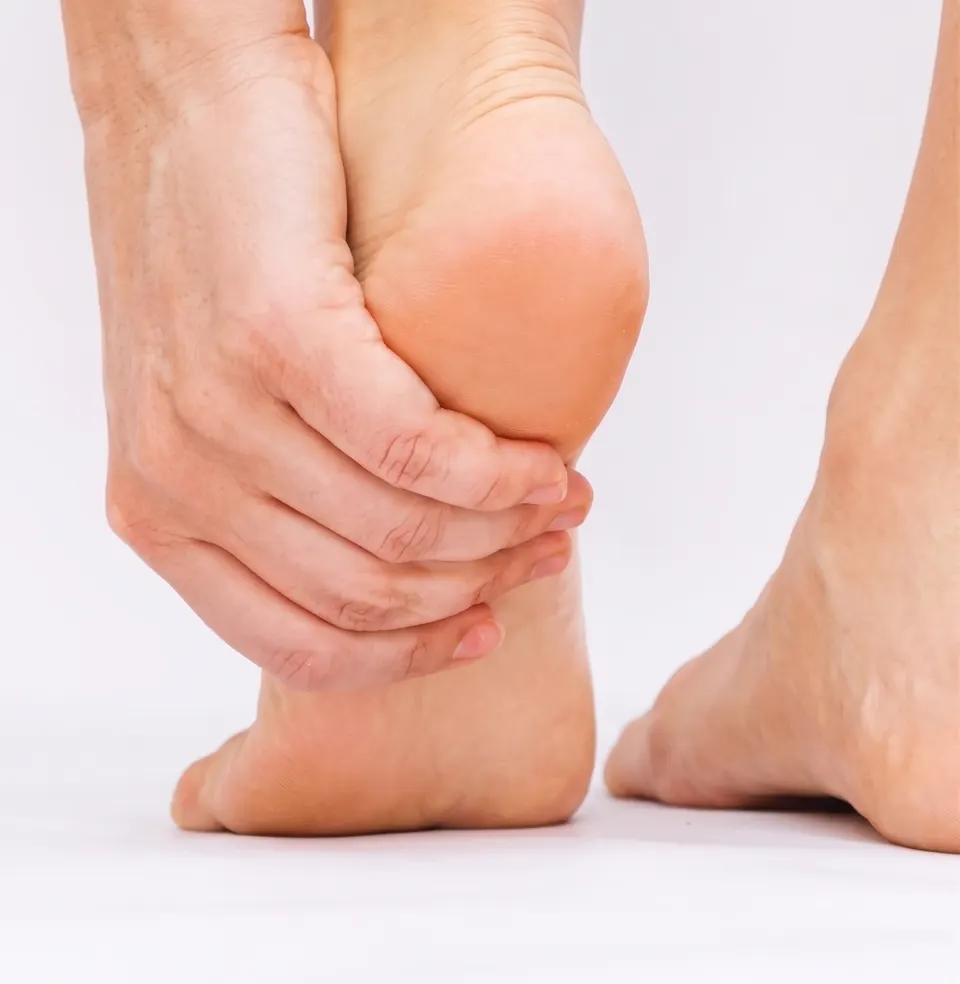
A practical, physician-informed routine of stretches and exercises for plantar fasciitis. Ease heel pain safely and rebuild strength over time.
Nội dung
Điểm Chính Cần Nhớ
- Stretching and strengthening are among the most evidence-supported steps for plantar fasciitis, and they cost nothing but consistency. This guide gives you a practical routine you can do at home, plus how to progress safely. Move within a tolerable level of discomfort, and stop anything that causes sharp or worsening pain.
Why exercise helps
The plantar fascia = the thick band of tissue along the sole of your foot, and it works together with your calf and Achilles. Tight calves increase the pull on your heel, while a fascia and foot that lack strength struggle to handle load. Stretching restores length; strengthening builds the tissue's capacity so everyday standing and walking hurt less over time. Progress is gradual - think weeks to months, not days.
Part 1 - Stretches
Do these gently, most days. Hold each stretch and breathe; never bounce.
Calf stretch against a wall
Stand facing a wall, hands on it. Step one foot back, keep the back knee straight and heel down, and lean forward until you feel a stretch in the calf. Hold 20-30 seconds, 3 times each side. Repeat with the back knee slightly bent to reach the deeper calf muscle.
Plantar fascia stretch (seated)
Sit and cross the sore foot over your other knee. Pull your toes back toward your shin with your hand until you feel a stretch along the sole. Hold 20-30 seconds, 3 times. Doing this before your first steps in the morning can ease start-up pain.
Rolling stretch
While seated, roll the arch of your foot over a firm ball or a chilled bottle for 1-2 minutes. The cold version doubles as gentle relief after a long day.
Towel stretch
Sit with your leg straight, loop a towel around the ball of your foot, and gently pull the toes toward you. Hold 20-30 seconds, 3 times. Useful first thing in the morning before standing.
Part 2 - Strengthening
Add these once stretching feels comfortable. Strengthening is what builds lasting capacity, so do not skip it.
Towel scrunches
Sit with a towel flat on the floor and scrunch it toward you using your toes. 2-3 sets of 10-15.
Toe and marble pickups
Pick up small objects (marbles, a pen) with your toes and set them down. 2 sets of 10 each foot.
Calf raises (progressive)
Stand and rise onto the balls of both feet, then lower slowly. Build to single-leg raises as you get stronger. 2-3 sets of 10-15.
Heel raises with a towel under the toes
Place a rolled towel under your toes so they are lifted, then do slow calf raises. This "high-load" variation targets the fascia and is well supported for stubborn cases. Do it slowly - about 3 seconds up, 3 seconds down - every other day, and expect some manageable discomfort that settles.
Part 3 - A simple weekly plan
- Daily: calf stretch, plantar fascia stretch, and rolling stretch - especially a short set before your first morning steps.
- Every other day: strengthening (towel scrunches, calf raises, and the towel-under-toes heel raises).
- Build gradually: add repetitions or move to single-leg work only when the current level feels comfortable.
Keep a light log of pain levels. A mild ache during and shortly after exercise is usually acceptable; sharp or rising pain over 24 hours means ease back.
What to avoid
- Pushing into sharp pain or "working through" a bad flare.
- Sudden jumps in walking, running, or standing hours.
- Barefoot on hard floors, especially first thing in the morning.
- Expecting overnight change - consistency over weeks to months is what pays off.
If a diligent routine over several months does not help, our medical team can reassess and discuss added support such as night splints, orthotics, or the procedures covered in our treatment options article.
Talk to our team
If heel pain is not improving, our medical team can assess the cause and options. Contact us on LINE (@younifyclinic) or WhatsApp +66 81 556 9696.
YOUNIFY Clinic - 2nd Floor, Room 214, United Center Building, 323 Silom Road, Silom, Bang Rak, Bangkok 10500. Open daily 11:00–20:00.
Câu hỏi thường gặp
How long until stretches help?
Many people notice gradual improvement over several weeks of consistent practice. Strength gains take longer, so keep going even once pain eases.
Should I exercise if it hurts?
Mild, manageable discomfort is usually fine. Sharp pain, or pain that rises over the next day, means reduce the load and progress more slowly.
Can I keep running or working out?
Often yes, at a reduced level. Trim the aggravating load, keep up your routine, and rebuild gradually rather than stopping everything.
Lưu Ý Y Khoa
Bài viết này chỉ mang tính thông tin chung và không thay thế cho việc thăm khám, chẩn đoán hay điều trị y khoa. Nếu triệu chứng nặng, thay đổi nhanh hoặc cấp bách, hãy đi khám ngay.
Kết quả có thể khác nhau ở mỗi người. Vui lòng tham khảo ý kiến bác sĩ trước khi điều trị.
Quý khách muốn biết kế hoạch chăm sóc nào phù hợp với mình?
Chia sẻ triệu chứng, tiền sử sức khỏe, thuốc đang dùng hoặc các thủ thuật đã thực hiện trước đây và mục tiêu cá nhân của Quý khách. Đội ngũ của chúng tôi có thể hỗ trợ sắp xếp buổi đánh giá y khoa.
Tư vấn cùng YOUNIFY Clinic