Понятное сравнение радиочастотной абляции щитовидной железы и операции: анестезия, рубец, восстановление, гормональные таблетки, наблюдение и то, когда операция всё же остаётся правильным выбором.
Содержание
Ключевые выводы
- Радиочастотная абляция (RFA) и операция на щитовидной железе не взаимозаменяемы. RFA применяется только к узлам, доброкачественность которых уже подтверждена тонкоигольной аспирационной биопсией (FNA); при раке или подозрении на рак лечение по-прежнему хирургическое.
- RFA выполняется под местной анестезией через прокол иглой, а не через разрез, большинство пациентов уходят домой в тот же день, а здоровая ткань щитовидной железы вокруг узла намеренно сохраняется, поэтому вероятность того, что потом понадобятся таблетки гормона щитовидной железы, ниже.
- RFA уменьшает узел, а не удаляет его. Доброкачественные узлы, как правило, теряют около 50–80% объёма за 6–12 месяцев, узел остаётся в шее, требуется контрольное УЗИ, и некоторым пациентам нужно больше одного сеанса.
- После удаления одной доли щитовидной железы примерно у 30% пациентов развивается гипотиреоз, и примерно один из четырёх в итоге принимает таблетки гормона щитовидной железы — этот компромисс стоит обсудить с нашей медицинской командой до принятия решения.
В чём настоящая разница между RFA и операцией?
Всё остальное вытекает из одного различия: операция извлекает узел из организма, тогда как RFA подводит тепло, которое разрушает ткань узла на месте, а организм затем месяцами её рассасывает. Поэтому после RFA не остаётся хирургического разреза и можно быстро вернуться к обычной жизни, но узел никуда не делся и по-прежнему требует наблюдения, — а операция решает вопрос с узлом за один шаг и позволяет лечить в том числе рак.
Здесь важен контекст. Узлы щитовидной железы встречаются очень часто: УЗИ находит их примерно у половины взрослых, и только около 5% из них оказываются раком. Большинство узлов безобидны, и многим из тех, кто спрашивает о лечении, никакая процедура может вовсе не понадобиться. Если вы ещё только разбираетесь, что за уплотнение у вас на шее, начните со статьи из-за чего появляется уплотнение на шее.
Эта статья прямо сравнивает два подхода, в том числе там, где каждый из них проигрывает. Она написана не для того, чтобы подтолкнуть вас к процедуре: подходящий выбор целиком зависит от ваших собственных результатов визуализации и биопсии.
Что каждый метод в действительности делает с узлом?
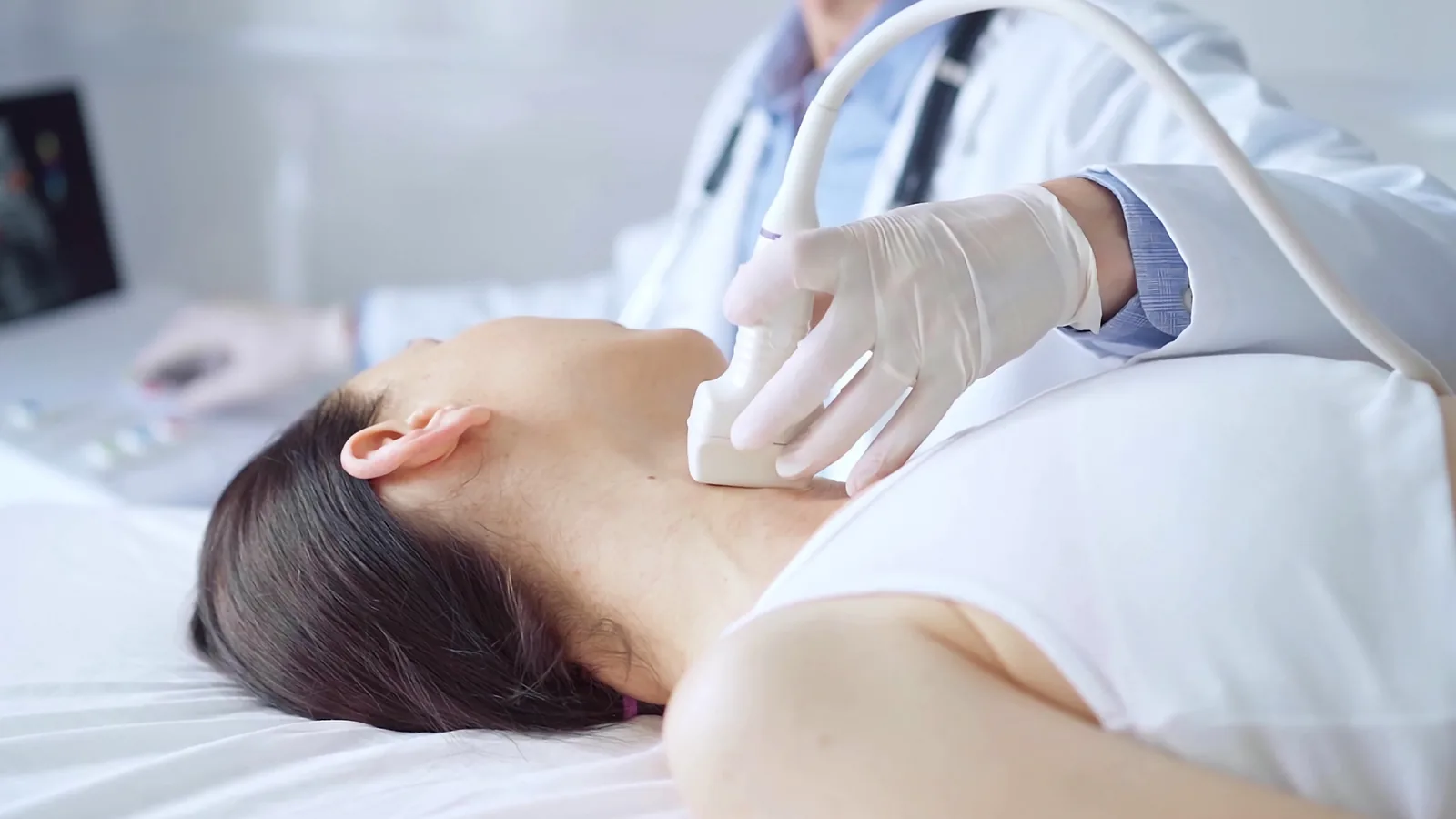
При RFA тонкий игольчатый электрод проводится через кожу в узел под непрерывным ультразвуковым контролем. Радиочастотная энергия на кончике иглы превращается в тепло и разрушает ткань узла участок за участком. Используется только местная анестезия, поэтому вы бодрствуете и всё время можете говорить с врачом.
Типичный сеанс выглядит так.
- Повторное УЗИ, чтобы измерить узел и наметить расположение нервов и сосудов вокруг него.
- Разбор результата биопсии FNA, подтверждающего доброкачественность узла, плюс анализы крови на функцию щитовидной железы.
- Местная анестезия кожи и области вокруг щитовидной железы, иногда с введением жидкостного барьера, чтобы отвести тепло от соседних структур.
- Вводится игла, и её кончик последовательно перемещают так, чтобы зоны нагрева охватили весь узел.
- Короткий период наблюдения в клинике, затем плановые контрольные УЗИ в течение следующих месяцев.
Операция на щитовидной железе выполняется под общей анестезией. Хирург делает разрез на шее и удаляет узел вместе с окружающей тканью железы — обычно одну долю (гемитиреоидэктомия), иногда всю железу, в зависимости от диагноза и расположения узла. Её очевидные преимущества в том, что весь узел отправляется в патоморфологическую лабораторию, а это даёт самый определённый из доступных диагнозов, и что уплотнение исчезает сразу после одного вмешательства.
RFA и операция: сравнение бок о бок
В таблице ниже два метода сопоставлены по тем пунктам, о которых пациенты спрашивают чаще всего: анестезия, разрез и рубец, пребывание в стационаре, время восстановления, влияние на функцию щитовидной железы и потребность в гормональных таблетках, что происходит с самим узлом, каким узлам подходит каждый вариант и какое наблюдение требуется в дальнейшем.
| Пункт сравнения | Радиочастотная абляция (RFA) | Операция на щитовидной железе |
|---|---|---|
| Анестезия | Местная анестезия кожи и области вокруг щитовидной железы; вы остаётесь в сознании и можете сообщать об ощущениях по ходу процедуры | Общая анестезия, с голоданием и предоперационной оценкой анестезиолога |
| Разрез и рубец | Прокол кожи тонкой иглой, без швов, обычно остаётся лишь небольшая отметина, которая бледнеет | Разрез на шее, который ушивается и оставляет постоянный рубец, хотя со временем он становится мягче и незаметнее |
| Пребывание в стационаре | Обычно процедура одного дня: короткое наблюдение, затем домой в тот же день | Госпитализация, чтобы контролировать кровотечение и уровень кальция, по плану хирурга |
| Время восстановления | Большинство людей возвращаются к работе и обычной активности за несколько дней; в первые дни часто бывает дискомфорт в шее | Более долгое восстановление, измеряемое неделями, с уходом за раной и периодом ограничения тяжёлых нагрузок |
| Влияние на функцию щитовидной железы и гормональные таблетки | Воздействие направлено на узел с сохранением окружающей нормальной ткани железы, поэтому вероятность того, что понадобится заместительная терапия, ниже | После удаления одной доли примерно у 30% развивается гипотиреоз и примерно одному из четырёх нужны гормональные таблетки; после полного удаления таблетки требуются пожизненно |
| Что происходит с узлом | Узел остаётся на месте, но постепенно уменьшается — как правило, примерно на 50–80% объёма за 6–12 месяцев | Узел удаляется сразу, за одно вмешательство, и отправляется на полное патоморфологическое исследование |
| Каким узлам подходит | Только узлам, доброкачественность которых подтверждена биопсией FNA | Подходит и для доброкачественных, и для злокачественных узлов и остаётся основным методом лечения рака щитовидной железы |
| Необходимое наблюдение | Продолжающееся наблюдение по УЗИ, поскольку узел остаётся; некоторым нужно больше одного сеанса | Контролируется уровень гормонов щитовидной железы, а дальнейшее лечение определяется патоморфологическим диагнозом |
Читайте таблицу как обзор различий, а не как приговор о превосходстве одного варианта над другим. В реальной практике результаты у разных людей отличаются и зависят от размера узла, от того, кистозный он или солидный, от близости к нерву, управляющему голосом, и от общего состояния здоровья.
Кому обычно подходит RFA?
RFA создавалась для людей, у которых узел доброкачественный, но действительно доставляет проблемы: заметная выпуклость на шее, ощущение помехи при глотании, стянутость в шее, стойкий кашель или изменение голоса из-за давления на трахею. Задача — устранить последствия узла, не жертвуя тканью щитовидной железы, которая ещё работает нормально.
Чаще всего пользу получают следующие группы:
- Узлы с подтверждённой по FNA доброкачественностью, вызывающие симптомы сдавления или заметные снаружи.
- Кисты щитовидной железы или преимущественно жидкостные узлы, которые вновь наполняются после простой аспирации.
- Люди, для которых общая анестезия связана с дополнительным риском, или те, кто плохо подходит для операции.
- Люди, которые предпочли бы избежать рубца на шее и вероятности длительного приёма гормональных таблеток.
- Люди, которым ранее рекомендовали наблюдение, но чей узел продолжал расти и начал мешать повседневной жизни.
В рандомизированном исследовании, сравнивавшем RFA с наблюдением при нефункционирующих доброкачественных узлах, в группе лечения было отмечено большее уменьшение узла и лучшие показатели симптомов. При этом наблюдение остаётся полноценным вариантом для небольших узлов без симптомов — лечить нужно далеко не каждый узел. Если вы не уверены, на каком этапе этого пути находитесь, прочитайте что делать, если найден узел щитовидной железы.
Когда операция всё же остаётся правильным ответом
Есть ситуации, в которых RFA невозможна и нужна именно операция. Самая важная из них — рак. RFA не предназначена для лечения рака щитовидной железы и не должна заменять операцию, когда результаты показывают злокачественность или указывают на неё, потому что разрушение ткани на месте сильно затрудняет оценку распространения и вовлечения лимфатических узлов.
Международные рекомендации считают операцию подходящим выбором в следующих случаях:
- Результат биопсии злокачественный или подозрительный на злокачественность.
- Биопсия остаётся неопределённой после повторного забора материала, и для диагноза нужно исследовать узел целиком.
- Очень крупные узлы или многоузловой зоб, явно сдавливающий трахею или пищевод.
- Узлы, уходящие вниз за грудину в грудную клетку, куда иглой безопасно не добраться.
- Необычно быстрый рост, охриплость из-за давления на нерв гортани или изменённые лимфатические узлы на шее.
Операция даёт и то, чего не может дать RFA: определённый патоморфологический ответ по всему узлу и завершённость — не нужно годами отслеживать на УЗИ уменьшающееся уплотнение. Более подробный разбор того, какие находки действительно указывают на операцию, — в статье нужна ли операция при узле щитовидной железы.
Ограничения и риски RFA, о которых стоит знать заранее
Безрисковых процедур не бывает. RFA обходится иглой вместо разреза, и восстановление проходит быстро, но у метода есть реальные ограничения, которые стоит понять до решения, чтобы ожидания совпадали с возможностями лечения.
Что стоит проговорить с нашей медицинской командой:
- Узел не удаляется, а лишь уменьшается, поэтому в первое время он ещё прощупывается, и уменьшение занимает месяцы, а не происходит сразу.
- Крупным или плотным солидным узлам иногда требуется больше одного сеанса, чтобы достичь запланированного результата.
- Часть узлов со временем растёт вновь, поэтому наблюдение по УЗИ продолжается даже после улучшения симптомов.
- К частым побочным эффектам относятся боль или чувство жжения в шее во время лечения, отёк, а также синяк или небольшое скопление крови под кожей — обычно всё это проходит само.
- Нечастый, но важный риск — воздействие тепла на нерв, управляющий голосом, с охриплостью, которая обычно временная, но иногда сохраняется дольше.
- RFA не даёт материала всего узла, поэтому диагноз целиком опирается на выполненную заранее биопсию, при которой узел должен быть отобран адекватно.
Именно поэтому рекомендации требуют подтверждённой по FNA доброкачественности до абляции, а во многих случаях — и второй подтверждающей биопсии. Результат индивидуален: два узла одинакового размера могут откликнуться совершенно по-разному.
Как понять, что подходит именно вам
Решение начинается не с выбора между абляцией и операцией. Оно начинается с двух более ранних вопросов: рак ли этот узел и создаёт ли он проблему? Как только на них есть ответ, разумный вариант обычно становится очевиден, и взвешивать методики друг против друга уже не требуется.
Вопросы, которые стоит задать до согласия на любую процедуру:
- К какой категории относятся результаты моего УЗИ и биопсии и что это означает на практике?
- Если пока ничего не делать, какой в этом риск и когда нужно повторить обследование?
- Действительно ли мой узел подходит для RFA и насколько вероятен второй сеанс?
- Если делать операцию, удалят одну долю или всю железу, и какова лично моя вероятность потом принимать гормональные таблетки?
- Как выглядит план наблюдения и как часто понадобится повторное УЗИ?
В клинике YOUNIFY оценка начинается с вашего анамнеза, УЗИ щитовидной железы и совместного разбора результата биопсии, и только после этого даётся рекомендация — наблюдать, выполнить абляцию или направить на операцию. Абляция щитовидной железы — от ฿65,000, окончательный план подтверждается после оценки.
Клиника находится по адресу: 2-й этаж, помещение 214, здание United Center, 323 Silom Road, Силом, Банграк, Бангкок 10500, Таиланд — рядом со станцией BTS Сала Дэнг. Работает ежедневно 11:00–20:00. Чтобы задать вопрос или записаться на оценку, позвоните по номеру 081-556-9696 или напишите в LINE @younifyclinic.
Часто задаваемые вопросы
Исчезает ли узел после RFA?
Не сразу. RFA разрушает ткань узла, а организм затем постепенно её рассасывает, поэтому узел уменьшается со временем — как правило, примерно на 50–80% объёма за 6–12 месяцев. В первые недели он ещё прощупывается, а то, что осталось, требует периодического наблюдения по УЗИ. Результат индивидуален.
Если узел злокачественный, можно ли сделать RFA вместо операции?
Нет. RFA применяется только к узлам, доброкачественность которых подтверждена биопсией FNA. Если результат злокачественный или подозрительный на злокачественность, по международным рекомендациям основным методом лечения остаётся операция, потому что узел нужно удалить целиком и оценить ближайшие лимфатические узлы.
Понадобятся ли мне таблетки гормона щитовидной железы после RFA?
RFA направлена на узел и сохраняет нормальную ткань щитовидной железы вокруг него, поэтому вероятность потерять столько функции, что понадобится заместительная терапия, ниже, чем при операции. Для сравнения: после удаления одной доли примерно у 30% людей развивается гипотиреоз и примерно один из четырёх принимает гормональные таблетки.
Сколько сеансов RFA нужно?
Узлы среднего размера часто лечат за один сеанс, но крупным или плотным солидным узлам иногда нужен ещё один сеанс, чтобы достичь запланированного уменьшения. Решение принимается по данным контрольного УЗИ и обсуждается с вами до того, как что-либо повторять.
Это очень неприятно? Нужен ли наркоз?
При RFA используется местная анестезия, а не общий наркоз, вы остаётесь в сознании и разговариваете с командой. Во время лечения возможны ощущение тепла, давления или боль, отдающая в челюсть или ухо; если сразу сказать об этом врачу, технику можно скорректировать. После процедуры часто бывает ноющий дискомфорт в шее на короткое время, который проходит сам.
Мой узел маленький и не даёт симптомов. Нужно ли что-то делать?
Часто нет. УЗИ находит узлы щитовидной железы примерно у половины взрослых, и лишь около 5% из них — рак. Небольшие узлы без симптомов и со спокойной ультразвуковой картиной обычно просто наблюдают с повторными исследованиями через интервалы, которые рекомендует врач.
Источники
- 2015 American Thyroid Association Management Guidelines for Adult Patients with Thyroid Nodules and Differentiated Thyroid Cancer (Thyroid. 2016;26(1):1–133. PMID: 26462967)
- 2017 Thyroid Radiofrequency Ablation Guideline: Korean Society of Thyroid Radiology (Korean J Radiol. 2018;19(4):632–655. PMID: 29962870)
- Efficacy and Safety of Radiofrequency Ablation Versus Observation for Nonfunctioning Benign Thyroid Nodules: A Randomized Controlled International Collaborative Trial (Thyroid. 2015;25(8):890–896. PMID: 26061686)
- Prevalence of and risk factors for hypothyroidism after hemithyroidectomy: a systematic review and meta-analysis (Endocrine. 2020;70(1):7–15. PMID: 32638212)
Медицинское примечание
Эта статья носит общий информационный характер и не заменяет медицинский осмотр, диагностику или лечение. Если симптомы выраженные, быстро меняются или требуют неотложной помощи, незамедлительно обратитесь за медицинской помощью.
Результаты индивидуальны. Перед лечением проконсультируйтесь с врачом.
Хотите узнать, какой план лечения подходит именно вам?
Расскажите о своих симптомах, истории здоровья, принимаемых препаратах или перенесённых процедурах и о личных целях. Наша команда поможет организовать медицинскую оценку.
Консультация в YOUNIFY Clinic