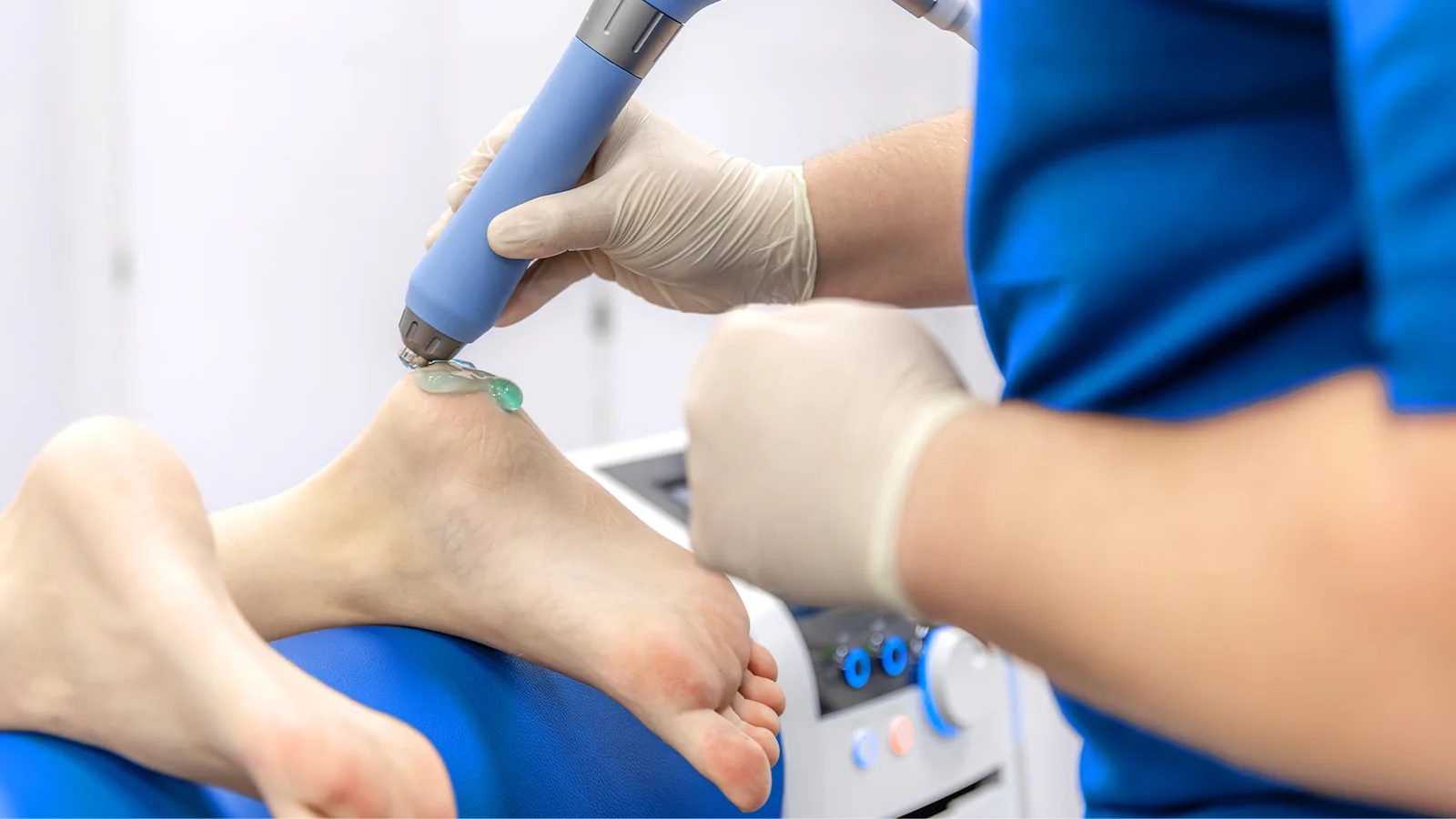
对于顽固的足底筋膜炎,体外冲击波可能带来适度、渐进的改善,皮质类固醇注射通常只能缓解数周而非数月,PRP 的证据则不一致。在 YOUNIFY Clinic(位于泰国曼谷是隆区的健康老龄化与身心健康中心),我们的疼痛科医生会根据您的病史、检查结果与目标选择合适的方案。
草稿:待医师审核批准,尚未发布。
内容
要点
- 这些治疗适用于经数月规律保守治疗后足跟痛仍未充分改善的人,而不是第一步;StatPearls 综述指出,约 75% 的病例会在 12 个月内自行缓解。
- 皮质类固醇注射通常可短期缓解疼痛,但效果往往逐渐减退,且因可能导致足跟脂肪垫变薄和筋膜断裂,注射次数需要严格限制。
- 体外冲击波无需进针,是研究相对较多的选择之一,但各项研究结果并不一致,改善通常在数周内逐步出现。
- PRP 的证据不一致,各机构的制备方法也不同,YOUNIFY Clinic 不提供 PRP,也不推荐将其作为治疗选择。
- 若经过上述步骤仍持续疼痛,由我们的介入放射科医生进行的经动脉微栓塞术(TAME)是另一种选择,泰铢 129,000 起。
哪些足底筋膜炎患者适合考虑冲击波、PRP 或激素注射?
这三种治疗适用于经过数月规律保守治疗后仍未充分改善的足底筋膜炎,而不适用于上个月才开始的足跟痛。
足底筋膜是足底一条厚实的带状组织,负责支撑足弓。足底筋膜炎的典型表现是早晨下床第一步时足跟疼痛最明显。大多数情况下,随着时间推移和正确的自我护理,症状会逐渐缓解:StatPearls 综述指出,约 75% 的病例会在 12 个月内自行缓解。一项物理治疗临床实践指南将足底筋膜牵伸列为最高等级(A 级)推荐,这也是考虑任何介入治疗之前的基础。
在考虑治疗之前,应先做好以下基础:
1. 每天牵伸小腿和足底筋膜,尤其是在早晨迈出第一步之前。
2. 穿着能支撑足跟和足弓的鞋子,或使用鞋垫。
3. 将站立、行走或跑步的量调整到足部能够承受的程度。
4. 加强足部与小腿肌肉力量。
5. 在医生认为安全的前提下,短期使用常用止痛药。
本文介绍的治疗都不能取代这些基础措施,而是与之配合进行。整体治疗思路请参阅足底筋膜炎怎么治疗。
体外冲击波治疗足底筋膜炎有效吗?
体外冲击波可能帮助部分慢性足底筋膜炎患者减轻疼痛,改善通常在数周内逐步出现,而不是治疗后马上出现。
原理: 体外冲击波疗法(extracorporeal shockwave therapy,ESWT)从皮肤外向足跟发送聚焦的高能声波脉冲,一般认为可以促进局部血流并激发受刺激组织的修复反应。无需进针,通常需要多次治疗。
证据: 冲击波是研究相对较多的选择之一,英国国家医疗服务体系(NHS)也将其列为自我护理无效时可考虑的治疗。多项综述报告部分患者可获得适度改善,但各项研究结果并不一致,StatPearls 亦指出相关证据存在矛盾。
注意事项: 治疗过程中可能有轻度不适,治疗后也可能出现酸痛。由于不需要进针,通常会在注射治疗之前考虑。冲击波可在评估后考虑;如适合而本诊所暂未提供,我们会为您安排转诊。
足底筋膜炎打激素能管多久,可以反复打吗?
皮质类固醇注射通常可在短期内缓解足跟痛,但效果往往在数周至数月内减退,且重复注射的次数需要限制。
原理: 将皮质类固醇与局部麻醉药注射到足底筋膜附近,宜在影像引导下进行,以确保药物到达预定位置。足跟激素注射可在评估后考虑;如适合而本诊所暂未提供,我们会为您安排转诊。
证据: StatPearls 总结认为,皮质类固醇注射可提供短期缓解,但长期疗效有限。
风险: 反复多次注射可能导致足跟脂肪垫变薄,少数情况下可能导致足底筋膜断裂,因此注射次数应尽量少。
注意事项: 激素注射可以让严重发作的疼痛平息下来,使您能够重新开始牵伸和肌力训练。我们认为它是通往康复训练的桥梁,而不是独立的治疗。
足底筋膜炎注射 PRP 比激素注射更好吗?
目前尚无明确结论。部分研究提示 PRP 的效果可能比激素维持得更久,另一些研究则未发现明显差异。
原理: 抽取少量您自己的血液,经离心浓缩血小板,制成富血小板血浆(platelet-rich plasma,PRP),再在影像引导下注射到足底筋膜附近,目的是促进组织修复。
证据: PRP 治疗足底筋膜炎的证据不一致,而且各机构的制备方法不同,使结果难以相互比较。以上内容仅用于帮助您了解研究证据。YOUNIFY Clinic 不提供 PRP 注射,也不推荐将 PRP 作为足底筋膜炎的治疗选择。
注意事项: 由于使用您自身的血液,一般耐受良好,但注射后数天内出现酸痛较为常见。医生会告知您注射前后应暂停哪些止痛药。
冲击波、激素注射、PRP 与 TAME 如何比较?
| 体外冲击波(ESWT) | 皮质类固醇注射 | PRP 注射 | TAME | |
|---|---|---|---|---|
| 是什么 | 从皮肤外发送的高能声波 | 在筋膜附近注射皮质类固醇 | 取自您自身血液的浓缩血小板 | 经血管置入细导管,减少筋膜周围异常的小血管 |
| 是否在足跟进针 | 否 | 是,影像引导 | 是,影像引导 | 否,仅在动脉上做一个小穿刺 |
| 由谁负责 | 评估后考虑;本诊所未提供时安排转诊 | 评估后考虑;本诊所未提供时安排转诊 | YOUNIFY Clinic 不提供 | 我们的介入放射科医生 |
| 何时可能感到变化 | 数周内逐步出现 | 通常数天内 | 数周内逐步出现 | 逐步出现 |
| 可能维持多久 | 因人而异,部分人可达数月 | 通常数周至数月 | 因人而异,证据不一致 | 因人而异,证据仍处于早期 |
| 主要注意事项 | 治疗后酸痛 | 脂肪垫变薄,少数筋膜断裂,次数受限 | 注射后酸痛,制备方法不一 | 使用造影剂与 X 线,穿刺处可能淤青 |
| 价格 | 取决于服务机构 | 取决于服务机构 | YOUNIFY Clinic 不提供 | 泰铢 129,000 起 |
以上价格均为起价,面诊后以书面报价确认。没有一种方案适合所有人,选择取决于疼痛持续时间、已尝试过的治疗以及您的目标。
各种方法都试过仍然疼痛,还有什么选择?
如果坚持康复训练并尝试过上述治疗后仍然疼痛,我们的介入放射科医生可能会与您讨论 TAME,泰铢 129,000 起。
经动脉微栓塞术(transarterial microembolization,TAME)是在动脉上做一个小穿刺,在 X 线引导下将细导管送到供应足跟区域的血管,再注入微小颗粒,以减少慢性受刺激组织周围新生的异常小血管;一般认为这些小血管与疼痛有关。整个过程不需要向筋膜内进针,大多数患者可当天回家。
《Skeletal Radiology》2024 年发表的一项系统综述指出,TAME 用于慢性肌腱与筋膜病变的证据基础仍然有限。因此我们将其作为部分患者的选择,而不是第一步。详见TAME 治疗足底筋膜炎与足底筋膜炎:冲击波还是 TAME。
何时需要紧急就医
如果足跟或足部疼痛伴有以下情况,请立即前往急诊或尽快就医:
- 跌倒、扭伤或撞击后无法用该脚承重
- 足底突然出现"啪"的断裂感,随后淤青和肿胀
- 足部发热、发红、肿胀,或伴有发烧
- 糖尿病患者足部出现伤口、水疱或皮肤颜色改变
- 新出现的足部麻木、刺痛或无力
- 小腿肿胀并有压痛
如果双侧足跟疼痛,同时伴有关节肿胀或早晨腰背僵硬,也应尽早就诊,因为可能与炎症性关节炎有关。
我们可能建议暂缓治疗的情况
在以下情况下,我们可能建议暂不进行注射或 TAME,或先等待:
- 抗凝药尚未能安全调整
- 存在活动性感染,包括足跟周围的皮肤感染
- 怀孕,对于需要使用 X 线与造影剂的 TAME
- 肾功能不适合使用造影剂,对于 TAME
- 糖尿病尚未控制,而正在考虑皮质类固醇注射
- 疼痛来源尚未确认,例如神经卡压、跟骨应力性骨折或足跟脂肪垫疼痛
- 尚未规律地尝试基础保守治疗
- 期望超出治疗所能达到的效果,例如希望单次注射取代康复训练
医生观点
[รอ approve] 在我们诊所,我们首先确认足跟痛确实是足底筋膜炎,而不是神经卡压、应力性骨折或足跟脂肪垫变薄,并询问您试过哪些自我护理、坚持了多久。如果您做过激素注射,我们会了解一共打了几次、每次缓解了多久。如果缓解时间越来越短,我们通常不建议再打,因为反复注射可能使足跟脂肪垫变薄。经评估后,可考虑体外冲击波配合有计划的康复训练;对于 PRP,我们会坦诚说明其证据并不一致,而且本诊所不提供这项治疗。如果冲击波或激素注射适合您但我们诊所不提供,我们会安排转诊。如果经过这些步骤后仍然疼痛,我们的介入放射科医生可以评估您是否适合 TAME。
示例(虚构)
示例(虚构),并非真实患者:一位需要整天站立的零售店经理,早晨足跟痛已持续数月。她每天做牵伸,也换了鞋,此前打过一次激素,效果维持了几周。经过体格检查和超声检查后,我们的疼痛科医生建议考虑冲击波,同时配合小腿肌力训练(如本诊所未提供该项目则安排转诊),并与她事先约定如何评估进展,再决定是否考虑下一次注射。
接下来怎么做
1. 发送影像资料(X 线或超声报告,如有 MRI 也一并提供)以及简要病史:疼痛多久、试过哪些方法、打过几次针、是否使用抗凝药或患有糖尿病。
2. 我们的疼痛科医生审阅资料;涉及 TAME 的问题会与介入放射科医生共同评估。
3. 您将收到书面治疗方案与书面报价。
4. 如适合,治疗在泰国曼谷是隆路 323 号 United Center 2 楼 214 室进行(Bangrak, Bangkok 10500),距 BTS Sala Daeng 站步行 5 分钟,每天 11:00–20:00(曼谷时间)营业。大多数患者可当天回家。
5. 随访时,我们根据疼痛日记与康复进展评估效果。
请通过 WhatsApp(+66 81 556 9696,https://wa.me/66815569696)或微信(ID:younifyclinic)发送影像资料与简要病史,由医生进行初步评估。更多病症信息请见足底筋膜炎与足跟痛页面,全部服务请见慢性疼痛服务。
常见问题
足底筋膜炎做冲击波好,还是打激素好?
两者目标不同。激素注射通常短期内起效更快,但效果往往逐渐减退;冲击波无需进针,改善是渐进的,部分人获益时间更长。各项研究结果并不一致,医生会根据疼痛持续时间、已尝试过的治疗以及您的目标来选择。
治疗后多久能感觉到变化?
激素注射可能在数天内缓解疼痛,但通常只是暂时的;冲击波和 PRP 的作用较为渐进,需要数周。效果因人而异。在此期间应继续牵伸和肌力训练,因为这些是康复的重要组成部分。
足跟可以打几次激素?
没有适合所有人的固定次数,但应尽量减少注射,因为反复注射可能使足跟脂肪垫变薄,少数情况下导致筋膜断裂。在考虑下一次注射前,医生会回顾您已注射过几次、每次效果维持多久,以及是否有更合适的其他选择。
冲击波治疗会痛吗?
发送脉冲时可能有不适或轻微疼痛,能量强度可以调整到可耐受的程度。部分人治疗后足跟会酸痛一到两天。无需注射麻醉或全身麻醉,大多数患者治疗后可自行走路回家。
打了 PRP 或做了冲击波,还需要做足部锻炼吗?
需要,而且我们强烈建议继续。足底筋膜牵伸、小腿与足部肌力训练以及合适的鞋子仍是康复的基础。如果您曾在其他机构注射 PRP,请遵循注射医生关于早期减少负重的建议,之后再逐步恢复原来的训练计划。
冲击波、PRP、激素注射治疗足底筋膜炎要多少钱,保险能报销吗?
冲击波与足跟激素注射可在评估后考虑,如适合而本诊所暂未提供,我们会为您安排转诊,费用取决于服务机构和治疗次数;本诊所不提供 PRP;足底筋膜炎的 TAME 泰铢 129,000 起。您会先收到书面报价。我们会为您准备医疗报告和分项收据,供您自行向保险公司申请理赔,能否报销取决于您的保单。
参考文献
- Buchanan BK, Sina RE, Kushner D. Plantar Fasciitis. StatPearls, StatPearls Publishing / NCBI Bookshelf,2024 年更新。
- Plantar fasciitis. NHS(英国国家医疗服务体系),2025 年审阅。
- Koc TA et al. Heel Pain - Plantar Fasciitis: Revision 2023. Journal of Orthopaedic & Sports Physical Therapy / Academy of Orthopaedic Physical Therapy,2023。
- Transcatheter arterial tendinopathy embolization as a treatment for painful and refractory tendinopathy: a systematic review. Skeletal Radiology,2024。
医疗记录
本文仅供一般参考,不能取代医学检查、诊断或治疗。如果症状严重、变化很快或属于紧急情况,请及时就医。
结果因人而异,接受治疗前请咨询医生。