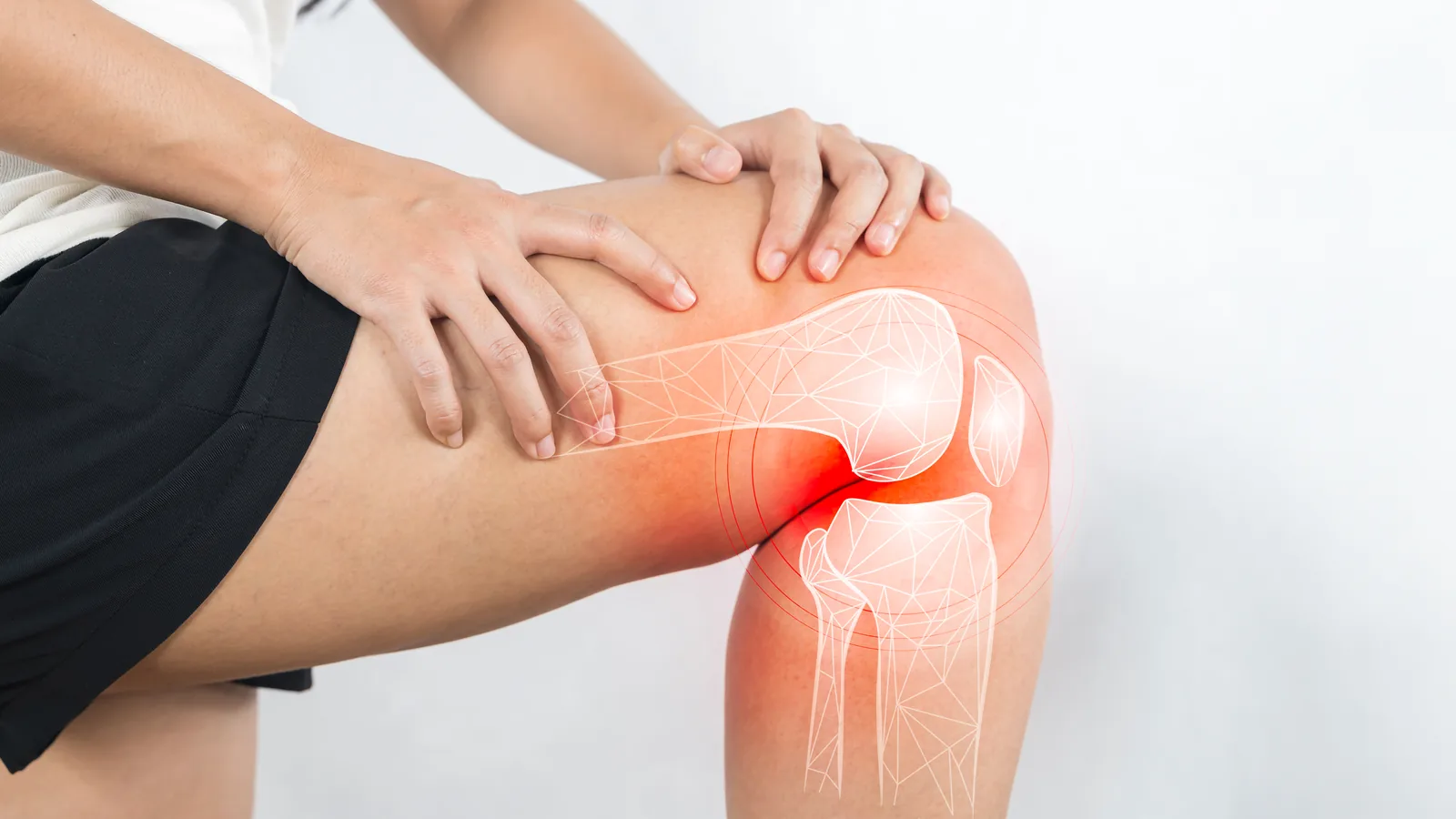
Knee osteoarthritis is the gradual breakdown of cartilage and the structures around it, producing pain, stiffness, swelling and a shrinking range of motion. Treatment depends on the stage and on what you want back: this guide covers staging, non-surgical care, injections, GAE and when surgery is genuinely indicated.
Contents
Key Takeaways
- Knee osteoarthritis is a condition involving cartilage and other joint structures, leading to pain, stiffness, swelling, or reduced movement.
- Treatment depends on stage and patient goals, starting with targeted exercise, weight and load management, medication, injections, and minimally invasive procedures in selected cases.
- GAE is a minimally invasive option for selected patients with chronic knee osteoarthritis pain who are not yet suitable for surgery, but suitability must be assessed individually.
Knee osteoarthritis is more than cartilage wear
Knee osteoarthritis involves the whole joint, not only worn cartilage. It can include the joint lining, bone beneath cartilage, surrounding muscles, and loading pattern.
Symptoms may start as pain after activity, short morning stiffness, joint noise, or reduced walking distance. Over time, poor loading balance can affect daily life more clearly.
Disease stage affects treatment choices
| General stage | Possible symptoms | Common care direction |
|---|---|---|
| Early | Pain comes and goes after heavier activity | Activity changes, strengthening, reducing joint load |
| Moderate | Pain with walking, stairs, or intermittent swelling | Physical therapy, medication/topicals, injections, or selected procedures |
| Advanced | Severe pain, limited walking, deformity, or major quality-of-life impact | Review all options, including knee replacement when appropriate |
Options before surgery
Exercise therapy
Strengthening and improving knee stability are core parts of osteoarthritis care for many patients.
Weight and load management
Reducing repeated joint load can reduce symptoms and help rehabilitation work better, especially when body weight contributes to pressure.
Injections
Some injections may reduce symptoms for a period of time, but the choice should match indications, risks, and medical history.
Genicular Artery Embolization
GAE aims to reduce abnormal blood vessels associated with joint lining inflammation in selected patients. It is an image-guided minimally invasive procedure.
How to understand evidence for GAE
Systematic reviews report high technical success and improvements in pain and WOMAC scores through 12 months in selected patients. However, evidence continues to evolve, and outcomes depend on disease stage, symptom pattern, and medical assessment.
GAE is not the answer for everyone. It is one option for people with knee osteoarthritis pain who want to evaluate a minimally invasive pathway before deciding on the next step.
Doctors

Dr. Thanakrit Mangklapaiboon
Interventional Radiology
Fellowship in Body Interventional Radiology
View full profile
Frequently Asked Questions
Can knee osteoarthritis be cured?
Knee osteoarthritis is usually a chronic condition. The goal is to control symptoms, slow worsening, improve movement, and choose treatment appropriate to the disease stage.
Does everyone with knee osteoarthritis need injections?
No. Injections are only one option. A treatment plan should also include strengthening, activity and weight management, and individualized assessment.
Which stage of knee osteoarthritis may be suitable for GAE?
GAE is often considered for patients with chronic osteoarthritis pain that has not improved enough with conservative care, but suitability depends on imaging, pain location, health conditions, and treatment goals.
References
- Knee pain - Symptoms and causes (Mayo Clinic)
- Knee pain (NHS)
- Arthritis of the Knee (American Academy of Orthopaedic Surgeons OrthoInfo)
- Guidelines for Osteoarthritis Treatments (Arthritis Foundation / American College of Rheumatology)
- Genicular artery embolization for treatment of knee osteoarthritis pain: Systematic review and meta-analysis (Osteoarthritis and Cartilage Open / PubMed)
- Genicular Artery Embolization for Primary Knee Osteoarthritis (Seminars in Interventional Radiology / PMC)
Read next in this series
Medical Note
This article is for general information and does not replace medical examination, diagnosis, or treatment. If symptoms are severe, changing quickly, or urgent, seek medical care promptly.
Individual results may vary. Please consult a doctor before treatment.
Want to know which care plan fits you?
Share your symptoms, health history, medications or prior procedures, and personal goals. Our team can help arrange a medical assessment.
Consult YOUNIFY Clinic