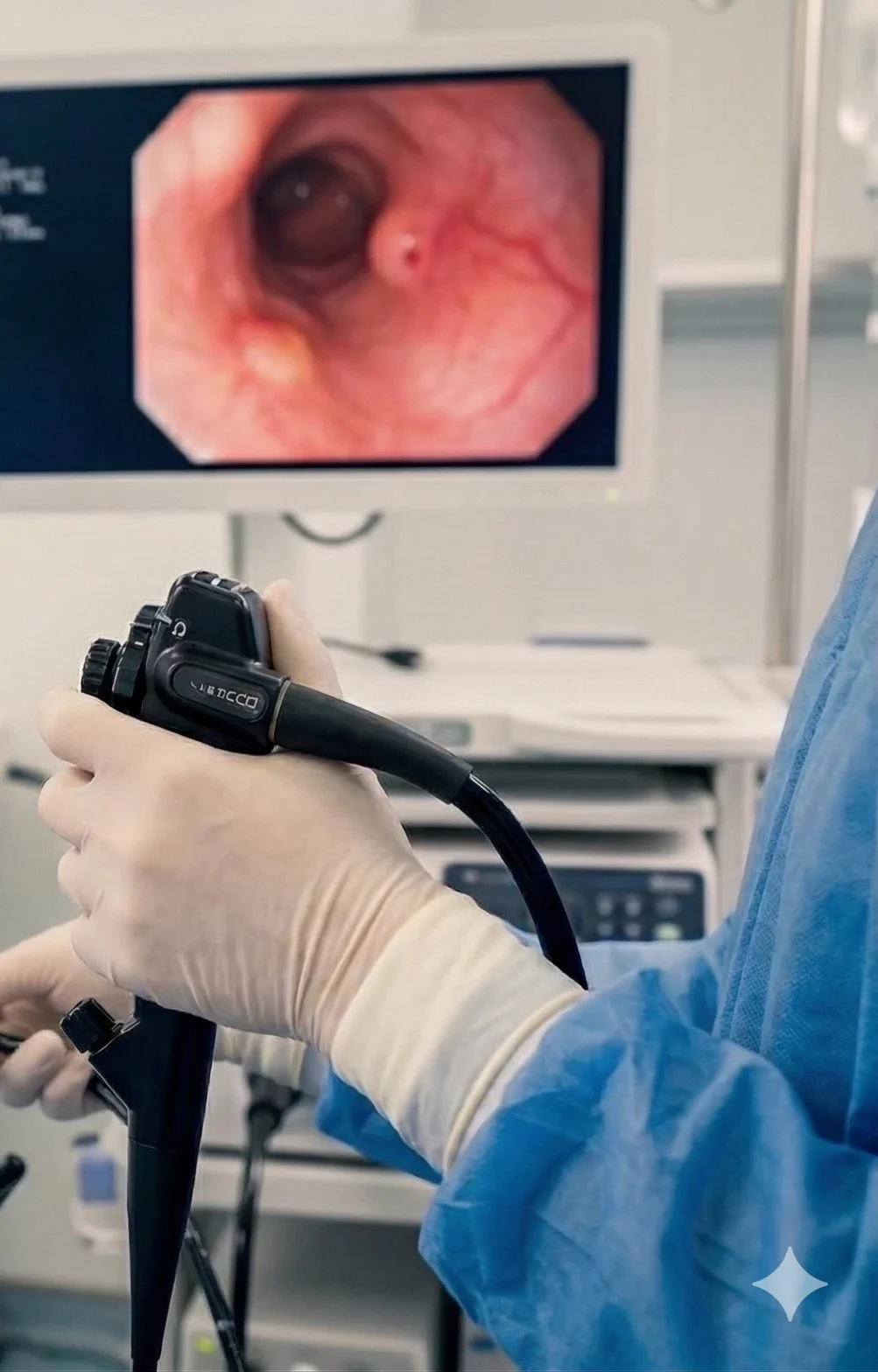
Should you stop a GLP-1 before an upper endoscopy? In Dr. Noppachai Siranart's study of 629 patients who stayed on the drug, continuing it showed no clear rise in aborted procedures, retained gastric food or aspiration. This article explains what the data found, and what it does not settle.
Contents
Key Takeaways
- GLP-1 medications such as semaglutide, liraglutide, dulaglutide, and tirzepatide can support weight loss and diabetes care, but they may slow stomach emptying in some people.
- In 629 patients taking GLP-1 medications who underwent upper endoscopy, continuing the medication was not clearly associated with more retained stomach contents, early procedure termination, or aspiration events.
- Patients should not stop or continue medication on their own. Tell the endoscopy and anesthesia team about the drug, last dose, nausea, vomiting, bloating, diabetes, and prior stomach surgery.
What GLP-1 medications do
GLP-1 receptor agonists are used for type 2 diabetes and weight management when medically appropriate. They can increase fullness, reduce appetite, and improve blood sugar control.
Examples in this study included dulaglutide, liraglutide, semaglutide, and tirzepatide. Some are taken daily and some weekly, so timing matters when planning a procedure.
- Use these medications under medical supervision
- Report nausea, vomiting, bloating, or unusually long fullness
- People with diabetes need a medication and fasting plan to avoid blood sugar problems
Why endoscopy teams ask about these medications
Before upper endoscopy, patients fast so the stomach is empty. If food remains in the stomach, the procedure may be harder to complete and the care team may worry about aspiration during sedation.
Because GLP-1 medications can slow gastric emptying in some people, some guidance has suggested holding the drug before procedures. Evidence is still evolving, so individualized planning is important.
Information to share
Medication name, dose, last dose date, and whether you have nausea, vomiting, bloating, or prolonged fullness.
Risk factors to mention
Diabetes, previous stomach surgery, known delayed gastric emptying, and active digestive symptoms.
Do not self-adjust
Stopping medication without guidance may affect appetite or blood sugar, especially in diabetes.
What the study found
The study included 629 patients taking GLP-1 medications who underwent upper endoscopy. Of these, 146 held the medication before endoscopy and 483 continued it.
Early termination occurred in 0% of the held group and 1.4% of the continued group. Retained gastric contents occurred in 2.7% of the held group and 6.4% of the continued group. There were no aspiration events in either group.
For patients, the takeaway is not that everyone should continue medication. It means the decision should be individualized rather than automatically canceling or delaying every procedure.
| Outcome | Held GLP-1 | Continued GLP-1 |
|---|---|---|
| Patients | 146 | 483 |
| Early termination | 0% | 1.4% |
| Retained gastric contents | 2.7% | 6.4% |
| Aspiration events | 0 | 0 |
What to do if you use GLP-1 and need endoscopy
Tell the care team exactly which GLP-1 medication you use and when you last took it. Also report nausea, vomiting, bloating, poor intake, diabetes, and previous bariatric surgery.
If you have significant digestive symptoms before the appointment, contact the clinic early. The team may adjust fasting, medication timing, or the procedure plan.
- Give the medication name, the dose, and the date of your most recent dose
- Report nausea, vomiting, bloating, or feeling full for unusually long after eating
- If you have diabetes, ask your doctor about adjusting medication and managing blood sugar while fasting
- Follow the instructions of the endoscopist and the anaesthesia team rather than advice found online
Doctors


Dr. Kittithat Tantitanawat
Gastroenterology and Hepatology
Thai Subspecialty Board of Gastroenterology
View full profile
Frequently Asked Questions
Does everyone need to stop GLP-1 before upper endoscopy?
No single answer fits everyone. This study did not find a clear increase in adverse outcomes when GLP-1 was continued, but decisions should consider symptoms, diabetes, medication schedule, and procedure risk.
Should I tell the doctor if I use semaglutide or tirzepatide?
Yes. Share the medication name, dose, last dose date, and any nausea, vomiting, bloating, or prolonged fullness.
Can GLP-1 slow stomach emptying?
Yes, it can in some people, especially during dose escalation or when digestive symptoms are present. The effect varies by person.
Is stopping the medication myself safer?
Do not stop it without guidance. Stopping may affect blood sugar or appetite control. Ask the prescribing doctor and endoscopy team.
References
After your weight is stable
Once your weight has settled, loose skin or changes in the face can be assessed separately. The same physician-led team plans that next stage with you.
Medical Note
This article is for general information and does not replace medical examination, diagnosis, or treatment. If symptoms are severe, changing quickly, or urgent, seek medical care promptly.
Individual results may vary. Please consult a doctor before treatment.
Want to know which care plan fits you?
Share your symptoms, health history, medications or prior procedures, and personal goals. Our team can help arrange a medical assessment.
Consult YOUNIFY Clinic