Does GAE work? An honest, plain-language look at what studies suggest about genicular artery embolization - and where the evidence is still limited.
内容
要点
- It is a fair and important question. Genicular artery embolization (GAE) - a minimally invasive way of blocking tiny abnormal blood vessels in an arthritic knee to ease pain - is relatively new compared with treatments like injections or knee replacement. This article gives an honest, plain-language view of what the evidence suggests and, just as importantly, where it is still limited. We avoid quoting specific success percentages on purpose, because headline numbers can mislead.
What the studies broadly suggest
Research on GAE has grown over recent years, and the general direction is cautiously encouraging.
- In suitable patients, studies suggest that GAE may reduce chronic knee osteoarthritis pain and improve function for a period of time.
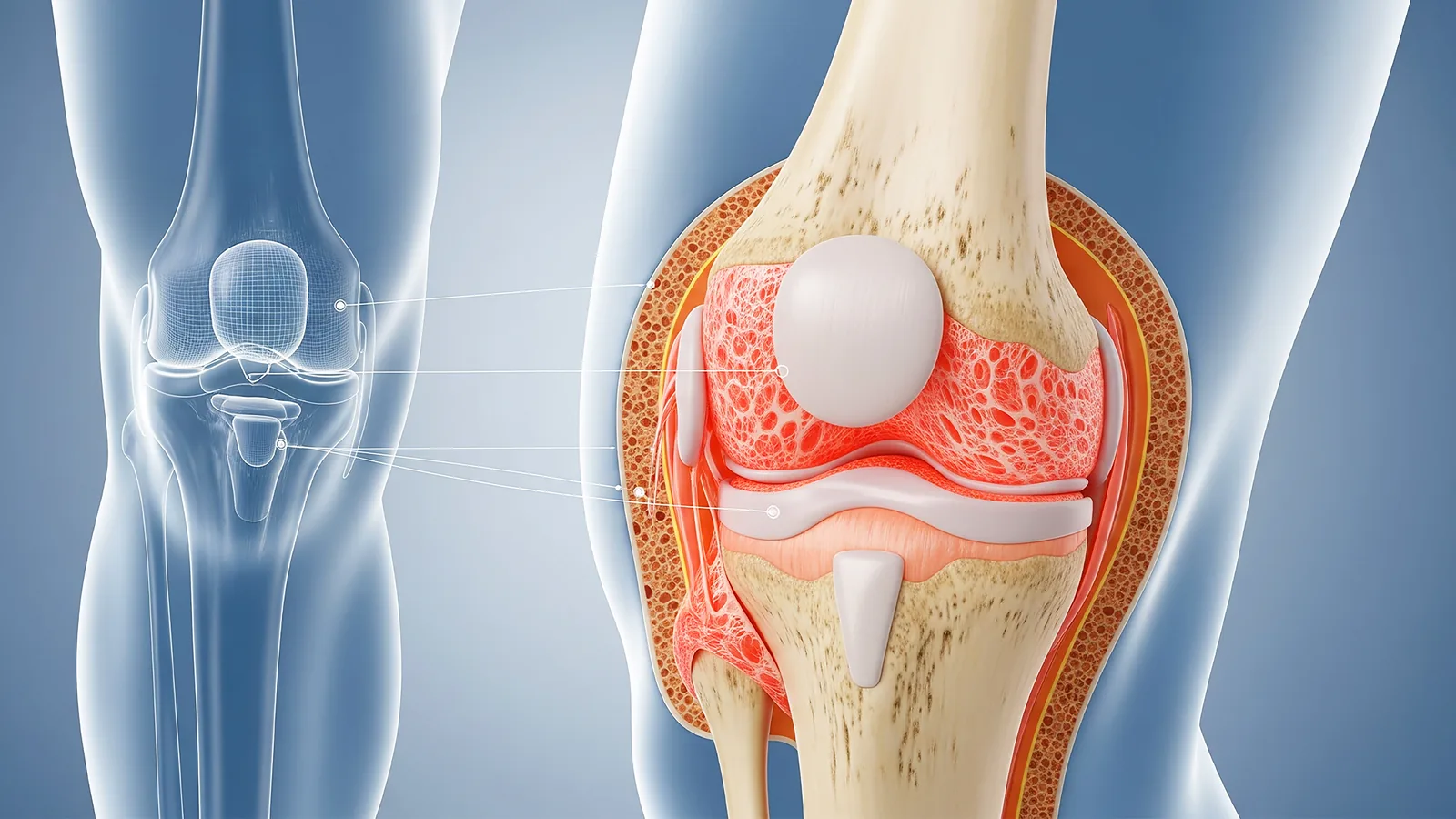
- The rationale is biologically sound: chronic inflammation in the joint lining is linked to abnormal new blood vessels and nerve growth, and reducing that blood supply may lower pain signals.
- Reported safety in studies has generally been reasonable for a minimally invasive procedure, with most side effects being minor and temporary.
In short, for the right person, there is a reasonable basis to expect that GAE may help. That is different from a promise.
What "it works" actually means here
It helps to be precise about the claim.
- GAE aims to relieve pain, not to cure arthritis or regrow cartilage. Even a good result leaves the underlying joint changes in place.
- The benefit is not permanent. Where it works, relief may last several years in some cases, typically 1-5 years, though results vary by individual.
- Response varies. Some people improve substantially, some partially, and some may not respond much at all.
So "does GAE work?" is best answered as: it can meaningfully reduce pain for many suitable patients, for a period, but it is neither a cure nor a certainty.
The honest limits of the evidence
Being straight about the gaps matters as much as the positives.
- It is a newer field. Long-term data - how people do over many years - is still building compared with older, well-established treatments.
- Studies vary. Differences in technique, patient selection, and how outcomes are measured make it harder to compare results neatly.
- Placebo and natural fluctuation. Knee pain naturally waxes and wanes, and careful study design is needed to separate genuine treatment effect from these. Well-controlled research is ongoing.
- Selection matters enormously. Results in "suitable patients" say little about people who are poor candidates - which is why assessment is central.
None of this means GAE does not work. It means the sensible stance is measured optimism, with realistic expectations.
How to use this information
The practical takeaway is not "yes" or "no" in the abstract, but "is it a reasonable option for me?" That comes down to your imaging, your history, and how you have responded to other treatments. Our candidacy article explains what makes someone a good fit, and our introduction to GAE explains the mechanism.
At YOUNIFY Clinic, our medical team believes in evidence over hype. We will give you an honest view of what GAE may and may not do for your specific situation, rather than overselling it.
Next step
To find out whether GAE is right for you, our medical team can arrange an initial assessment. Contact us on LINE (@younifyclinic) or WhatsApp +66 81 556 9696.

常见问题
Is GAE proven?
Studies suggest it may help chronic knee osteoarthritis pain in suitable patients, and it is an active area of research. Long-term evidence is still developing, so it is best viewed as a promising option, not a guaranteed one.
Why will not you quote a success rate?
Because single percentages can be misleading - they depend heavily on who was studied and how outcomes were measured. What matters more is whether you are a suitable candidate. An assessment gives a more meaningful picture.
If the evidence is still developing, why offer it?
For carefully selected patients who have not responded to the basics and are not ready for surgery, GAE can be a reasonable, minimally invasive option to consider. The key word is selected - hence the emphasis on assessment.
参考文献
- Chlorogiannis DD, Vasilopoulou A, Konstantinidis CI, Pagona AE, Filippiadis DK. Knee pain improvement after genicular artery embolization for the management of knee osteoarthritis: an updated systematic review and meta-analysis of 21 studies. Radiologie. 2024;64(Suppl 1):S32-S46.
- Alves LH, Barbosa D, Merighi MC, et al. Genicular artery embolization as a minimally invasive treatment for knee osteoarthritis: systematic review and meta-analysis. Skeletal Radiol. 2026.
- Correa MP, Michelin AF, Aguiar LA, et al. Genicular artery embolization using imipenem/cilastatin vs. microsphere for knee osteoarthritis (GAUCHO): 12-month clinical results of a single-blind randomized controlled trial. Cardiovasc Intervent Radiol. 2026;49:1825-1837.
- Outcome and safety of genicular artery embolization for knee osteoarthritis: systematic review and meta-analysis. Cardiovasc Intervent Radiol. 2026.
- Genicular artery embolization: systematic review of sham-controlled randomized trials. J Orthop. 2025. PMID 40766107.
医疗记录
本文仅供一般参考,不能取代医学检查、诊断或治疗。如果症状严重、变化很快或属于紧急情况,请及时就医。
结果因人而异,接受治疗前请咨询医生。