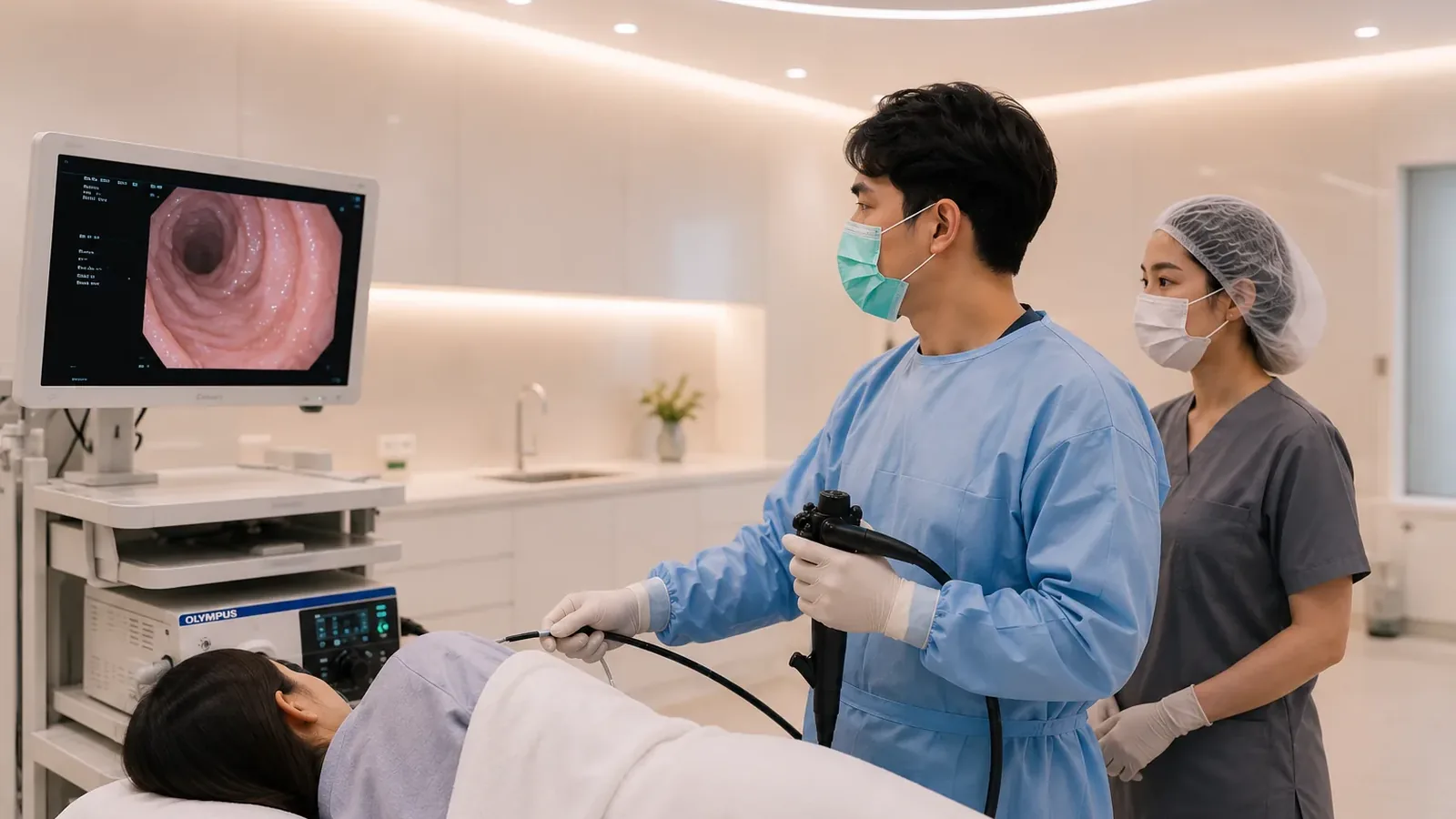
What an upper endoscopy (gastroscopy) is, why it is done, how to prepare, and what to expect on the day - a calm, doctor-led guide.
內容
要點
- If your doctor has suggested an upper endoscopy, it is natural to feel a little uneasy about a camera test. The good news is that it is a common, well-established examination, and knowing what happens tends to make it much easier. Here is a clear, calm walk-through.
What is an upper endoscopy?
An upper endoscopy - also called a gastroscopy - is a test in which a thin, flexible tube with a small camera on the tip (an endoscope) is passed through the mouth to look at the esophagus (food pipe), stomach, and the first part of the small intestine (duodenum). The camera sends a clear picture to a screen, so the doctor can examine the lining directly.
Why it is done
Your doctor may recommend a gastroscopy to look into symptoms or to screen when there is a reason to. Common reasons include:
- Ongoing heartburn, acid reflux, or difficulty swallowing.
- Persistent upper-abdominal pain, nausea, or indigestion.
- Unexplained anaemia or signs of bleeding.
- Checking for H. pylori (a common stomach bacterium), inflammation, or ulcers.
- Following up known conditions over time.
During the test, the doctor can also take a tiny tissue sample (a biopsy), which is a routine part of many endoscopies and is not something you feel.
A note on ESG
The same gentle endoscopic route - through the mouth, no external cuts - is what makes the non-surgical ESG (endoscopic sleeve gastroplasty) possible for eligible weight-management patients. If that is relevant to you, you can read more on our ESG service page.
How to prepare
Preparation is straightforward, and we will give you specific instructions when you book:
- Fasting: an empty stomach is essential for a clear, safe view. This usually means no food for around 6-8 hours beforehand, with clear-fluid guidance up to a set time.
- Medications: tell us about all your medications, especially blood thinners and diabetes medicines, as some may need adjusting. Do not stop anything without asking us first.
- Arrange support: if you choose sedation, you will need someone to accompany you home and should not drive for the rest of the day.
What happens on the day
The examination itself is usually short - often around 10 to 15 minutes.
1. Check-in and consent. The team reviews your history and answers questions.
2. Comfort options. A numbing throat spray and, in many cases, light sedation are offered so the test is as comfortable as possible. It is usually well tolerated.
3. The examination. You lie on your side. The endoscope is passed gently through the mouth; it does not interfere with breathing.
4. Recovery. You rest until any sedation wears off. Most people go home the same day.
We use internationally accredited techniques and equipment, and everything is explained as we go.
After the test
You may have a mildly sore throat or feel a little bloated with air for a short time - this usually settles quickly. If sedation was used, plan to rest for the day. The doctor will share initial findings, and any biopsy results follow later. We will explain what the findings mean for you and any next steps.
When should you call us? Contact us promptly if you have significant chest or abdominal pain, difficulty swallowing, black stools, vomiting blood, or a fever after the procedure. These are uncommon, but worth acting on quickly.
Talk it through with us
If a gastroscopy has been suggested, or you have symptoms you would like assessed, it helps to plan it around your history. To plan a check-up that fits your history and goals, our medical team can help. Contact us on LINE (@younifyclinic) or WhatsApp +66 81 556 9696.
YOUNIFY Clinic - 2nd Floor, Room 214, United Center Building, 323 Silom Road, Silom, Bang Rak, Bangkok 10500. Open daily 11:00–20:00.
常見問題
Does an upper endoscopy hurt?
It is not usually described as painful, though it can feel unfamiliar. Throat-numbing spray and optional sedation help most people stay comfortable. We cannot promise it will be entirely free of discomfort, but it is generally well tolerated.
Will I be asleep?
Many patients choose light sedation, which leaves them relaxed and drowsy. Others prefer numbing spray only. Your doctor will discuss which option suits you.
How long until I get results?
The doctor can often describe what was seen soon after the test. Biopsy results typically take several days, and we will review them with you.
參考文獻
- Upper Endoscopy (patient information) (American Society for Gastrointestinal Endoscopy (ASGE))
- Esophagogastroduodenoscopy (EGD), StatPearls (StatPearls Publishing / NCBI Bookshelf)
- In brief: What happens during a gastroscopy? - InformedHealth.org (IQWiG / NCBI Bookshelf)
醫療記錄
本文僅供一般參考,不能取代醫學檢查、診斷或治療。如果症狀嚴重、變化很快或屬於緊急情況,請及時就醫。
結果因人而異,接受治療前請諮詢醫師。