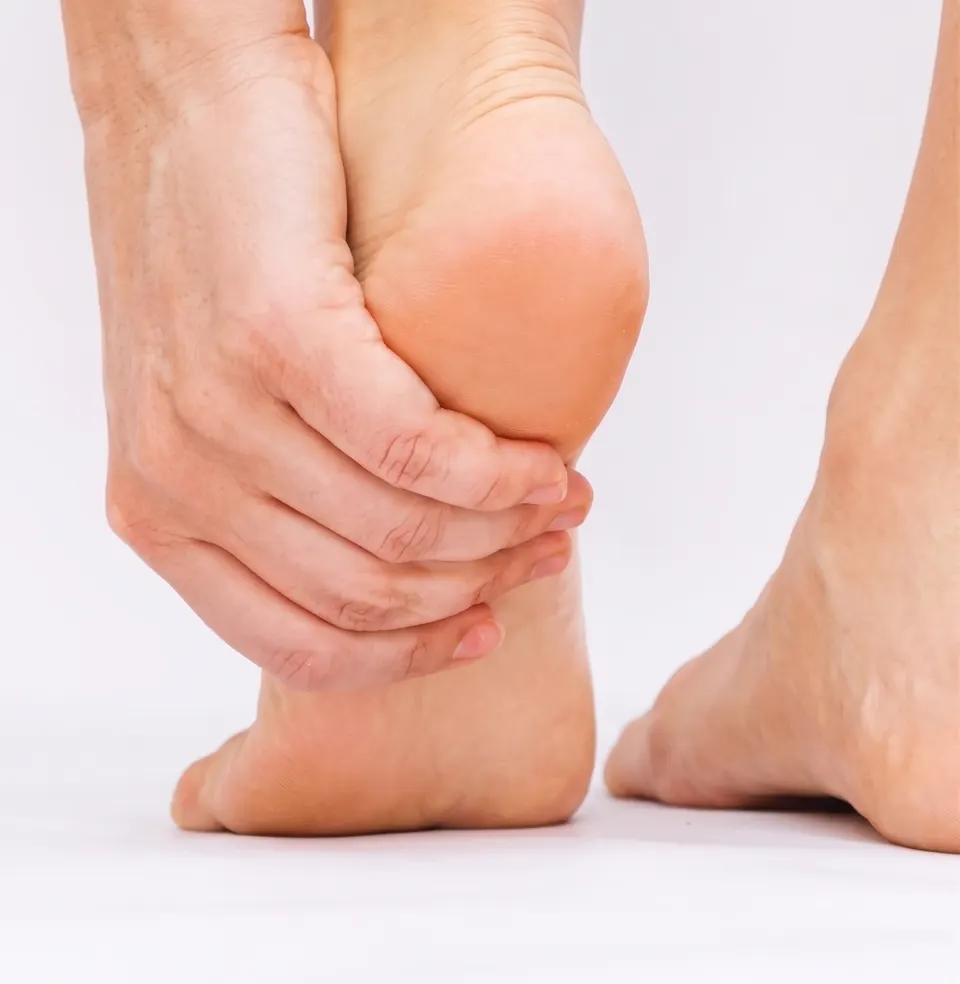
For heel pain that has not improved, learn about image-guided, needle-only options for stubborn plantar fasciitis at YOUNIFY Clinic, Bangkok.
内容
要点
- Most plantar fasciitis settles with time and conservative care - but a smaller group of people stay stuck despite doing everything right. If your heel pain has dragged on for many months, this article explains what comes next, including image-guided, needle-only options, and how our pain medicine team decides with you.
First, make sure the diagnosis is right
When heel pain does not improve as expected, the most useful first step is often to revisit the diagnosis rather than escalate treatment. The plantar fascia = the thick band of tissue along the sole of your foot, but several other conditions can mimic plantar fasciitis, including:
- Nerve entrapment near the heel (burning, tingling, or numbness).
- A heel-bone stress reaction (pain that worsens steadily with activity).
- Heel fat pad problems, Achilles issues, or an inflammatory joint condition.
Our medical team may use examination and imaging - such as ultrasound or other scans - to confirm what is actually driving the pain. Treating the wrong problem is a common reason care seems to "fail."
Why some cases are stubborn
Persistent plantar fasciitis often reflects tissue that has become worn and slow to heal rather than simply inflamed, sometimes with a thickened fascia or a very tight calf that keeps overloading the heel. In these cases, the tissue needs a targeted stimulus to healing plus continued load management - which is where advanced options come in.
Image-guided, needle-only options
Within our Chronic Pain Care service, our pain medicine team offers image-guided, needle-only procedures performed with same-day discharge, using internationally accredited techniques and equipment. Image guidance (ultrasound) means the needle is placed precisely where it is needed, which supports both accuracy and comfort. Options that may be considered for selected patients include:
- Shockwave therapy (ESWT) - non-invasive sound-wave treatment, often tried first for chronic cases.
- Ultrasound-guided injections - for example PRP or, in some cases, a corticosteroid, placed accurately near the fascia. (See our evidence comparison for how these differ.)
- Needle procedures to stimulate healing - techniques such as needle tenotomy/fenestration, where a fine needle is passed through the irritated tissue under ultrasound to prompt a healing response.
These are chosen case by case, and none is presented as guaranteed. The aim is the least invasive route with a realistic chance of helping.
Where surgery fits
Surgery for plantar fasciitis is uncommon and considered only after a long, thorough course of non-surgical care has not helped. Most people never reach this stage. If it is ever raised, our medical team will explain the reasoning and refer appropriately. The message for most readers is reassuring: the great majority of stubborn cases are managed without an operation.
What to expect from an assessment
If your heel pain is not improving, a visit with our team typically involves:
1. A focused history - how long, what makes it better or worse, what you have already tried.
2. Examination - checking the site of pain, calf tightness, foot mechanics, and nerve signs.
3. Imaging if needed - to confirm the diagnosis and rule out mimics.
4. A shared plan - matching the next step to your stage, your goals, and your daily demands.
Rehabilitation usually continues alongside any procedure, because strengthening and load management remain central to recovery.
Who these options suit
Advanced and image-guided options are for selected patients who have genuinely persistent symptoms after several months of consistent conservative care - not for early or mild plantar fasciitis, which almost always improves with the foundations. If you are earlier in the journey, our treatment options and stretches articles are the better starting point.
Talk to our team
If heel pain is not improving, our medical team can assess the cause and options. Contact us on LINE (@younifyclinic) or WhatsApp +66 81 556 9696.
YOUNIFY Clinic - 2nd Floor, Room 214, United Center Building, 323 Silom Road, Silom, Bang Rak, Bangkok 10500. Open daily 11:00–20:00. Founded by Dr. Noppachai Siranart (postdoctoral research at Brigham & Women's Hospital / Harvard Medical School, and Mayo Clinic).
常见问题
Do image-guided procedures require surgery or a hospital stay?
No. The image-guided options our pain medicine team offers are needle-only with same-day discharge. Surgery is a separate, uncommon step considered only when non-surgical care has not helped.
How do I know if I am a candidate?
Generally, if honest conservative care over several months has not helped and the diagnosis is confirmed. An assessment is the way to find out.
Will one procedure fix it?
Not necessarily. Many people improve, results vary by individual, and procedures usually work best combined with continued rehabilitation.
医疗记录
本文仅供一般参考,不能取代医学检查、诊断或治疗。如果症状严重、变化很快或属于紧急情况,请及时就医。
结果因人而异,接受治疗前请咨询医生。